
If you’re searching for a sciatica exercises pdf, you’re probably tired of shooting leg pain, numbness, or burning that makes sitting, standing, and sleeping miserable. The good news: the right at-home exercise routine can often ease sciatic nerve pain, improve mobility, and help prevent flare-ups—without fancy equipment or endless clinic visits.
Below is a complete, evidence-informed guide plus a structured routine you can easily turn into your own printable PDF.
Understanding Sciatica (In Simple Terms)
Sciatica is not a diagnosis by itself—it’s a symptom. It refers to pain that travels along the path of the sciatic nerve, usually:
- From the lower back or buttock
- Down the back of the thigh
- Sometimes into the calf and foot
Typical causes include:
- Lumbar disc herniation or bulge
- Spinal stenosis (narrowing of the spinal canal)
- Piriformis syndrome (tight piriformis muscle irritating the sciatic nerve)
- Degenerative changes in the spine
Exercise is a first-line treatment. Clinical guidelines consistently support staying active, stretching, and strengthening for most people with sciatica (source: Mayo Clinic).
Why a Sciatica Exercises PDF Helps You Stay Consistent
A dedicated sciatica exercises pdf is more than a download—it’s a simple system that:
- Puts your full routine in one place
- Makes tracking progress easier (reps, sets, pain levels)
- Helps you stay off your phone and focus on movement
- Can be shared with your physiotherapist or doctor for feedback
The routine below is intentionally simple, requires no equipment (or very minimal), and is designed to be printed or saved as a PDF for daily use.
Before You Start: Safety & Red-Flag Symptoms
Most sciatica improves with conservative care, but you should stop and seek urgent medical help if you notice:
- Sudden, severe weakness in the leg or foot
- Loss of bladder or bowel control
- Numbness around the groin or “saddle” area
- Trauma (fall, accident) preceding the pain
- Fever, unexplained weight loss, history of cancer, or night sweats with back pain
Also talk to your doctor or physical therapist before starting these exercises if:
- Your pain is rapidly worsening
- You have osteoporosis, spinal fractures, or recent surgery
- You’re pregnant and unsure which positions are safe
If cleared, move slowly, breathe steadily, and stop any exercise that causes sharp, worsening, or radiating pain.
How to Use This At-Home Sciatica Routine
This routine is divided into three parts:
- Pain relief & nerve mobility – gentle moves to calm symptoms
- Stretching tight tissues – especially hips, glutes, and hamstrings
- Core & hip strengthening – to protect your spine and prevent recurrences
Frequency:
- Aim for 4–6 days per week
- Most exercises: 1–3 sets, 8–12 reps or 20–30 seconds per stretch
You can easily place this structure into a sciatica exercises pdf:
- Warm-up
- Relief / nerve flossing
- Stretching series
- Strength series
- Cool-down & notes section
Part 1: Gentle Warm-Up (5 Minutes)
Warming up increases blood flow and preps your muscles and nervous system.
1. Easy Walking (2–3 Minutes)
- Walk indoors or in place.
- Keep posture upright, steps short, and pace light.
- Stop if leg pain becomes sharper or more intense.
2. Pelvic Tilts in Standing (1–2 Minutes)
- Stand with feet hip-width apart, knees soft.
- Gently tuck your tailbone under (flattening your low back slightly), then release.
- Move within a pain-free range, 10–15 repetitions.
Part 2: Pain Relief & Nerve Mobility
These are the foundation of your at-home program and perfect for a sciatica exercises pdf layout.
1. Prone Lying (Extension Rest Position)
Best if your pain is worse with bending forward and feels better when you stand upright.
- Lie face down on a firm surface, forehead on your hands.
- Allow your back and hips to relax.
- Stay for 3–5 minutes, adjusting if needed for comfort.
If symptoms ease or centralize (move out of the leg and toward the back), that’s a positive sign.
2. Prone Press-Ups (McKenzie Extension)
- Start lying face down, hands under shoulders like a push-up.
- Press your upper body up, allowing your hips and pelvis to stay on the floor.
- Go only as high as comfortable; lower back down slowly.
- Perform 8–10 repetitions, 1–2 sets.
Stop if leg pain travels farther down or intensifies.
3. Sciatic Nerve Glides (Seated)
These “floss” the nerve gently without aggressive stretching.
- Sit upright on a chair, feet flat, hands relaxed on thighs.
- On one leg at a time:
- Slowly straighten your knee while flexing your ankle (toes toward you).
- As the leg straightens, gently look up.
- As you bend the knee back down, look toward your chest.
- Alternate between positions in a smooth, pain-free range.
- Do 10 repetitions per leg, 1–2 sets.
Aim for a mild tug—not sharp pain.
Part 3: Stretching Tight Muscles (Hips & Legs)
Tight hips and hamstrings can exacerbate sciatica by increasing tension around the nerve.
1. Figure-4 Piriformis Stretch (On Back)
- Lie on your back, knees bent, feet flat.
- Cross the ankle of your affected leg over the opposite knee (like a “4”).
- Gently pull the uncrossed thigh toward your chest until you feel a stretch in the buttock of the crossed leg.
- Hold 20–30 seconds, repeat 2–3 times per side.
Avoid pulling too hard; keep your low back comfortably against the surface.
2. Hamstring Stretch (With Strap or Towel)
- Lie on your back with one leg extended on the floor.
- Loop a strap/towel around the ball of the opposite foot.
- Gently straighten that knee, lifting the leg until you feel a stretch in the back of the thigh.
- Keep the leg you’re lying on relaxed and the stretch mild.
- Hold 20–30 seconds, repeat 2–3 times per leg.
3. Hip Flexor Stretch (Half-Kneeling)
- Kneel on one knee (use a pillow), other foot in front like a lunge.
- Gently shift your weight forward until you feel a stretch in the front of the hip of the kneeling leg.
- Keep torso upright (don’t arch your back).
- Hold 20–30 seconds, repeat 2–3 times per side.
Part 4: Core & Hip Strengthening (Protection & Prevention)
Strengthening the muscles that support your spine and hips is crucial for long-term relief and should be a core section of any sciatica exercises pdf.
1. Glute Bridge
- Lie on your back, knees bent, feet hip-width apart.
- Tighten your abdominals slightly, squeeze your glutes, and lift your hips off the floor until your body forms a straight line from shoulders to knees.
- Hold 2–3 seconds at the top, then lower slowly.
- Perform 10–15 reps, 2–3 sets.
Keep the movement controlled—no arching through the lower back.
2. Bird Dog (Spinal Stability)
- Start on hands and knees, hands under shoulders, knees under hips.
- Tighten your core.
- Slowly extend one leg straight back while extending the opposite arm forward.
- Keep your back flat; avoid twisting.
- Hold 3–5 seconds, then switch sides.
- Perform 8–10 reps per side, 2 sets.
If it’s too hard, start with just legs or just arms.
3. Side-Lying Clamshells (Hip Strength)
- Lie on your side, hips and knees bent about 45°, feet together.
- Keep heels touching and lift the top knee upward like opening a clamshell.
- Don’t roll your hips backward—keep them stacked.
- Perform 12–15 reps, 2–3 sets per side.
This targets the gluteus medius, a key stabilizer of your pelvis.
4. Wall Sit (Isometric Strength & Endurance)
- Stand with your back against a wall, feet about 18–24 inches away.
- Slide down into a mini squat (knees not beyond toes; aim for 45–60° bend).
- Press your lower back gently into the wall and hold.
- Start with 10–20 seconds, working up to 30–45 seconds, 2–3 sets.
Stop if your pain worsens or moves further down your leg.
Part 5: Cool-Down & Breathing
Finish with a brief reset so your nervous system can “downshift.”
1. Child’s Pose (Modified if Needed)
- From hands and knees, gently sit your hips back toward your heels, arms stretched forward.
- If this aggravates your pain, place a pillow between your calves and thighs or skip it.
- Hold 20–30 seconds, 1–2 times.
2. Diaphragmatic Breathing
- Lie on your back or sit comfortably.
- Place one hand on your chest, one on your belly.
- Inhale through your nose so the hand on your belly rises more than the one on your chest.
- Exhale slowly through your mouth.
- Continue for 1–2 minutes.
This can reduce muscle tension and help shift your body out of “pain alarm” mode.
Sample Daily Routine You Can Turn Into a PDF
Here’s a simple structure you can copy directly into your sciatica exercises pdf and print:
-
Warm-Up (5 minutes)
- 2–3 min easy walking
- 10–15 pelvic tilts
-
Pain Relief & Nerve Mobility
- 3–5 min prone lying
- 8–10 prone press-ups
- 10 sciatic nerve glides per leg
-
Stretch Series
- Figure-4 stretch: 2–3 × 20–30 sec/side
- Hamstring stretch: 2–3 × 20–30 sec/leg
- Hip flexor stretch: 2–3 × 20–30 sec/side
-
Strength Series
- Glute bridges: 2–3 × 10–15
- Bird dog: 2 × 8–10/side
- Clamshells: 2–3 × 12–15/side
- Wall sit: 2–3 × 10–30 sec
-
Cool-Down
- Child’s pose: 1–2 × 20–30 sec (if comfortable)
- 1–2 minutes diaphragmatic breathing
Use checkboxes or a simple table in your PDF so you can mark completion and jot down pain levels before/after.
Extra Tips for Faster Relief
To make your sciatica exercises pdf routine more effective:
- Be consistent: Aim for at least 3–4 weeks before judging results.
- Use pain as a guide: Mild discomfort is okay; sharp, radiating, or worsening pain is not.
- Balance rest and movement: Prolonged bed rest delays recovery; gentle, regular movement helps.
- Watch your sitting posture: Keep hips slightly higher than knees, feet flat, and avoid slouching for long periods.
- Change positions often: Stand, walk, or stretch briefly every 30–45 minutes, especially if you work at a desk.
FAQ: Sciatica Exercise PDFs & At-Home Routines
1. What should a good sciatica stretching exercises PDF include?
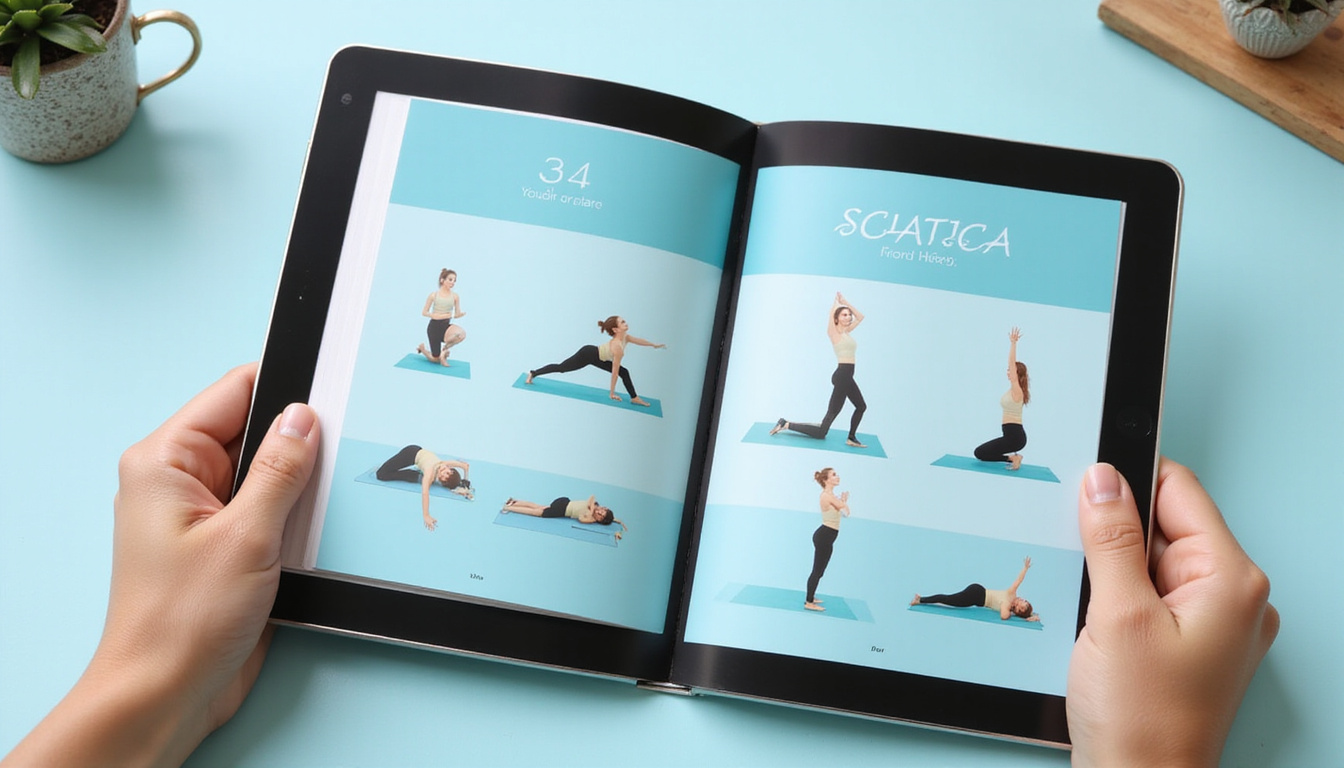
A helpful sciatica stretching exercises PDF should include clear pictures or diagrams, simple written cues (starting position, movement, reps/holds), and a balanced mix of nerve glides, hip/glute stretches, hamstring stretches, and gentle lower-back mobility. It should also note safety tips and suggest stopping any exercise that makes leg symptoms worse.
2. Are there sciatica nerve exercises PDFs that are safe for beginners?
Most sciatica nerve exercises PDF programs for beginners focus on low-intensity movements: prone lying, gentle press-ups, basic nerve glides, and light stretching. If you’re a beginner, avoid aggressive forward bending or heavy lifting at first, and stick to exercises that keep pain the same or better—not worse.
3. How often should I do exercises in a sciatica pain relief PDF?
For a typical sciatica pain relief PDF routine, 4–6 days per week is a good target. Some relief exercises (like prone lying or nerve glides) can be done 1–3 times per day in shorter sessions, while strengthening work is usually done once daily or every other day. Always adjust frequency based on your symptoms and any guidance from your healthcare provider.
Turn This Routine Into Your Own Sciatica Exercises PDF and Start Today
Every day you wait with untreated sciatica is another day of lost sleep, limited movement, and unnecessary frustration. You now have a complete, practical routine that’s ready to be turned into a sciatica exercises pdf you can print, post on your wall, or keep on your device.
Copy these sections into a document, add simple images if you like, and commit to following the plan consistently for the next few weeks. If needed, share your PDF with a physiotherapist or doctor so they can fine-tune it to your specific condition.
Start today—give this routine 10–20 minutes, and keep showing up for yourself. Small, steady steps with the right exercises can be the difference between living around your pain and finally moving past it.