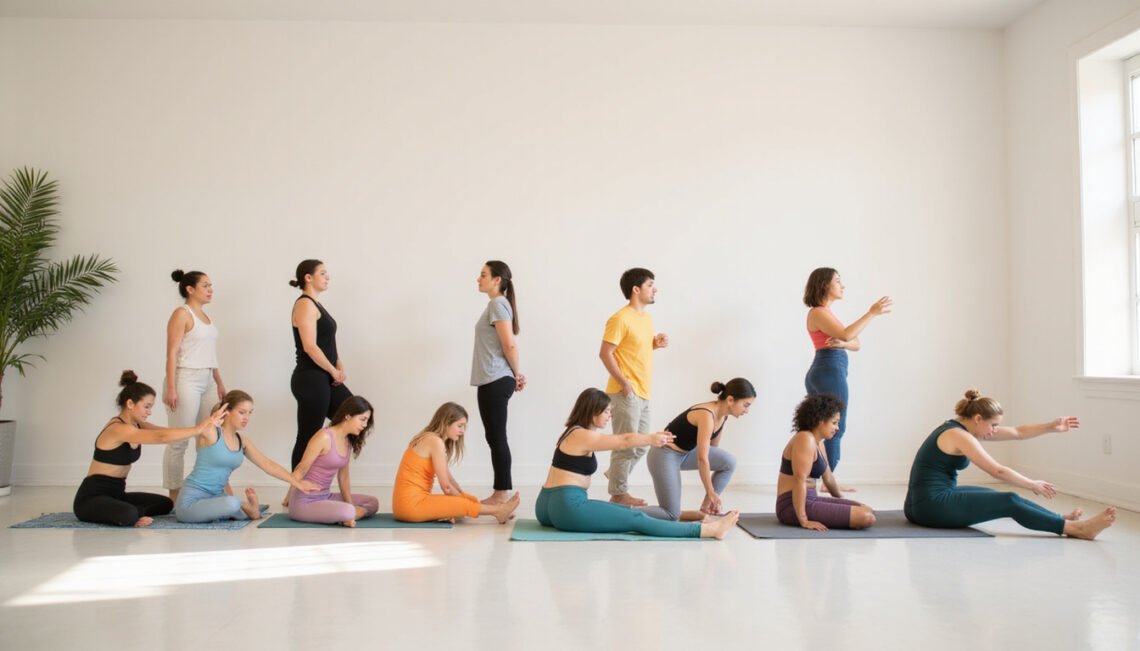
If you spend hours sitting, run regularly, or feel a pull in the back of your legs, a focused hamstring stretch routine can transform how you move. This article gives nine simple, safe hamstring stretch moves designed to reduce tightness, improve flexibility, and lower your risk of strain — no gym required.
Why tight hamstrings matter
Tight hamstrings limit hip mobility, change how you walk, and can contribute to low back pain and knee discomfort. Improving hamstring length and control helps posture, running form, and daily comfort. A balanced approach that mixes gentle static stretches, dynamic movements, and a little strengthening produces the best results. Clinical guidance on safe stretching techniques can be found at the Mayo Clinic (https://www.mayoclinic.org/healthy-lifestyle/fitness/in-depth/stretching/art-20047931) (Mayo Clinic).
How to use these stretches safely
- Warm up lightly (5–10 minutes of brisk walking or cycling) before deep static stretches to increase blood flow.
- Move into each stretch gradually; avoid bouncing.
- Hold static stretches 20–30 seconds for beginners and up to 60 seconds when you have more experience.
- If you feel sharp pain, stop — a mild pulling or tension is normal, pain is not.
- Combine stretching with hamstring strengthening and hip mobility work for lasting improvement.
The 9 simple hamstring stretch moves
Below are nine accessible stretches. Perform them in sequence as a cool-down, or pick 3–4 to use in a daily mini-routine. Aim for 2–3 sets per side when applicable.
- Standing forward fold (basic)
- How: Stand feet hip-width, hinge at the hips and fold forward, keeping knees soft if needed. Let gravity lengthen the hamstrings.
- Hold: 20–40 seconds.
- Tip: Bend the knees more if your low back rounds or pain appears.
- Seated single-leg reach
- How: Sit on the floor with one knee bent and the sole against your inner thigh. Extend the other leg and reach toward your toes, keeping your chest lifted.
- Hold: 20–30 seconds per side.
- Tip: Use a strap around the foot if you can’t reach.
- Lying hamstring stretch with strap (most effective for tight hamstrings)
- How: Lie on your back and loop a strap or towel around the ball of one foot. Keep the other leg bent or straight on the floor. Gently lift the strapped leg toward you until you feel a stretch.
- Hold: 30–60 seconds per side.
- Tip: Point and flex the ankle to change the tension.
- Dynamic leg swings (pre-workout warm-up)
- How: Stand near a wall for support. Swing one leg forward and back with controlled motion, gradually increasing range. Keep torso stable.
- Reps: 10–15 swings each side.
- Tip: Great as a warm-up before running or sports.
- Heel-on-elevated standing hamstring stretch
- How: Place your heel on a low chair or bench with your leg straight. Hinge at the hip toward the raised foot.
- Hold: 20–40 seconds per side.
- Tip: Keep the supporting knee soft to protect it.
- Runner’s lunge to hamstring focus
- How: Step into a forward lunge then shift hips backward over the front leg and straighten that front knee, reaching forward toward the toes to load the hamstring.
- Hold: 20–30 seconds per side.
- Tip: Keep hips square and avoid rounding the back.
- Supine active straight-leg raise (strength + stretch)
- How: Lie on your back and actively lift one straight leg a few inches while keeping the other leg on the floor. Lower slowly. This trains active control while lengthening.
- Reps: 8–12 controlled lifts per side.
- Tip: If full straight raises are hard, perform single-leg bridges first.
- Wall hamstring stretch
- How: Lie near a doorway or wall, extend one leg up against the wall with the other leg bent on the floor. Scoot closer to the wall to increase stretch.
- Hold: 30–60 seconds per side.
- Tip: This is very gentle and great for post-workout recovery.
- PNF contract-relax hamstring stretch (advanced)
- How: Using a strap, lift the straight leg. Gently contract the hamstring into the strap for 5–6 seconds (push against the strap), then relax and pull the leg slightly higher. Repeat 2–3 times.
- Hold: After each contract, hold the new position for 15–30 seconds.
- Tip: Only do PNF when warmed up and with guidance if unsure — it’s powerful but can overdo it.
Sample quick routine (10 minutes)
- Warm-up: 3 minutes brisk walk or leg swings (dynamic leg swings)
- Standing forward fold — 30 seconds
- Lying hamstring stretch with strap — 45 seconds per side
- Runner’s lunge to hamstring focus — 30 seconds per side
- Supine active straight-leg raises — 10 reps per side
Finish with a gentle wall hamstring stretch or seated single-leg reach as cool-down.
Common mistakes and how to fix them
- Bouncing into the stretch: Use slow, sustained holds instead.
- Rounding the back: Hinge at the hips and aim to lead with the chest.
- Skipping warm-up: Static stretching cold tissue increases injury risk; light cardio first is better (Mayo Clinic).
- Stretch-only approach: Combine stretching with strengthening and mobility work for lasting change.
Progression and frequency
- Beginners: 3–4 short sessions per week focusing on 2–3 stretches.
- Regular exercisers: Daily 10–15 minute routines are effective; include dynamic work before workouts and static holds after.
- After an injury: Check with a clinician or physical therapist for a tailored plan.
Simple checklist for each stretch
- Warmed up?
- Good posture?
- Mild tension only, not pain?
- Controlled breathing?
If yes, proceed.
FAQ — quick answers
Q: How often should I do hamstring stretches to see results?
A: For measurable flexibility gains, perform hamstring stretches 3–7 times per week. Short daily sessions (10–15 minutes) often produce the fastest, most consistent improvements.
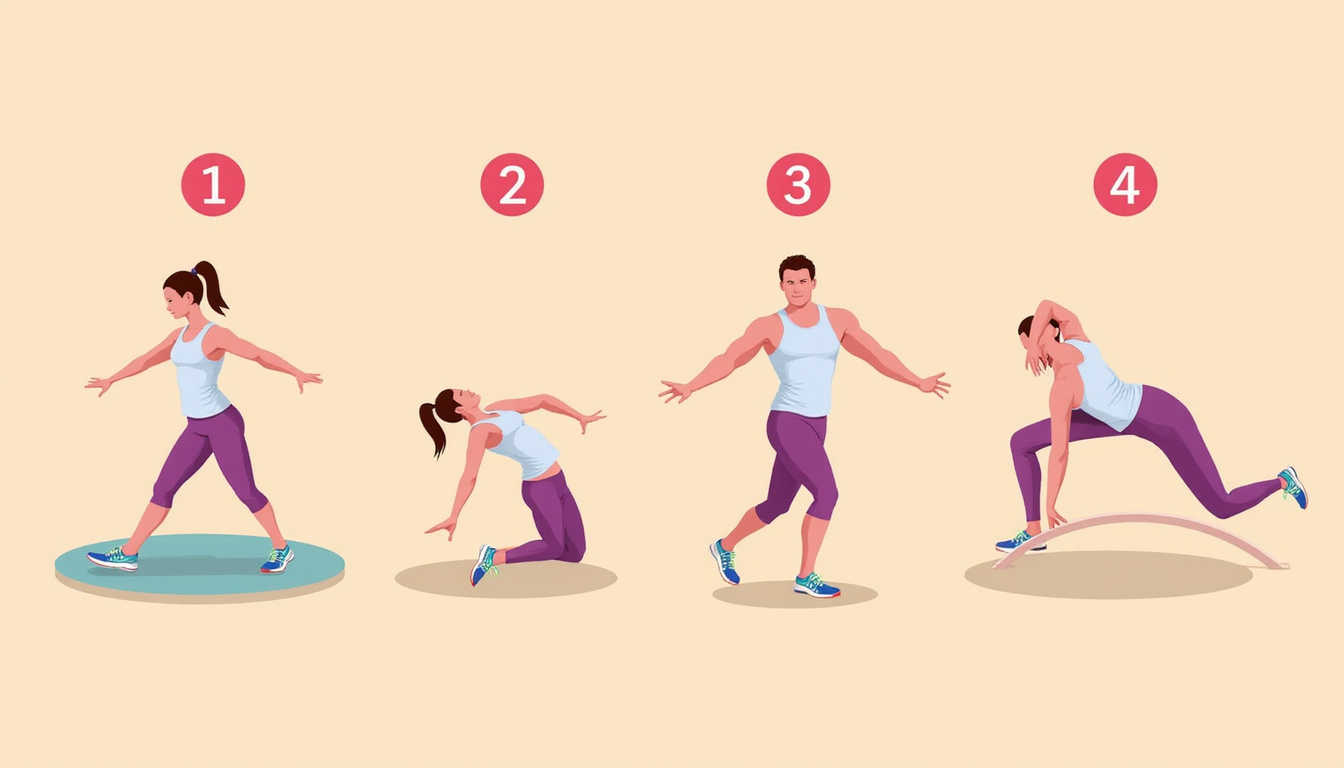
Q: What’s the best hamstring stretch routine for runners?
A: Runners benefit from a mix: dynamic leg swings before runs, and seated or strap-assisted lying hamstring stretches plus wall stretches after runs. Include active hamstring work (glute bridges, single-leg deadlifts) to balance flexibility with strength.
Q: Can hamstring stretching help low back pain?
A: Hamstring stretching can relieve posterior chain tightness that contributes to low back strain, but it’s not a standalone cure. Combine stretching with core and glute strengthening and consult a clinician for persistent pain.
Why strengthening matters too
Stretching lengthens tissue; strengthening gives the hamstrings the control to operate through that new range. Balance flexibility work with exercises like Romanian deadlifts, glute bridges, and single-leg deadlifts to reduce re-tightening and lower injury risk.
When to see a professional
If tightness follows a sudden strain, causes sharp pain, or doesn’t improve after consistent stretching and strengthening, see a physical therapist or healthcare provider. They can assess for tendon or nerve involvement and prescribe targeted interventions.
Authoritative note
Guidance about safe stretching and warming up varies by activity and health status; general best practices for stretching and flexibility are summarized by reputable health organizations (Mayo Clinic) (https://www.mayoclinic.org/healthy-lifestyle/fitness/in-depth/stretching/art-20047931).
Start today — small steps, big gains
Tight hamstrings don’t fix overnight, but consistent daily practice does work. Pick three of the above hamstring stretch moves that feel good, do them after a light warm-up, and track how your range and comfort change over two weeks. If you want, print this list and keep it near your workout space.
Call to action
Ready to end chronic tightness? Try this 10-minute routine (standing forward fold, strap-assisted lying stretch, and supine active raises) every day for 14 days and note the difference. If you’d like a printable routine or a customizable plan based on your goals or injury history, tell me your current activity level and I’ll create one for you.