
Sciatica Sleeping Positions That End Nighttime Pain and Restore Sleep
Finding the right sciatica sleeping positions can be the difference between a long, painful night and waking up truly rested. When the sciatic nerve is irritated, even small changes in posture can trigger sharp, burning, or throbbing pain that shoots from your lower back down your leg. The good news: with some smart positioning, simple supports, and a few habit changes, most people can significantly reduce nighttime sciatica pain and finally get back to restorative sleep.
Below, you’ll learn the best and worst sleep positions for sciatica, how to support your spine with pillows, and practical tips to wake up with less pain.
What Is Sciatica and Why It Hurts More at Night
Sciatica is not a condition by itself—it’s a symptom. It means your sciatic nerve (the largest nerve in the body) is being compressed or irritated somewhere along its path from your lower spine, through your hips and buttocks, and down the back of each leg.
Common causes include:
- Lumbar disc herniation or bulging discs
- Spinal stenosis (narrowing of the spinal canal)
- Degenerative disc disease
- Piriformis syndrome (muscle spasm compressing the nerve)
- Pregnancy and postural changes
At night, sciatica can worsen because:
- Your spine may fall into poor alignment when you’re relaxed
- Inflammation and fluid can build when you’re lying still for hours
- Muscles cool down and tighten, putting more pressure on irritated areas
- You become more aware of pain without daytime distractions
That’s why dialing in your sciatica sleeping positions is one of the fastest ways to cut down nighttime pain.
Core Principle: Neutral Spine Alignment
The single most important concept for sciatica-friendly sleep is neutral spine alignment. This means:
- Your ears, shoulders, and hips form a relatively straight line
- Your lower back keeps its natural, gentle curve
- Your pelvis isn’t twisted or tilted excessively
- Your hips and knees are supported so muscles aren’t pulling on the back
Every position below is designed to protect that neutral alignment and reduce strain on the sciatic nerve.
Best Sciatica Sleeping Positions (With Pillow Setups)
1. Side Sleeping with a Pillow Between the Knees
For many people, this is the most comfortable and sustainable position.
How to do it:
- Lie on your non-painful side (if pain is mostly in one leg). If both legs hurt, test both sides and choose the one that feels better.
- Slightly bend your knees and hips, like a relaxed “fetal” position—but avoid curling too tightly.
- Place a medium-firm pillow between your knees and down to your ankles.
- Keep your top hip stacked directly over the bottom hip (don’t let the top knee drop forward onto the mattress).
Why it helps:
The pillow keeps your hips and pelvis from twisting and prevents your top leg from pulling your spine into rotation, a major source of nighttime sciatic irritation. This position also opens up space in the lower back and reduces tension around the nerve roots.
2. Side Sleeping with a Pillow in Front (for Severe Leg Pain)
If pain shoots down the back of your leg with the slightest rotation, add front support.
How to do it:
- Lie on the more comfortable side, knees slightly bent.
- Place a firm pillow or folded blanket between your knees.
- Hug another pillow to your chest and stomach, with your top arm and leg resting partially on it.
Why it helps:
Front support prevents your trunk from twisting forward and stabilizes your lumbar spine, which can be especially soothing when nerve compression is severe.
3. Back Sleeping with Pillows Under the Knees
If you can tolerate lying on your back, this is one of the most spine-friendly positions.
How to do it:
- Lie flat on your back with your head on a low-to-medium pillow.
- Place one or two pillows (or a foam wedge) under your knees so they’re slightly bent.
- Allow your feet to relax outward naturally.
Why it helps:
Elevating your knees reduces tension on your lower back and decreases the pull on your sciatic nerve. This position promotes an even distribution of body weight, which can ease disc-related sciatica.
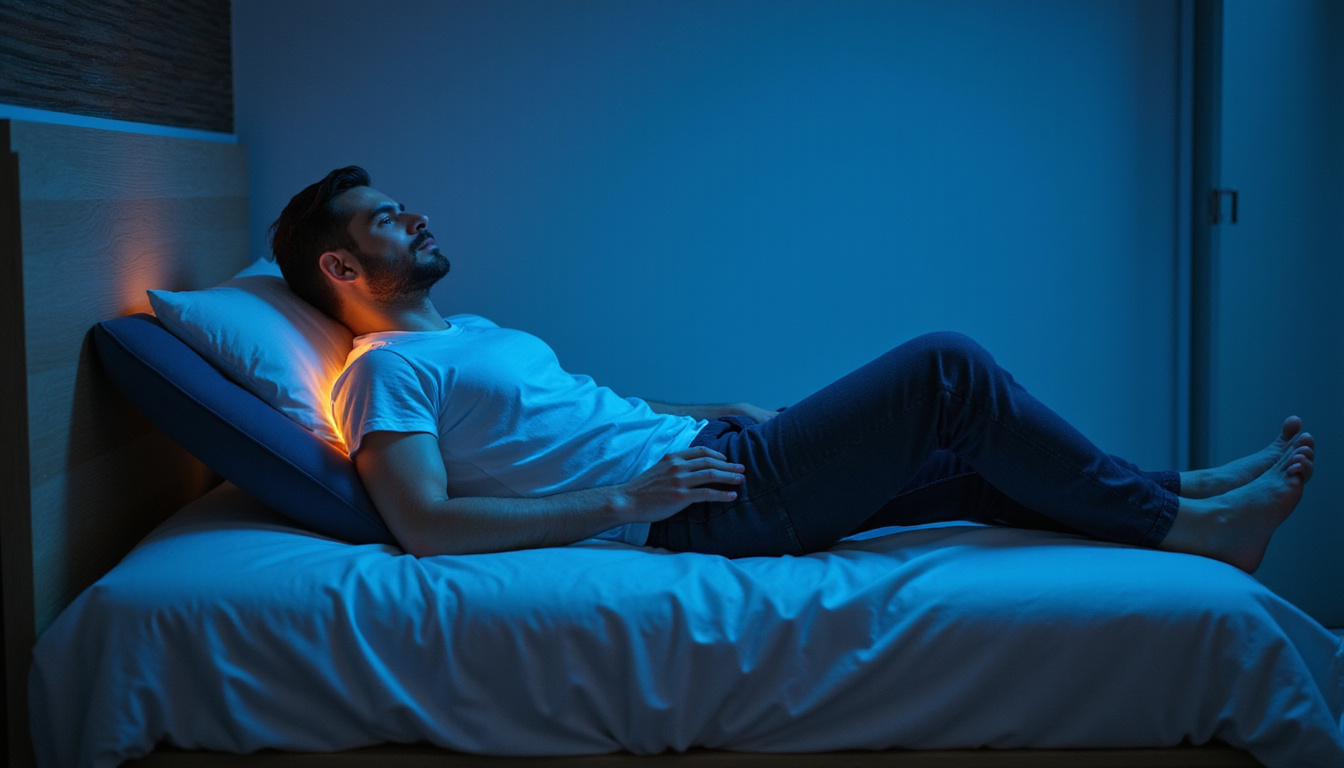
4. Back Sleeping in a Semi-Reclined Position
Some people with sciatica feel best in a reclined posture, similar to sitting in a recliner.
Options:
- Use an adjustable bed to raise your head and knees
- Use wedge pillows under your upper back and knees
- Arrange firm pillows to create a gentle “V” shape: torso elevated, knees bent, feet on the mattress
Why it helps:
A semi-reclined position opens the angle between the thighs and trunk, which can reduce pressure on lumbar discs and nerve roots. It’s also helpful for those whose pain is worse when fully flat.
5. The Modified Fetal Position (Used Carefully)
The classic fetal position—curling on your side with your knees toward your chest—can relieve some types of lumbar and disc pain.
How to do it safely:
- Lie on your side with a pillow between your knees.
- Gently bring your knees a bit closer to your chest without fully curling into a ball.
- Keep your chest open and shoulders relaxed, not hunched forward.
Why it helps:
This slightly flexed posture can widen the spaces between vertebrae, reducing pressure in certain disc-related cases. Just avoid over-curling, which can stress other parts of the spine.
Positions to Avoid or Limit with Sciatica
Certain positions tend to aggravate sciatica because they increase pressure on the lower back or twist the spine.
Be cautious with:
-
Stomach sleeping (prone position)
- Forces your neck into rotation and often creates excessive arch in your lower back.
- Can compress the lumbar spine and irritate nerve roots.
-
Side sleeping without knee support
- Allows the top leg to pull your spine into rotation, stressing the sciatic nerve.
-
Sleeping in a deep “C” shape on a too-soft mattress
- Hips sink while shoulders stay up, causing spinal misalignment.
If you absolutely must sleep on your stomach, place a flat pillow under your pelvis and lower abdomen to reduce the arch in your lower back, and use a very thin pillow or no pillow under your head.
How to Use Pillows to Support Sciatica Sleeping Positions
Pillows are your best tool for customizing support and maintaining your ideal position throughout the night.
Use them:
- Between the knees and ankles – to keep hips aligned
- Under the knees (back sleeping) – to ease lumbar tension
- Under the waist (side sleeping) – if you have a pronounced curve and space between the waist and mattress
- Behind your back (side sleeping) – to stop you from rolling onto your back or stomach
- Under arms or to hug – to reduce shoulder and trunk rotation
You don’t necessarily need specialized pillows. Many people get great results using:
- A regular bed pillow between the knees
- A tightly rolled towel under the waist or knees
- A firmer cushion or folded blanket as a makeshift knee bolster
Picking the Right Mattress and Pillow for Sciatica
Even the best sciatica sleeping positions will struggle to help if your mattress and pillow work against you.
Mattress tips
- Aim for medium-firm support. Research suggests a medium-firm surface is generally best for chronic low back pain (source: National Library of Medicine).
- Avoid very soft mattresses that let your hips sink much deeper than your shoulders.
- If your mattress is too firm but new, try a 2–3 inch foam topper.
- If it’s old, sagging, or lumpy, no topper will fully fix it—replacement may be the best investment in your back.
Pillow tips
- Side sleepers: choose a pillow that fills the gap between your ear and shoulder without tilting your head.
- Back sleepers: use a thinner pillow to avoid pushing your head too far forward.
- Consider a separate knee pillow if you’re a side sleeper with hip or knee discomfort.
Simple Bedtime Routine to Calm Sciatic Pain
Beyond positioning, a few low-effort habits can improve how your back and nerves feel at night.
Try this 10–15 minute pre-sleep routine:
- Gentle mobility
- Pelvic tilts, knee-to-chest (if comfortable), or cat-cow stretches to loosen the lower back.
- Light nerve-friendly stretches
- Hamstring stretch with a strap/towel (avoid bouncing), piriformis stretch, or figure-4 stretch if pain allows.
- Heat therapy
- Warm (not hot) heating pad or warm shower for 10–15 minutes to relax muscles around the sciatic nerve.
- Wind-down
- 5 minutes of deep breathing, box breathing, or another relaxation exercise to quiet the nervous system.
Stop any stretch that makes your leg pain sharper or travels further down your leg. Mild muscular pulling is fine; nerve pain is not.
When to See a Professional About Nighttime Sciatica Pain
Position changes and home care help many people, but you shouldn’t ignore persistent or severe symptoms. See a doctor or physical therapist if:
- Sciatica pain lasts more than a few weeks or is steadily worsening
- You experience significant weakness, foot drop, or trouble moving the leg
- You notice numbness in the groin or loss of bladder/bowel control (emergency—seek immediate care)
- Night pain wakes you repeatedly despite optimized sciatica sleeping positions
- Pain started after a fall, accident, or other significant injury
A professional can assess the root cause and tailor exercises, manual therapy, or medical treatments to your specific situation.
Quick Checklist: Nighttime Sciatica Relief
Use this simple checklist to dial in your routine:
- [ ] I sleep on my side with a pillow between my knees and ankles, or on my back with pillows under my knees.
- [ ] My mattress is medium-firm (or adjusted with a supportive topper).
- [ ] My pillow keeps my neck in a neutral position—no big tilt up or down.
- [ ] I use extra pillows to stop rolling into aggravating positions.
- [ ] I do 5–10 minutes of gentle stretching and relaxation before bed.
- [ ] I’ve spoken to a healthcare provider if my symptoms are severe or not improving.
FAQ: Common Questions About Sleeping with Sciatica
1. What are the best sciatica sleep positions to reduce leg pain?
The best sciatica sleep positions usually involve either side sleeping with a pillow between the knees and ankles or back sleeping with pillows under the knees. Both help maintain neutral spinal alignment and reduce the pull on the sciatic nerve. Experiment to find which one results in the least pain after several nights.
2. Is it okay to sleep on the side with sciatica?
Yes, side sleeping for sciatica is often recommended—provided you support your body correctly. Lie on the less painful side, keep your hips stacked, and use a pillow between your knees. If you still feel pain, add a pillow in front of your body to prevent twisting or try side sleeping on the opposite side.
3. What sleeping posture is best for sciatica if I can’t sleep on my side?
If side sleeping is uncomfortable, try back sleeping for sciatica pain with your knees elevated on pillows or a wedge. This reduces pressure on your lower back and can ease nerve irritation. A semi-reclined position—similar to a recliner—can also be very helpful for some people.
Reclaim Your Nights by Optimizing Your Sciatica Sleeping Positions
Night after night of sciatica pain can wear you down physically and mentally—but you’re not stuck with it. Simple, intentional changes to your sciatica sleeping positions, combined with supportive pillows, a suitable mattress, and a brief pre-bed routine, can dramatically reduce nighttime pain and help restore deep, healing sleep.
Start by choosing one position (side with a knee pillow or back with knees elevated) and commit to trying it consistently for a week. Adjust pillows to match your body, listen carefully to your pain signals, and don’t hesitate to involve a healthcare professional if symptoms persist.
Your body heals while you sleep. By giving your spine and sciatic nerve the support they need at night, you’re not just chasing comfort—you’re actively helping your back recover. Begin refining your sleep setup tonight, and take the first real step toward waking up rested, mobile, and in far less pain.