Lower back tightness is one of the most common complaints for people who sit a lot, stand all day, or exercise regularly. The knee to chest stretch is one of the simplest, most effective moves to gently open up the lower back, hips, and glutes. When combined with a few other easy stretches, it can create a short routine that helps ease discomfort, improve mobility, and support a healthier spine.
Below, you’ll learn how to do the knee to chest stretch correctly, plus four additional gentle moves to create a 5-part sequence for relieving lower back pain.
Why the knee to chest stretch helps your lower back
The knee to chest stretch works by:
- Gently flexing the lumbar spine (lower back)
- Lengthening muscles in the lower back and glutes
- Opening the space between vertebrae, which can reduce pressure
- Encouraging relaxation of tight hip and pelvic muscles
When done with control and proper breathing, this stretch can:
- Ease morning stiffness
- Reduce tension after sitting
- Act as a cool-down after workouts
According to the American Academy of Orthopaedic Surgeons, gentle stretching and strengthening are key components of conservative treatment for low back pain (source: AAOS).
Move 1: Single-leg knee to chest stretch (core move)
This is the classic version most people think of when they hear “knee to chest.”
How to do it
- Lie on your back with your knees bent and feet flat on the floor, hip-width apart.
- Relax your shoulders and keep your spine in a neutral, comfortable position.
- Slowly bring your right knee toward your chest, using your hands to gently hold the front of your shin or just below the knee.
- Keep your left foot on the floor, knee bent.
- Gently pull the right knee closer until you feel a mild stretch in your lower back and right glute.
- Hold for 20–30 seconds, breathing slowly and deeply.
- Release and repeat on the left side.
- Complete 2–3 rounds per leg.
Form tips
- Avoid yanking or forcing the knee; the stretch should be mild to moderate, never painful.
- Keep your head resting on the floor; don’t lift it toward the knee.
- If you feel strain in your neck or shoulders, support your head with a small pillow or folded towel.
Move 2: Double-leg knee to chest stretch (deeper release)
Once you’re comfortable with the single-leg version, the double-leg knee to chest stretch offers a deeper release for both sides of the lower back.
How to do it
- Start lying on your back with knees bent and feet flat.
- Bring both knees toward your chest at the same time.
- Wrap your arms around your shins, just below the knees, or place hands on the backs of your thighs if that’s more comfortable.
- Gently pull both knees closer to your chest until you feel a stretch across your lower back and buttocks.
- Hold for 15–20 seconds, breathing steadily.
- Slowly release your legs and return feet to the floor.
- Repeat 2–3 times.
Modifications
- If your hips feel tight, rock slightly side to side in a small, controlled motion to massage the muscles along the spine.
- If it’s difficult to reach your shins, loop a yoga strap, belt, or towel behind your thighs and hold the ends instead.
Move 3: Knee to opposite shoulder stretch (glute and piriformis focus)
This variation of the knee to chest stretch targets the piriformis and outer glute muscles, which often contribute to lower back discomfort and even sciatic-like pain.
How to do it
- Lie on your back with both legs extended straight on the floor.
- Bend your right knee and bring it toward your chest.
- Using both hands, gently guide your right knee toward your left shoulder (across your body), not straight up.
- Stop when you feel a stretch in the outside of your right hip and buttock.
- Keep both shoulders flat on the ground.
- Hold for 20–30 seconds, then switch sides.
- Perform 2–3 times per side.
Safety notes
- Move slowly and stay within a comfortable range of motion.
- If you feel tingling, numbness, or sharp pain down the leg, stop and consult a healthcare professional.
Move 4: Supported spinal twist (gentle rotation for the lower back)
After working through the knee to chest stretches, adding a supported twist can help mobilize the spine in another direction and further relieve tightness.
How to do it
- Lie on your back with your knees bent and feet flat.
- Extend your arms out to the sides in a “T” position, palms up.
- Gently bring both knees up toward your chest.
- Slowly lower your knees together toward the right side, allowing your hips to roll, but keep your shoulders anchored to the mat.
- If your knees don’t reach the floor comfortably, place a pillow or folded blanket under them for support.
- Turn your head slightly to the left for a full-body twist if it feels good on your neck.
- Hold 20–30 seconds, breathing deeply.
- Bring knees back to center, then repeat on the left side.
- Do 2–3 rounds per side.
Tips
- Keep the movement controlled; don’t let your legs “drop” down.
- Only go as far as your body allows without strain.
Move 5: Child’s pose (restorative finish)
Child’s pose is a yoga posture that gently stretches the lower back, hips, and thighs. It’s an ideal way to end your knee to chest routine and transition into rest.
How to do it
- Start on your hands and knees in a tabletop position.
- Bring your big toes together and widen your knees toward the edges of your mat (or as far as comfortable).
- Gently sit your hips back toward your heels.
- Extend your arms forward, reaching your fingertips away from you, and allow your chest to lower toward the floor.
- Rest your forehead on the ground or a pillow.
- Breathe deeply, feeling the expansion in your lower back with each inhale.
- Hold for 30–60 seconds or longer if comfortable.
Modifications
- If your hips don’t reach your heels, place a cushion or folded blanket between your calves and thighs.
- If stretching the arms overhead bothers your shoulders, you can rest your arms by your sides instead.
Putting it together: A 5-move lower back relief routine
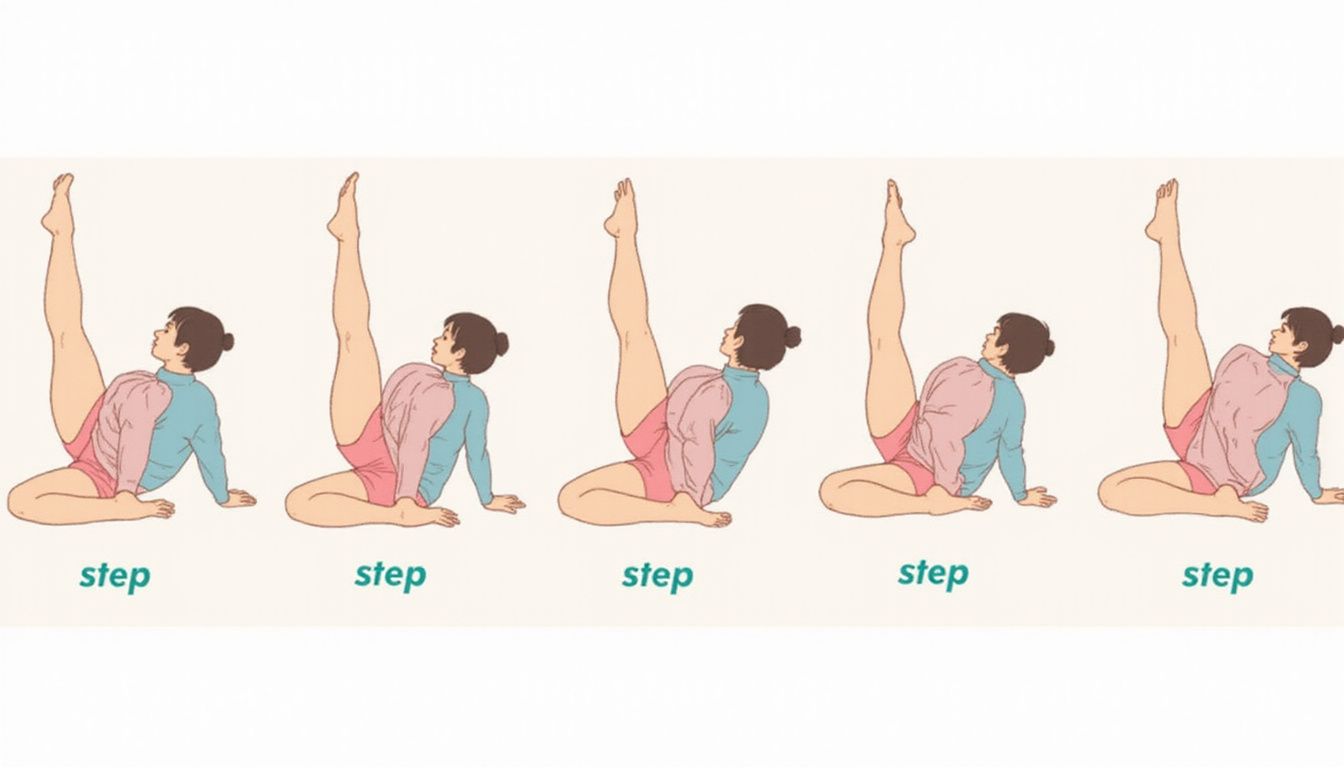
You can use the knee to chest stretch and related moves as a quick daily sequence. Here’s one simple order:
- Single-leg knee to chest – 2–3 rounds per leg
- Double-leg knee to chest – 2–3 holds
- Knee to opposite shoulder – 2–3 rounds per side
- Supported spinal twist – 2–3 rounds per side
- Child’s pose – 30–60 seconds
Aim to move slowly, breathe steadily, and never push into pain. Most people benefit from doing this sequence once per day, especially after long periods of sitting or at the end of the day.
Common mistakes with knee to chest stretches
To get the most out of your routine and protect your back, avoid these frequent errors:
-
Pulling too aggressively
Stretching should create a gentle pulling sensation, not pain or sharp discomfort. -
Holding your breath
Breath-holding increases tension. Inhale through your nose and exhale slowly through your mouth during each hold. -
Lifting the head and shoulders
This can strain your neck. Keep your head relaxed on the floor and use a small pillow if needed. -
Forcing range of motion
Everyone’s hip and spine mobility is different. Work within what feels comfortable for your body. -
Skipping both sides
Even if your pain is more noticeable on one side, balance your stretches on both legs to avoid creating imbalances.
Who should be cautious with knee to chest stretches?
While the knee to chest stretch is gentle for most people, certain conditions call for extra care or professional guidance:
- Recent lower back surgery
- Acute disc herniation or severe sciatica
- Osteoporosis with vertebral fractures
- Hip replacement or severe hip arthritis
- Unexplained severe back pain or pain accompanied by fever, weight loss, or loss of bladder/bowel control
If you’re unsure whether the knee to chest stretch is safe for your situation, check with a physical therapist, chiropractor, or physician before starting.
Tips for making the most of your lower back stretches
To get better and more lasting relief from this routine:
-
Warm up gently
A short walk, a few minutes of marching in place, or slow hip circles can increase blood flow before stretching. -
Be consistent
A 5–10 minute daily routine is usually more effective than a long session once a week. -
Combine with strengthening
Strengthening your core and glutes helps support your lower back so it doesn’t get overworked. -
Watch your posture
Even the best knee to chest routine can’t fully counteract hours of poor sitting or standing posture. Adjust your chair, screen height, and standing habits where you can. -
Listen to your body
Mild soreness is okay; sharp or shooting pain is not. Modify or stop if anything feels wrong.
FAQ: knee to chest stretch and lower back pain
1. How long should I hold a knee to chest stretch for lower back pain?
For most people, holding a knee to chest stretch for 20–30 seconds is ideal. You can repeat it 2–3 times per side. Longer isn’t always better—focus on relaxed breathing and gentle tension rather than forcing a deeper stretch.
2. Is the single knee to chest exercise good for sciatica?
A single knee to chest exercise can help some people with mild sciatic discomfort by easing tightness in the lower back and glutes. However, if your symptoms worsen, cause numbness or tingling, or radiate down the leg, stop and consult a medical professional to make sure the movement is appropriate for your specific condition.
3. Can I do a double knee to chest stretch every day?
Yes, most people can safely perform a double knee to chest stretch daily, especially if they have chronic lower back stiffness. Keep the movement gentle, avoid bouncing, and back off if you have an acute injury, severe disc issues, or if your healthcare provider has restricted spinal flexion movements.
Daily lower back pain doesn’t have to be your “normal.” By building a short routine around the knee to chest stretch and the four complementary moves above, you can gently loosen tight muscles, improve flexibility, and give your spine the care it needs.
If you’re ready to feel the difference, set aside just 5–10 minutes today to try this sequence. Stay consistent for a couple of weeks, notice how your body responds, and consider pairing these stretches with core-strengthening exercises or guidance from a physical therapist for even better results. Your lower back will thank you every time you get up, bend, or move without that familiar ache.