
Finding the right mattress for sciatica can feel like an endless trial-and-error experiment when you’re already exhausted from pain and poor sleep. The wrong surface can make that burning, shooting pain down your leg even worse. The right one, however, can ease pressure on your lower back and hips, help your spine stay aligned, and dramatically improve how you feel when you wake up.
This guide breaks down what sciatica is, what to look for in a mattress, the best types and firmness levels, and how to fine-tune your entire sleep setup to actually reduce nightly pain—not just mask it.
What is sciatica and why does your mattress matter?
Sciatica is irritation or compression of the sciatic nerve, which runs from your lower back through your hips, buttocks, and down each leg. It’s often caused by issues like a herniated disc, spinal stenosis, or degenerative disc disease.
At night, certain positions and surfaces can increase:
- Pressure on the lumbar spine and nerve roots
- Misalignment of the spine and pelvis
- Muscle tension in the lower back and hips
A poorly chosen mattress for sciatica can:
- Sag under the hips, throwing the spine out of alignment
- Be so firm that it creates painful pressure points
- Fail to support natural curves, forcing muscles to work all night
A well-chosen mattress can help distribute body weight evenly, keep your spine neutral, reduce pressure on the nerve, and let your muscles relax instead of constantly bracing.
Key features to look for in a mattress for sciatica
When shopping, focus less on brand hype and more on these core support features.
1. Proper firmness for your body and sleep position
There’s no one universal “best” firmness, but research suggests that medium-firm mattresses often reduce back pain more than very soft or very firm ones (source: NIH / PubMed). For sciatica, the ideal firmness:
- Supports the lumbar spine so it doesn’t sink
- Allows your shoulders and hips to sink just enough for comfort
- Keeps the spine in a neutral, straight line (from neck to tailbone) when viewed from behind
Broad guidelines:
- Side sleepers: Medium-soft to medium (5–6/10 firmness)
- Back sleepers: Medium to medium-firm (6–7/10)
- Stomach sleepers: Medium-firm to firm (7–8/10), though stomach sleeping is usually discouraged for sciatica
Your weight matters too: heavier bodies generally need a bit firmer support; lighter bodies often prefer slightly softer surfaces to get adequate contouring.
2. Zoned or targeted lumbar support
Zoned support systems use firmer materials in the lumbar region and softer zones at the shoulders. For someone seeking the best mattress for sciatica, this can:
- Prevent the lower back from collapsing or over-arching
- Reduce pressure on the sciatic nerve roots
- Keep the pelvis from rotating or tilting at odd angles
Look for descriptions like “zoned support,” “lumbar reinforcement,” or “tri-zone/5-zone construction.”
3. Pressure relief around hips and shoulders
Because the sciatic nerve often flares where it passes near the hip and buttock, pressure in these areas can intensify symptoms. You want a mattress that:
- Cushions bony areas (hips, shoulders)
- Spreads your weight across the surface
- Avoids deep “pressure points” that feel sore or tingly
Comfort layers made of memory foam or latex are very effective here—as long as they’re supported by a sturdy base so you don’t sink too far.
4. Spinal alignment and edge stability
Spinal alignment is the main reason a mattress for sciatica can help or hurt. Signs a mattress supports alignment:
- When you lie on your side, your spine looks mostly straight
- Your hips and shoulders sink in slightly but not excessively
- You don’t feel your lower back “hanging” or over-arching
Good edge support also matters, especially if getting in and out of bed is painful. Reinforced edges help you sit and pivot without feeling like you’ll slide off.
Best mattress types for sciatica relief
Different mattress constructions can all work for sciatica, but each has pros and cons. Your ideal choice depends on your symptoms, body type, and feel preference.
Memory foam mattresses
Best for: Side sleepers, people needing deep pressure relief, those with hip-dominant pain.
Pros:
- Excellent contouring that cradles hips and shoulders
- Good motion isolation if you share a bed
- Can reduce “dead arm” or tingling from pressure points
Cons:
- Some models trap heat
- Too-soft foam can let your hips sink excessively
- Slow response may make repositioning harder for some
Look for high-density foam (especially in the support core), medium to medium-firm feel, and a reputable brand that lists foam densities.
Latex mattresses
Best for: People wanting support + gentle bounce, combination sleepers, and those who sleep hot.
Pros:
- Responsive and buoyant, easier to move around
- Naturally cooler and more breathable
- Offers both support and cushion without a “stuck” feeling
Cons:
- Often more expensive
- Some people find latex slightly firmer than foam of similar rating
A latex mattress for sciatica can be a great choice if you need pressure relief but dislike the “hug” of memory foam.
Hybrid mattresses (foam + coils)
Best for: Most sleepers with sciatica, heavier bodies, and anyone wanting a balance of bounce and contouring.
Pros:
- Pocketed coils deliver strong support and good spinal alignment
- Foam or latex comfort layers provide pressure relief
- Better airflow and edge support than many all-foam models
Cons:
- Heavier and harder to move
- Quality varies—cheap hybrids may have thin comfort layers that wear out fast
For sciatica, hybrids are often the sweet spot: zoned coils plus a quality comfort layer can offload the hips while keeping the lower back supported.
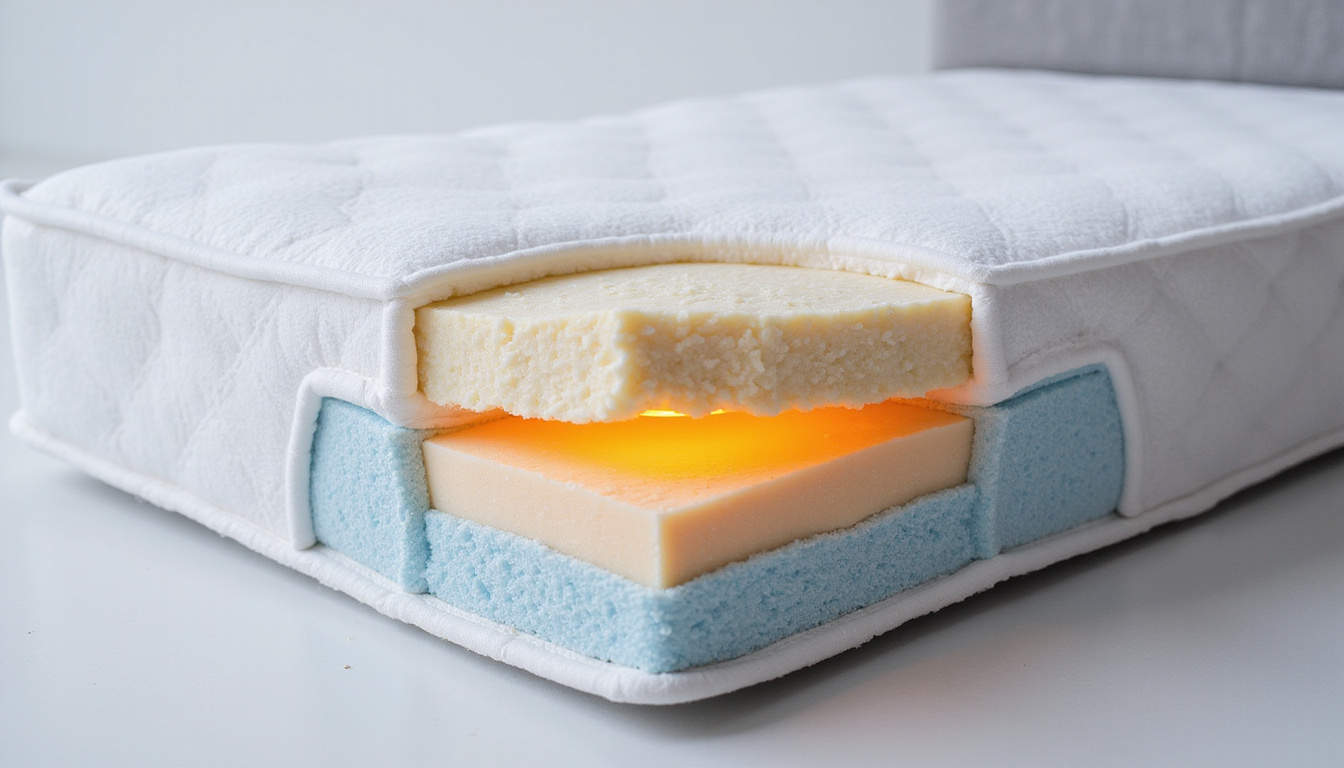
Innerspring mattresses
Best for: People who want a traditional, bouncy feel and usually sleep on their back or stomach.
Pros:
- Strong support and great airflow
- Often more affordable
- Easy to move on
Cons:
- Limited contouring without a substantial top layer
- Can cause pressure points if comfort layer is too thin or firm
If you prefer an innerspring mattress for sciatica, choose one with a thicker, quality pillow top or Euro top to soften pressure around the hips and shoulders.
Matching your sleep position with the right mattress for sciatica
Your sleep position can help or hinder nerve irritation. Combine the right mattress with strategic support to maximize relief.
Side sleepers with sciatica
Side sleeping is often recommended for sciatica, especially on the non-painful side, because it can reduce direct pressure on the affected nerve.
For side sleepers:
- Choose a medium mattress with strong support and good cushioning
- Ensure your hips and shoulders sink in enough to keep the spine straight
- Use a pillow between your knees to keep hips stacked and reduce twisting
If your mattress is too firm, your hips and shoulders won’t sink, causing the spine to curve; too soft, and your hips will dip, stressing the lower back.
Back sleepers with sciatica
Back sleeping can work very well if your lumbar area is supported.
For back sleepers:
- Look for a medium to medium-firm mattress
- Ensure your lower back feels supported, not “hovering”
- Place a thin pillow or folded towel under your knees to reduce lower back tension
If your hips sink deeper than your shoulders, your lower back can arch and compress nerve roots.
Stomach sleepers with sciatica
Stomach sleeping is usually not ideal for sciatica because it forces the neck and lumbar spine into extension and rotation. If you can’t avoid it:
- Use a firmer mattress (7–8/10) to prevent the hips from sinking
- Use the thinnest pillow possible under your head
- Consider placing a small pillow under your pelvis to reduce strain
Long-term, transitioning to side or back sleeping is usually more beneficial for sciatic pain.
Practical tips to optimize any mattress for sciatica
Even if you’re not ready to buy a new mattress for sciatica, you can often improve your current setup.
Here are 7 ways to make your bed more sciatica-friendly:
-
Add a quality mattress topper
- A 2–3" memory foam or latex topper can add pressure relief if your mattress is too firm.
- Choose medium density/firmness so you don’t sink excessively.
-
Use pillows strategically
- Side sleepers: pillow between knees, possibly another at the waist for side support.
- Back sleepers: pillow under knees; consider a small lumbar roll.
-
Check your pillow height
- A pillow that’s too high or low will misalign your neck and, in turn, your whole spine.
- Side sleepers need thicker pillows; back sleepers need medium loft.
-
Rotate (not flip) your mattress regularly
- Rotating head-to-foot every 3–6 months can slow body impressions and sagging.
-
Support your bed base
- Ensure your foundation or slats are firm and not sagging.
- Too much flex under the mattress can worsen spinal misalignment.
-
Experiment with sleep positions
- Try side sleeping with the painful side up and pillow between knees.
- Give your body a few nights to adjust before judging.
-
Stretch gently before bed
- Light piriformis and hamstring stretches plus core activation can reduce nighttime flare-ups.
- Avoid aggressive stretching that spikes pain.
When to replace your mattress for sciatica relief
No matter how advanced the materials, mattresses wear out. Typical lifespan is 7–10 years, shorter for cheaper models or heavier users.
Signs your mattress is hurting—not helping—your sciatica:
- Visible sags or dips, especially under hips or lower back
- You sleep better on a hotel bed, couch, or a different mattress
- You wake with increased lower back or leg pain that eases during the day
- You’re constantly rolling toward the center or feeling “stuck” in a crater
If a mattress is older than 8–10 years and you’re dealing with chronic sciatica, upgrading is often one of the most cost-effective changes you can make for your pain and sleep quality.
FAQs about choosing the best mattress for sciatic nerve pain
1. What type of mattress is best for sciatic nerve pain?
For most people, a medium-firm hybrid or memory foam mattress provides the best mix of spinal support and pressure relief for sciatic nerve pain. Look for zoned lumbar support and a comfort layer thick enough (usually at least 2–3") to cushion your hips and shoulders without letting your lower back collapse.
2. Is a soft or firm mattress better for sciatica?
Neither extreme is ideal. A mattress that’s too soft can let your hips sink and twist the spine, worsening sciatica. One that’s too firm can create pressure points at the hips and shoulders. A medium to medium-firm feel usually works best, adjusted for your body weight and preferred sleeping position.
3. Can a new mattress really help sciatica at night?
A well-chosen mattress for sciatica won’t cure the underlying cause, but it can significantly reduce nighttime pressure on the sciatic nerve, support better alignment, and allow muscles to relax. Many people report fewer flare-ups, less morning stiffness, and better overall sleep when they switch to a mattress that properly supports their spine and cushions sensitive areas.
Take action: create a sleep setup that supports healing, not pain
Night after night of sciatic pain isn’t just frustrating—it can erode your energy, mood, and ability to rehab effectively during the day. Upgrading to a well-designed mattress for sciatica—one that balances support, pressure relief, and alignment for your body and sleep style—is one of the most direct ways to break the cycle of poor sleep and persistent pain.
If your current bed is sagging, overly firm, or simply not working, commit to changing it. Start by clarifying your sleep position, body type, and budget, then look for a medium to medium-firm foam, latex, or hybrid model with solid lumbar support and generous trial and return policies. Pair your choice with smart pillow use and supportive sleep positions, and give your body a few weeks to adapt.
Your nights don’t have to be ruled by sciatica. The right mattress can’t fix everything—but it can become a powerful part of your pain-management toolkit and help you finally wake up rested instead of wrecked.