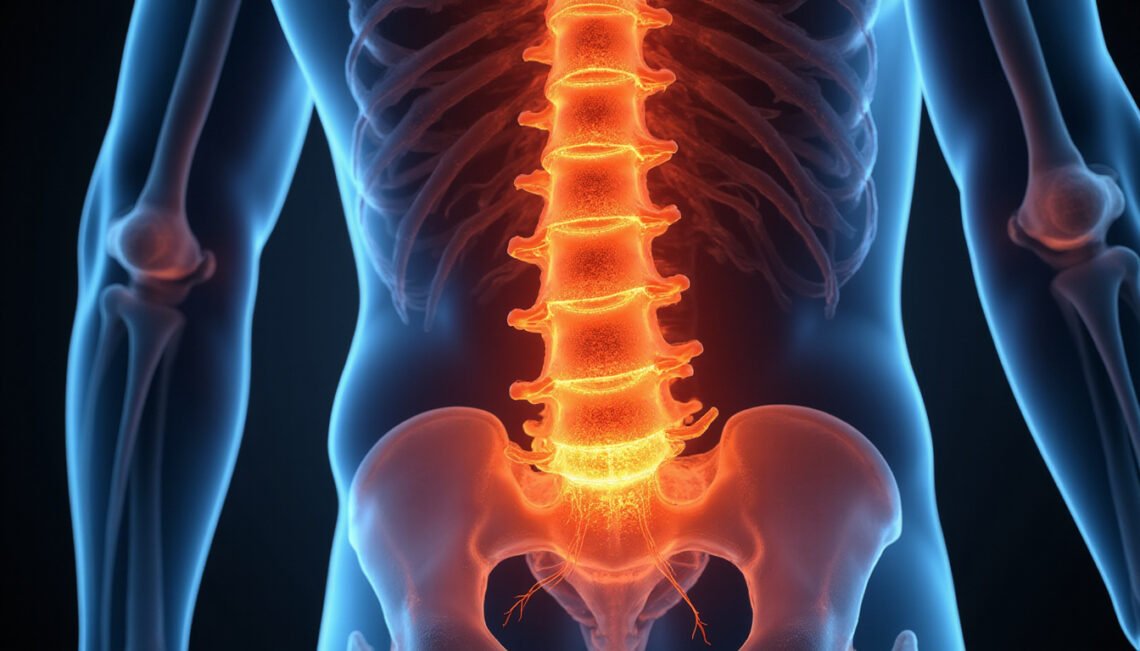
Discogenic pain is one of the most common—but often misunderstood—sources of chronic low back pain. Many people go months or years believing their discomfort is from “muscle strain” or “arthritis,” when in reality the pain is coming from the spinal discs themselves. Understanding what’s really going on inside your spine is the first step toward lasting relief.
Below, we’ll break down what discogenic pain is, why it happens, the surprising risk factors most people overlook, and the most up-to-date, evidence-based treatment options that go far beyond “just rest and take painkillers.”
What Is Discogenic Pain?
Discogenic pain refers to pain that originates from a damaged or degenerated intervertebral disc—the cushions between the vertebrae in your spine. These discs act as shock absorbers, helping you bend, twist, and carry loads.
A healthy disc has:
- A tough outer ring (annulus fibrosus)
- A gel-like center (nucleus pulposus)
- Adequate hydration and flexibility
When the disc structure breaks down, small tears, inflammation, or chemical irritation can trigger pain signals from within the disc and surrounding nerves. That pain is called discogenic pain.
Typical Symptoms
Discogenic back pain can mimic other causes, but there are some common patterns:
- Deep, aching pain in the low back (lumbar spine) or neck (cervical spine)
- Pain worsened by sitting, bending forward, or prolonged standing
- Pain improved (sometimes) by walking or changing positions frequently
- Stiffness, especially after inactivity
- Pain that may or may not radiate into the buttocks or hips (without classic nerve “sciatica”)
Diagnosis is often based on a combination of history, physical exam, imaging (like MRI), and ruling out other causes.
How Discs Cause Pain: The Hidden Mechanisms
Not all disc degeneration is painful—many people with “bad discs” on MRI have no symptoms at all. So why do some discs hurt and others don’t?
Structural Damage and Tears
Tiny cracks or tears in the outer layer of the disc (annular tears) can expose nerves to irritating substances from the disc’s core. This can cause:
- Local inflammation
- Sensitized nerve endings
- Persistent, dull or sharp pain, especially with load or flexion
Chemical Irritation and Inflammation
As discs degenerate, they can release inflammatory molecules (like cytokines) that:
- Irritate nearby nerves
- Increase sensitivity to movement or pressure
- Contribute to chronic inflammation in the spinal segment
Disc Height Loss and Load Changes
As a disc dries out and loses height:
- Vertebrae move closer together
- Load distribution changes across joints and ligaments
- Facet joints (small joints at the back of each vertebra) may become overloaded and painful
- Muscles may overwork to stabilize the area, adding secondary muscle pain
Discogenic pain is often a combination of mechanical damage and a biochemical “storm” inside the disc and surrounding tissues.
Surprising Causes and Risk Factors You Might Not Expect
Most people know that aging and heavy lifting can affect the spine. But several less obvious factors can increase your risk of discogenic pain.
1. Prolonged Sitting and “Comfortable” Sedentary Lifestyles
Desk jobs, long commutes, and hours on the couch add up. Prolonged sitting:
- Increases pressure on lumbar discs more than standing or lying down
- Encourages slouched posture, placing extra stress on the disc’s back portion
- Reduces blood flow to surrounding muscles and support structures
Ironically, many people with discogenic pain feel “better” at rest, so they sit more—accidentally feeding the problem.
2. Smoking and Nicotine Use
Smoking is one of the strongest lifestyle factors linked to disc degeneration. Nicotine:
- Reduces blood flow and nutrient delivery to discs
- Accelerates disc dehydration and breakdown
- Increases inflammatory processes in spinal tissues
Studies show smokers have higher rates of low back pain and disc problems than non-smokers (source: National Library of Medicine).
3. Genetics and Family History
If close relatives have had early disc degeneration, back surgery, or chronic back pain, your own disc health may be partially influenced by:
- Variations in collagen structure
- Differences in disc metabolism
- Inherited inflammatory tendencies
You can’t change your genetics, but you can modify many behaviors that interact with genetic risk.
4. Metabolic Health and Obesity
Extra body weight, especially around the abdomen, increases compressive load on the spine. But it’s not only about weight:
- Metabolic syndrome and chronic low-grade inflammation can worsen disc degeneration.
- Poor blood sugar control can affect tissue health and healing capacity.
5. Deconditioning and Weak Core Stability
Weak deep core muscles and glutes mean:
- Less support for the spine during everyday movements
- More load transferred directly to the discs
- Higher risk of micro-injury and gradual wear-and-tear
This is why specific, targeted strengthening is often more effective than generic “back stretches.”
How Is Discogenic Pain Diagnosed?
There’s no single perfect test, but doctors and spine specialists typically use a combination of approaches.
Clinical Evaluation
A clinician will ask about:
- Onset of pain (sudden vs gradual)
- What positions worsen or relieve symptoms
- Any leg pain, numbness, or weakness
- Work and lifestyle factors
Physical exam may include range-of-motion tests, palpation, and neurologic testing.
Imaging: MRI and Beyond
MRI is the most common imaging tool for suspected discogenic pain. It can show:
- Disc dehydration (dark discs on T2-weighted images)
- Disc height loss
- Annular tears or bulging
- Associated issues like facet joint arthritis
However, MRI findings must be interpreted cautiously, because many “abnormalities” appear in people without pain.
Provocative Discography (Less Common Now)
In some cases, discography is used: injecting contrast dye into discs to see which ones reproduce the patient’s pain. Because it’s invasive and somewhat controversial, it’s typically reserved for complex cases or surgical planning.
Breakthrough Relief Solutions: From Conservative to Cutting-Edge
Treatment for discogenic pain is increasingly focused on preserving motion, reducing inflammation, and stabilizing the spine—rather than jumping straight to fusion surgery.
Step 1: Foundational Lifestyle and Self-Care Strategies
These are essential, whether or not you pursue medical procedures:
- Movement “snacks”: Stand, walk, or perform gentle mobility drills every 30–45 minutes of sitting.
- Ergonomic setup: Neutral spine alignment, chair with lumbar support, screen at eye level.
- Sleep optimization: Medium-firm mattress, side-lying with a pillow between knees, or back-lying with a pillow under knees.
- Weight management: Gradual, sustainable loss if overweight to reduce spinal load.
- Quit smoking: One of the most powerful ways to support long-term disc health.
Often, symptoms improve significantly when these “background” factors are addressed consistently.

Step 2: Targeted Physical Therapy and Exercise
High-quality physical therapy is one of the most evidence-supported treatments for discogenic pain.
A good program may include:
- McKenzie-based or directional preference exercises to find movements that centralize or reduce pain.
- Core stability training focusing on deep stabilizers (transversus abdominis, multifidus) rather than just “six-pack” crunches.
- Hip and thoracic mobility work to offload the lumbar spine.
- Graded strengthening for glutes, hamstrings, and back extensors.
- Education in body mechanics for lifting, bending, and daily tasks.
The goal is to restore confident, pain-tolerant movement—not to avoid all bending or lifting forever.
Step 3: Medications and Injections
Used thoughtfully, these can reduce pain enough to make rehab work better.
- NSAIDs: Short-term use to reduce inflammation, if tolerated.
- Muscle relaxants: For acute spasms, used briefly.
- Epidural steroid injections: Can help when inflammation around nerve roots is a major component.
- Intradiscal injections: Experimental or emerging therapies (like platelet-rich plasma, PRP) aim to calm disc inflammation and support healing; evidence is promising but still developing.
Always discuss risks and benefits with a spine-informed provider.
Step 4: Minimally Invasive Procedures
Recent years have brought several innovative options designed specifically for discogenic pain:
- Intradiscal electrothermal therapy (IDET): Controlled heating of the disc to shrink collagen fibers and seal tears; mixed evidence but still used in select cases.
- Biacuplasty (radiofrequency ablation of disc): Cooled radiofrequency probes reduce nerve sensitivity within a painful disc.
- Basivertebral nerve ablation: Targets nerves in the vertebral body that may contribute to chronic disc-related back pain (for patients with specific MRI findings like Modic changes).
These procedures are usually for people who haven’t improved with conservative care but aren’t ideal candidates for major surgery.
Step 5: Surgical Options
Surgery is typically considered only after months of well-executed non-surgical care, unless there is severe nerve compromise.
Common surgical approaches include:
- Spinal fusion: The traditional option for severe discogenic low back pain; vertebrae are fused to eliminate motion at the painful segment. Reliable for some, but involves permanent loss of motion and increased stress on adjacent segments.
- Total disc replacement (TDR): Removes the damaged disc and replaces it with an artificial disc, aiming to preserve motion. TDR can be an excellent option for carefully selected patients with isolated discogenic pain and healthy surrounding structures.
Surgery decisions are highly individual. A second opinion from a non-surgical spine specialist and a spine surgeon is wise before committing.
Preventing Flare-Ups and Protecting Your Discs Long-Term
Once discogenic pain improves, the focus shifts to keeping it that way. These habits can reduce the risk of future flare-ups:
- Maintain a regular strength and mobility routine
- Avoid long uninterrupted periods of sitting—set a timer if needed
- Use proper lifting techniques (hinge at hips, keep load close, engage core)
- Stay active with low-impact cardio (walking, cycling, swimming)
- Manage stress, which can amplify pain perception and muscle tension
Consistent, moderate habits usually beat short bursts of intense “fixes.”
Quick Checklist: Are Your Habits Helping or Hurting Your Discs?
Use this list as a snapshot of your current spine health behaviors:
- [ ] I break up sitting every 30–45 minutes
- [ ] I do core and hip strengthening at least 2–3 times per week
- [ ] I don’t smoke or vape nicotine
- [ ] My work setup supports good posture
- [ ] I get 7–9 hours of quality sleep most nights
- [ ] I stay generally active with walking or other low-impact cardio
- [ ] I lift objects using my legs and hips, not just my back
The more boxes you can check, the better your odds of reducing discogenic pain and keeping your spine resilient.
FAQ About Discogenic Back Pain
What is discogenic low back pain exactly?
Discogenic low back pain is pain that comes primarily from a damaged or degenerated lumbar disc rather than muscles, ligaments, or facet joints. It’s often felt as deep, central low back pain that worsens with sitting or bending and may or may not radiate slightly into the buttocks.
How is discogenic lumbar pain different from a herniated disc?
Discogenic lumbar pain can occur with or without a disc herniation. A herniated disc means disc material has protruded or extruded out of its normal space, potentially compressing a nerve root and causing leg symptoms (sciatica). Discogenic pain refers to the disc itself being the main pain generator, even if there isn’t significant nerve compression.
Can discogenic disc pain heal without surgery?
Yes. Many people with discogenic disc pain improve significantly with non-surgical treatments: lifestyle changes, targeted physical therapy, medications, and sometimes minimally invasive procedures. Discs don’t “go back to brand new,” but they can stabilize and become much less painful over time.
Take the Next Step Toward Disc Pain Relief
Living with discogenic pain can make even simple tasks feel exhausting and uncertain. The good news is that you’re not stuck with it forever—and you have more options than just “rest” or “get surgery.” By understanding how your discs work, addressing the surprising risk factors in your daily life, and exploring modern, evidence-based treatments, you can move toward real, lasting relief.
If your back pain has been lingering for more than a few weeks, or if it keeps flaring up and limiting your life, now is the time to act. Reach out to a spine-informed physical therapist or pain specialist, get a clear diagnosis, and start a tailored plan that combines smart movement, lifestyle upgrades, and (if needed) advanced interventions. The sooner you take that step, the sooner you can get back to bending, lifting, working, and living with confidence instead of fear.