
Hamstring Strengthening Guide: Build Power, Prevent Injuries Fast
If you want faster sprints, higher jumps, and healthier knees and hips, effective hamstring strengthening needs to be a priority in your training. Weak or under-used hamstrings are a major factor in many sports injuries, lower back pain, and frustrating plateaus in performance. The good news: with the right approach, you can build stronger hamstrings quickly and safely—at home or in the gym.
This guide walks you through what the hamstrings do, why they matter, and exactly how to strengthen them for power, stability, and injury prevention.
Why Hamstring Strengthening Matters So Much
Your hamstrings are a group of three muscles at the back of your thigh: the biceps femoris, semitendinosus, and semimembranosus. Together, they:
- Bend (flex) your knee
- Extend your hip (drive your leg backward)
- Help stabilize your pelvis and protect your knees
When these muscles are weak, tight, or unbalanced compared to your quads, several problems can follow:
- Higher injury risk: Hamstring strains are among the most common sports injuries, especially in sprinting and field sports (source: American Academy of Orthopaedic Surgeons).
- Knee pain and instability: Overpowering quads and weak hamstrings can place extra strain on the ACL and knee joint.
- Slower speed and lower power: Hamstrings are crucial for top-speed sprinting, acceleration, and jumping.
- Low back and hip issues: They help control pelvic position. Weak or tight hamstrings can alter posture and movement patterns.
Smart hamstring strengthening improves all of the above—supporting performance and making your whole lower body more resilient.
Key Principles of Effective Hamstring Training
Before jumping into exercises, it helps to understand a few training principles so you get the most out of your efforts.
1. Train Through Both Hip and Knee
The hamstrings cross both the hip and knee joints, so you need movements that:
- Extend the hip (e.g., deadlifts, bridges)
- Flex the knee (e.g., leg curls, Nordic curls)
Relying on only one type of movement leaves strength gaps that can still lead to injury.
2. Include Eccentric (Lowering) Emphasis
Research consistently shows that eccentric hamstring strengthening (slowing down the lowering phase) is highly effective at preventing strains, especially in athletes who sprint or change direction quickly.
Examples: Nordic curls, Romanian deadlifts with slow lowering, and sliding leg curls.
3. Progressively Overload
To build strength and power, you need gradual increases in:
- Load (weight, resistance)
- Volume (sets and reps)
- Difficulty (more advanced variations, slower tempo, single-leg work)
Increase only one or two variables at a time to avoid overloading tendon and muscle tissue too quickly.
4. Balance Strength and Flexibility
Stronger hamstrings that are also mobile are far less likely to tear. Pair your strengthening work with regular:
- Dynamic warm-up (leg swings, marching, light jogging)
- Post-workout static stretches and foam rolling
Best Hamstring Strengthening Exercises (From Beginner to Advanced)
Below is a progression of effective hamstring strengthening exercises. You don’t have to do all of them—select those that match your current level and equipment.
Bodyweight Hamstring Strengthening (No Equipment)
1. Glute Bridge
- Target: Hamstrings, glutes, lower back
- How to:
- Lie on your back, knees bent, feet hip-width apart, flat on the floor.
- Press through your heels, squeeze your glutes, and lift your hips until your body forms a straight line from shoulders to knees.
- Pause 1–2 seconds at the top, then lower slowly.
- Reps/Sets: 2–3 sets of 12–15 reps
To shift more load into the hamstrings, walk your feet slightly further away from your body.
2. Single-Leg Glute Bridge
- Why it’s great: Adds unilateral strength and stability; quickly exposes imbalances.
- How to:
- Start in glute bridge position.
- Extend one leg straight out, keeping thighs aligned.
- Drive through the heel of the planted leg, lifting hips.
- Lower under control.
- Reps/Sets: 2–3 sets of 8–12 reps per leg
3. Sliding Leg Curl (Towels or Sliders)
- Equipment: Floor sliders, socks on a smooth floor, or towels
- How to:
- Lie on your back with heels on sliders, legs straight.
- Lift hips into a bridge.
- Slowly slide heels toward your glutes, bending your knees.
- Slide legs back out, keeping hips off the floor if possible.
- Reps/Sets: 2–3 sets of 8–10 reps
This is an excellent beginner-friendly eccentric hamstring strengthening exercise.
Dumbbell and Kettlebell Hamstring Strengthening
4. Romanian Deadlift (RDL)
- Target: Hamstrings, glutes, lower back
- How to:
- Stand holding dumbbells or a barbell in front of your thighs.
- Soften your knees slightly.
- Hinge at the hips, pushing them backward while keeping your back flat and core braced.
- Lower until you feel a strong stretch in the hamstrings (around mid-shin level for many).
- Drive hips forward and stand tall, squeezing glutes.
- Reps/Sets: 3–4 sets of 6–10 reps
Focus on a slow 3–4 second lowering phase to maximize eccentric hamstring strengthening.
5. Single-Leg RDL
- Why it’s powerful: Trains hamstrings, glutes, and balance one side at a time; closely mimics athletic movements.
- How to:
- Stand holding a dumbbell or kettlebell in one hand.
- Shift weight to the opposite leg.
- Hinge at the hips, extending the free leg backward as your torso lowers.
- Keep hips square; stop when you feel a strong stretch.
- Return to standing by driving the working foot into the ground.
- Reps/Sets: 2–3 sets of 6–10 reps per leg
Gym-Based Hamstring Strengthening (Machines & Advanced Moves)
6. Seated or Lying Leg Curl
- Target: Direct hamstring knee flexion strength
- How to:
- Adjust the machine so the pad rests just above your Achilles.
- Brace your core and keep hips in place.
- Curl your heels toward your glutes, then lower slowly.
- Reps/Sets: 3–4 sets of 8–15 reps
Use a controlled tempo; don’t swing or bounce the weight.
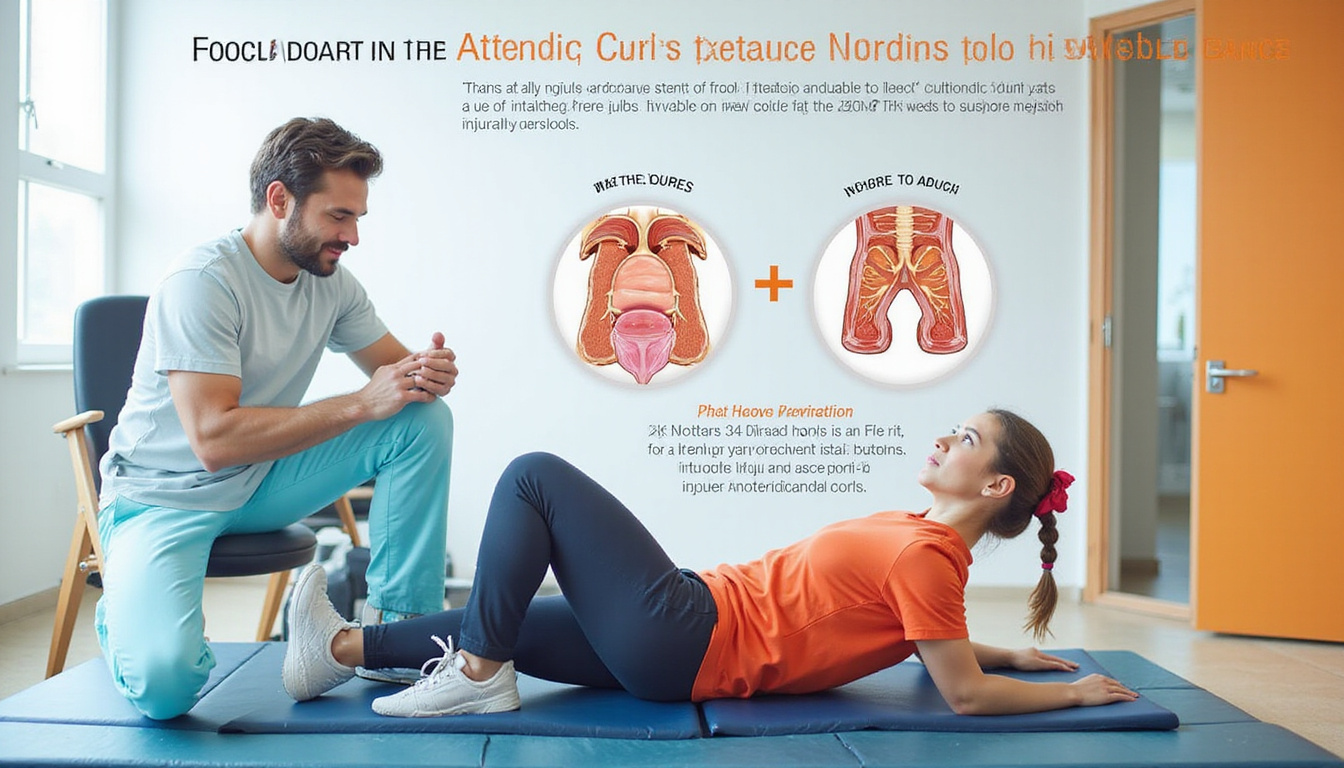
7. Nordic Hamstring Curl
Often called the gold standard for hamstring injury prevention, especially for athletes who sprint or play field sports.
- Equipment: Partner, or anchor for your feet (e.g., loaded barbell, padded bench edge)
- How to:
- Kneel on a pad with your ankles anchored.
- Keep your body in a straight line from knees to head.
- Slowly lean forward, resisting the descent with your hamstrings as long as possible.
- Catch yourself with your hands near the bottom, lightly push off the ground, and return to the starting position.
- Reps/Sets: 2–3 sets of 3–6 reps (quality over quantity)
Nordics are intense. Start with partial range or assistance (band around chest attached above you, or lowering only halfway) and gradually progress.
8. Good Morning (With Barbell)
- Target: Hamstrings, glutes, spinal erectors
- How to:
- Place a light barbell across your upper back as in a back squat.
- Stand with feet shoulder-width apart, knees soft.
- Hinge at the hips, keeping your back neutral and chest proud.
- Lower until you feel a deep hamstring stretch without rounding your back.
- Reverse the motion, driving hips forward.
- Reps/Sets: 3–4 sets of 6–10 reps with conservative loading
Form is critical here—prioritize technique over heavy weights.
Sample Weekly Hamstring Strengthening Plan
Use this as a template and adjust based on your schedule and current level.
Frequency: 2–3 hamstring-focused sessions per week, with at least 48 hours between heavy sessions.
Option A: 2-Day Hamstring Focus (Full-Body Program)
Day 1 (Strength Emphasis)
- Romanian Deadlift – 4 × 6–8
- Seated or Lying Leg Curl – 3 × 8–12
- Glute Bridge – 3 × 12–15
Day 2 (Eccentric & Unilateral Emphasis)
- Single-Leg RDL – 3 × 6–8 per leg
- Sliding Leg Curl – 3 × 8–10
- Nordic Curl (assisted if needed) – 2–3 × 3–5
Option B: 3-Day Lower Body Split (Athletes / Advanced)
Day 1 (Heavy Hip Hinge)
- Barbell RDL – 4 × 5–6
- Good Mornings (light) – 3 × 8–10
Day 2 (Knee Flexion / Machine)
- Seated or Lying Leg Curl – 4 × 10–12
- Glute Bridge or Hip Thrust – 3 × 10–12
Day 3 (Eccentric & Speed Prep)
- Nordic Hamstring Curl – 3 × 4–6
- Single-Leg RDL – 3 × 6–8 per leg
- Light sprints or bounds (if cleared and sport-specific)
Common Hamstring Strengthening Mistakes to Avoid
Even well-intentioned training can fall short or cause problems if you miss a few key points. Watch out for these:
- Skipping the warm-up: Cold muscles are more prone to strain. Always do 5–10 minutes of light cardio plus dynamic leg swings, lunges, and hip circles.
- Going too heavy too soon: Rapid jumps in weight or volume are a common trigger for hamstring pulls. Progress gradually.
- Ignoring pain signals: A sharp twinge, sudden tightness, or pulling sensation is a warning sign. Stop, back off, and reassess.
- Only training one pattern: Relying solely on curls or only on deadlifts leads to incomplete development. Combine hip extension and knee flexion work.
- Neglecting the other side of the leg: Strong quads, glutes, and calves also support hamstring function and joint health.
Warm-Up and Mobility for Better Hamstring Strength
Improving how your hamstrings move and activate makes your strengthening sessions more effective and comfortable.
Quick 5–7 Minute Hamstring-Focused Warm-Up
- Light cardio (bike, jog, brisk walk) – 2–3 minutes
- Leg swings (front-to-back) – 10–15 per leg
- Walking lunges with a slight forward lean – 10 steps per leg
- High knees and butt kicks – 20–30 seconds each
Post-Workout Hamstring Care
After your session:
- Perform static hamstring stretches (e.g., seated reach, standing toe touch with soft knees) for 20–30 seconds each, 2–3 rounds.
- Use a foam roller on the back of your thighs for 1–2 minutes per leg.
- Walk for a few minutes to help flush metabolites and reduce stiffness.
Who Especially Needs Hamstring Strengthening?
While everyone benefits from stronger hamstrings, some groups should pay extra attention:
- Sprinters and field/court athletes (soccer, football, rugby, basketball)
- Lifters who do lots of squats but few hinges or curls
- People with recurring hamstring pulls or tightness
- Those with anterior knee pain where quad dominance may be a factor
- Desk workers with prolonged sitting and weak posterior chains
If you fall into any of these categories, making hamstring strengthening a consistent priority can significantly cut your risk of future problems and boost performance.
Quick Reference: Hamstring Strengthening Checklist
Use this list to keep your training on track:
- [ ] Strengthen both hip extension (deadlifts, bridges) and knee flexion (curls, Nordics)
- [ ] Include at least one eccentric-focused exercise weekly
- [ ] Train hamstrings 2–3 times per week with 48 hours recovery between hard sessions
- [ ] Warm up dynamically before, stretch and/or foam roll after
- [ ] Progress gradually in weight and volume
- [ ] Incorporate single-leg work to address imbalances
- [ ] Back off and adjust if you feel sharp pain or pulling
FAQ: Hamstring Strengthening and Injury Prevention
1. How often should I do hamstring strengthening exercises?
Most people do well with 2–3 hamstring-focused sessions per week, depending on overall training load. If you’re new, start with 2 days, keeping volume moderate, then gradually build as your tolerance and strength improve.
2. What are the best hamstring strengthening exercises for runners?
Runners benefit most from a mix of Romanian deadlifts, Nordic curls, single-leg RDLs, and glute bridges or hip thrusts. These moves train both hip extension and knee flexion, support sprint mechanics, and reduce strain risk during faster running.
3. Can hamstring strengthening help with knee pain?
Yes, properly balanced hamstring strengthening can offload stress from the knee, especially if your quads have been doing most of the work. Stronger hamstrings help stabilize the knee joint and support the ACL. However, if you have significant or persistent knee pain, consult a qualified medical professional before starting or modifying your program.
Start Your Hamstring Strengthening Plan Today
You don’t need fancy equipment or hours in the gym to transform your hamstrings. With a handful of targeted exercises—bridges, RDLs, curls, and Nordics—you can quickly build strength and resilience that shows up in your speed, stability, and everyday comfort.
Choose 3–5 of the exercises above, plug them into a 2–3 day weekly plan, and commit to 6–8 weeks of consistent hamstring strengthening. Track your reps, weights, and how your body feels. As your hamstrings grow stronger, you’ll notice smoother runs, more powerful lifts, and a lower risk of those frustrating pulls and strains.
Start today: pick your first hamstring workout from this guide, schedule it in your calendar, and follow through. Your future athletic performance—and joint health—will thank you.