
Hamstring Tightness: How to Fix It with 8 Simple Stretches
If you spend a lot of time sitting, running, or lifting, there’s a good chance you’ve felt some hamstring tightness. That pulling sensation at the back of your thighs can affect how you walk, squat, and even how your lower back feels. The good news: most hamstring tightness can be improved with consistent, smart stretching and some basic mobility work.
Below, you’ll learn what causes tight hamstrings, how to know if they’re genuinely “short” or just overworked, and 8 simple stretches to loosen them up safely and effectively.
What Is Hamstring Tightness, Really?
Your hamstrings are a group of three muscles on the back of your thigh that run from your sit bones (ischial tuberosities) down to below the knee. They:
- Bend (flex) your knee
- Help straighten (extend) your hip
- Support your pelvis and lower back during movement
Hamstring tightness can feel like:
- A pulling or tension behind the thigh
- Stiffness when bending forward
- Limited stride length while walking or running
- Discomfort when straightening the knee while sitting or lying down
Sometimes, what we call “tight” is actually the hamstrings working overtime to stabilize joints because other muscles (like the glutes or core) aren’t doing their jobs. That’s why a complete solution goes beyond just yanking on the back of your leg.
Common Causes of Tight Hamstrings
Understanding the “why” behind your hamstring tightness will help you choose the right stretches and habits.
1. Prolonged Sitting
Sitting with your knees bent keeps hamstrings in a shortened or static position for hours. Over time, they adapt and feel short and stiff when you stand or move.
2. Poor Movement Mechanics
If your glutes, hips, or core are weak, your hamstrings may compensate. This overuse can make them feel constantly tight, especially during and after workouts.
3. Previous Hamstring Strain or Injury
Old strains can lead to scar tissue and protective guarding. The muscle may remain less flexible and more sensitive unless you retrain it.
4. Lower Back or Nerve Irritation
Sometimes, tightness is actually referred sensation from the sciatic nerve or lumbar spine. This can mimic hamstring tightness but may require a different approach.
5. Lack of Regular Stretching or Mobility Work
If you train hard but never restore length and mobility, your hamstrings will naturally feel tight and restricted.
If you have sharp pain, numbness, or tingling down the leg, or if your hamstring tightness came on suddenly during a sprint or heavy lift, consult a health professional before starting a stretching program.
How to Stretch Hamstrings Safely and Effectively
Before we get into the 8 simple stretches, keep these principles in mind:
- Warm up first: Walk, cycle, or lightly move for 3–5 minutes before deeper stretching. Warm tissue responds better.
- No bouncing: Use slow, controlled movements. Avoid ballistic, jerky stretches.
- Mild discomfort is okay; sharp pain is not: Aim for 3–6 out of 10 in intensity, never more.
- Breathe: Exhale as you ease into the stretch; let your body relax.
- Consistency beats intensity: Light daily stretching is better than one aggressive session a week.
1. Supine Hamstring Stretch with Strap
This is a great starting stretch for hamstring tightness because your back is supported and you can easily control the intensity.
How to do it:
- Lie on your back with both legs straight.
- Loop a strap, belt, or towel around the ball of your right foot.
- Keeping your left leg on the ground, gently straighten your right leg toward the ceiling.
- Pull on the strap just enough to feel a stretch down the back of your thigh.
- Hold 20–30 seconds, breathing slowly.
- Switch legs.
Tips:
- Keep a slight bend in the knee if your hamstrings are very tight.
- Avoid lifting your lower back off the floor.
2. Seated Hamstring Stretch (With Neutral Back)
Many people round their spine and stretch their back more than their hamstrings. This variation helps target the right area.
How to do it:
- Sit on the floor with your right leg extended and left leg bent, sole of the left foot against the inner right thigh.
- Sit tall and hinge at your hips (not your lower back) toward your right foot.
- Reach your hands toward your shin, ankle, or foot without forcing it.
- You should feel a stretch in the back of the right thigh, not intense pulling in the low back.
- Hold 20–30 seconds. Switch legs.
Tips:
- Imagine your chest reaching forward, not your head.
- Sit on a folded towel if your lower back rounds easily.
3. Standing Hamstring Stretch on a Step
This stretch mimics functional positions like walking or hiking and helps you work on single-leg flexibility.
How to do it:
- Stand facing a low step, box, or sturdy chair.
- Place your right heel on the step with your knee straight or slightly bent.
- Keep your back straight and hinge forward at the hips.
- Flex your foot (toes up) to increase the stretch if tolerated.
- Hold 20–30 seconds, then switch legs.
Tips:
- Keep your hips facing forward; avoid twisting.
- Don’t lock the knee; a micro-bend protects the joint.
4. Dynamic Leg Swings (Before Activity)
Dynamic stretches are useful before running, sports, or leg workouts because they increase blood flow and mobility without relaxing the muscles too much.
How to do it:
- Stand next to a wall for balance.
- Swing your right leg forward and backward like a pendulum.
- Start small and gradually increase your range of motion.
- Perform 10–15 controlled swings, then switch legs.
Tips:
- Keep your core engaged and torso upright.
- Stop if you feel sharp pain or pinching.
5. 90/90 Active Hamstring Stretch
This targets hamstring tightness while teaching your body to control the range of motion.
How to do it:
- Lie on your back with both knees bent at 90 degrees and hips at 90 degrees (shins parallel to the ceiling).
- Hold behind your right thigh with both hands.
- Slowly straighten your right knee until you feel a stretch, then bend it back to 90 degrees.
- Move in and out of the stretch 8–12 times.
- Switch legs.
Tips:
- Move slowly and with control.
- Exhale as you straighten the leg.
6. Downward Dog (Hamstring and Calf Combo)
This yoga pose lengthens hamstrings, calves, and also helps decompress the spine.
How to do it:
- Start on hands and knees. Hands under shoulders, knees under hips.
- Tuck your toes and lift your hips toward the ceiling, straightening your legs as much as comfortable.
- Press your chest toward your thighs and your heels toward the floor.
- Hold 20–30 seconds, breathing deeply.
Tips:
- Bend your knees slightly if your hamstring tightness is severe.
- Focus on lengthening your spine first, then your legs.
7. Lying Wall Hamstring Stretch
This is a gentle, passive stretch that’s great for after a workout or before bed.
How to do it:
- Sit sideways next to a wall, then swing your legs up so your back rests on the floor and legs are vertical against the wall.
- Scoot closer to the wall until you feel a stretch in the back of your thighs.
- Relax your arms by your sides and breathe deeply.
- Hold 1–2 minutes if comfortable.
Tips:
- Adjust your distance from the wall to manage intensity.
- If your low back feels strained, slide slightly away.
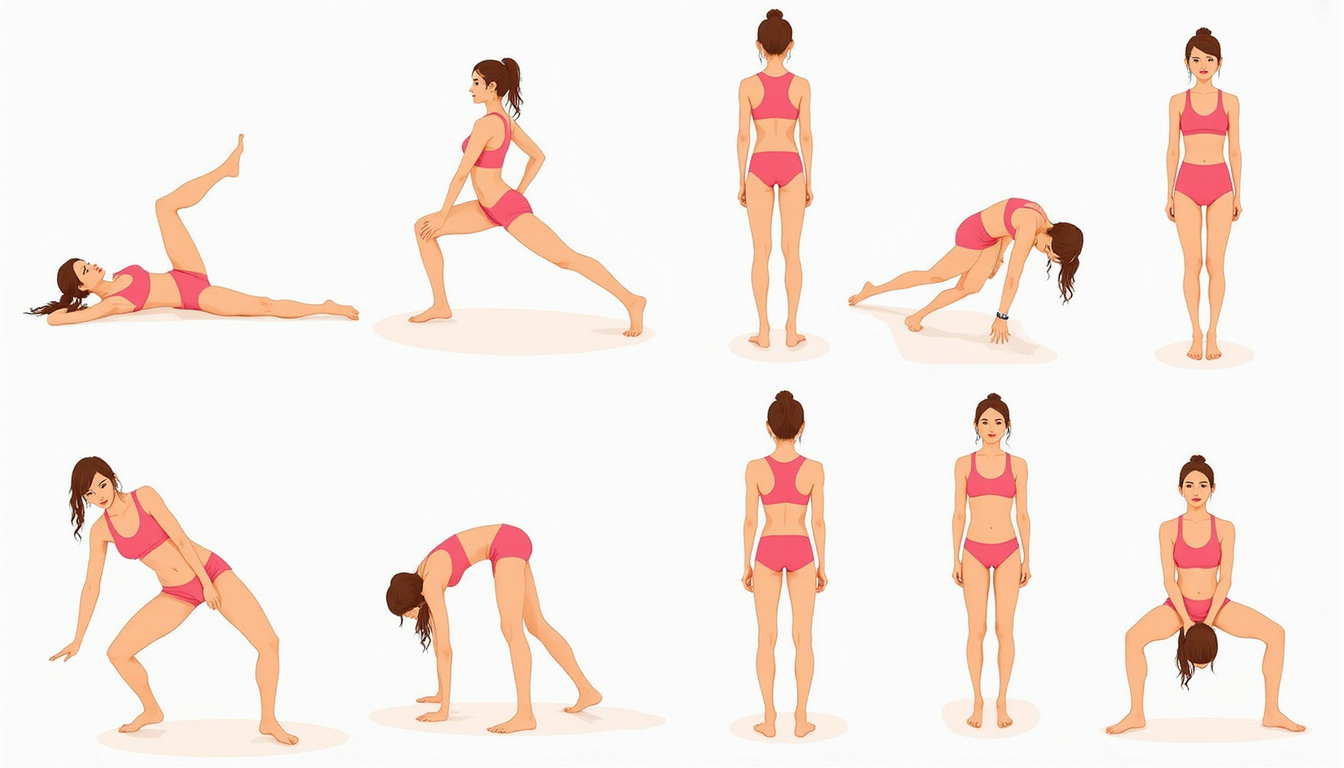
8. Romanian Deadlift Stretch (Loaded Stretch for Advanced)
For those who already train, this “loaded stretch” can improve hamstring flexibility and strength together when done lightly and with perfect form.
How to do it:
- Hold a light barbell, dumbbells, or kettlebell in front of your thighs.
- Stand with feet hip-width apart, knees softly bent.
- Hinge at your hips, sending them backward while keeping your spine neutral.
- Lower the weight toward mid-shin level or until you feel a stretch in the hamstrings.
- Pause 1–2 seconds, then drive your hips forward to stand.
- Perform 8–10 slow reps.
Tips:
- Keep the weight close to your body.
- Stop if you feel pain in the lower back—focus on hip movement, not spinal rounding.
A Simple Routine to Ease Hamstring Tightness
To make these stretches work for you, consistency is key. Here’s an example weekly plan:
-
Daily (2–5 minutes):
- Supine Hamstring Stretch with Strap – 2 x 20–30 seconds per side
- Seated Hamstring Stretch – 1–2 x 20–30 seconds per side
-
Before workouts (3–5 minutes):
- Dynamic Leg Swings – 10–15 per leg
- 90/90 Active Hamstring Stretch – 8–12 reps per leg
-
After workouts (5–8 minutes):
- Standing Hamstring Stretch – 1–2 x 20–30 seconds per leg
- Downward Dog – 2 x 20–30 seconds
- Lying Wall Hamstring Stretch – up to 2 minutes
-
2x per week (for lifters):
- Light Romanian Deadlifts – 2–3 sets of 8–10 reps (as part of strength training)
Adjust volume based on how your body responds. Mild muscle soreness is normal initially; sharp or lingering pain is not.
Beyond Stretching: Other Ways to Help Tight Hamstrings
Stretching is important, but it’s not the only piece of the puzzle.
1. Strengthen Supporting Muscles
Weak glutes and core often make hamstrings work overtime. Add:
- Glute bridges or hip thrusts
- Clamshells or lateral band walks
- Planks and side planks
2. Vary Your Posture
If you sit a lot:
- Stand up at least once every 30–60 minutes.
- Alternate between sitting and standing if you have a sit–stand desk.
- Occasionally sit on the edge of your chair and gently straighten one knee at a time to lightly mobilize the hamstring.
3. Hydration and Recovery
Dehydration and poor recovery can contribute to muscle stiffness. Get enough water, sleep, and avoid ramping up training volume too quickly.
4. Check for Nerve Involvement
If hamstring tightness is accompanied by numbness, tingling, or back pain, see a physical therapist or healthcare provider. They can assess whether nerve tension, not just muscle tightness, is at play (source: American Physical Therapy Association).
FAQ About Hamstring Tightness and Flexibility
Q1: Why are my hamstrings so tight even though I stretch them?
If hamstring tightness won’t go away, it could be due to weak glutes or core, poor posture, or previous injury. Your hamstrings may be “guarding” to stabilize your pelvis. Adding strengthening exercises and improving sitting habits, along with stretching, is usually more effective than stretching alone.
Q2: How long does it take to loosen tight hamstrings?
Mild to moderate tight hamstrings often improve noticeably in 3–6 weeks with consistent daily stretching and mobility work. Very stiff hamstrings or old injuries can take longer. Aim for small, steady improvements rather than expecting overnight changes.
Q3: Is it okay to stretch hamstrings every day?
Yes, daily gentle stretching is generally safe for hamstring tightness, as long as you avoid pain and don’t force the range. Short, frequent sessions work better than infrequent, intense stretching. If you experience increasing pain, consult a professional.
Take Action Now to Loosen Your Hamstrings
You don’t have to live with constant hamstring tightness or that stiff, pulling sensation every time you stand up or bend forward. With just a few minutes a day and these 8 simple stretches, you can restore flexibility, move more freely, and reduce your risk of strains and lower back discomfort.
Pick three stretches from the list and start them today—right now if you can. Set a reminder on your phone, tie it to an existing habit (like after brushing your teeth or post-workout), and commit to just two weeks of consistency. Your future self will thank you every time you walk, run, or train without that nagging tightness holding you back.