If you’ve been struggling with persistent back or leg pain from a herniated disc, your doctor may have discussed endoscopic discectomy as a treatment option. This minimally invasive spine surgery is designed to relieve nerve compression while reducing tissue damage, shortening hospital stays, and speeding up recovery. Understanding how it works, what the benefits and risks are, and what to expect before and after surgery can help you make a confident, informed decision.
What Is Endoscopic Discectomy?
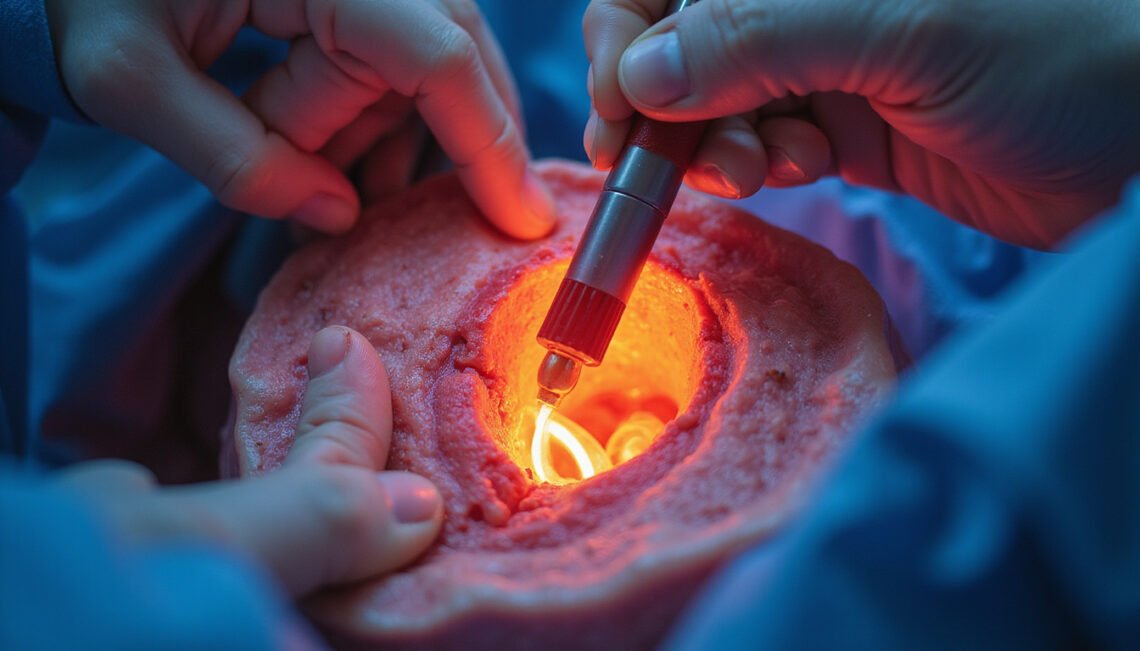
Endoscopic discectomy is a minimally invasive surgical procedure used to treat herniated discs in the spine, most commonly in the lumbar (lower back) region. Instead of making a large incision and stripping muscles from the spine, the surgeon uses a thin tube (endoscope) with a camera and specialized instruments inserted through a small incision, typically less than 1–2 cm.
Using continuous X-ray (fluoroscopy) and the endoscope’s camera, the surgeon removes the portion of the disc that is pressing on spinal nerves. The goal is to relieve nerve compression that causes:
- Sciatica (shooting leg pain)
- Numbness, tingling, or weakness in arms or legs
- Persistent back pain not improving with conservative care
Endoscopic discectomy is often considered after non-surgical treatments like physical therapy, medications, and injections have failed to provide adequate relief over several weeks or months.
How Does Endoscopic Discectomy Differ From Traditional Open Surgery?
While both procedures aim to remove herniated disc material and decompress the nerve, the approach is very different.
Traditional open discectomy:
- Larger incision, often 3–5 cm or more
- More muscle dissection and tissue disruption
- Typically requires general anesthesia
- Slightly longer hospital stay (often overnight)
Endoscopic discectomy:
- Small “keyhole” incision, generally 1–2 cm
- Minimal muscle and ligament disruption
- Can often be done with local anesthesia and sedation
- Frequently performed as an outpatient procedure
Because of these differences, endoscopic discectomy is often associated with less post-operative pain, quicker mobilization, and a faster overall recovery, although outcomes can vary depending on the patient and the severity of the disc problem.
Who Is a Good Candidate for Endoscopic Discectomy?
Not everyone with back pain is a candidate. Endoscopic discectomy is best suited for patients with specific structural problems confirmed on MRI or CT scans.
You may be considered a candidate if you have:
- A herniated disc compressing a nerve root (sciatica is common)
- Persistent leg or arm pain for 6–12 weeks despite conservative care
- Objective findings like weakness, numbness, or reflex changes
- Pain that correlates with imaging findings
It may be less appropriate if you have:
- Significant spinal instability (e.g., advanced spondylolisthesis)
- Severe spinal stenosis at multiple levels
- Large deformities like advanced scoliosis
- Active spinal infection or tumor
Ultimately, candidacy is decided by a spine specialist after reviewing your history, physical exam, and imaging.
Key Benefits of Endoscopic Discectomy
When performed on appropriate patients by experienced surgeons, endoscopic discectomy can offer several advantages:
1. Smaller Incisions and Less Tissue Damage
Because the surgeon works through a narrow tube, there’s less:
- Muscle cutting or stripping
- Ligament removal
- Blood loss
This typically results in less pain, less scarring, and a lower risk of post-operative instability.
2. Faster Recovery and Earlier Mobilization
Many patients are able to:
- Walk within hours of surgery
- Go home the same day
- Return to light activities within days
A 2017 review of minimally invasive spine surgery techniques found that patients often experience less postoperative pain and quicker return to work compared with traditional open procedures (source: National Institutes of Health).
3. Reduced Hospital Stay and Lower Infection Risk
Because most endoscopic discectomy procedures are performed on an outpatient basis, you spend less time in the hospital, which can reduce your exposure to hospital-acquired infections and may lower overall healthcare costs.
4. Targeted Nerve Decompression
The endoscope provides a magnified, illuminated view of the disc and nerve root. This allows the surgeon to precisely:
- Identify the herniated fragment
- Remove only the problematic tissue
- Preserve as much normal disc and bone as possible
Preserving healthy structures is one reason this technique is considered “tissue-sparing.”
Potential Risks and Complications
Despite being less invasive, endoscopic discectomy is still a real surgery, and it carries risks. These include:
1. Recurrent Disc Herniation
A portion of the disc is removed, not the entire disc. In a small percentage of cases, the disc can herniate again at the same level. Recurrence rates are generally similar to traditional open discectomy.
2. Nerve Injury or Persistent Symptoms
There is a small risk of:
- Nerve irritation or damage
- Persistent leg or arm pain
- Continued numbness or weakness
Sometimes this is because the nerve needs time to recover; in other cases, additional treatment may be required.
3. Dural Tear and Spinal Fluid Leak
The dura (the covering of the spinal cord and nerves) can occasionally be torn. This may cause a spinal fluid leak, headaches, or the need for additional repair procedures.
4. Infection or Bleeding
Although risk is lower than in open surgery, infections and bleeding can still occur and may require antibiotics, drainage, or rarely, re-operation.
5. Need for Conversion or Revision
In some cases, the surgeon may convert from endoscopic discectomy to a more traditional minimally invasive or open approach if visibility is limited or anatomy is complex. Later on, a small subset of patients may require fusion or other stabilizing procedures if there are underlying degenerative changes.
A thorough preoperative evaluation and choosing an experienced surgeon can help minimize these risks.
What to Expect Before the Procedure
Preparation for endoscopic discectomy usually includes:
- Imaging: MRI (and sometimes CT) to confirm the level and location of disc herniation.
- Medical clearance: Blood tests, EKG, and review of medications, especially blood thinners.
- Medication adjustments: You may be asked to stop certain drugs (like anticoagulants or anti-inflammatories) several days prior.
- Smoking cessation: If you smoke, your surgeon may strongly recommend stopping, as smoking impairs healing.
- Pre-op instructions: No food or drink after midnight before surgery, depending on anesthesia type.
You’ll also discuss anesthesia options—many endoscopic discectomy procedures are done with local anesthesia and sedation, but some patients may need or prefer general anesthesia.
What Happens During Endoscopic Discectomy?
While techniques vary slightly, a typical procedure looks like this:
- Positioning: You lie face down on a special operating table that reduces pressure on the abdomen and allows better access to the spine.
- Anesthesia: Local anesthetic with sedation or general anesthesia is administered.
- Imaging guidance: Fluoroscopy (live X-ray) is used to locate the correct spinal level.
- Small incision: A ~1–2 cm incision is made, and a series of dilators gently separate muscle fibers to create a path.
- Endoscope insertion: The working sleeve and endoscope are inserted, providing a magnified, illuminated view.
- Disc removal: Using fine instruments, the surgeon removes the herniated disc fragment compressing the nerve.
- Verification: The nerve root is decompressed and moves freely; bleeding is controlled.
- Closure: Instruments are removed; the small incision is closed with sutures or adhesive strips and covered with a dressing.
Total operating time is often 45–90 minutes, depending on complexity.
Recovery Timeline: What to Expect After Endoscopic Discectomy
Recovery varies by individual, but a typical timeline looks like this:
First 24–72 Hours
- You’ll spend a few hours in the recovery area for monitoring.
- Many patients go home the same day.
- Walking short distances is encouraged as soon as it’s safe.
- Incisional pain, muscle soreness, and some fatigue are common.
- Leg or arm pain may improve immediately, but numbness or weakness can take longer to resolve.
First 2 Weeks
- Light activities at home are usually allowed: walking, gentle movements, basic self-care.
- Avoid heavy lifting, bending, twisting, and prolonged sitting.
- You may gradually walk longer distances as tolerated.
- A follow-up visit is typically scheduled to check the incision and progress.
Weeks 3–6
- Many patients can return to office work within 2–4 weeks, depending on pain levels and job demands.
- A structured physical therapy program may begin, focusing on core strengthening, posture, and flexibility.
- Driving is usually allowed once you’re off strong pain medications and can move comfortably.
After 6 Weeks and Beyond
- Most routine daily activities can be resumed, with guidance from your surgeon or therapist.
- More strenuous exercise, including light weightlifting, may be added gradually.
- Full recovery for heavy labor jobs or high-impact sports may take 3–6 months.
Remember that even though endoscopic discectomy is minimally invasive, your disc and nerve need time to heal. Pushing too hard too soon can increase the risk of recurrence.
Tips for a Smooth Recovery
To maximize the benefits of endoscopic discectomy:
- Follow instructions: Adhere to your surgeon’s restrictions on bending, lifting, and twisting.
- Walk regularly: Short, frequent walks promote circulation and prevent stiffness.
- Protect your back: Learn proper body mechanics—hinge at the hips, keep loads close to the body, and avoid sudden twisting.
- Stay engaged with therapy: Physical therapy can help retrain muscles, improve posture, and reduce the risk of future problems.
- Maintain a healthy lifestyle: A balanced diet, weight control, not smoking, and regular low-impact exercise support long-term spine health.
Frequently Asked Questions About Endoscopic Discectomy
1. How successful is lumbar endoscopic discectomy for herniated discs?
Lumbar endoscopic discectomy has success rates comparable to traditional open discectomy for appropriately selected patients, often in the range of 80–90% for significant leg-pain relief. Long-term outcomes depend on factors like disc degeneration, lifestyle, and adherence to post-operative rehab.
2. Is endoscopic laser discectomy the same as standard endoscopic discectomy?
Endoscopic laser discectomy is a variation where a laser is used to shrink or vaporize part of the disc. Standard endoscopic discectomy relies more on mechanical instruments. Both are minimally invasive, but traditional endoscopic techniques using micro-instruments are more widely studied and commonly used. Your surgeon can explain which approach they use and why.
3. What is the difference between microdiscectomy and endoscopic spine surgery?
Both are minimally invasive. Microdiscectomy typically uses a small incision and microscope but may still require more muscle dissection than purely endoscopic spine surgery. Endoscopic discectomy uses an even smaller approach with an endoscope and tubular instruments. In practice, both can be very effective; the main differences relate to incision size, tissue disruption, and surgeon preference and experience.
Is Endoscopic Discectomy Right for You?
If you’re living with disabling leg or back pain that hasn’t responded to conservative treatments, endoscopic discectomy may offer a path back to a more active, comfortable life—with smaller incisions, shorter recovery times, and less disruption to your daily routine.
The next step is to consult a qualified spine specialist who can:
- Review your imaging and medical history
- Confirm whether your symptoms match a surgically treatable disc problem
- Explain the potential benefits and risks in your specific case
Ask directly whether endoscopic techniques are appropriate for you, and don’t hesitate to get a second opinion. Taking an active role in understanding your options is one of the most powerful things you can do for your spine health—and for your long-term quality of life.