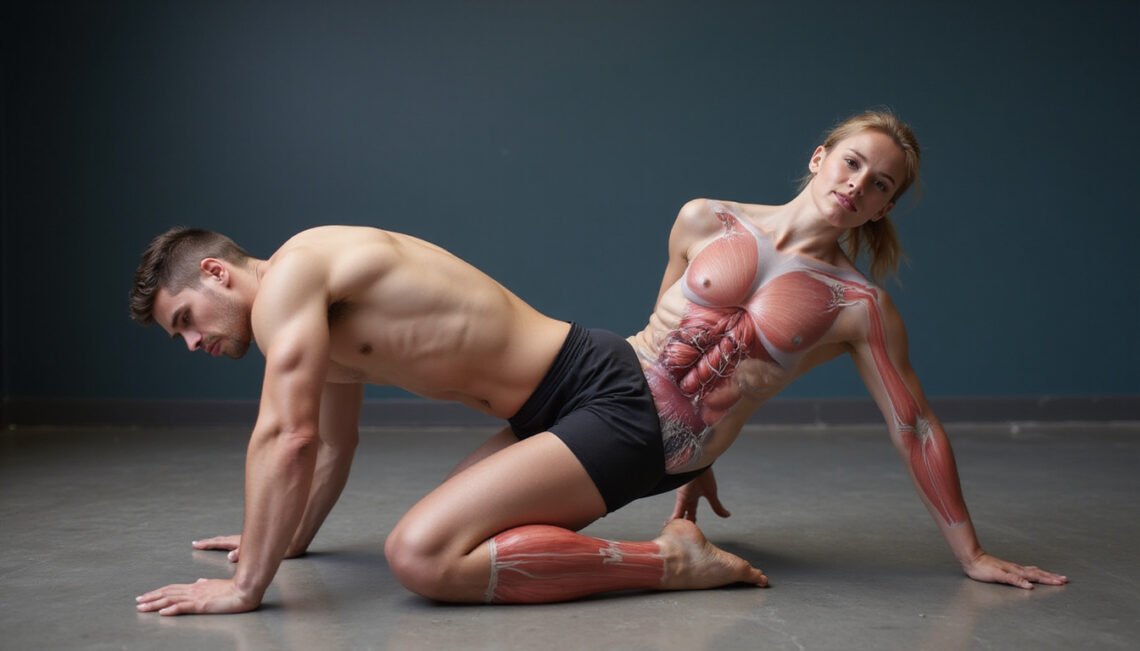
Glute Medius Exercises to Fix Hip Pain and Boost Performance
If you struggle with hip pain, knee discomfort, or a feeling of instability when you walk, run, or lift, your glute medius is almost certainly involved. This small but powerful muscle on the side of your hip plays a big role in stabilizing your pelvis, aligning your knees, and generating strength in athletic movements. Training it properly can reduce pain, improve posture, and boost overall performance.
Below, you’ll learn what the glute medius does, why it matters, and the most effective glute medius exercises to build strength, stability, and power—plus how to put them into a simple, practical program.
What Is the Glute Medius and Why It Matters
The glute medius is one of the three main glute muscles (along with the glute maximus and glute minimus). It sits on the outer side of your hip, attaching from the ilium (pelvis) to the greater trochanter of the femur (thigh bone).
Key roles of the glute medius
- Hip abduction – moves your leg out to the side.
- Pelvic stability – prevents your hip from dropping when you stand on one leg.
- Control of knee alignment – helps keep your knee from collapsing inward (valgus).
Because of these functions, a weak or poorly functioning glute medius is commonly associated with:
- Lateral hip pain
- Iliotibial band (IT band) issues
- Knee pain, especially in runners and lifters
- Lower back discomfort from compensations
Research has shown that targeted hip abductor strengthening, which focuses heavily on the glute medius, can reduce pain and improve function in people with various knee and hip problems (source: Journal of Orthopaedic & Sports Physical Therapy).
Signs Your Glute Medius Might Be Weak
You don’t need a full lab test to suspect glute medius weakness. Common signs include:
- Hip drop when walking or running – one hip sinks lower when the opposite foot swings forward.
- Knees caving inward during squats, lunges, or landing from jumps.
- Pain or fatigue on the outer hip during standing or walking.
- Single-leg weakness – difficulty balancing on one leg or performing single-leg exercises.
If these sound familiar, targeted glute medius exercises can help realign your movement patterns and offload stressed joints.
Principles for Effective Glute Medius Training
Before jumping into the exercises, keep these training principles in mind:
-
Start with activation, then build strength.
Begin with low-load exercises that help you feel and recruit the glute medius, then progress to heavier, compound moves. -
Train in multiple positions.
Side-lying, quadruped, standing, and single-leg exercises each challenge the glute medius differently. -
Control your form.
The glute medius is easily overshadowed by larger muscles. Use slow, controlled reps to avoid compensating with your lower back or hip flexors. -
Progress gradually.
Increase resistance, complexity, or range of motion as you get stronger, not all at once.
Best Glute Medius Activation Exercises
These are ideal as a warm-up or for beginners dealing with pain or instability.
1. Side-Lying Hip Abduction
Why it works: It isolates the glute medius without requiring a lot of balance or load.
How to do it:
- Lie on your side, bottom leg bent, top leg straight.
- Stack your hips and shoulders (don’t roll backward).
- Flex your top foot and lift the leg about 30–45 degrees.
- Pause, then lower under control.
Sets/Reps: 2–3 sets of 12–15 reps per side.
Tips:
- Keep your toes pointing forward or slightly down—not flaring up.
- You should feel the side of your hip working, not your lower back.
2. Clamshells
Why it works: Targets the posterior fibers of the glute medius and helps reduce knee valgus.
How to do it:
- Lie on your side with hips and knees bent about 45 degrees.
- Keep feet together and open your top knee like a clam shell.
- Don’t let your hip roll backward.
- Slowly lower the knee back down.
Sets/Reps: 2–3 sets of 15–20 reps per side.
Progression: Add a resistance band around your knees.
3. Quadruped Fire Hydrants
Why it works: Adds core demand and mimics more functional positions.
How to do it:
- Start on all fours, hands under shoulders, knees under hips.
- Keeping your knee bent at 90 degrees, lift one knee out to the side.
- Pause at the top, then lower with control.
Sets/Reps: 2–3 sets of 10–15 reps per side.
Tip: Keep your weight evenly distributed; don’t lean away from the working leg.
Strength-Building Glute Medius Exercises
Once you can activate the glute medius easily, move on to stronger, more functional exercises.
4. Banded Lateral Walks
Why it works: Trains the glute medius to stabilize the pelvis during side-to-side movement.
How to do it:
- Place a resistance band around your ankles or just above the knees.
- Stand with feet hip-width apart, knees slightly bent, hips back.
- Step sideways with one foot, then bring the other foot in without letting the band snap together.
- Maintain tension in the band the entire time.
Sets/Reps: 2–3 sets of 10–15 steps each direction.
Tips:
- Keep your torso upright and hips level.
- Don’t let the knees cave inward.
5. Single-Leg Glute Bridge
Why it works: Builds unilateral hip extension strength and pelvic stability.
How to do it:
- Lie on your back with knees bent, feet flat.
- Extend one leg straight out, keeping thighs aligned.
- Drive through the heel of the planted foot to lift your hips.
- Squeeze your glutes at the top, then lower down slowly.
Sets/Reps: 2–3 sets of 8–12 reps per leg.
Tip: Keep your pelvis level; don’t let one side drop.

6. Curtsy Lunge
Why it works: Hits the glute medius through hip adduction and rotation control.
How to do it:
- Stand tall with feet hip-width apart.
- Step one leg back and across behind the front leg, as if doing a curtsy.
- Bend both knees, lowering into a lunge.
- Push through the front heel to return to the start.
Sets/Reps: 2–3 sets of 8–10 reps per side.
Tip: Keep your front knee tracking in line with your toes, not collapsing inward.
Performance-Focused Glute Medius Exercises
These exercises mimic athletic movement patterns and are excellent for runners, lifters, and field-sport athletes.
7. Single-Leg Romanian Deadlift (RDL)
Why it works: Challenges balance, hip hinge mechanics, and lateral hip stability at once.
How to do it:
- Stand on one leg, soft bend in the knee.
- Hinge at the hips, sending your free leg back as your torso leans forward.
- Keep your back flat and hips square to the ground.
- Return to standing by driving through your heel and squeezing your glutes.
Sets/Reps: 3 sets of 6–10 reps per leg (hold dumbbells or a kettlebell to progress).
Tip: Move slowly; this is about control, not speed.
8. Lateral Lunge
Why it works: Trains the glute medius to decelerate and push laterally—key in most sports.
How to do it:
- Stand tall with feet hip-width apart.
- Step out to the side, bending the stepping knee and sitting back into your hip.
- Keep the other leg straight, foot flat.
- Push off the working leg to return to center.
Sets/Reps: 3 sets of 8–12 reps per side.
Tip: Keep your chest up and weight in the heel of the working leg.
9. Skater Hops (Lateral Bounds)
Why it works: Adds power and dynamic stability training to the glute medius.
How to do it:
- Start standing on one leg.
- Jump sideways to the other leg, landing softly and bending the knee.
- Control the landing, stabilize, then bound back.
Sets/Reps: 2–3 sets of 8–12 hops per side.
Tip: Focus on quiet landings and knee tracking; don’t rush the movement.
Sample Weekly Glute Medius Program
Here’s a simple structure to consistently build your glute medius without overcomplicating things.
Perform these 2–3 times per week:
-
Activation (warm-up)
- Clamshells – 2 × 15/side
- Side-lying hip abduction – 2 × 12–15/side
-
Strength
- Banded lateral walks – 2–3 × 10–15 steps each way
- Single-leg glute bridge – 2–3 × 8–12/leg
-
Performance / Functional
- Single-leg RDL – 3 × 6–10/leg
- Lateral lunge – 3 × 8–10/side
-
Optional power (for athletes)
- Skater hops – 2 × 8–10/side
You can integrate this into your lower-body days or use a shorter version as a warm-up before running or lifting.
Common Mistakes When Training the Glute Medius
Avoid these errors to get the most from your work:
- Letting your hips roll or twist during side-lying movements.
- Allowing your knees to cave inward on squats, lunges, or landings.
- Overusing the lower back instead of feeling the outer hip doing the work.
- Going too heavy, too soon, which leads to compensations and poor form.
- Skipping single-leg work, even though the glute medius is most critical on one-leg tasks.
Focus on clean movement and mind-muscle connection; the load can increase once technique is consistent.
Quick Checklist: Are You Hitting Your Glute Medius Well?
Use this list to make sure your routine supports healthy, strong lateral hips:
- [ ] I include at least one isolation activation exercise (clamshells, side-lying abduction).
- [ ] I do banded lateral work weekly (lateral walks, monster walks).
- [ ] I train single-leg patterns like RDLs, lunges, or single-leg bridges.
- [ ] I pay attention to knee alignment (no caving in).
- [ ] I progress load or difficulty gradually over time.
FAQ: Glute Medius Training and Hip Pain
1. What are the best exercises for gluteus medius weakness?
Some of the best options for gluteus medius weakness are clamshells, side-lying hip abductions, banded lateral walks, and single-leg bridges. Once you can perform those comfortably, progress to single-leg Romanian deadlifts and lateral lunges to build strength in more functional, athletic patterns.
2. Can glute medius exercises help knee and lower back pain?
Yes, in many cases. A weak glute medius can cause your knees to fall inward and your pelvis to tilt or rotate excessively, which increases stress on the knee and lumbar spine. Strengthening the glute medius improves alignment and load distribution, which often reduces knee and lower back pain when combined with proper technique and an overall balanced program.
3. How often should I train the gluteus medius for results?
Training the gluteus medius 2–3 times per week is ideal for most people. You don’t need long sessions—10–20 focused minutes per session can be enough. Consistency over several weeks is more important than a single hard workout. As symptoms improve, keep a few glute medius exercises in your regular routine to maintain strength and stability.
Take Action: Build Stronger Hips, Less Pain, and Better Performance
You don’t have to live with nagging hip or knee pain, or feel wobbly on one leg. The glute medius is a small muscle with a huge impact on how you move, lift, and perform. By integrating targeted activation, strength, and functional exercises into your routine, you can stabilize your hips, support your knees, and unlock more power in every stride and rep.
Start by picking three or four of the exercises above and add them to your next lower-body workout or warm-up. Track your progress weekly, and as your control and strength improve, progress to the more advanced movements. If pain is significant or persistent, pair these exercises with guidance from a qualified physical therapist or coach for a tailored plan.
Begin today—your future self, with stronger hips and better performance, will thank you.