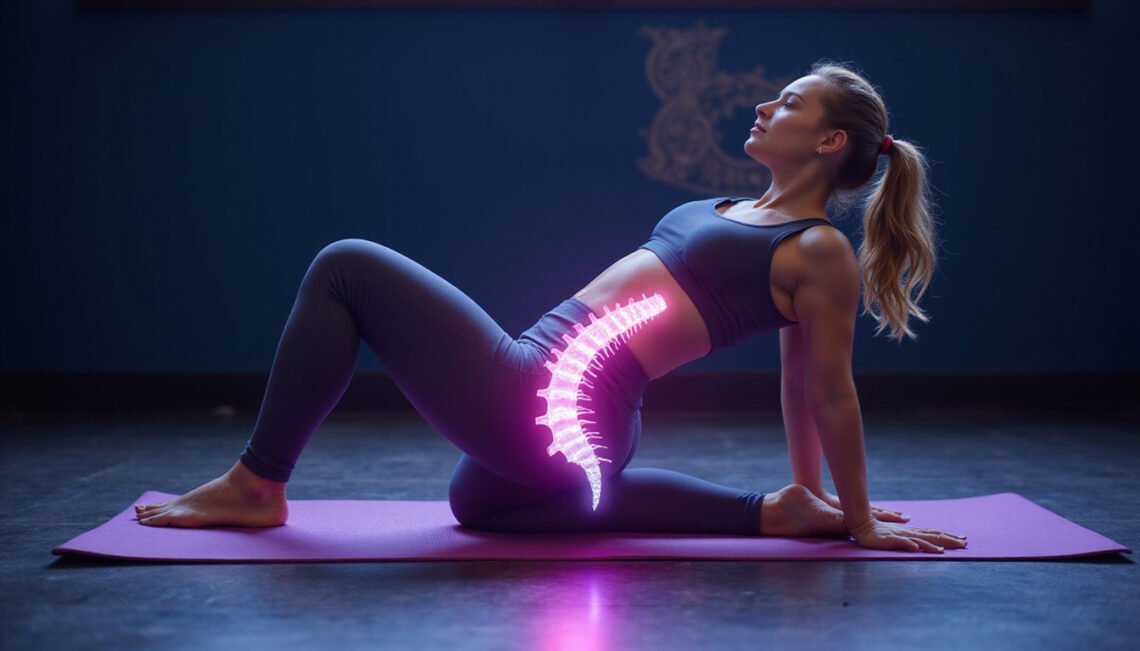
Lumbar Lordosis: 10 Proven Exercises to Fix Your Posture
If you spend long hours sitting or standing, you may have noticed your lower back curving inward more than it should. That exaggerated inward curve in the lower spine is known as lumbar lordosis. While some curvature is normal and necessary, too much can lead to back pain, tightness, and posture problems. The good news: with targeted exercises, stretching, and mindful posture habits, you can often reduce excessive lumbar lordosis and feel more stable and comfortable.
Below you’ll find 10 proven exercises to help correct your posture, along with practical tips for getting results safely.
What Is Lumbar Lordosis?
Your spine naturally has three main curves: in the neck (cervical), upper back (thoracic), and lower back (lumbar). Lumbar lordosis refers to the inward curve of the lower spine. A normal lumbar lordotic curve helps absorb shock and keep you upright.
Problems arise when the curve is:
- Too exaggerated (hyperlordosis) – often described as “swayback” or “an arched lower back”
- Associated with weak core and glutes, and tight hip flexors and lower back muscles
Common causes include:
- Prolonged sitting
- Poor posture (standing with hips pushed forward, chest flared)
- Weak abdominal and glute muscles
- Tight hip flexors and lower back
- Obesity or pregnancy
- Certain structural conditions
Symptoms can range from mild discomfort to chronic low back pain, hip pain, and fatigue from standing or walking.
How Exercise Helps Correct Lumbar Lordosis
To improve lumbar lordosis posture, you need to address muscle imbalances:
- Strengthen: deep core stabilizers, abdominals, glutes, hamstrings
- Stretch/lengthen: hip flexors, lower back, sometimes quads
- Improve awareness: learn what a neutral spine feels like and practice it
Exercise cannot change your spinal bones, but it can significantly change how your pelvis and spine are positioned and controlled, which often reduces pain and improves alignment (source: American Academy of Orthopaedic Surgeons).
Before You Start: Safety Tips
- Consult a professional if you have severe pain, numbness, tingling, known spinal conditions, or recent injury.
- Move within comfort – you should feel stretching or working muscles, not sharp pain.
- Start slow – 2–3 sessions per week, increasing as tolerated.
- Focus on quality – precise form matters more than reps.
10 Proven Exercises to Improve Lumbar Lordosis
These exercises are grouped into activation/awareness, stretching, and strengthening. Aim to perform most of them 3–4 times per week.
1. Pelvic Tilt (Supine)
Goal: Learn neutral pelvis and gently strengthen deep core.
- Lie on your back with knees bent, feet flat, hip-width apart.
- Notice the small space under your lower back.
- Exhale and gently draw your belly button toward your spine.
- Flatten your lower back slightly toward the floor by tilting your pelvis backward (imagine your tailbone tucking).
- Hold 5–10 seconds while breathing normally.
- Relax and return to the starting position.
Reps: 10–15
This trains you to reduce excessive arching and is foundational for correcting lumbar lordosis.
2. Dead Bug
Goal: Strengthen deep core while maintaining a neutral spine.
- Lie on your back, knees bent to 90°, hips bent to 90° (tabletop), arms straight up toward the ceiling.
- Engage your core as in the pelvic tilt, keeping the lower back gently against the floor.
- Slowly extend your right arm overhead and your left leg straight out (without touching the floor).
- Keep your lower back stable—no arching.
- Return to start and alternate sides.
Reps: 6–10 per side
Keep movements slow and controlled. Stop if your lower back starts to lift significantly.
3. Glute Bridge
Goal: Strengthen glutes and hamstrings, reduce reliance on lower back.
- Lie on your back with knees bent and feet hip-width apart, close to your glutes.
- Engage your core and perform a small pelvic tilt.
- Press through your heels to lift your hips until your body forms a straight line from shoulders to knees.
- Squeeze your glutes at the top; avoid over-arching the lower back.
- Hold 2–3 seconds, then lower slowly.
Reps: 10–15
Stronger glutes help control pelvic position and counter an exaggerated lumbar curve.
4. Plank (Modified or Full)
Goal: Build endurance in core stabilizers.
Modified plank:
- Start on hands and knees.
- Walk your knees back until your body forms a straight line from shoulders to knees.
- Engage your core, gently tuck your pelvis so your lower back isn’t sagging.
- Hold 15–30 seconds.
Full plank:
- Start on hands and toes, or forearms and toes.
- Keep shoulders, hips, and ankles in line.
- Avoid letting your stomach drop or your butt rise.
- Maintain a slight tuck of the pelvis.
Sets: 2–3 holds, rest between
Good core endurance helps keep lumbar lordosis in check during daily activities.
5. Bird Dog
Goal: Improve spinal stability and coordination of core, glutes, and back.
- Start on all fours (hands under shoulders, knees under hips).
- Brace your core; keep your spine in a neutral, straight line.
- Extend your right arm forward and left leg straight back.
- Avoid letting your lower back arch or your hips twist.
- Hold 3–5 seconds, then return and switch sides.
Reps: 8–10 per side

This teaches your spine to stay stable while limbs move—a key skill for posture correction.
6. Hip Flexor Stretch (Half-Kneeling)
Goal: Lengthen tight hip flexors that pull the pelvis into an anterior tilt, increasing lumbar lordosis.
- Kneel on your right knee, left foot flat in front, knee bent at 90°.
- Keep your torso upright, core engaged.
- Gently tuck your pelvis under (posterior tilt)—you should feel a stretch in the front of your right hip.
- Gently shift your weight forward without arching your back.
- Hold 30–45 seconds, switch sides.
Sets: 2–3 per side
Be sure the stretch comes from the hip, not by leaning your back into a deeper arch.
7. Child’s Pose
Goal: Gently stretch lower back and encourage a more flexed, lengthened spine.
- Kneel on the floor, big toes touching, knees apart.
- Sit back onto your heels and walk your hands forward.
- Let your chest lower toward the floor, forehead resting on the ground or a pillow.
- Breathe slowly, focusing on expanding your lower back.
Hold: 30–60 seconds, repeat 2–3 times
This can be a great counter-position if you’ve been in an extended lumbar posture all day.
8. Hamstring Stretch (Supine)
Goal: Improve hamstring flexibility, which helps pelvis alignment for some people.
- Lie on your back with one leg extended on the floor.
- Loop a strap or towel around the ball of your other foot.
- Keeping a slight bend in the knee, slowly raise the leg until you feel a gentle stretch in the back of the thigh.
- Keep your lower back neutral (do not force it flat or arched).
Hold: 20–30 seconds, 2–3 times per leg
Avoid bouncing; move into the stretch and hold.
9. Wall Slide / Wall Posture Drill
Goal: Improve postural awareness and strengthen upper back, encouraging alignment throughout the spine.
- Stand with your back against a wall: heels 2–4 inches away, buttocks, upper back, and head lightly touching.
- Find a comfortable, neutral lumbar position (a small natural curve, not pressed flat or overly arched).
- Bring your arms up to a “goalpost” position with elbows and wrists against the wall.
- Slowly slide your arms up overhead as far as you can without arching your lower back or letting ribs flare up.
- Lower back down.
Reps: 8–12
This reinforces what “good posture” feels like and helps tie upper and lower body posture together.
10. Standing Posterior Pelvic Tilt Practice
Goal: Translate core and pelvic control into your everyday standing posture.
- Stand with feet hip-width apart.
- First, exaggerate your arch (anterior tilt) slightly so you feel the curve; then reverse it by gently tucking your tailbone under (posterior tilt).
- Move slowly between the two extremes a few times to feel the motion.
- Then settle into the middle—your neutral pelvis.
- Hold neutral while gently engaging your core and glutes.
Practice: 5–10 slow tilts, then hold neutral for 20–30 seconds, a few times per day
This simple awareness exercise helps you correct lumbar lordosis in real time while standing in lines, cooking, or commuting.
Sample Weekly Routine for Lumbar Lordosis
A basic structure you can follow:
- 3–4 days per week
- Pelvic Tilt – 1–2 sets
- Dead Bug – 1–2 sets
- Glute Bridge – 2 sets
- Bird Dog – 2 sets
- Plank (mod/full) – 2–3 holds
- Hip Flexor Stretch – 2–3 sets per side
- Hamstring Stretch – 2–3 sets per side
- Child’s Pose – 2–3 holds
- Daily
- Wall posture drill – 1 set
- Standing pelvic tilt practice – a few minutes sprinkled through the day
Everyday Habits to Support Better Lumbar Alignment
Correcting lumbar lordosis isn’t only about exercise. Small daily changes amplify your progress:
- Adjust your chair: Hips slightly higher than knees, feet flat, back supported, monitor at eye level.
- Avoid high heels: They shift your weight forward and can increase lumbar curve.
- Change positions often: Stand, walk, or stretch every 30–60 minutes of sitting.
- Sleep smart: Side or back sleeping with a pillow under knees (back) or between knees (side) can reduce stress on the lower back.
- Strength train sensibly: When lifting weights, keep a neutral spine and avoid exaggerated arching of the lower back, especially in overhead or squat movements.
FAQ: Lumbar Lordosis and Posture
1. Can exercises really fix lumbar lordosis?
Exercises can’t change the shape of your vertebrae, but they can significantly improve how your pelvis and spine are positioned and supported. By strengthening your core and glutes and stretching tight hip flexors and lower back muscles, many people see reduced exaggerated curvature, less pain, and better posture.
2. How long does it take to correct hyperlordosis in the lumbar spine?
It depends on the cause and severity of your lumbar lordosis, plus your consistency. Some people notice improvements in comfort and awareness within a few weeks of regular exercise, while visible postural changes may take 8–12 weeks or longer. Structural conditions (like spondylolisthesis or congenital issues) may require medical guidance and may not fully “correct,” but can often be managed.
3. Is lumbar lordosis always bad and does it need treatment?
No. A certain amount of lumbar lordosis is normal and healthy. It only becomes a problem when it’s exaggerated, causes pain, or affects movement and function. If your lower back curve looks pronounced, you have persistent discomfort, or your posture seems “swayed,” it’s wise to work on the exercises above and consider an evaluation by a physical therapist or healthcare provider.
Take Action: Start Improving Your Posture Today
You don’t have to live with constant tightness, discomfort, or self-consciousness about your posture. With consistent practice of these 10 exercises, you can strengthen the right muscles, release the tight ones, and gradually bring excessive lumbar lordosis closer to a healthy, supported curve.
Begin with just a few exercises today—pelvic tilts, glute bridges, and hip flexor stretches—and build from there. If you want more personalized guidance, consider working with a qualified physical therapist or movement specialist who can tailor a plan to your body.
Your spine supports you every day. Invest a few minutes regularly, and you can stand taller, move more freely, and protect your back for the long term.