
If you spend long hours at a desk, on a phone, or driving, chances are your posture has slipped over time—often without you noticing. A simple postural assessment can reveal the small imbalances that lead to neck stiffness, headaches, and chronic back pain. The good news: you don’t need complicated equipment or a full gym routine to start correcting these issues. With a few easy daily habits, you can align your body better, reduce pain, and move more comfortably.
Below, you’ll learn how to check your posture at home and 7 simple habits to help fix neck and back pain before it becomes a bigger problem.
Why Postural Assessment Matters for Neck and Back Pain
Posture is more than just “standing up straight.” It’s the way your bones, muscles, and joints line up when you sit, stand, and move. A postural assessment helps you identify patterns like:
- Forward head position (head jutting in front of your shoulders)
- Rounded upper back and shoulders
- Over-arched or flattened lower back
- Hips rotated or shifted to one side
These patterns increase strain on spinal joints, muscles, and discs. For example, every inch your head shifts forward can add the equivalent of 10–12 extra pounds of load on your neck and upper back (source: Cleveland Clinic). Over months and years, that can mean:
- Neck and shoulder tightness
- Mid- and lower-back pain
- Tension headaches
- Reduced mobility and energy
Understanding where your posture is off is the first step. The second is building small daily habits that gently nudge your body back into better alignment.
How to Do a Simple At-Home Postural Assessment
You don’t need a professional studio to get started. Here’s a quick DIY postural assessment you can do in minutes.
1. Wall Test
Stand with your back against a wall:
- Heels 2–3 inches from the wall
- Buttocks and upper back touching the wall
- Back of your head gently touching if comfortable
Check:
- Is it hard to get your head to the wall without tilting your chin up? That often means forward head posture.
- Is there a very large gap between your lower back and the wall? That can indicate an over-arched lower back.
- Do your shoulder blades rest evenly against the wall, or does one side feel tighter or higher?
2. Side-View Photo
Ask someone to take a side photo of you standing relaxed, or use a timer and tripod:
- Stand naturally, feet hip-width apart
- Look straight ahead, arms relaxed at sides
Draw an imaginary vertical line from:
- Ear
- Shoulder
- Hip
- Knee
- Ankle
Ideally, these points line up (or are close). If your head is far ahead of your shoulders, or your upper back is rounded, those are key areas to target with the habits below.
7 Easy Habits to Fix Neck and Back Pain
You don’t have to overhaul your life. Start with 1–2 habits and build up. Consistency beats intensity.
Habit 1: The 30–30 Movement Rule
Staying in one position too long—no matter how “perfect”—stresses your body. The 30–30 rule is simple:
- Every 30 minutes, move for at least 30 seconds.
You can:
- Stand up and stretch your arms overhead
- Roll your shoulders back 10 times
- Walk to get water
- Gently turn your head side to side
This resets muscle tension, boosts circulation, and prevents your “default” posture from stiffening into place.
Tip: Set a recurring reminder on your phone or smartwatch during work hours to make this automatic.
Habit 2: Desk Setup for Better Posture
A quick ergonomic check acts like a built-in daily postural assessment for desk workers. Adjust:
- Screen height: Top of the screen at (or slightly below) eye level. You shouldn’t have to tilt your head down or up.
- Distance: About an arm’s length away.
- Chair: Hips slightly higher than knees, with your buttocks back in the chair and your lower back supported by the backrest or a cushion.
- Feet: Flat on the floor (or on a footrest), not tucked under your chair.
- Keyboard & mouse: Close enough that elbows stay near your sides, wrists neutral (not bent up or down).
Even a well-set desk can’t fix everything, but it reduces constant strain that drives neck and back pain.
Habit 3: Chin Tucks for Forward Head Posture
Chin tucks are one of the most effective exercises to counteract forward head posture.
How to do it:
- Sit or stand tall. Imagine a string pulling the top of your head toward the ceiling.
- Gently draw your chin straight back (like making a double chin), without tipping your head up or down.
- Hold 3–5 seconds, feeling a mild stretch at the base of your skull.
- Relax and repeat 8–10 times.
Do this several times per day—at red lights, while waiting for coffee, or during work breaks.
Why it helps: Chin tucks re-train your deep neck flexor muscles, bringing your head back over your shoulders and reducing load on the neck and upper back.
Habit 4: Open Your Chest and Shoulders
Rounded shoulders and a hunched upper back are common findings in any postural assessment. Counter this with simple “opening” stretches.
Doorway chest stretch:
- Stand in a doorway, forearms on the doorframe, elbows about shoulder height.
- Step one foot forward and gently lean your chest through the doorway.
- Hold 20–30 seconds, breathing deeply.
- Repeat 2–3 times.
Seated shoulder opener:
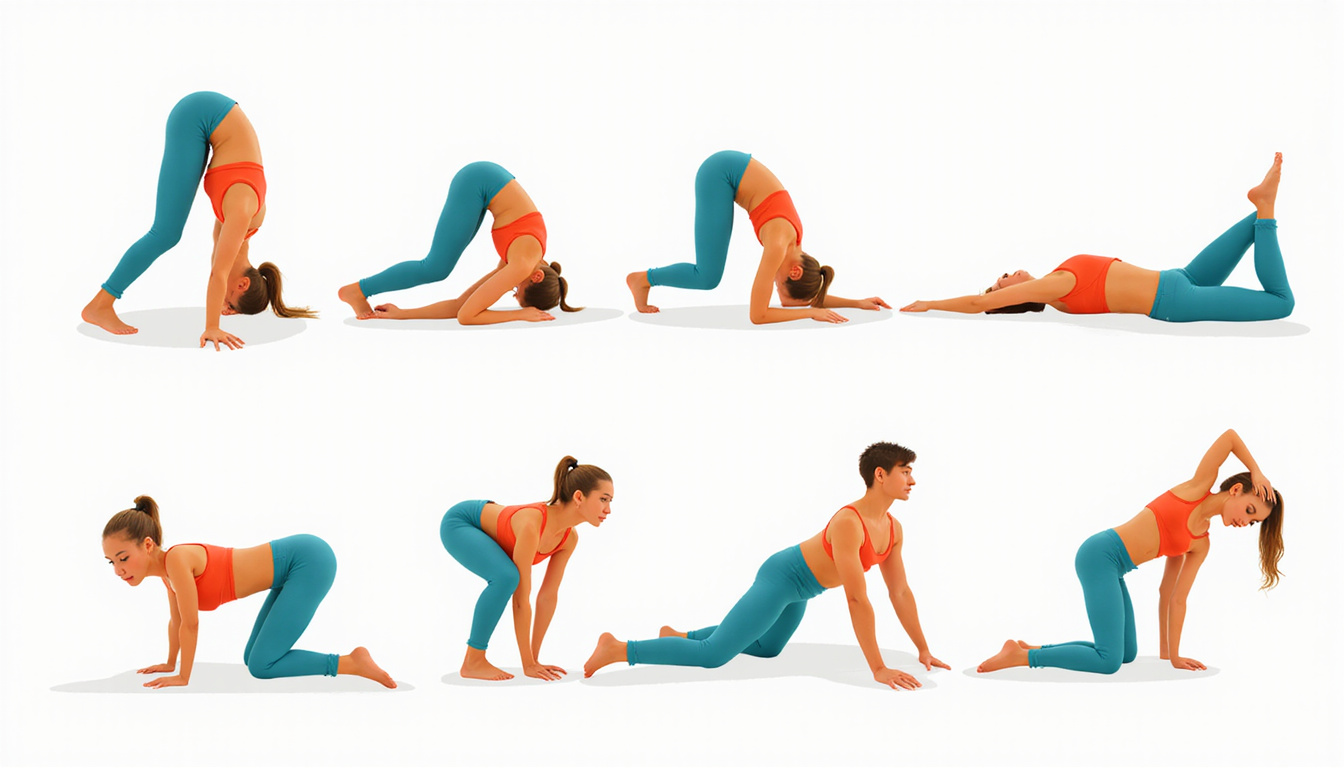
- Sit tall, clasp your hands behind your back (or hold a towel if your hands don’t reach).
- Gently straighten your arms and lift your chest as you draw your shoulder blades down and back.
- Hold 10–20 seconds.
Do these once or twice daily, especially after long computer or phone use. Over time, you’ll notice it becomes easier to sit and stand tall without forcing it.
Habit 5: Strengthen Your Core (Without Crunches)
Your core is more than abs—it’s the deep muscles around your spine, sides, and pelvis. Weak core muscles leave your back to do too much of the work.
Two simple core exercises:
-
Dead bug (beginner-friendly):
- Lie on your back, arms up toward the ceiling, knees bent to 90 degrees above hips.
- Tighten your core gently, flattening your lower back slightly into the floor.
- Slowly lower your right arm and left leg toward the floor without arching your back.
- Return to start and switch sides.
- Do 6–10 reps per side.
-
Modified plank:
- Start on hands and knees.
- Walk your knees back slightly and keep your hands under shoulders.
- Tighten your core and keep a straight line from head to knees.
- Hold for 15–30 seconds, rest, repeat 2–3 times.
A stronger core helps you maintain better posture with less effort, reducing both neck and lower back strain.
Habit 6: Upgrade How You Use Your Phone
“Text neck” is real. Looking down at your phone for hours each day is a major driver of neck and upper back pain.
Use this mini “tech posture” checklist:
- Hold your phone closer to eye level instead of in your lap.
- Rest elbows on armrests or a cushion to avoid shrugging shoulders.
- Use voice-to-text or calls for long messages.
- Take “phone breaks”: for every 10–15 minutes on your phone, look up and gently move your neck for 30 seconds.
Even small changes can reduce the cumulative load on your neck throughout the day.
Habit 7: Nighttime Reset: Sleep for Better Alignment
Posture doesn’t pause when you sleep. Poor sleep positions can undo daytime progress.
Better sleeping habits for neck and back:
- Back sleepers: Use a medium pillow that fills the gap between your neck and the mattress, without pushing your head too far forward. A small pillow or rolled towel under your knees can ease lower back strain.
- Side sleepers: Use a pillow that keeps your neck in a straight line with your spine (not tilted up or down). Place a pillow between your knees to keep hips and lower back aligned.
- Stomach sleeping: This heavily rotates your neck and arches your back. If possible, transition away from this position by starting on your side or back with supportive pillows.
Think of sleep as an 8-hour postural “reset.” Supporting your spine overnight lets muscles recover and reduces morning stiffness.
Simple Daily Postural Checklist
To keep your postural assessment top-of-mind, use this quick daily checklist:
- [ ] Did I move at least every 30 minutes while working?
- [ ] Is my screen at eye level and my feet flat on the floor?
- [ ] Did I do at least one set of chin tucks today?
- [ ] Did I stretch my chest and open my shoulders?
- [ ] Did I practice 1–2 core exercises?
- [ ] Did I use my phone at (or near) eye level most of the time?
- [ ] Did I set up my pillows for better sleep alignment?
You don’t have to check every box every day—but aiming for most of them most days will add up.
When to Seek Professional Help
While home strategies are powerful, there are times when you should see a professional for a more detailed postural assessment and treatment plan:
- Persistent neck or back pain lasting more than a few weeks
- Pain radiating into your arms or legs (numbness, tingling, or weakness)
- Severe or worsening headaches linked to neck tension
- Recent trauma, falls, or accidents
- Pain that interferes with sleep or daily tasks
A physical therapist, chiropractor, or other musculoskeletal specialist can assess your posture in detail, identify specific muscle imbalances, and give you targeted exercises.
FAQ: Postural Assessment and Pain Relief
Q1: How do you perform a clinical postural assessment?
In a clinical setting, a practitioner observes your posture from the front, side, and back. They’ll check head, shoulder, spine, hip, knee, and foot alignment, often using plumb lines or digital tools. They may also test muscle strength, flexibility, and joint mobility to see what’s contributing to your posture and pain.
Q2: Can a posture assessment really help neck pain?
Yes. Many types of neck pain are linked to forward head posture, rounded shoulders, or stiff upper-back segments. A focused neck and upper-back posture assessment reveals these patterns so your provider can prescribe specific stretches and strengthening exercises to relieve pressure on irritated joints, muscles, and nerves.
Q3: How often should I reassess my posture?
A quick home postural assessment every 4–6 weeks works well for most people. Take new photos from the side and back, compare with older ones, and notice changes in head position, shoulder height, and spinal curves. If you’re in rehab or have significant pain, your provider may reassess more frequently to track progress.
Start Your Posture Reset Today
Neck and back pain rarely appear out of nowhere—they usually build up from small, repeated postural stresses over time. The flip side is encouraging: small, repeated corrections can also reverse much of that damage.
Use a simple postural assessment to spot where your alignment is off, then choose just 2–3 of the habits above to start this week. As those become automatic, layer in more. In a few weeks, you can feel noticeably less tension, move more freely, and sit or stand taller without constant effort.
If pain is already limiting your life, don’t wait. Reach out to a qualified physical therapist or posture specialist and bring this guide with you. Together, you can create a clear, personalized plan to correct your posture, protect your spine, and get back to doing what you love—without being held back by neck and back pain.