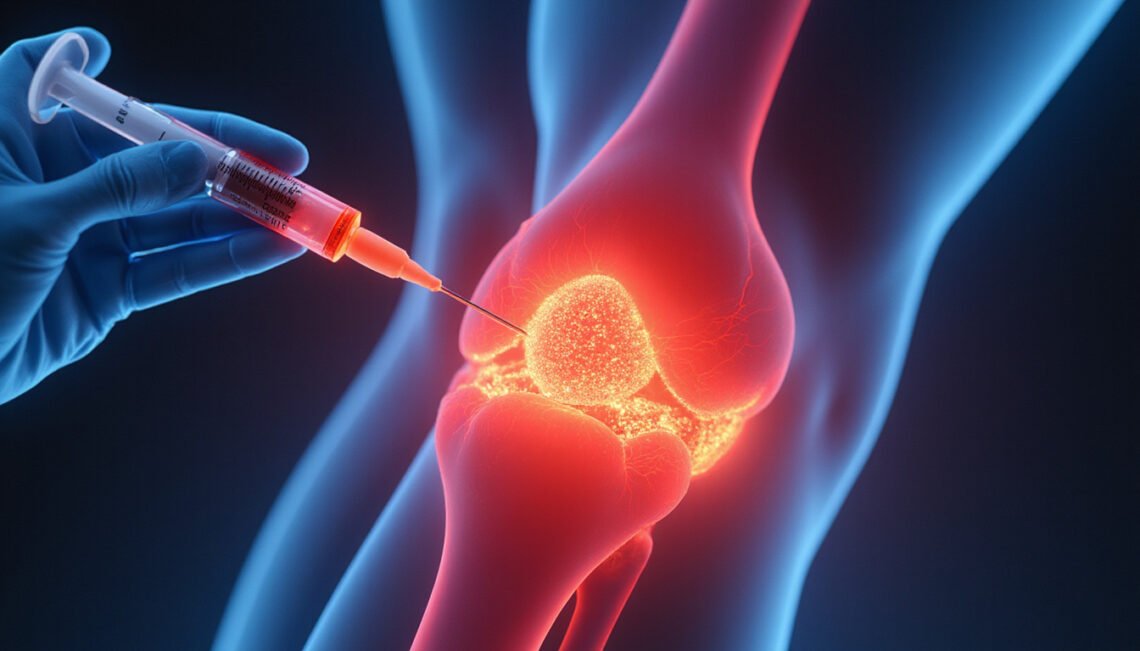
Platelet-rich plasma (PRP) injection has become a popular treatment for sports injuries, joint pain, hair loss, and even skin rejuvenation. You might have heard of athletes or celebrities getting PRP injections to speed up healing or improve appearance, but understanding what it actually is—and whether it’s right for you—can be confusing. This guide breaks down how a PRP injection works, its benefits, potential side effects, and what to expect before and after treatment.
What Is a PRP Injection?
A PRP injection is a treatment that uses a concentrated portion of your own blood—specifically platelets—to promote healing in injured or aging tissues.
Key components:
- Plasma – the liquid part of your blood, made mostly of water and proteins.
- Platelets – tiny blood cells that help with clotting and contain growth factors that signal your body to repair tissue.
In a PRP injection, your blood is drawn, spun in a machine called a centrifuge to separate the components, and the platelet-rich portion is then injected into a targeted area such as a joint, tendon, scalp, or facial skin.
Because PRP uses your own blood, it’s considered an autologous therapy—meaning it comes from you and goes back into you.
How Does a PRP Injection Work?
The main idea behind PRP is to amplify your body’s natural healing process.
Step-by-step process
-
Blood draw
A small amount of blood is taken from your arm, similar to a standard lab test. -
Centrifugation
The blood is placed in a centrifuge that spins it at high speed. This separates:- Red blood cells
- White blood cells
- Platelet-poor plasma
- Platelet-rich plasma
-
Preparing the PRP
The clinician collects the platelet-rich plasma, which now contains a high concentration of platelets and growth factors. -
Injection into the target area
Using a needle—and often ultrasound guidance for precision—the PRP is injected into the tissue that needs healing (such as an arthritic knee, chronic tendon injury, or scalp for hair loss). -
Healing response
Once injected, the platelets release growth factors and signaling proteins that:- Attract healing cells
- Stimulate tissue repair
- Support new blood vessel formation
- Reduce inflammation over time
These effects don’t work like a painkiller that acts instantly; instead, a PRP injection aims to improve tissue quality over weeks to months.
Conditions Commonly Treated with PRP Injections
PRP is used across several areas of medicine. While research is ongoing, it has shown promise in the following:
1. Orthopedic and Sports Injuries
Many people seek a PRP injection for musculoskeletal problems, including:
- Tennis elbow (lateral epicondylitis)
- Golfer’s elbow
- Patellar tendonitis (jumper’s knee)
- Plantar fasciitis
- Achilles tendinopathy
- Rotator cuff injuries
- Mild to moderate osteoarthritis, especially in the knee
Some studies suggest PRP can reduce pain and improve function in knee osteoarthritis and certain chronic tendon injuries when conservative measures haven’t helped (source: American Academy of Orthopaedic Surgeons).
2. Hair Restoration
In dermatology, PRP injection is used on the scalp to help with:
- Androgenetic alopecia (male or female pattern baldness)
- Thinning hair
The goal is to stimulate hair follicles, encouraging thicker, stronger hair growth over a series of sessions.
3. Skin Rejuvenation (“Vampire Facial”)
Facial PRP treatments may involve:
- Injecting PRP into targeted areas
- Applying PRP topically after microneedling
People seek this for:
- Fine lines and wrinkles
- Acne scarring
- Overall skin texture and tone
4. Post-Surgical Healing
Some surgeons use PRP during or after surgery (e.g., orthopedic or dental procedures) to potentially support healing and reduce recovery time, though evidence is mixed and varies by procedure.
Benefits of PRP Injections
Not everyone will experience the same results, but potential benefits of a PRP injection include:
Natural, Autologous Treatment
Because PRP uses your own blood, there is:
- No risk of immune rejection
- Very low risk of disease transmission
- Minimally invasive approach compared with surgery
Potential for Long-Term Relief
Instead of just numbing pain like a local anesthetic or temporarily reducing inflammation like a steroid injection, a PRP injection aims to:
- Promote actual tissue repair
- Improve structural quality of tendons or cartilage (where possible)
- Deliver improvements that may last months or longer
Reduced Reliance on Medications
For some patients, successful PRP treatment can:
- Lower the need for anti-inflammatory drugs
- Delay or reduce the need for more invasive procedures, like joint replacement (particularly in early to moderate arthritis)
Versatility Across Body Areas
A PRP injection can be tailored for:
- Joints (knee, shoulder, hip, ankle)
- Tendons and ligaments
- Scalp and hair follicles
- Skin and soft tissues
What to Expect Before, During, and After a PRP Injection
Before the Procedure
Your clinician will typically:
- Review your medical history, medications, and allergies
- Examine the area and possibly order imaging (e.g., ultrasound, MRI, X-ray)
- Discuss realistic expectations and number of sessions
You may be asked to:
- Avoid NSAIDs (like ibuprofen, naproxen) for several days before and after, as they can interfere with the inflammatory-healing response.
- Stay well-hydrated and have a light meal beforehand.
During the Procedure
Typical appointment time: 30–60 minutes.
- Blood draw from your arm
- Centrifuge processing (10–20 minutes)
- Injection into the target area, sometimes under ultrasound guidance
- Local anesthetic may be used to reduce discomfort, depending on location
Pain levels vary, but most people tolerate a PRP injection well. Some areas (like the scalp or certain tendons) can be more sensitive.
After the Procedure
Immediately after a PRP injection, you may notice:
- Mild to moderate pain or soreness
- Swelling or warmth in the area
- Feeling of “fullness” in a joint
These effects generally peak within 2–3 days and then settle.
Recovery tips:
- Rest the treated area for the first 24–48 hours.
- Avoid heavy exercise or high-impact activities for a few days, as directed.
- Apply ice packs briefly if recommended by your clinician.
- Do not take NSAIDs (unless your provider specifically allows them); acetaminophen is usually acceptable.
Your provider may suggest a gradual return to activity and possibly physical therapy to maximize results.
How Many PRP Injections Are Needed?
This varies depending on what’s being treated:
- Tendon or ligament injuries: Often 1–3 PRP injections spaced 4–6 weeks apart.
- Knee osteoarthritis: Commonly 2–3 injections separated by several weeks.
- Hair loss: Frequently a series of 3–6 sessions spaced about 4–6 weeks apart, followed by maintenance treatments.
- Skin rejuvenation: Usually a series of sessions combined with microneedling or other treatments.
Improvement may begin within a few weeks but often continues to develop over 3–6 months as tissues remodel and heal.
Risks and Side Effects of PRP Injection
Even though a PRP injection is generally considered safe, it is still a medical procedure and carries some risks.
Common, Temporary Side Effects
These usually resolve in a few days:
- Pain or tenderness at the injection site
- Swelling or stiffness
- Bruising
- Temporary worsening of symptoms
These reactions are part of the inflammatory response that PRP aims to stimulate.
Less Common Risks
Though rare, more serious complications can include:
- Infection at the injection site
- Nerve injury if a nerve is accidentally irritated or damaged
- Tissue damage or bleeding, particularly in people with bleeding disorders
- Allergic reaction – usually to antiseptics, local anesthetics, or other materials, not the PRP itself
Who Should Avoid PRP?
A PRP injection may not be suitable if you have:
- Active infection (local or systemic)
- Certain blood disorders or very low platelet counts
- Uncontrolled diabetes or severe metabolic conditions
- Active cancer in or near the treatment area
- Ongoing use of blood thinners that cannot be safely paused
Always discuss your full medical history, including medications and supplements, with your doctor before treatment.
How Effective Are PRP Injections?
Effectiveness varies depending on:
- The condition treated (e.g., chronic tendinopathy vs. advanced osteoarthritis)
- The severity and duration of the problem
- The PRP preparation method (platelet concentration, presence of white cells, volume injected)
- The skill and experience of the clinician
- Your overall health, activity level, and lifestyle
Research is more supportive for:
- Chronic tendon injuries (like tennis elbow, some cases of plantar fasciitis)
- Mild to moderate knee osteoarthritis
- Androgenetic alopecia (pattern hair loss) in early stages
For advanced arthritis, major structural damage, or complete tendon tears, a PRP injection is less likely to reverse the issue, though it may offer some symptom relief in selected cases.
Because evidence is still evolving and not all studies show the same level of benefit, PRP should usually be considered one part of a comprehensive treatment plan, not a miracle cure.
Cost and Insurance Coverage
Costs for a PRP injection can vary widely depending on:
- Your location and clinic
- Area being treated (joint vs. scalp vs. face)
- Number of sessions required
- Additional services (e.g., imaging guidance, microneedling)
In many places, PRP is considered experimental or not fully standard of care, so insurance companies often do not cover it, meaning you may pay out of pocket.
Before proceeding, ask:
- Total estimated cost per injection and per treatment course
- What is included (e.g., follow-up visits, imaging, additional therapies)
- Payment options or package pricing
Quick Pros and Cons of PRP Injections
Pros:
- Uses your own blood; low risk of rejection
- Minimally invasive
- May promote real tissue healing rather than short-term masking of pain
- Applicable to many conditions (joints, tendons, hair, skin)
Cons:
- Out-of-pocket cost can be high
- Evidence is mixed for certain conditions
- Results are not guaranteed and can be gradual
- Multiple PRP injections may be necessary
FAQ About PRP and Platelet-Rich Plasma Treatments
1. How long does a PRP injection last for joint pain?
Duration of benefit varies. Many patients with mild to moderate arthritis experience relief for 6–12 months, sometimes longer, after a series of PRP injections. Others may notice only modest or short-lived improvement. The underlying degeneration often still progresses, so repeat treatments or other therapies might be needed.
2. Are PRP therapy and platelet-rich plasma injections the same thing?
Yes. “PRP therapy,” “PRP treatment,” and “platelet-rich plasma injection” usually refer to the same procedure: drawing your blood, concentrating the platelets, and reinjecting that concentrate into a targeted area. The exact preparation methods, however, can differ significantly between clinics.
3. Is a PRP shot painful, and how long is the recovery?
Pain during a PRP shot depends on the injection site and your individual sensitivity. Most people feel brief, sharp discomfort that fades quickly. Some soreness and swelling for a few days is common. Most patients return to light daily activities within 24–48 hours, with full return to sports or heavy exercise guided by their clinician over the following days to weeks.
Considering a PRP Injection? Take the Next Step
If you’re dealing with stubborn joint pain, a nagging tendon injury, thinning hair, or skin concerns that haven’t responded to standard treatments, a PRP injection may be a worthwhile option to explore. The key is working with a knowledgeable, experienced provider who can honestly assess whether platelet-rich plasma makes sense for your specific condition, set realistic expectations, and integrate PRP into a broader, personalized treatment plan.
Schedule a consultation with a qualified orthopedic specialist, sports medicine doctor, dermatologist, or aesthetic clinician who regularly performs PRP injections. Bring your questions, discuss your goals, and review the potential benefits and risks together so you can make a confident, informed decision about whether PRP therapy is right for you.