If you’re dealing with discomfort around the lower back and hips, the sacroiliac joint is a likely suspect. The sacroiliac joint connects your spine to your pelvis, and when it becomes irritated or unstable it can cause sharp, aching, or radiating pain. This guide gives practical, expert-backed exercises and fast home fixes you can use today to ease symptoms and restore function.
How the sacroiliac joint causes pain
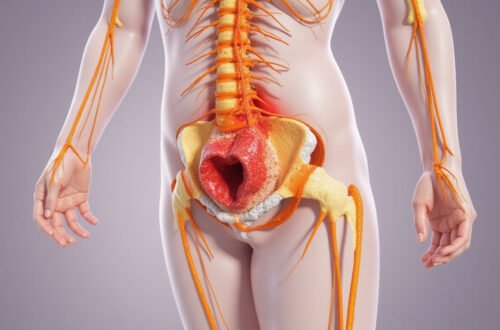
The sacroiliac joint (SI joint) links the sacrum — the triangular bone at the base of your spine — to the iliac bones of the pelvis. Normally it moves only a few millimeters, but that small motion is crucial for walking and transferring load between your trunk and legs. Too much motion (hypermobility), too little motion (hypomobility), trauma, pregnancy-related changes, or degenerative arthritis can all produce pain. The pain often shows up as low back pain, buttock pain, or pain that radiates into the groin or thigh.
Quick safety notes
- If you have numbness, bowel or bladder changes, unexplained weight loss, fever, or severe progressive weakness — seek immediate medical attention.
- If pain is new and severe after a fall or injury, get evaluated for fractures.
- Check with your healthcare provider before starting an exercise program if you have significant medical issues or recent surgery.
Fast home fixes for immediate relief
These techniques can help reduce inflammation, relax tight muscles, and stabilize the joint in the short term.
- Ice for acute pain: Apply an ice pack wrapped in a thin towel for 10–15 minutes every 1–2 hours during the first 48–72 hours after an exacerbation.
- Heat for stiffness: Use a heating pad for 15–20 minutes to ease muscle tightness once acute inflammation has decreased.
- Support belts: An SI belt or pelvic strap gives external compression that can reduce pain and improve stability while standing or walking.
- Posture and ergonomics: Sit with hips and knees at 90 degrees, avoid crossing legs, and use lumbar support; stand with weight evenly distributed between both legs.
- Over-the-counter anti-inflammatories: Short-term use of NSAIDs like ibuprofen may help; follow dosing instructions and check with a provider if you have contraindications.
Targeted stretches to relieve tension
Tight muscles around the hip and lower back often exacerbate sacroiliac joint pain. Try these gentle stretches daily:
- Knees-to-chest stretch: Lie on your back, pull one knee toward your chest, hold 20–30 seconds, switch sides. Repeat 3 times per side.
- Piriformis stretch: Lying on your back, cross the affected ankle over the opposite knee, pull the uncrossed thigh toward your chest until you feel a stretch in the buttock. Hold 20–30 seconds, repeat 2–3 times.
- Hamstring stretch: Sit with one leg extended, hinge at the hip and lean forward with a flat back until you feel a stretch behind the thigh. Hold 20–30 seconds; repeat on both sides.
- Hip flexor (kneeling lunge) stretch: Kneel with one foot forward and gently push hips forward to stretch the hip flexor of the rear leg. Hold 20–30 seconds; repeat 2–3 times.
Strengthening exercises to stabilize the sacroiliac joint
Improved muscular support around the pelvis can reduce abnormal motion and pain. Perform 3–4 times per week, progressing gradually. Below is a clear routine:
- Pelvic tilts — 2 sets of 10–15 reps
- Lie on your back with knees bent. Gently flatten your lower back against the floor by tightening your abdominal muscles and tilting the pelvis upward; hold for 3–5 seconds, then relax.
- Glute bridges — 2–3 sets of 10–15 reps
- Lie on your back with knees bent, feet hip-width apart. Squeeze your glutes and lift your hips into a straight line from shoulders to knees. Avoid over-arching the lower back. Lower slowly.
- Clamshells — 2–3 sets of 10–15 reps per side
- Lie on your side with hips and knees bent. Keep feet together and lift the top knee while keeping pelvis stable. Use a resistance band above the knees to increase difficulty.
- Bird dog — 2–3 sets of 8–12 reps per side
- On hands and knees, extend opposite arm and leg while keeping hips level. Hold 2–3 seconds; return slowly. Focus on spinal neutrality.
- Side-lying hip abduction — 2 sets of 10–15 reps per side
- Lie on your side and lift the top leg straight up without rotating the hip. This targets the gluteus medius — important for pelvic stability.
- Core activation (dead bug) — 2 sets of 8–10 reps per side
- Lying on your back, lower opposite arm and leg while maintaining a neutral spine and bracing the core.
Start with low resistance and build endurance before adding weight. Pain is a guide: some muscle soreness is normal, but sharp pain, especially in the joint, means stop and consult a clinician.
Manual techniques and self-mobilizations
Gentle manual techniques can offer quick relief when done safely. Consider seeking a physical therapist, chiropractor, or osteopath trained in SI joint care. At home, try:
- Self-mobilization lying stretch: Lie on your back near the edge of a bed with both legs hanging; slowly lower one leg off the bed to create a gentle pull at the SI area for 20–30 seconds.
- Gentle pelvic drop: Stand on a step with one foot hanging, allow the hanging hip to drop slightly then lift using glute activation. Repeat 8–12 times to encourage small, controlled motion.
When to see a professional
If conservative measures don’t provide meaningful relief within 4–6 weeks, or if symptoms worsen, see a primary care provider or physiotherapist. They can perform diagnostic tests, prescribe targeted therapy, or refer you for injections (e.g., corticosteroid injection) or further imaging if needed. The Mayo Clinic provides reliable information on low back and pelvic pain and when to seek care (Mayo Clinic).

Lifestyle adjustments to prevent recurrence
- Maintain a healthy weight to reduce stress across the pelvic joints.
- Strengthen glutes and deep core muscles regularly, not just during flares.
- Avoid prolonged one-sided postures — alternate carrying bags or use backpacks.
- Use proper lifting mechanics: hinge at the hips, keep load close to the body.
- During pregnancy, consider prenatal physiotherapy for pelvic support strategies.
One-week starter plan (sample)
Day 1–3: Ice (10–15 minutes) after activity, pelvic tilts and gentle stretches twice daily, belts during walking if painful.
Day 4–7: Add glute bridges, clamshells, and bird dog (as described) every other day; heat before exercise for stiffness; maintain posture corrections and avoid single-leg standing for long periods.
Bulleted checklist before you start exercises
- Get medical clearance if you have red-flag symptoms.
- Warm up with 5–10 minutes of gentle walking.
- Focus on form over repetitions.
- Stop if you experience new or worsening numbness/weakness.
- Progress slowly and track pain and function.
FAQ — common questions about sacroiliac joint troubles
Q: How long does sacroiliac joint pain typically last?
A: Recovery varies. Mild cases often improve in weeks with home care and targeted exercises; chronic or severe cases may take months and sometimes require injections or specialist care.
Q: What is the difference between sacroiliac joint pain and sacroiliac joint dysfunction?
A: “Sacroiliac joint pain” describes the symptom of pain arising from the joint. “Sacroiliac joint dysfunction” refers to abnormal mechanics (too much or too little movement) or pathology causing that pain.
Q: Can SI joint pain be mistaken for sciatica or a herniated disc?
A: Yes. Pain from the sacroiliac joint can mimic sciatica, with buttock and leg pain. A clinician uses history, physical tests, and sometimes imaging to differentiate causes.
Authoritative source
For a reliable overview of low back and pelvic pain and guidance on when to seek care, see the Mayo Clinic’s information on low back pain (Mayo Clinic).
Final thoughts and call to action
Sacroiliac joint pain can be frustrating, but many people find meaningful relief with a combination of immediate home fixes, targeted stretching, and progressive strengthening. Start gently, focus on stabilizing the pelvis with glute and core exercises, and use support tools like belts and heat/ice strategically. If your progress stalls or symptoms worsen, get evaluated — early targeted care often prevents long-term problems. Ready to start a personalized plan? Book a session with a licensed physical therapist or clinician who can assess your sacroiliac joint mechanics and build a step-by-step program tailored to your needs.