Sacroiliitis—irritation or inflammation of one or both sacroiliac (SI) joints—can turn simple movements like standing, walking, or rolling in bed into daily challenges. Whether your sacroiliitis stems from arthritis, pregnancy, injury, or an unknown cause, the right mix of treatments can significantly reduce pain and improve how you move.
This guide explains what sacroiliitis is, why it hurts, and the most effective, evidence-based strategies for lasting relief and better mobility.
Understanding sacroiliitis and why it’s so painful
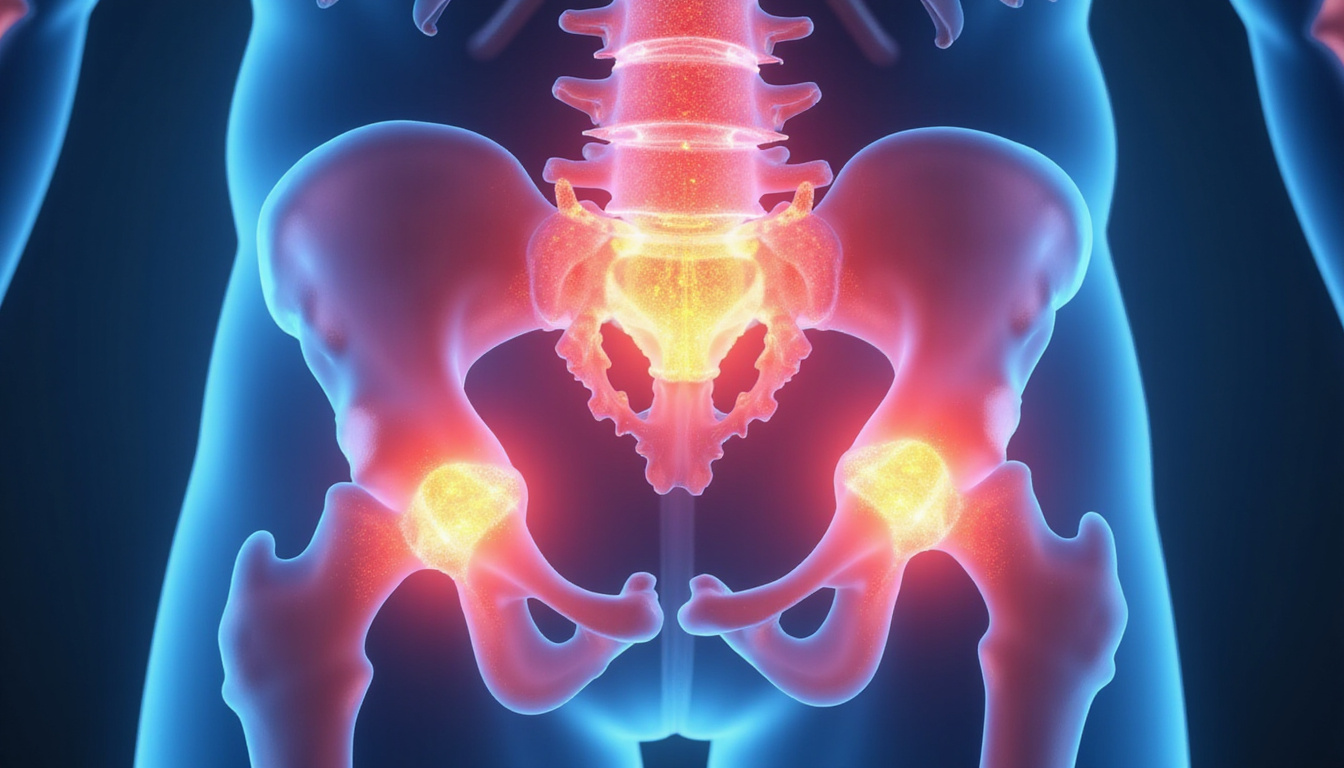
The sacroiliac joints sit where your spine meets your pelvis—one on each side, connecting the sacrum (the triangular bone at the base of the spine) to the iliac bones (the “wings” of the pelvis). These joints don’t move as much as your hips or knees, but they absorb huge forces every time you stand, walk, or bend.
Sacroiliitis occurs when one or both of these joints become inflamed or irritated. Common causes include:
- Repetitive stress or overuse (e.g., heavy lifting, long-distance running)
- Traumatic injury (falls, car accidents)
- Pregnancy and childbirth (ligaments loosen, posture changes)
- Inflammatory arthritis (e.g., ankylosing spondylitis, psoriatic arthritis)
- Degenerative changes, like osteoarthritis
- Infection (rare but serious)
- Prior lumbar or pelvic surgery causing altered biomechanics
Typical symptoms include:
- Deep aching or sharp pain in the lower back, just off to one side of the spine
- Pain in the buttocks, groin, or back of the thigh (sometimes down to the knee)
- Pain that worsens with prolonged standing, walking, or climbing stairs
- Stiffness or “locking” feeling when rising from a chair or bed
- Increased pain with single-leg activities (e.g., standing on one leg, using stairs)
Because sacroiliac pain often mimics sciatica or lumbar disc issues, proper diagnosis by a clinician is essential.
Getting the diagnosis right: your roadmap to targeted relief
Before choosing a treatment plan for sacroiliitis, you need a correct diagnosis. A healthcare professional—often a primary care physician, physiatrist (PM&R), rheumatologist, or orthopedic specialist—will usually:
- Take a detailed history (injuries, pregnancy, arthritis, activity level)
- Examine posture, gait, and pelvic alignment
- Perform provocative tests (e.g., FABER, Gaenslen, compression tests) that stress the SI joint
- Sometimes order imaging: X-rays, CT, or MRI
- In some cases, use a diagnostic SI joint injection with anesthetic; pain relief helps confirm the joint as the source
If you haven’t had a clear diagnosis yet, start there. Treating the wrong cause of pain is one of the main reasons people struggle for years.
First-line sacroiliitis pain relief: home strategies that work
For many, conservative treatments at home can significantly reduce sacroiliitis symptoms.
1. Activity modification (without total rest)
Completely stopping movement usually backfires; stiffness and weakness increase pain over time. Instead, aim to:
- Avoid heavy lifting and twisting motions
- Reduce long periods of standing, sitting, or walking in one stretch
- Use both legs when climbing stairs (step up with the less painful side, follow with the other)
- Break tasks into shorter bouts with movement breaks
Gentle movement keeps the joint lubricated and muscles active, which supports healing.
2. Ice and heat therapy
- Ice (for 10–15 minutes) can help calm acute flare-ups, especially after activity.
- Heat (warm pack, heating pad on low, warm bath) can ease muscle tension and stiffness around the SI joint.
Many people find alternating ice and heat effective—just protect your skin and avoid falling asleep on a heating pad.
3. Over-the-counter pain relievers
Non-prescription medications can be part of a short-term plan, if your doctor approves:
- NSAIDs (ibuprofen, naproxen) can reduce pain and inflammation.
- Acetaminophen can help with pain if NSAIDs aren’t tolerated or are contraindicated.
Chronic use carries risks (e.g., stomach, kidney, or liver issues), so these should supplement—not replace—long-term strategies like exercise and posture correction.
Physical therapy: the cornerstone of long-term sacroiliitis relief
Among all non-surgical treatments, targeted physical therapy has some of the strongest support for reducing pain and improving function in sacroiliitis (source: Mayo Clinic).
Goals of PT for sacroiliitis
- Stabilize the SI joints and pelvis
- Improve hip and core strength
- Increase flexibility of tight muscles (especially hip flexors and hamstrings)
- Correct posture and movement patterns that overload the joints
Common PT strategies
A physical therapist will tailor your program, but it may include:
-
Core stabilization exercises
Focusing on the deep stabilizers of the spine and pelvis:- Transverse abdominis activation (gentle “ab bracing”)
- Bridge variations
- Bird-dog exercises
-
Hip strengthening
To better support the pelvis:- Glute bridges and clamshells
- Side-lying leg lifts
- Standing hip abduction and extension
-
Flexibility work
To reduce asymmetrical pull on the SI joint:- Gentle hip flexor stretches
- Hamstring and piriformis stretches
- Low-intensity lower back mobility drills
-
Manual therapy
In some cases, therapists may use joint mobilizations or soft-tissue techniques to improve alignment and reduce muscle guarding. -
Gait and posture training
Learning how to stand, walk, bend, and lift with better alignment can prevent flare-ups.
Consistency is more important than intensity. Small amounts of daily, low-pain movement build strength and stability over time.
Helpful exercises for sacroiliitis (done safely)
Always confirm with your clinician or physical therapist that these are appropriate for you. Done gently and with good form, they can reduce symptoms:
-
Pelvic tilts (supine)
- Lie on your back, knees bent, feet flat.
- Gently flatten your lower back into the floor by tightening your lower abs and glutes.
- Hold 3–5 seconds, relax.
- Repeat 10–15 times.
-
Glute bridge
- From the same position, tighten your core and squeeze your glutes.
- Lift your hips until your body forms a straight line from shoulders to knees.
- Hold 3–5 seconds, lower slowly.
- Repeat 8–12 times.
-
Modified clamshell
- Lie on your side with knees slightly bent and stacked, hips neutral.
- Keeping feet together, slowly lift the top knee without rolling your hip backward.
- Lower with control.
- 10–15 reps per side.
-
Gentle piriformis stretch (figure-4)
- Lie on your back, cross the ankle of the affected side over the opposite knee.
- Gently pull the uncrossed leg toward your chest until you feel a stretch in the buttock.
- Hold 20–30 seconds, repeat 2–3 times.
Stop any exercise that significantly worsens pain, especially sharp, radiating, or new symptoms.
Bracing and supports: when to consider them
Sacroiliac belts or braces wrap around the pelvis to provide external stability, particularly useful when:
- Pain flares with walking or standing
- You’re in late pregnancy or early postpartum
- You’re transitioning back to activity after a flare
Tips:
- Use a brace as an aid, not a permanent crutch. Over-reliance can weaken supporting muscles.
- Wear it during higher-demand activities rather than all day.
- Work with a therapist or clinician to ensure proper fit and positioning.
Medical treatments for sacroiliitis: injections, medications, and more
If conservative measures aren’t enough, medical interventions can provide additional relief—especially in moderate to severe sacroiliitis.
Prescription medications
Depending on your cause and severity, your doctor may consider:
- Stronger NSAIDs or short courses of oral steroids for inflammation
- Muscle relaxants for prominent muscle spasm
- Medications targeting nerve-related pain or associated conditions (e.g., inflammatory arthritis drugs)
For inflammatory sacroiliitis from conditions like ankylosing spondylitis, disease-modifying antirheumatic drugs (DMARDs) or biologics may be indicated and managed by a rheumatologist.
Image-guided injections
When pain is persistent and clearly localized to the SI joint, injections can be both diagnostic and therapeutic:
-
Corticosteroid injection
- Delivered into the SI joint under X-ray or ultrasound guidance
- Reduces inflammation and can provide relief lasting weeks to months
- Often combined with anesthetic for immediate but temporary pain reduction
-
Radiofrequency ablation (RFA)
- Uses heat to disrupt pain-conducting nerve fibers around the SI joint
- Typically for chronic sacroiliitis that responds to diagnostic nerve blocks
- Relief can last 6–12 months in many patients
These approaches are not cures, but they can create a window of reduced pain that allows you to engage more fully in rehabilitation.
Surgical options: when is SI joint fusion considered?
Surgery is rarely the first-line treatment for sacroiliitis and is reserved for carefully selected cases, such as:
- Severe, disabling pain lasting 6+ months despite comprehensive conservative care
- Confirmed SI joint as the primary pain generator through diagnostic injections
- Structural instability or damage to the joint
SI joint fusion stabilizes the joint by using implants and/or bone graft to fuse the sacrum to the ilium. While some patients experience substantial relief and better function, surgery carries typical risks (infection, nerve injury, non-union) and requires committed rehabilitation.
Surgical decisions should be made in concert with spine or orthopedic specialists, based on thorough evaluation.
Lifestyle changes to support sacroiliitis healing and prevent flare-ups
Beyond specific treatments, your daily habits have a major impact on sacroiliitis.
Optimize your posture and body mechanics
- Stand with weight evenly distributed on both feet
- Avoid “hanging” on one hip or standing with one knee locked
- When lifting:
- Keep objects close to your body
- Bend at the hips and knees, not the waist
- Avoid twisting while carrying
Improve your sleep setup
- Side sleepers: Place a pillow between your knees to keep hips and pelvis level.
- Back sleepers: A pillow under the knees can reduce lumbar and SI joint strain.
- Choose a supportive mattress that doesn’t sag; overly soft surfaces can worsen misalignment.
Maintain a healthy weight and stay active
Excess body weight increases mechanical stress on the SI joints. Combining:
- A nutrient-dense, anti-inflammatory diet (fruits, vegetables, lean protein, whole grains)
- Low-impact exercise (walking, swimming, cycling, yoga or Pilates with modifications)
can reduce load on the joints and improve muscle support.
Manage systemic inflammation and comorbid conditions
If your sacroiliitis is associated with an inflammatory condition (e.g., ankylosing spondylitis, psoriasis, inflammatory bowel disease):
- Stay consistent with medications prescribed by your rheumatologist or specialist.
- Don’t ignore new symptoms such as eye pain/redness, bowel changes, or skin rashes—these may indicate systemic flares.
FAQ: common questions about sacroiliitis and SI joint pain
1. How is sacroiliitis different from regular lower back pain?
Sacroiliitis specifically involves inflammation of the sacroiliac joints, whereas “lower back pain” is a broad term that can include muscle strain, disc problems, facet joint arthritis, or spinal stenosis. Sacroiliitis often causes pain in the buttock or just off to one side of the spine, sometimes radiating to the thigh, and is frequently aggravated by standing on one leg, climbing stairs, or rolling in bed.
2. Can sacroiliac joint pain go away on its own?
Mild sacroiliac joint pain from a temporary strain or pregnancy-related changes can improve significantly or resolve with time, activity modification, and targeted exercises. However, if sacroiliitis is driven by underlying arthritis, biomechanics, or inflammatory disease, symptoms may recur without a long-term plan that includes strengthening, posture correction, and medical management where needed.
3. What are the best exercises for sacroiliac joint dysfunction?
The most helpful exercises for sacroiliac joint dysfunction focus on core stability and hip strength—such as pelvic tilts, bridges, clamshells, and gentle hip stretches—combined with posture and gait training. The “best” program is individualized; a physical therapist can design a routine that avoids aggravating your specific pattern of sacroiliitis while building stability.
Take control of sacroiliitis: next steps for real relief
Sacroiliitis doesn’t have to define your day-to-day life. With an accurate diagnosis, a targeted physical therapy program, smart use of home remedies, and—when appropriate—medical interventions like injections or advanced medications, many people dramatically reduce pain and regain comfortable movement.
If sacroiliitis has been limiting your work, sleep, or favorite activities, don’t wait for it to “just go away.” Schedule an evaluation with a musculoskeletal specialist or physical therapist, bring a clear description of your pain patterns, and ask about a structured plan that includes strengthening, posture training, and, if needed, image-guided treatments.
The combination of informed medical care and consistent self-management is powerful. Start today with one small step—like a short walk, a few gentle core exercises, or booking that appointment—and build from there toward steadier, stronger, more confident movement.