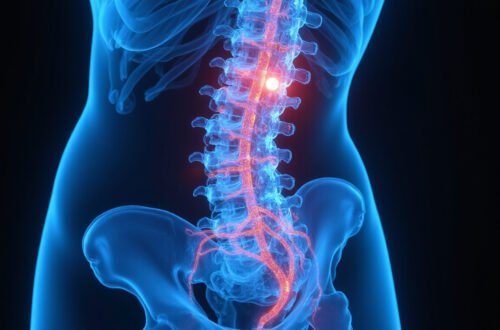
If you’ve felt a deep ache or sharp twinge in your buttock or low back that shoots down the leg, your sciatic notch may be involved. This key anatomical passageway in the pelvis is where the sciatic nerve exits toward your legs. When tissues in or around this area become irritated or compressed, pain can range from a mild nuisance to completely debilitating.
This guide walks you through what the sciatic notch is, why it hurts, proven stretches and exercises that help, and when to see a doctor—so you can move toward fast, lasting relief.
What is the sciatic notch?
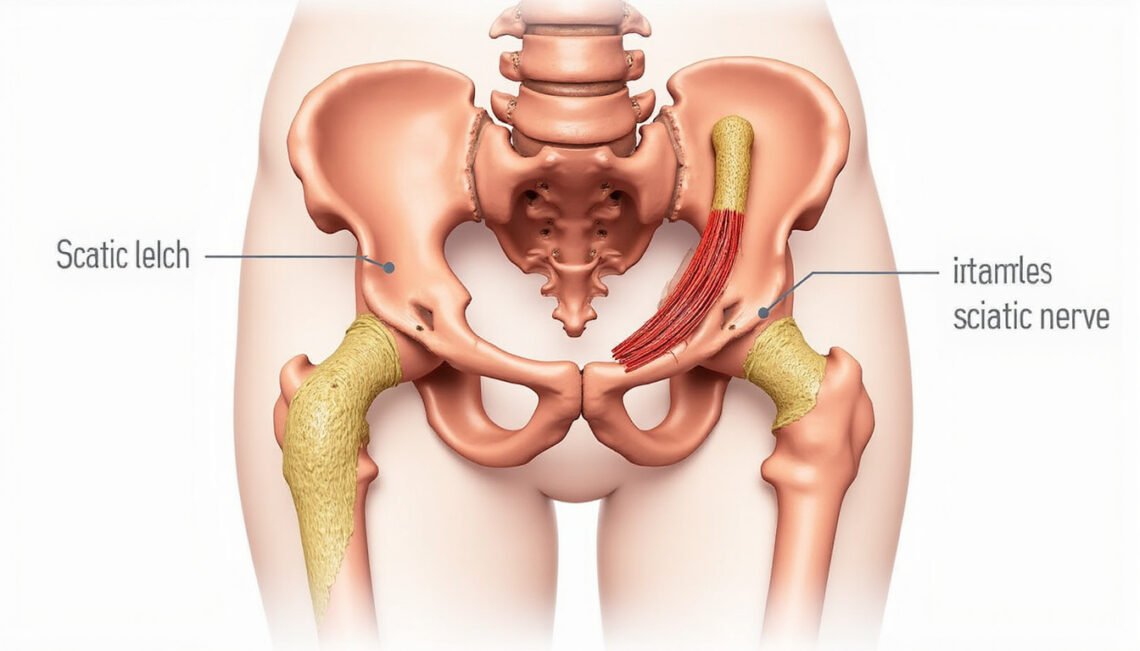
The sciatic notch is a bony groove in your pelvis formed mainly by the ilium bone. There are two regions:
- Greater sciatic notch – the large opening at the back of the pelvis where the sciatic nerve, piriformis muscle, and several blood vessels pass.
- Lesser sciatic notch – a smaller opening below, involved with different nerves and tendons.
Ligaments transform these notches into the greater and lesser sciatic foramina (tunnel-like openings). The sciatic nerve, the largest nerve in the body, passes through the greater sciatic foramen, then travels through the buttock and down the back of the leg.
Because this area is crowded with muscles (like the piriformis and gluteal muscles), tendons, ligaments, and nerves, even small imbalances or tightness can irritate the nerve and cause sciatic notch pain.
Common causes of sciatic notch pain
Understanding the “why” behind your pain can guide the right treatment. Pain around the sciatic notch often comes from one or more of these issues:
1. Piriformis syndrome
The piriformis muscle, which externally rotates your hip, runs right through the greater sciatic notch and over the sciatic nerve. In some people, the nerve even pierces the muscle.
When the piriformis becomes tight, spasms, or becomes inflamed, it can:
- Compress the sciatic nerve
- Cause deep buttock pain at or near the sciatic notch
- Send radiating pain, numbness, or tingling down the back of the leg
This is often worsened by prolonged sitting, running, or activities that overload the hips without enough stretching or strength balance.
2. Lumbar spine issues (true sciatica)
Issues in the lower back can send nerve pain that’s felt at the sciatic notch:
- Disc herniation or bulge (L4–S1)
- Spinal stenosis (narrowing of nerve passages)
- Degenerative disc disease or arthritis
These conditions irritate or compress nerve roots that combine to form the sciatic nerve, causing classic sciatica: low back and buttock pain, shooting leg pain, tingling, weakness, or numbness.
3. Sacroiliac (SI) joint dysfunction
The SI joint sits near the sciatic notch where the spine meets the pelvis. If it becomes inflamed, unstable, or stuck, you may feel:
- Sharp or aching pain near the dimple of the low back or upper buttock
- Pain near the sciatic notch that worsens with standing, walking, or stairs
- Sometimes radiation into the groin or thigh
4. Gluteal muscle strain or trigger points
Overuse, sudden movements, or poor form in exercise can cause:
- Strain or micro-tears in gluteus medius, minimus, or maximus
- Painful trigger points that refer pain to the sciatic notch area
- Achy, stiff buttock pain, especially when climbing stairs or lying on that side
5. Trauma or bony changes near the sciatic notch
Falls, car accidents, or prior hip/pelvic fractures can alter the shape or space around the sciatic notch, leading to chronic irritation. Rarely, tumors or cysts near the pelvis can also compress the nerve.
Symptoms: Is your pain really from the sciatic notch?
Pain involving the sciatic notch often has a recognizable pattern. You may notice:
- Deep, aching pain in the buttock, often slightly to one side
- Tenderness if you press near the bony area of the upper buttock
- Pain that can:
- Stay localized to the buttock, or
- Radiate down the back of the thigh and sometimes to the calf
- Pain that worsens with:
- Prolonged sitting (especially on hard surfaces)
- Driving
- Climbing stairs or hills
- Running or heavy lower-body workouts
- Possible numbness, tingling, or burning in the leg (especially if the sciatic nerve is directly involved)
- Difficulty getting comfortable in bed or sitting for long periods
If pain is severe, accompanied by significant leg weakness, or associated with loss of bladder/bowel control, that’s an emergency—seek urgent medical care.
Proven stretches for sciatic notch pain relief
Targeted stretching can reduce pressure on the sciatic nerve, ease muscle tension around the sciatic notch, and improve mobility. Move slowly, avoid forcing any position, and stop if pain spikes sharply.

1. Piriformis stretch (lying figure-4)
This is one of the most effective stretches for pain around the sciatic notch.
- Lie on your back with knees bent, feet flat.
- Cross your right ankle over your left thigh (above the knee), forming a “figure 4.”
- Gently pull your left thigh toward your chest until you feel a stretch in your right buttock.
- Keep your low back on the floor and shoulders relaxed.
- Hold 20–30 seconds, breathing slowly. Repeat 2–3 times per side.
2. Seated figure-4 stretch
Great for quick relief during work or travel.
- Sit tall in a chair, feet flat.
- Place your right ankle on your left knee.
- Gently press your right knee down while hinging forward from the hips (don’t round your back).
- Stop when you feel a stretch deep in the buttock.
- Hold 20–30 seconds, repeat 2–3 times per side.
3. Knees-to-chest stretch
Opens the lower back and glutes, helping relieve tension that affects the sciatic notch.
- Lie on your back.
- Bring one or both knees to your chest, wrapping your arms around your shins.
- Gently pull your knees closer until you feel a comfortable stretch in your low back and buttocks.
- Hold 20–30 seconds, repeat 2–3 times.
4. Pigeon pose (modified)
This deeper stretch targets hip rotators and the piriformis.
- Start on hands and knees.
- Bring your right knee forward toward your right wrist, letting your shin angle slightly under your torso.
- Extend your left leg straight behind you, hips square.
- Support yourself on your hands or forearms; if needed, place a pillow under the right hip.
- Hold 20–30 seconds, repeat 1–2 times per side.
Avoid if you have knee pain or cannot comfortably bear weight through your hips.
5. Standing hamstring stretch
Tight hamstrings can increase pull on the pelvis and aggravate sciatic notch pain.
- Place your heel on a low step or sturdy chair.
- Keep your knee slightly bent and your back straight.
- Hinge forward from your hips until you feel a stretch along the back of your thigh.
- Hold 20–30 seconds, repeat 2–3 times per leg.
Strengthening exercises to support the sciatic notch
Stretching addresses tightness, but strengthening stabilizes the pelvis and reduces recurrence. After pain begins to ease, add gentle strengthening exercises.
1. Glute bridges
- Lie on your back, knees bent, feet hip-width apart.
- Tighten your core, then squeeze your glutes and lift your hips until your body forms a straight line from shoulders to knees.
- Hold for 2–3 seconds, lower slowly.
- Do 10–15 reps, 2–3 sets.
2. Clamshells
Targets gluteus medius to support the hip and reduce strain on the sciatic notch.
- Lie on your side, hips and knees bent about 90 degrees, feet together.
- Keep your hips stacked; do not roll backward.
- Keeping feet together, lift your top knee like opening a clamshell.
- Pause, then lower slowly.
- Do 12–15 reps per side, 2–3 sets.
3. Dead bug (core stability)
- Lie on your back, arms toward the ceiling, hips and knees bent 90 degrees.
- Tighten your core as if bracing for a gentle poke.
- Slowly lower opposite arm and leg toward the floor without letting your low back arch.
- Return to start and switch sides.
- Do 8–10 reps per side, 2–3 sets.
Other fast relief strategies for sciatic notch pain
Along with stretching and strengthening, these methods can help calm symptoms:
-
Ice or heat
- Use ice (10–15 minutes) in the first 24–48 hours after a flare, especially if pain is sharp or from a new injury.
- Use heat (15–20 minutes) for chronic muscle tightness and stiffness around the sciatic notch.
-
Over-the-counter medication
Nonsteroidal anti-inflammatory drugs (NSAIDs) like ibuprofen or naproxen can reduce pain and inflammation when taken as directed and if medically appropriate. Always check with your healthcare provider first. -
Activity modification
- Take standing or walking breaks every 30–45 minutes if you sit a lot.
- Avoid prolonged driving without breaks.
- Temporarily reduce high-impact activities like running, jumping, or heavy squats.
-
Posture and ergonomics
- Use a chair that supports your low back.
- Keep feet flat and avoid crossing legs for long periods.
- Adjust screens to eye level so you’re not slouching.
-
Physical therapy
A licensed physical therapist can provide a tailored program of manual therapy, stretching, and strengthening, and watch for red flags that need further evaluation.
According to clinical guidelines from the American Academy of Orthopaedic Surgeons, most people with sciatic-type pain improve significantly with conservative treatment (exercise, medication, and activity modification) within a few weeks to months (source: AAOS).
When to see a doctor about sciatic notch pain
Get a professional evaluation if:
- Pain has lasted longer than 2–4 weeks despite home care
- Pain is severe or getting progressively worse
- You experience:
- Significant leg weakness
- Numbness around the groin or inner thighs
- Loss of bladder or bowel control
- Fever, unexplained weight loss, or history of cancer
- You had a recent fall, accident, or trauma to your back, hip, or pelvis
A healthcare provider may use physical examination, imaging (X-ray, MRI), or nerve tests to identify whether the sciatic notch, lumbar spine, SI joint, or something else is the main cause.
How to prevent sciatic notch pain from coming back
Once symptoms improve, consistent habits are key:
-
Maintain hip and glute strength
Continue glute bridges, clamshells, and core work 2–3 times per week. -
Stay flexible
Do piriformis and hamstring stretches most days, especially if you sit for work. -
Move regularly
Avoid long periods of sitting. Set a timer to stand or walk briefly every 30–60 minutes. -
Use good lifting mechanics
Bend at hips and knees, keep objects close to your body, and avoid twisting while lifting. -
Watch your running and workout volume
Increase mileage or intensity gradually and schedule recovery days. -
Maintain a healthy body weight
Reducing excess load on the spine and pelvis lowers strain around the sciatic notch.
Quick reference: home care checklist
Use this simple checklist as a daily guide while managing sciatic notch pain:
- 1–2 stretching sessions (piriformis, hamstrings, low back)
- 1 short walk (5–15 minutes, as tolerated)
- 1 strength session (glutes + core) on most days
- Ice or heat 1–2 times a day as needed
- Posture check at your desk or in the car
- Avoid prolonged sitting without movement breaks
FAQ about sciatic notch pain
What is sciatic notch syndrome?
“Sciatic notch syndrome” generally refers to pain and nerve irritation caused by compression of the sciatic nerve as it passes through the sciatic notch. This can be due to muscle tightness (like piriformis syndrome), trauma, or, rarely, space-occupying lesions in the pelvis. Symptoms typically include deep buttock pain, tenderness near the sciatic notch, and possible radiating pain or tingling down the leg.
How do I know if my sciatic notch is the source of my sciatica?
Pain linked to the sciatic notch often presents as a deep ache or tenderness in the upper buttock where the nerve exits the pelvis, sometimes without significant low back pain. Pressing on the area may reproduce symptoms. A clinician will examine your hip, pelvis, and spine and may perform tests that differentiate sciatic notch issues from lumbar disc or SI joint problems.
Can stretching alone fix sciatic notch nerve pain?
For mild to moderate cases, consistent stretching of the piriformis, hip rotators, and hamstrings can significantly reduce sciatic notch nerve irritation and sometimes resolve symptoms. However, for best long-term results, stretching should be combined with strengthening, posture changes, and activity modification. If symptoms persist or worsen despite these measures, medical evaluation is important to rule out more serious causes.
Take the next step toward sciatic notch pain relief
Deep buttock pain and sciatic symptoms don’t have to dictate how you sit, stand, work, or exercise. By understanding how the sciatic notch and surrounding muscles contribute to your discomfort—and consistently applying the stretches, exercises, and simple daily habits outlined here—you can often calm irritation, restore mobility, and prevent future flare-ups.
If your pain has lingered for weeks, is interfering with sleep or daily activities, or you’re simply unsure what’s driving it, don’t wait. Schedule an appointment with a qualified healthcare provider or physical therapist to get an accurate diagnosis and a personalized plan. The sooner you address sciatic notch pain with the right strategy, the faster you can get back to moving comfortably and confidently.