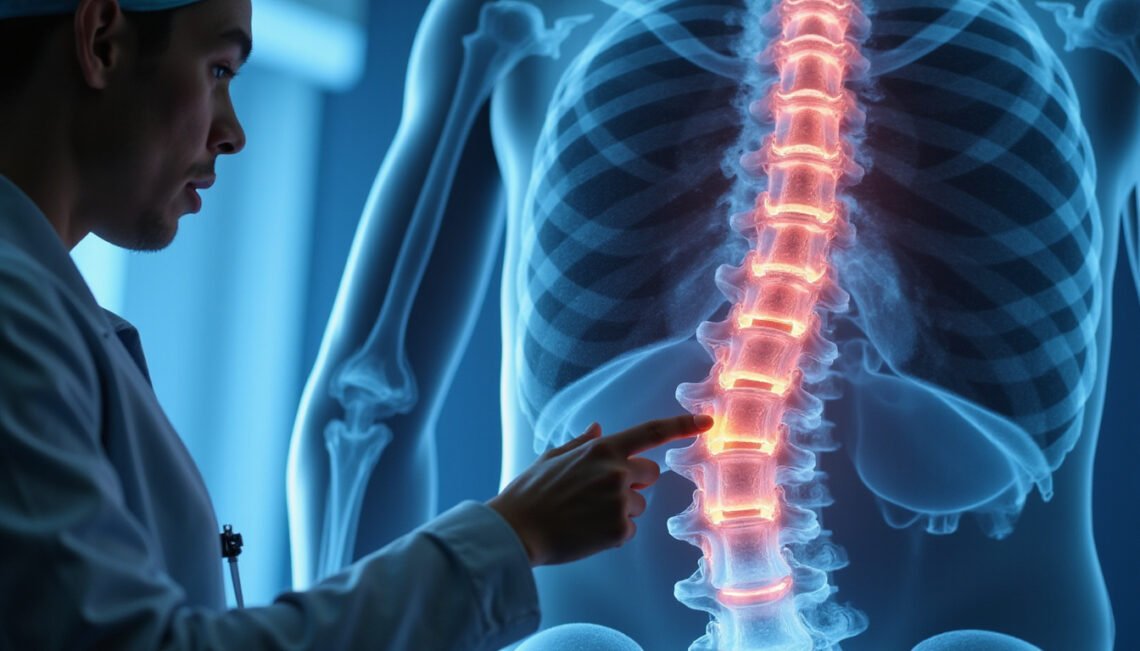
If you or someone you love has been diagnosed with spondylolisthesis, you’re likely searching for clear, effective ways to reduce pain and regain mobility. Spondylolisthesis occurs when one vertebra slips forward over the one below it, and treatment ranges from targeted exercises to surgical repair depending on severity. This article explains proven options, practical exercises, and recovery tips so you can make informed choices and move more comfortably.
Understanding spondylolisthesis: what happens to your spine
Spondylolisthesis most commonly affects the lower lumbar spine (L4–L5 and L5–S1). The slippage can be caused by a stress fracture (isthmic), degenerative changes in the spine, trauma, or congenital defects. As the vertebra shifts, it can narrow nerves or destabilize the spinal segment, producing pain, stiffness, and sometimes leg symptoms like sciatica.
Common symptoms and how it’s diagnosed
Symptoms vary by degree of slippage and nerve involvement:
- Low back pain and stiffness
- Pain radiating to the buttocks or legs (sciatica)
- Numbness, tingling, or weakness in the legs
- Difficulty walking or standing for long periods
A clinician will confirm spondylolisthesis through a combination of history, neurological exam, and imaging—typically X-rays to grade the slippage, with MRI or CT used when nerve compression or detailed anatomy is needed (source).
Proven non-surgical treatments that work
Most people with low-grade spondylolisthesis improve with conservative care. The goal is to reduce pain, restore function, and strengthen the spine to prevent further slippage. Proven conservative options include:
- Activity modification: avoiding heavy lifting and extreme spinal extension.
- Medications: short-term NSAIDs or acetaminophen for pain; muscle relaxants for acute spasms.
- Physical therapy: the cornerstone of non-surgical care, focusing on core stabilization, flexibility, and posture.
- Bracing: short-term use to limit motion in severe pain phases or in youth with isthmic types.
- Injections: selective epidural steroid injections or facet blocks for radicular pain not responding to other measures.
Targeted exercises to restore movement and stability
A progressive exercise program reduces pain, strengthens spinal support, and improves flexibility. Below are safe, commonly recommended movements that many physical therapists use for spondylolisthesis. Start slowly and stop if symptoms worsen—check with your clinician or PT first.
- Pelvic tilts — Lie on your back with knees bent. Tighten abdominal muscles to flatten the low back to the floor, hold 5–10 seconds, relax. Repeat 10–15 times.
- Dead bug (modified) — On your back with knees bent, slowly lower one heel toward the floor while keeping the low back stable; alternate sides. 8–12 reps per side.
- Bird dog — On hands and knees, extend opposite arm and leg while maintaining neutral spine. Hold 3–5 seconds. 8–12 reps each side.
- Glute bridges — Lie on your back with knees bent, lift hips to form a straight line from knees to shoulders, squeeze glutes, hold 2–3 seconds. 10–15 reps.
- Hamstring and hip flexor stretches — Tight hips and hamstrings can pull on the pelvis and increase symptoms; gentle stretching for 30 seconds, 2–3 times each side.
- Wall-supported squats — With back against a wall, perform shallow squats to build leg and core endurance without excessive lumbar load.
Progression principles:
- Emphasize neutral spine and quality over quantity.
- Build endurance before adding resistance.
- Avoid repeated or sustained lumbar extension if that type of movement provokes symptoms.
Quick reference: exercises at a glance
- Core stabilization: pelvic tilts, dead bug, bird dog
- Hip strength: glute bridges, wall squats
- Flexibility: hamstring and hip flexor stretches
When surgery becomes the best option
- High-grade slippage causing progressive neurological deficits
- Severe, persistent pain that doesn’t respond to conservative care
- Spinal instability demonstrated on imaging and exams
Common surgical options include decompression (laminectomy) to relieve nerve pressure and spinal fusion to stabilize the slipped segment. In many cases, surgeons combine decompression with fusion. Surgical decisions are individualized; outcomes are better when conservative measures have been appropriately tried first.

Recovery expectations after surgery
Most people experience significant pain relief and improved function after appropriate surgery. Recovery timelines vary:
- Hospital stay: often 1–3 days for modern fusion procedures.
- Early recovery: walking and daily activity resumed gradually over weeks.
- Return to work: light duty in 4–8 weeks; more physical jobs may require 3–6 months.
- Fusion maturation: full fusion can take 6–12 months; bone health and smoking cessation support better outcomes.
Prevention and everyday strategies to protect your spine
Long-term improvement often depends on lifestyle adjustments:
- Maintain a healthy weight to reduce spinal loading.
- Strengthen the core and hips regularly.
- Use good body mechanics—lift with legs, keep loads close to your center.
- Quit smoking to support tissue healing and bone health.
- Alternate sitting and standing; use lumbar support when long sitting is unavoidable.
What to expect from physical therapy
A therapist will tailor a program to your pain level, biomechanics, and activity goals. Sessions typically include hands-on therapy, progressive exercises, education on posture and body mechanics, and a home exercise program you can maintain long-term.
One reputable source for patient information on the condition is the Mayo Clinic, which covers causes, symptoms, and treatment options (source).
Frequently asked questions (short)
Q: What causes spondylolisthesis?
A: Spondylolisthesis can result from a stress fracture (isthmic), age-related degeneration, trauma, or congenital spine differences that allow vertebral slippage.
Q: Can spondylolisthesis be treated without surgery?
A: Yes—many cases improve with conservative care including physical therapy, medication, bracing, and activity modification. Surgery is considered when these measures fail or when neurological deficits are present.
Q: Which exercises help spondylolisthesis pain?
A: Core stabilization (pelvic tilts, dead bug, bird dog), glute strengthening (bridges), and flexibility work for hamstrings and hip flexors are commonly helpful. Avoid pain-provoking extension movements until cleared by a therapist.
When to see a specialist
Seek urgent help if you have progressive leg weakness, loss of bowel or bladder control, or rapidly worsening neurologic symptoms. Otherwise, consult a spine specialist or experienced physical therapist if pain continues despite several weeks of conservative measures.
Final thoughts and next steps
spondylolisthesis doesn’t have to mean a life of limits. Many people regain meaningful function with a structured rehabilitation plan, modest lifestyle changes, and, when needed, appropriate surgical intervention. If you’re ready to reduce pain and restore movement, start with a clinical evaluation and a guided physical therapy program tailored to your condition.
Call to action
Don’t wait to take back control of your spine. Book an appointment with a spine specialist or licensed physical therapist today to get a personalized assessment, start a safe exercise program, and create a treatment plan that fits your goals. Your movement and quality of life can improve — take the first step now.