If you live with chronic lower back pain, you’ve probably tried stretches, massage, or just resting more. But one classic, research-backed approach you might not know by name is Williams flexion exercises. Originally developed in the 1930s, this simple set of movements is still used today by physical therapists to relieve many types of lower back pain—especially pain linked to tight hip flexors and too much extension (arching) in the lumbar spine.
This guide breaks down what Williams flexion exercises are, when they help (and when they don’t), and how to do a basic routine safely at home.
What Are Williams Flexion Exercises?
Williams flexion exercises are a group of low‑back exercises designed by orthopedic surgeon Dr. Paul C. Williams to:
- Flex (round) the lower spine
- Stretch tight hip flexors and lower‑back muscles
- Strengthen the abdominal and glute muscles
The core idea is that many people with chronic low back pain have:
- Too much lumbar lordosis (excessive arching in the low back)
- Tight hip flexors and back extensors
- Weak abdominals and glutes
By focusing on flexion (bending forward) and strengthening the front of the core, Williams believed you could reduce pressure on the facet joints and relieve pain, especially in people with pain that improves when they bend forward and worsens with standing or arching.
Who Can Benefit from Williams Flexion?
Williams flexion exercises can be especially helpful if:
- Your pain improves when sitting, bending forward, or leaning on a cart
- Standing or walking upright makes your pain worse
- You’ve been told you have spinal stenosis or degenerative disc disease
- You feel tightness in the front of your hips and lower back
They are commonly used for:
- Lumbar spinal stenosis
- Degenerative disc disease
- Spondylosis (age-related spine wear and tear)
- Certain types of chronic mechanical low back pain
However, Williams flexion exercises are not ideal for everyone. They may aggravate symptoms if you have:
- A known disc herniation with pain that worsens when bending forward
- Acute disc prolapse where flexion increases leg pain
- Certain spinal instabilities or fractures
- Specific conditions where your provider has told you to avoid bending forward
Because of this, it’s best to get a diagnosis from a physical therapist or physician before starting any program for chronic back pain.
Key Principles Behind the Williams Flexion Approach
To use Williams flexion exercises effectively, it helps to understand the basic principles:
-
Reduce lumbar extension:
Less arch in your lower back usually means less compression on the posterior (back) parts of the spine and facet joints. -
Encourage lumbar flexion:
Gentle forward bending can open the spaces where spinal nerves exit, which is often soothing for stenosis-related pain. -
Strengthen the core, especially the front:
Stronger abdominals and glutes reduce the load on lumbar vertebrae and help maintain healthier posture. -
Stretch hip flexors and lower back muscles:
Tight hip flexors (from lots of sitting) and tight spinal extensors contribute to an exaggerated arch and discomfort. -
Build functional tolerance:
Over time, the goal is not just to feel less pain during the exercises, but to move better in day‑to‑day life: walking, standing, lifting, and sitting.
The Classic Williams Flexion Exercise Series
Before you start, keep in mind:
- Work within a pain-free or minimally uncomfortable range.
- Move slowly and control your breathing.
- If any exercise significantly worsens your pain—especially leg pain or numbness—stop and consult a professional.
1. Pelvic Tilt (Posterior Pelvic Tilt)
The foundation of Williams flexion is the pelvic tilt, which teaches you how to gently flatten your lower back.
How to do it:
- Lie on your back with knees bent, feet flat, hip-width apart.
- Gently tighten your abdominal muscles as if bracing for a light punch.
- Flatten your lower back toward the floor by tilting your pelvis backward (tailbone slightly curls up).
- Hold 5–10 seconds while breathing normally.
- Relax and return to neutral.
Reps: 10–15 repetitions, 1–2 sets.
This move is subtle. You shouldn’t be forcing your back into the floor aggressively—just a gentle flattening controlled by your abs.
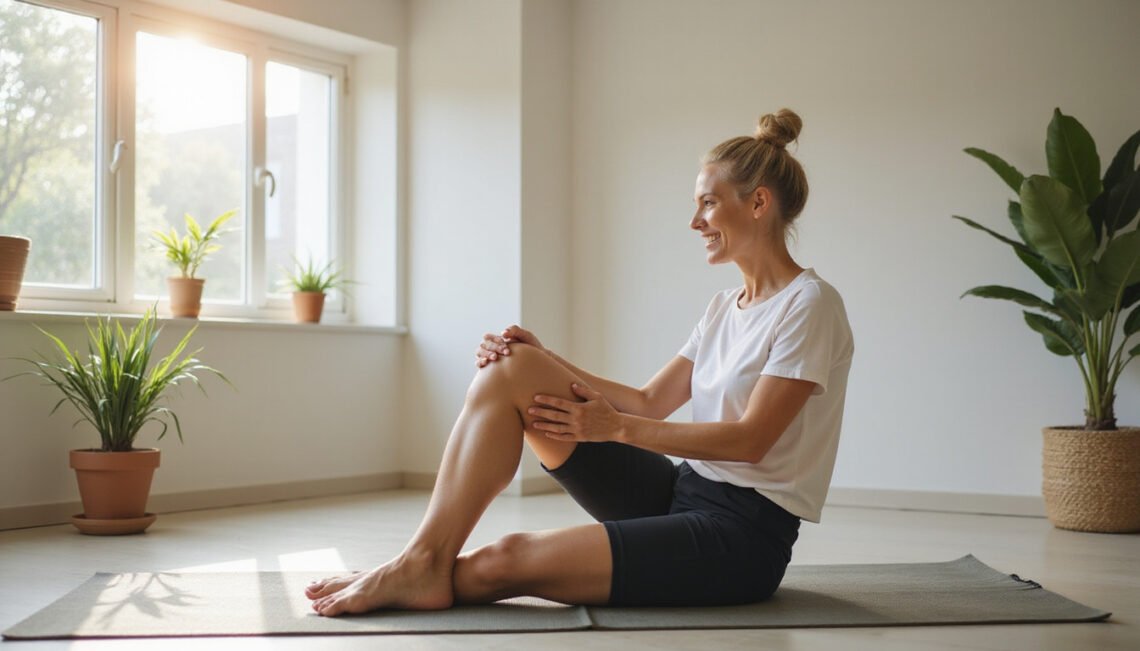
2. Single Knee-to-Chest Stretch
This stretch enhances lumbar flexion and loosens the lower back and glutes.
How to do it:
- Lie on your back with both legs straight or slightly bent.
- Bring one knee up toward your chest.
- Grasp your shin or behind your thigh with both hands.
- Gently pull the knee closer until you feel a comfortable stretch in your low back and buttock.
- Hold 20–30 seconds, then release.
Reps: 2–3 times each leg.
Keep your head and shoulders relaxed on the ground and avoid bouncing.
3. Double Knee-to-Chest Stretch
Building on the previous exercise, this increases lumbar flexion and can offer strong relief for some people.
How to do it:
- From lying on your back, bring both knees toward your chest.
- Wrap your arms around your shins or hold behind your thighs.
- Gently draw your knees closer until you feel a stretch in your low back.
- Hold 20–30 seconds, breathing steadily.
- Slowly lower your feet back to the floor.
Reps: 2–3 repetitions.
If this is too intense, stick with the single knee-to-chest and gradually progress.
4. Partial Sit‑Up (Abdominal Curl)
The goal here is to strengthen your abdominals without straining your neck or overloading your spine.
How to do it:
- Lie on your back with your knees bent and feet flat.
- Cross your arms over your chest or lightly support your head with fingertips (don’t pull on your neck).
- Perform a small pelvic tilt to flatten your back.
- Gently curl your head and shoulders off the floor a few inches, looking toward your knees.
- Hold 2–3 seconds, then lower slowly.
Reps: 8–12 repetitions, 1–3 sets.
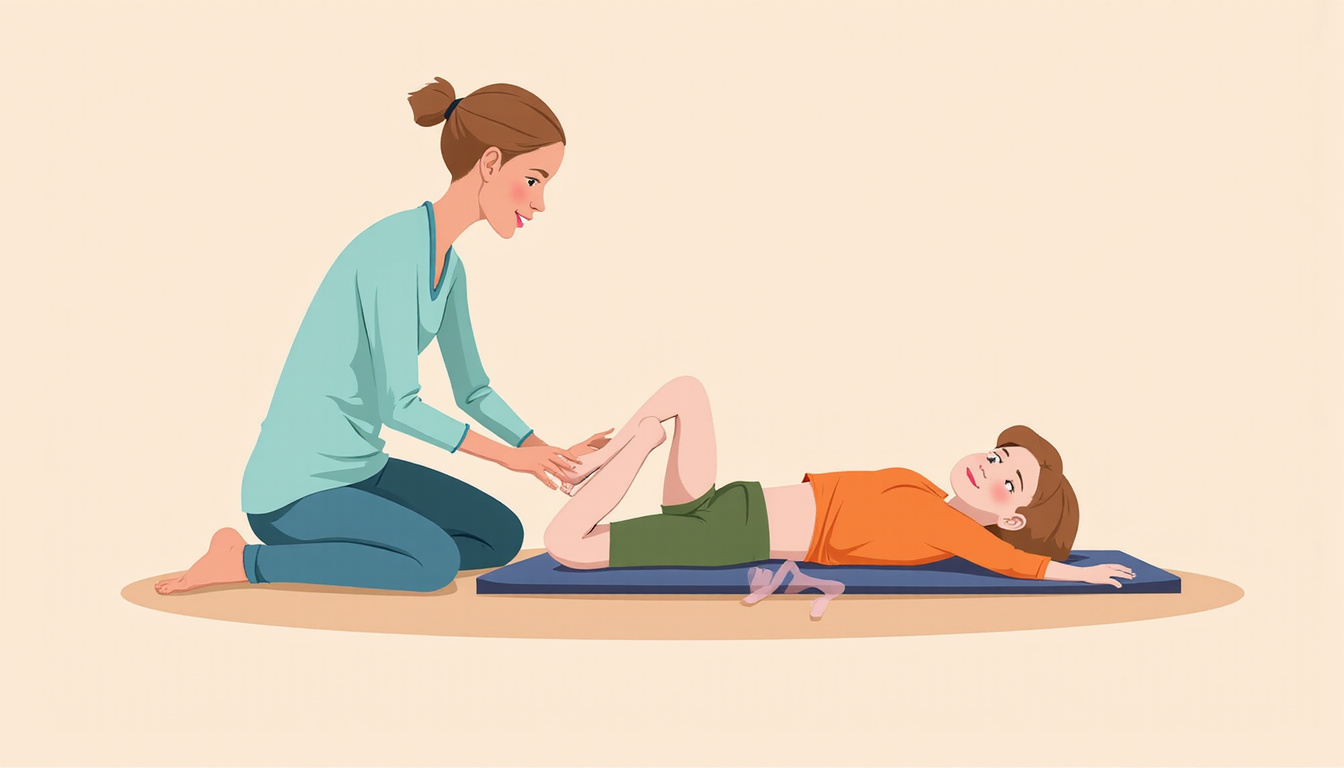
This is not a full sit-up; the movement is small and controlled. Stop if you feel low-back strain rather than abdominal effort.
5. Hamstring Stretch
Tight hamstrings can pull the pelvis into positions that stress the lower back. Williams flexion routines often include a hamstring stretch.
How to do it (lying version):
- Lie on your back with one leg straight on the ground.
- Lift the other leg, keeping the knee slightly bent.
- Loop a strap or towel around your thigh or foot.
- Gently straighten the lifted leg until you feel a stretch in the back of your thigh.
- Hold 20–30 seconds, then switch sides.
Reps: 2–3 times each leg.
Avoid locking the knee or forcing the stretch; keep it comfortable.
6. Hip Flexor Stretch
Because prolonged sitting tightens the hip flexors, stretching them is a key part of reducing lumbar arching.
How to do it (half-kneeling):
- Kneel on one knee with the other foot in front (like a lunge), both knees bent about 90°.
- Keep your torso upright and gently tuck your pelvis under (a small pelvic tilt).
- Shift your weight forward slightly until you feel a stretch in the front of the hip of the back leg.
- Hold 20–30 seconds, then switch legs.
Reps: 2–3 times each side.
You should feel the stretch in the front of the hip and thigh, not the low back. If needed, use a cushion under the kneeling knee.
A Simple Daily Williams Flexion Routine
Here is a sample 10–15 minute routine you can perform once or twice per day, assuming your healthcare provider has cleared you for these movements:
- Pelvic Tilts – 10–15 reps
- Single Knee-to-Chest – 2–3 holds each leg (20–30 seconds)
- Double Knee-to-Chest – 2–3 holds (20–30 seconds)
- Partial Sit‑Ups – 8–12 reps, 1–2 sets
- Hamstring Stretch – 2–3 holds each leg (20–30 seconds)
- Hip Flexor Stretch – 2–3 holds each side (20–30 seconds)
Progression Tips
- Start at the lower end of the reps and sets and increase slowly over 1–2 weeks.
- Keep a brief log of pain levels before and after; you should see equal or reduced pain over time, not worsening.
- Once these exercises feel easy, your therapist may add glute bridges, side‑lying leg lifts, or standing posture work to your program.
How Williams Flexion Fits into Modern Back Pain Care
While Williams flexion exercises are nearly a century old, many of their principles fit well with modern, evidence‑based back pain management:
- Stay active rather than resting for long periods.
- Strengthen the core, hips, and legs to reduce load on the spine.
- Use graded exposure—gradually doing more while staying within your limits.
- Combine exercise with education (understanding pain) and lifestyle changes.
Current guidelines for low back pain emphasize staying active, using exercise therapy, and avoiding long‑term reliance on medications alone (source: American College of Physicians). Williams flexion can be one valuable tool within that broader strategy.
Safety Tips and When to Seek Help
Williams flexion exercises are generally gentle, but it’s important to pay attention to your body:
- Stop and seek professional advice if:
- Pain sharply increases or radiates down your leg.
- You notice new weakness, numbness, or tingling.
- You develop changes in bladder or bowel control (emergency – seek urgent care).
- Modify or pause during acute flare-ups, especially if forward bending clearly worsens pain.
- Consult a professional (physical therapist, sports medicine doctor, or spine specialist) if:
- Pain persists beyond 4–6 weeks despite home care.
- You’re unsure whether flexion‑based exercises are appropriate for your diagnosis.
- You have osteoporosis, previous spine surgery, or other complex conditions.
A tailored program will almost always beat a one‑size‑fits‑all routine, especially for longstanding or severe pain.
Frequently Asked Questions About Williams Flexion Exercises
1. Are Williams flexion exercises good for herniated discs?
They can help some people with degenerative disc disease or spinal stenosis, but they are not universally recommended for all disc herniations. If bending forward increases leg pain, numbness, or tingling, Williams flexion exercises may aggravate your symptoms. Get a proper evaluation before using flexion‑based exercises for a suspected or confirmed disc herniation.
2. How often should I do Williams flexion stretches for lower back pain?
In many cases, doing the Williams flexion stretches and strengthening moves once or twice daily is reasonable, as long as your symptoms don’t worsen. A common approach is a short morning routine to reduce stiffness and an evening session to unwind the spine after daily activities. Adjust frequency based on your response and guidance from your clinician.
3. Can Williams flexion exercises replace physical therapy?
Williams flexion exercises are part of what many physical therapists may prescribe, but they do not replace individual assessment. A PT can determine whether a flexion‑based approach is right for your specific condition, adjust technique, progress your program, and add other elements like manual therapy, balance training, or work‑specific exercises for more complete recovery.
Take the Next Step Toward a Stronger, Less Painful Back
Chronic back pain can feel overwhelming, but you’re not powerless. A simple, consistent plan built around Williams flexion exercises can lessen pain, improve mobility, and help you trust your back again—especially if your symptoms ease when you bend forward and worsen with standing or arching.
Use the routine in this guide as a starting point, but don’t stop there. Reach out to a qualified physical therapist or spine specialist who can confirm that a flexion‑based approach is right for you and customize your program. With the right guidance and a few focused minutes each day, you can move away from constant discomfort and toward a more active, confident life.