
Spine health affects how you move, sleep, work, and feel—every single day. Whether your back pain is a dull ache from sitting too long or sharp discomfort from an old injury, simple daily habits can make a dramatic difference. The good news: you don’t need a gym membership or complicated routines to protect your spine health. With a few science-backed moves built into your day, you can reduce pain, improve posture, and keep your back strong for the long term.
Below are seven everyday moves you can start using today, plus practical tips to make them stick.
Why Spine Health Matters More Than You Think
Your spine does much more than keep you standing upright. It:
- Supports your body weight
- Protects your spinal cord and nerves
- Allows you to bend, twist, and move
- Plays a key role in balance and coordination
When spine health suffers, you may feel:
- Lower back pain
- Neck and shoulder tension
- Sciatica or nerve pain
- Headaches and fatigue
- Reduced mobility and flexibility
Back pain is one of the leading causes of disability worldwide, and up to 80% of people will experience it at some point in their lives (World Health Organization – source). The everyday moves below are designed to protect your spine, reduce pain, and prevent future issues.
Move 1: The 20-2 Rule – Sit Less, Stand and Walk More
Prolonged sitting is one of the biggest enemies of spine health. When you sit for hours, your hip flexors tighten, your core muscles switch off, and pressure builds in your lower back.
How to Do It
Use the “20-2 rule” as a simple structure:
- For every 20 minutes of sitting, aim for 2 minutes of light movement.
That movement can be:
- Standing and stretching
- Walking to fill your water bottle
- Doing a quick lap around your home or office
- Marching in place
Why It Works
Frequent movement:
- Reduces compressive load on the discs in your spine
- Activates glutes and core muscles
- Improves blood flow to support spinal tissues
If you struggle to remember, set a phone timer or use a smartwatch reminder. Over time, this becomes automatic—and your back will feel the difference.
Move 2: The “Tall String” Posture Reset
Good posture is one of the cheapest forms of spine insurance. But “sit up straight” can sound vague and tiring. The “tall string” mental cue offers a simple, repeatable posture reset for both sitting and standing.
How to Do It
Several times per day, do this quick reset:
- Imagine a string attached to the crown of your head, gently pulling you upward.
- Let your shoulders drop down and slightly back—no shrugging.
- Bring your chin slightly in, as if giving yourself a small “double chin.”
- Gently tighten your lower belly as though bracing for a cough.
Hold this for 10–20 seconds, then relax—but don’t collapse fully. Aim to revisit this posture reset:
- At red lights
- Before answering a call
- While waiting for coffee or the microwave
- Each time you sit at your desk
Why It Works
This move:
- Stacks your head over your shoulders and pelvis
- Reduces strain on your neck and lower back
- Reinforces muscle memory for healthy posture
Over time, better posture becomes your default position, protecting long-term spine health.
Move 3: Cat-Camel Spinal Mobility (60 Seconds a Day)
Stiffness in the spine often shows up as morning pain or “rusty” movement when you stand up after sitting. A gentle mobility drill like the cat-camel (also called cat-cow) helps keep your spine moving smoothly.
How to Do It
- Get onto all fours with hands under shoulders and knees under hips.
- Inhale as you slowly drop your belly, lifting your chest and tailbone—this is the “cow” position.
- Exhale as you round your back toward the ceiling, tucking your chin and tailbone—this is the “cat” position.
- Move smoothly between these positions for 8–12 repetitions.
If getting on the floor is difficult, you can modify by placing your hands on a countertop and gently rounding/arching your back.
Why It Works
Cat-camel:
- Lubricates the joints and discs in your spine
- Gently stretches back and core muscles
- Reduces morning or “after sitting” stiffness
Just 60 seconds in the morning or before bed can noticeably improve your daily comfort.
Move 4: Core Bracing – Protecting Your Spine from the Inside Out
Strong, coordinated core muscles act like a built-in back brace. Core bracing teaches your deep abdominal and back muscles to stabilize your spine during everyday movements like lifting groceries, picking up a child, or twisting.
How to Do It
Try this lying down to learn the feeling:
- Lie on your back with knees bent and feet flat.
- Place one hand on your lower belly, one on your chest.
- Take a gentle breath in.
- As you exhale, tighten your lower belly as if preparing for a light punch to the stomach—without holding your breath or sucking your stomach inward.
- Hold this gentle brace for 5–10 seconds while breathing normally, then relax.
Perform 8–10 repetitions once or twice a day.
As you get comfortable, practice this:
- When lifting something off the floor
- When getting out of a chair or bed
- When pushing or pulling heavy doors
Why It Works
Core bracing:
- Increases stability in the lumbar spine
- Reduces stress on spinal discs and ligaments
- Trains your body to protect your back automatically during daily tasks
This is a foundational skill for long-term spine health.
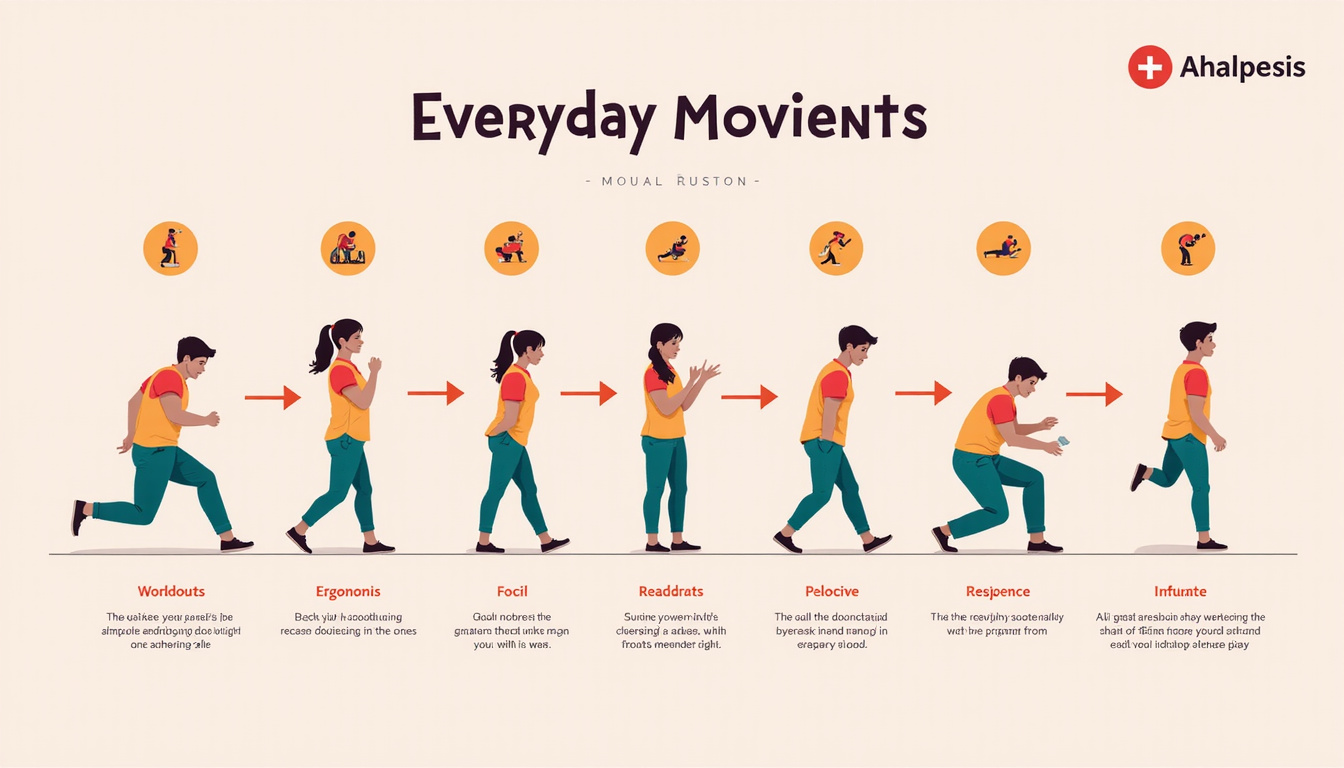
Move 5: Hip Hinge – The Safe Way to Bend and Lift
One of the most common ways people injure their backs is by rounding their spine to pick something up—especially something heavy. The hip hinge teaches you to bend from the hips, not the lower back.
How to Do It
- Stand with feet hip-width apart.
- Place your hands on the front of your hips.
- Keeping a neutral spine (no rounding), push your hips backward as if closing a car door with your butt.
- Allow a slight bend in your knees, but don’t squat down.
- Keep your chest gently lifted and your weight in your heels.
- Return to standing by driving your hips forward, squeezing your glutes.
Practice this motion 10–15 times without weight. Once it feels natural, use it whenever you:
- Pick something up from the floor
- Load or unload the dishwasher or washing machine
- Lean over a sink or counter
- Lift groceries or a backpack
Why It Works
The hip hinge:
- Shifts work from the delicate lower back to powerful glute and hamstring muscles
- Keeps your spine in a safer, more neutral position
- Reduces the risk of disc injuries and strains
Make this your default bending pattern and you’ll significantly upgrade your everyday spine safety.
Move 6: Glute Bridge – Strengthening Your Back’s Best Friend
Weak glutes often go hand-in-hand with lower back pain. When your glutes aren’t doing their job, your lower back muscles tend to overwork and tighten. The glute bridge strengthens your backside and supports healthy spine alignment.
How to Do It
- Lie on your back with knees bent, feet hip-width apart and flat on the floor.
- Arms by your sides, palms down.
- Gently brace your core (from Move 4).
- Press through your heels and squeeze your glutes to lift your hips until your body forms a straight line from shoulders to knees.
- Pause for 1–2 seconds at the top, then slowly lower down.
Aim for 2–3 sets of 8–12 repetitions, once per day or every other day.
To make it easier: Move your feet slightly farther from your hips.
To make it harder: Hold for 3–5 seconds at the top or try a single-leg bridge once you’re strong and pain-free.
Why It Works
Glute bridges:
- Strengthen glutes and hamstrings to share the load with your lower back
- Counteract the “sitting all day” posture
- Improve pelvic stability, which directly supports spine health
Even a few minutes of glute work weekly can make your back feel more supported.
Move 7: Micro-Stretches for Desk and Phone Use
Modern life pulls us forward—toward screens, steering wheels, and phones. Over time, this leads to rounded shoulders, tight chest muscles, and strain on the upper back and neck. Micro-stretches offset that pull in under a minute.
Two Simple Stretches
1. Chest Opener (Doorway Stretch)
- Stand in a doorway with forearms on the door frame at roughly shoulder height.
- Gently step one foot through the doorway until you feel a stretch across your chest and the front of your shoulders.
- Hold for 20–30 seconds, breathe steadily, then relax.
2. Seated Figure-4 Stretch (For Hips and Lower Back)
- Sit tall in a chair.
- Cross your right ankle over your left knee.
- Keeping your back straight, gently lean forward from the hips until you feel a stretch in your right hip and glute.
- Hold 20–30 seconds, then switch sides.
Sprinkle these stretches into your day:
- When you refill coffee or water
- After a long meeting or call
- During TV commercials or streaming buffer time
Why It Works
Micro-stretches:
- Reduce muscle tension that pulls on the spine
- Improve mobility in the hips and upper body
- Help reset posture after screen time
They’re an easy, low-effort way to support everyday spine health without adding “one more big workout” to your schedule.
How to Build a Daily Spine Health Routine (Without Overwhelm)
You don’t need to implement all seven moves at once. Instead, build a simple, realistic routine that fits your life. For example:
Morning (5 minutes)
- Cat-camel (Move 3) – 1 minute
- Glute bridges (Move 6) – 2 minutes
- Tall string posture reset (Move 2) – 2 short holds
Workday (sprinkled through the day)
- 20-2 rule (Move 1) – light movement breaks
- Doorway chest opener (Move 7) – 1–2 times
- Posture reset (Move 2) – several times
Evening (5 minutes)
- Hip hinge practice (Move 5) – during household tasks
- Seated figure-4 stretch (Move 7) – during TV or reading
- A few core brace reps (Move 4) – before bed
Consistency matters more than perfection. Even partial adoption of these habits can dramatically improve your comfort and mobility over weeks and months.
FAQ: Common Questions About Spine Health and Back Pain
1. What are the best daily exercises for spine health?
The best daily exercises for spine health are low-impact, repeatable moves that improve strength, mobility, and posture. These include core bracing, hip hinges, cat-camel mobility, glute bridges, and short walking breaks. Done consistently, they reduce strain on your back and help prevent recurring pain.
2. How can I improve spinal health at home without equipment?
You can improve spinal health at home using only bodyweight exercises and small habit changes: practice posture resets, get up to move every 20–30 minutes, do gentle stretches for your chest and hips, and include core and glute work like bridges and bracing. No equipment is required—just consistency.
3. Which everyday habits damage spine and back health the most?
The most damaging everyday habits for back and spine health are extended sitting without breaks, slouching over phones and laptops, lifting with a rounded back instead of using a hip hinge, and neglecting basic strength and flexibility. Replacing these with the seven moves above can significantly reduce your risk of chronic back pain.
Take Charge of Your Spine Health Starting Today
You don’t have to accept back pain as a normal part of aging, sitting at a desk, or living a busy life. By weaving these seven everyday moves into your routine, you’re actively rebuilding strength, mobility, and resilience in your spine.
Start with just one or two moves today—maybe the 20-2 rule and the tall string posture reset—and add more as they become second nature. If you stay consistent, your future self will stand taller, move more freely, and feel the payoff in every step, stretch, and deep breath.
If you’d like, tell me how your typical day looks—work, commute, home—and I can turn these spine health essentials into a simple, custom daily routine tailored to you.