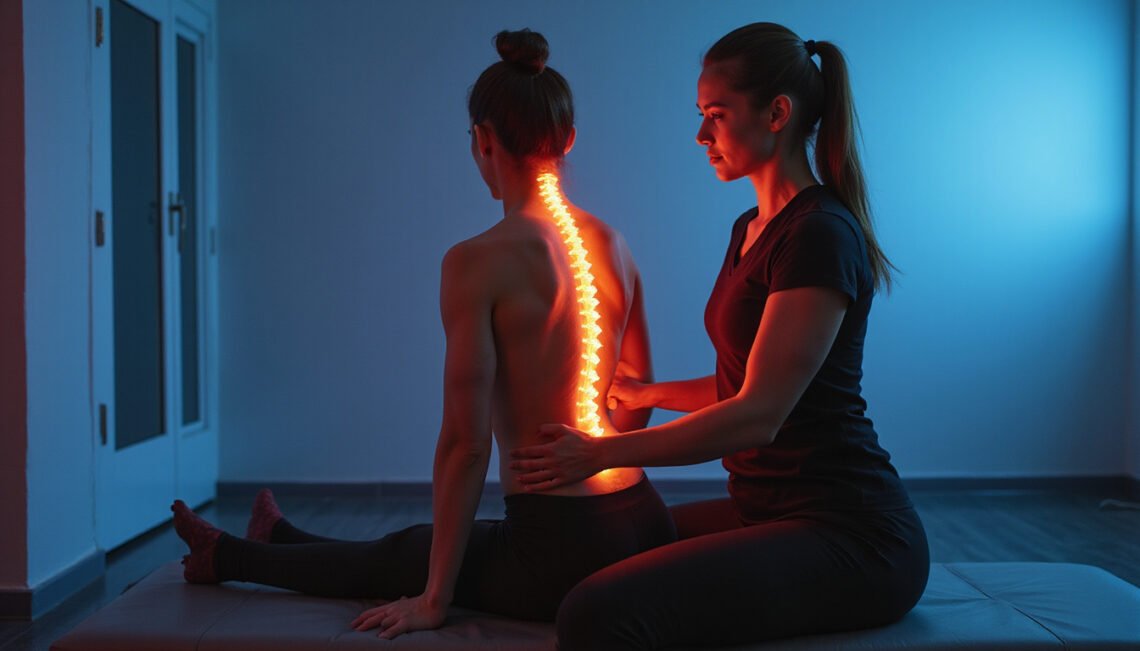
Back pain can feel random and unpredictable—one day you’re fine, the next you’re stuck on the couch. The hidden link behind this rollercoaster is often poor control of the muscles that protect your spine. That’s where dynamic stabilization comes in. It’s one of the core strategies physical therapists use to reduce pain, prevent flare-ups, and help people move with confidence again.
This article breaks down how dynamic stabilization works, why it matters for your back, and how therapists quietly use it every day to get lasting results.
What is dynamic stabilization?
Dynamic stabilization is your body’s ability to keep the spine stable while you’re moving, lifting, twisting, or changing positions. Instead of relying on rigid bracing or external supports, it uses coordinated muscle activation—especially around the core, hips, and spine—to:
- Control joint motion
- Absorb and distribute forces
- Protect sensitive structures like discs, ligaments, and nerves
Unlike static stabilization (holding a fixed posture, like a plank), dynamic stabilization is about maintaining control through motion—walking, squatting, reaching, bending, or even sneezing.
Physical therapists target this system because research shows that people with low back pain often have delayed, weak, or poorly coordinated activation of deep stabilizing muscles like the multifidus and transverse abdominis (source: National Library of Medicine).
Why your spine needs more than strength
Most people think back pain is only about weak muscles. Strength matters, but for your spine, timing and coordination matter just as much:
- The right muscles must turn on at the right time
- They must work together in the right sequence
- They must adapt to changing positions and loads
When this control system breaks down, certain areas of your spine can move too much or too suddenly, irritating joints and nerves. Over time, that can trigger:
- Recurrent “mystery” flare‑ups
- Tight, protective muscle spasms
- Stiffness that never quite goes away
- Pain with everyday movements (getting out of a chair, rolling in bed, bending to tie shoes)
Dynamic stabilization training aims to restore this fine control so your back doesn’t have to “guess” how to move safely.
The core of dynamic stabilization: more than just abs
To a physical therapist, your “core” is not just a six‑pack. It’s a cylinder of muscles that surrounds and supports your spine and pelvis:
- Front: Transverse abdominis (deep abdominal muscle), rectus abdominis
- Sides: Internal and external obliques
- Back: Multifidus and deep spinal stabilizers
- Bottom: Pelvic floor muscles
- Top: Diaphragm
In effective dynamic stabilization:
- The deep core (transverse abdominis, multifidus, pelvic floor, diaphragm) turns on gently and consistently.
- The global muscles (rectus abdominis, big back muscles, hip muscles) add power and movement on top of that stability.
When the deep system is underperforming, the bigger muscles try to compensate, often by clenching, gripping, or overworking—creating stiffness and fatigue rather than true support.
How physical therapists secretly assess your stabilization
A skilled PT rarely relies on just “Does this hurt?” They’re constantly evaluating your control system. Some subtle tests they use:
1. How you move, not just if you move
They watch how your spine and hips behave when you:
- Sit down and stand up
- Bend forward and return
- Reach overhead
- Step, lunge, or squat
They’re looking for things like:
- Excessive movement in specific spinal segments
- “Giving way” or sudden jerks
- Overuse of back or neck muscles instead of hips and core
- Shifting weight off one side to “protect” pain
2. Deep muscle activation tests
On the table, they may ask you to:
- Gently “draw your lower belly in” without holding your breath
- Lift one leg while lying on your back or stomach
- Hold a small movement while they apply light resistance
They’re checking:
- Can you activate the deep stabilizers without tensing everything else?
- Does your pelvis or spine wobble when a challenge is added?
- Does pain increase when the stabilizers fail?
3. Balance and control challenges
Simple balance tasks (single‑leg stance, mini‑squats, stepping in different directions) can reveal:
- How well your system reacts to shifts in load
- Whether your back stiffens up instead of adapting
- Whether your hips and core share the work—or dump it into your spine
All of this guides the specific dynamic stabilization strategies they choose for you.
The three pillars of dynamic stabilization training
Physical therapists typically build a stabilization program around three progressive pillars:
1. Awareness and activation
Goal: Wake up the deep stabilizers and teach you what true support feels like.
Typical strategies:
- Diaphragmatic breathing: To coordinate the diaphragm with core and pelvic floor.
- Gentle deep core activation: Low‑intensity “bracing” that doesn’t involve breath‑holding or clenching.
- Multifidus activation: Small, precise movements near the painful area of the spine.
The key in this stage: low effort, high control.
2. Control through simple movement
Goal: Maintain that gentle stability while your arms or legs move.
Examples:
- Marching in place while lying on your back with a supported spine
- Bridges with slow, controlled lifting and lowering
- Side‑lying leg lifts while keeping the pelvis steady
- Seated or standing arm movements while keeping the ribs and lower back quiet
Here, dynamic stabilization begins to look more like real life—but in low‑risk positions.

3. Integration into daily function
Goal: Translate your new control into the movements that actually matter to you.
Your PT might coach you through:
- Squats, deadlifts, or hip hinges for safe bending and lifting
- Lunges, step‑ups, and stair work
- Pushing, pulling, and carrying tasks
- Sports‑specific motions like swinging, running, or serving
The secret here: your therapist isn’t just giving you “exercises”—they’re retraining your nervous system to automatically protect your back in motion.
A simple example progression (for educational purposes)
These examples are for understanding, not a substitute for individualized care. Always consult a professional if you have pain, numbness, or a recent injury.
-
Supine diaphragmatic breathing
- Lie on your back, knees bent.
- Breathe into your lower ribs and belly, letting your chest stay relatively relaxed.
- Exhale slowly, feeling gentle engagement around your midsection.
-
Deep core activation with marching
- Maintain that gentle engagement.
- Slowly lift one foot a few inches, then lower. Alternate sides.
- Avoid arching your back or holding your breath.
-
Bridge with slow lowering
- From the same position, lift your hips into a bridge.
- Focus on control as you slowly lower, keeping your spine aligned.
-
Hip hinge with dowel or broomstick
- Stand with a dowel touching the back of your head, upper back, and tailbone.
- Gently brace your core as you push hips back, letting your torso tip forward while the stick maintains contact at those three points.
- This mimics safe bending patterns using dynamic stabilization.
A PT would modify or replace these depending on your specific diagnosis, pain level, and goals.
Common mistakes that sabotage stabilization
Many people try to “protect” their back in ways that actually increase stress. Physical therapists often have to undo these habits:
- Over‑bracing: Gripping your abs as hard as possible. This can compress the spine, restrict breathing, and exhaust your muscles.
- Breath‑holding: Increases internal pressure and tension, reducing your body’s ability to adapt dynamically.
- Moving from the back instead of hips: Rounding or extending the lower back for every reach, twist, and bend instead of hinging at the hips.
- Training only big muscles: Heavy sit‑ups, back extensions, and machines without first restoring the deep stabilizers.
- Jumping to advanced exercises too soon: High‑intensity moves without baseline control can flare pain and reinforce compensation patterns.
True dynamic stabilization feels steady but easy, not forced. You should be able to breathe and talk while maintaining it.
How dynamic stabilization helps end back pain long-term
When done correctly and consistently, dynamic stabilization can:
- Reduce pain sensitivity by limiting excessive or jerky joint motion.
- Break the pain–spasm cycle as muscles learn to work efficiently instead of locking up.
- Improve movement confidence, so daily tasks don’t feel threatening to your back.
- Distribute load properly between spine, hips, and legs, protecting irritated areas.
- Prevent recurrence, because you’re no longer relying on luck or rigid bracing to get through movements.
This is why many physical therapists focus less on “cracking” your back or isolating one tight muscle and more on teaching your entire system to stabilize dynamically.
Who benefits most from dynamic stabilization?
You may be a good candidate for dynamic stabilization–focused rehab if you:
- Have recurring episodes of low back pain that come and go
- Notice pain with transitions: getting up, rolling over, bending, or lifting
- Feel “fragile,” like the wrong move might “tweak” something
- Have been told you have instability, hypermobility, or a history of sprains/strains
- Experience more stiffness and guarding than sharp, localized pain
- Are returning to sport or physical work after a back injury
Even if imaging shows disc bulges, arthritis, or degenerative changes, improving dynamic stabilization can often reduce symptoms and improve function, because it changes how those structures are loaded and protected.
FAQ: dynamic stabilization and back pain
Q1: What is dynamic lumbar stabilization and how is it different from regular core training?
Dynamic lumbar stabilization specifically targets the muscles and control around the lower spine, teaching them to support the lumbar region during movement. Regular core training often focuses on strength or appearance (like crunches), while dynamic lumbar stabilization emphasizes timing, coordination, and low‑intensity endurance for spinal protection.
Q2: Can dynamic spine stabilization exercises help chronic back pain?
Yes, for many people with chronic back pain, dynamic spine stabilization exercises are a key part of rehab. By restoring coordinated support around the spine, they can reduce irritation, improve movement patterns, and help prevent flare‑ups. The exercises need to be tailored to your condition and progressed thoughtfully.
Q3: How often should I do dynamic stabilization exercises for my back?
Frequency depends on your condition, but many physical therapists recommend brief, frequent practice: often daily for gentle activation work and 3–4 times per week for more challenging dynamic stabilization exercises. The goal is to retrain your nervous system, which responds best to consistent, repeat exposure rather than occasional intense sessions.
Ready to put dynamic stabilization to work for your back?
You don’t have to live in fear of the next flare‑up or keep guessing which stretch or gadget might finally fix your pain. Dynamic stabilization gives you a clear, evidence‑based path: retrain your body to support your spine in the exact ways daily life demands.
If you’re dealing with persistent or recurring back pain, consider working with a licensed physical therapist who specializes in spine care. They can evaluate your movement, design a stabilization program specific to your body, and guide you safely from basic activation to real‑world function.
Start by booking an assessment, asking directly about dynamic stabilization, and committing to a few weeks of focused practice. With the right guidance, you can move from constant guarding and worry to a back that feels supported, resilient, and ready for whatever your day—and life—requires.