If you or a loved one has been told you need a CT scan, it’s normal to feel a mix of relief and anxiety. You may wonder: Is it safe? Will it hurt? Is it really necessary? Understanding both the risks and benefits of CT scanning can help you make informed decisions, ask better questions, and feel more confident before, during, and after the exam.
What is a CT scan?
A CT scan (computed tomography scan) is an imaging test that uses X-rays and computer processing to create detailed cross‑sectional images of the body. Unlike a standard X-ray, which shows a flat image, a CT scan produces multiple “slices” that can be reconstructed into 3D views of bones, organs, blood vessels, and soft tissues.
CT scans are commonly used to examine:
- The brain and spine
- Chest and lungs
- Abdomen and pelvis
- Bones and joints
- Blood vessels (CT angiography)
Because CT scans are fast and very detailed, they’re especially useful in emergencies, complex diagnoses, and when other imaging tests don’t provide enough information.
Why doctors recommend a CT scan
Understanding why a CT scan has been ordered is the first step in weighing risks and benefits. Doctors commonly request CT scans to:
1. Diagnose or rule out serious conditions
CT imaging can rapidly help identify:
- Strokes and brain bleeds
- Blood clots in the lungs (pulmonary embolism)
- Internal bleeding or organ damage after trauma
- Tumors, cysts, and certain cancers
- Infections and abscesses
- Kidney stones and gallstones
In many of these situations, timing is critical. A prompt CT scan can guide life-saving treatment decisions.
2. Plan surgeries and treatments
Surgeons, oncologists, and other specialists rely on CT scans to:
- Map the exact size and location of a tumor
- Plan radiation therapy fields
- Guide minimally invasive procedures
- Assess whether surgery is feasible and how best to approach it
The high level of anatomical detail gives clinicians a “road map” before they operate or deliver targeted therapies.
3. Monitor disease progression or response to treatment
For people with chronic conditions or cancer, periodic CT scans can:
- Show whether a tumor is shrinking, stable, or growing
- Check for recurrences after treatment
- Track changes in lung disease or other organ conditions
- Confirm that post-surgical healing is progressing as expected
This information helps doctors decide whether to continue, adjust, or change treatment plans.
Key benefits of a CT scan
When considering any medical test, it’s helpful to focus on what you gain from it. Major benefits of a CT scan include:
High diagnostic accuracy
Compared to regular X-rays, CT scans offer much more detailed and precise images. They can reveal small abnormalities and subtle changes in tissue density that might otherwise go unnoticed. This increases the chances of getting a correct diagnosis early.
Speed — especially in emergencies
A CT scan is typically completed in minutes, and in emergencies the scan and interpretation can be extremely fast. For stroke, trauma, and suspected internal bleeding, this speed is critical. Rapid imaging can make the difference between full recovery and permanent damage.
Noninvasive and painless
Most CT scans:
- Do not require incisions
- Are not painful
- Allow you to return to normal activities right after the exam
Even when contrast dye is used, the procedure itself remains minimally invasive (usually just an IV catheter).
3D views that other tests can’t provide
CT scans can produce 3D reconstructions of organs, bones, and blood vessels, offering perspectives that ultrasound or plain X-rays can’t match. This 3D capability is especially valuable for evaluating fractures, complex anatomy, and vascular problems.
Broad availability
Unlike some advanced imaging technologies, CT scanners are widely available in hospitals and imaging centers. This accessibility means more patients can get timely, high-quality imaging.
Understanding the risks of a CT scan
No medical test is entirely risk‑free. For CT scans, the main concerns are:
- Exposure to ionizing radiation
- Potential reactions or side effects from contrast dye
- Rare long-term cancer risk from cumulative radiation
Radiation exposure
CT scans use X-rays, which are a form of ionizing radiation. This type of radiation has enough energy to potentially damage DNA in cells. While the radiation dose from a single CT is relatively low, it is higher than most standard X-rays.
Approximate comparisons:
- Chest X-ray: Very low dose
- CT of the head: Several times the dose of a chest X-ray
- CT of the abdomen/pelvis: Higher dose than a head CT
According to the U.S. Food and Drug Administration, for most people the individual risk from a medically necessary CT scan is small compared with the health benefit of an accurate diagnosis and appropriate treatment (source: FDA).
Key points about radiation risk:
- A single CT scan is unlikely to significantly increase your lifetime cancer risk.
- Repeated scans over many years, especially at younger ages, can add up.
- Children are more sensitive to radiation than adults.
- Pregnant patients require extra caution due to fetal sensitivity.
Contrast dye risks
Some CT scans use a special contrast material (often iodine-based) that’s injected into a vein or taken by mouth to better highlight blood vessels, organs, and inflammation.
Possible issues include:
- Allergic reactions:
- Mild: itching, rash, hives
- Rare severe reactions: difficulty breathing, low blood pressure
- Kidney effects:
- In people with pre-existing kidney disease or diabetes, IV contrast can sometimes worsen kidney function.
Before your CT scan, you’ll usually be asked about:
- History of contrast reactions
- Asthma or severe allergies
- Kidney disease or reduced kidney function
- Use of certain diabetes medications
This information helps the radiology team minimize risk and choose the safest approach.
Discomfort or anxiety
While a CT scan is painless, some patients experience:
- Claustrophobia or anxiety lying in the scanner
- Discomfort holding still or holding their breath
- A warm sensation or metallic taste when contrast is injected
These effects are temporary and usually minor, but they’re worth mentioning so the staff can support you (for example, by offering reassurance, clear instructions, or occasionally a mild sedative).
Balancing CT scan risks and benefits
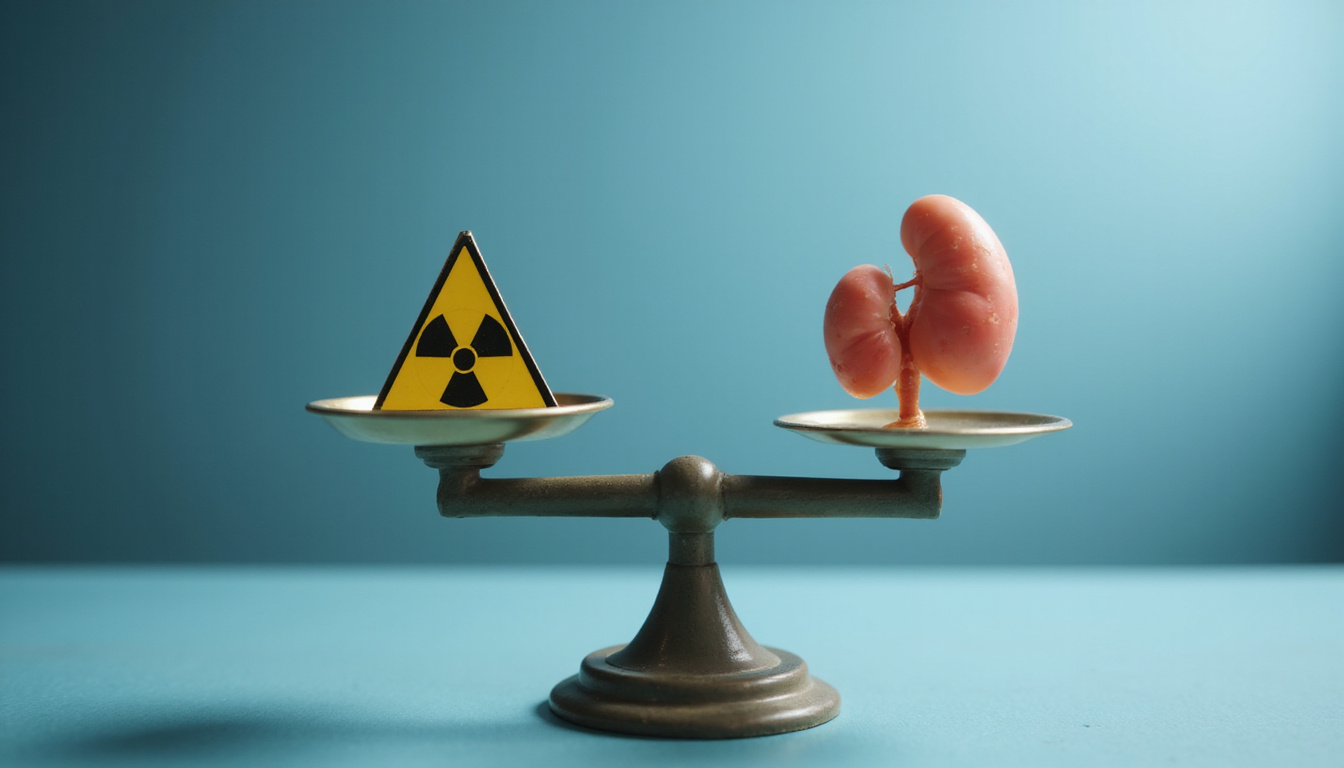
The central question is: Do the potential benefits of this CT scan outweigh the risks for me? In most medically justified situations, the answer is yes.
Here’s how clinicians think about that balance:
-
Is the CT scan likely to change management?
If the results will directly guide important decisions (surgery vs. no surgery, start vs. stop medication, emergency treatment), the benefit is high. -
Are there safer alternative tests?
Ultrasound or MRI may provide similar information without radiation, depending on the body part and problem. -
Is the timing critical?
When rapid diagnosis is urgent (e.g., stroke, trauma), CT is often the best – and sometimes the only – practical choice. -
What is the patient’s age and medical history?
Young patients, pregnant patients, and those who’ve had multiple prior scans may need special consideration.
Open communication with your healthcare provider is key. If you’re unsure, ask explicitly: “What are the risks and benefits of this CT scan for me, and are there alternatives?”
When a CT scan is clearly worth it
Many clinical scenarios almost universally justify CT imaging because of the potential to save life or prevent serious harm. Examples include:
- Suspected stroke or sudden, severe headache
- Major trauma (car accidents, falls, significant injuries)
- Symptoms of internal bleeding or ruptured organ
- Suspected pulmonary embolism (clot in the lung)
- Suspected appendicitis or other acute abdominal emergencies
- Certain cancer staging or treatment-planning situations
In these cases, delaying or avoiding a CT scan can be far riskier than the scan itself.
When to consider alternatives to CT
There are also situations where another imaging method may be better:
-
Musculoskeletal injuries (tendons, ligaments, cartilage):
MRI often provides more detail without radiation. -
Pregnancy (non-emergent issues):
Ultrasound is usually first choice; MRI may be used when more detail is needed. -
Children, when time is not critical:
Ultrasound or MRI may be favored to limit radiation exposure. -
Routine follow-up when minimal change is expected:
Non-radiation options may sometimes be adequate, depending on the condition.
Always feel comfortable asking your provider, “Could an ultrasound or MRI replace a CT scan in my case?”
How to prepare for a CT scan and reduce risk
Taking a few simple steps can make your CT scan safer and more comfortable.
Before the scan
Tell your doctor or imaging center if you:
- Are pregnant or might be pregnant
- Have kidney disease or take medications affecting the kidneys
- Have had a previous reaction to CT contrast dye
- Have asthma or multiple severe allergies
- Have diabetes, especially if you take metformin
- Have implanted medical devices
You may be asked to:
- Avoid eating for a few hours before the scan (especially if contrast is used)
- Drink extra fluids after contrast to help flush it from your system
- Arrive early to complete paperwork and consent forms
During the scan
To improve safety and image quality:
- Follow the technologist’s breathing and positioning instructions.
- Stay as still as possible while the images are taken.
- Immediately report any unusual sensations (trouble breathing, intense itching, chest tightness).
The staff are trained to respond quickly if any reaction occurs.
After the scan
Most people can resume normal activities right away. You may be advised to:
- Drink extra water to help clear contrast dye from your body
- Watch for delayed symptoms such as rash, itching, or difficulty urinating and contact your doctor if they appear
Questions to ask before your CT scan
If you want to be an active participant in your care, consider asking:
- Why is a CT scan the best test for my situation?
- Could another imaging method (ultrasound or MRI) work as well?
- Will contrast dye be used, and is it safe for me?
- How will the results affect my treatment decisions?
- How many CT scans have I had in recent years, and does that matter?
A good provider will welcome these questions and explain their reasoning clearly.
FAQ: Common questions about CT scans
Q1: How safe is a CT scan compared to an MRI?
Both tests are generally safe when medically appropriate. A CT scan uses ionizing radiation, which carries a small long-term risk, especially with repeated exposure. MRI uses magnetic fields and radio waves instead of radiation. However, CT scans are often faster, more widely available, and better for certain conditions (like acute bleeding or lung disease). The safest test is the one that best answers your clinical question with the lowest overall risk.
Q2: Can a CT scan cause cancer later in life?
The radiation from a single CT scan slightly increases lifetime cancer risk, but for most adults this increase is very small. The risk is higher with multiple scans over many years, and in children. When a CT scan is needed to diagnose or treat a potentially serious condition, the benefit typically far outweighs this small long-term risk. Tracking your imaging history and avoiding unnecessary repeat scans helps keep cumulative exposure low.
Q3: What if I’m allergic to CT contrast dye?
If you’ve had a prior reaction to contrast during a CT scan, tell your doctor and the imaging center in advance. In many cases, they can take precautions such as pre-medication, using a different contrast agent, or choosing an alternative imaging test. Mild reactions can often be managed safely, but severe past reactions may mean avoiding that type of contrast in the future.
A medically necessary CT scan can be a powerful tool for protecting your health, guiding treatment, and offering peace of mind when symptoms are unexplained. If your doctor has recommended this test, use the opportunity to discuss why it’s needed, what the alternatives are, and how the results will shape your care.
If you have an upcoming CT scan or are unsure whether to proceed, schedule time with your healthcare provider or radiology team to review the specific risks and benefits in your case. An informed conversation now can help you move forward with clarity, confidence, and the reassurance that you’re making the best choice for your health.