Meralgia paresthetica is a nerve condition that can cause burning pain, tingling, and numbness on the outer side of your thigh. Because it doesn’t affect strength or movement, it’s often misdiagnosed as a hip, back, or muscle problem. Understanding what’s really going on—and how to relieve it quickly—can save you months (or years) of frustration and discomfort.
Below, you’ll learn the most surprising symptoms, the real causes, and the fastest options for relief, from home strategies to medical treatments.
What Is Meralgia Paresthetica?
Meralgia paresthetica is a condition caused by irritation or compression of the lateral femoral cutaneous nerve (LFCN), a sensory nerve that supplies feeling to the outer (lateral) part of your thigh.
Key points:
- It’s a sensory nerve only, so:
- No muscle weakness
- No changes in your ability to walk or move the leg
- Symptoms are typically limited to feeling (pain, tingling, numbness) on one side of the outer thigh.
- It’s sometimes called Bernhardt-Roth syndrome.
Because it does not affect joints or muscles directly, the pain can feel confusing and is often mistaken for sciatica, hip arthritis, or a pulled muscle.
Surprising Symptoms You Might Not Expect
Many people only think of pain when they hear “nerve problem,” but meralgia paresthetica can produce a range of unusual sensations. Some of the most surprising include:
1. Burning Pain on the Outer Thigh
The classic symptom is a burning or searing pain on the outside of the thigh, usually:
- On one side only
- Worsening with walking, standing, or hip extension
- Improving when sitting or flexing the hip
The skin can be so sensitive that even light touch—like bedsheets or clothing—feels unbearable.
2. Patchy Numbness or “Dead Zone” of Skin
You may notice:
- A well-defined patch on the outer thigh that feels “numb”
- Reduced sensitivity to temperature or light touch
- A strange contrast: pain in some spots, numbness in others
This patch doesn’t move around; it generally stays in the same zone supplied by the lateral femoral cutaneous nerve.
3. Electric or “Ant Crawling” Sensations
Some people describe:
- Electric shock-like zaps
- Pins and needles or “ants crawling” under the skin
- Intermittent jabs or stabbing pains
These sensations may come and go and can be triggered by standing, walking, or even tight waistbands.
4. Pain That Changes With Clothing or Posture
A hallmark clue of meralgia paresthetica is that symptoms often:
- Worsen with:
- Tight belts, shapewear, or waistbands
- Heavy tool belts or holsters
- Standing or walking for long periods
- Improve with:
- Looser clothing
- Sitting with hips flexed
- Bending slightly forward
This posture dependence strongly suggests a nerve compression issue rather than a pure joint or muscle problem.
5. No Weakness, But Still Disabling
You may:
- Walk normally from a strength perspective
- Have normal hip and knee function on exam
- Yet feel too uncomfortable to stand or walk for long
This disconnect—no weakness, but severe pain or burning—frequently leads to confusion and delayed diagnosis.
What Actually Causes Meralgia Paresthetica?
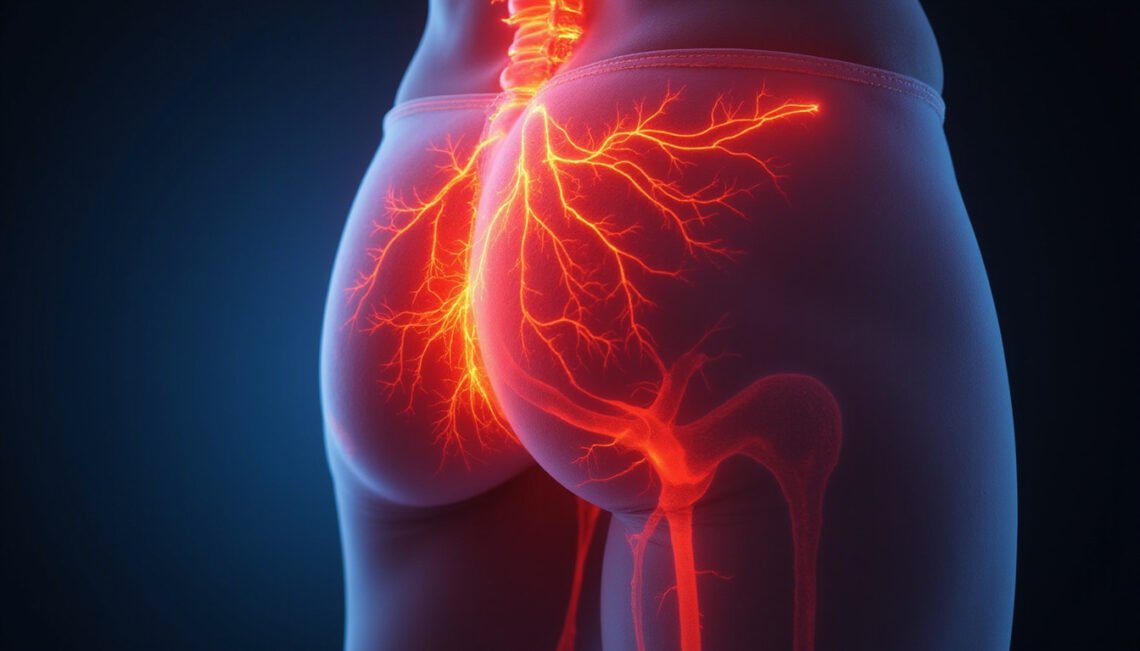
The lateral femoral cutaneous nerve travels from your lower spine, across the pelvis, under (or through) the inguinal ligament near your hip, then out to your thigh. Meralgia paresthetica happens when this nerve is compressed along its path, most often as it passes under the inguinal ligament near the front of the hip.
Common External Triggers
Anything that squeezes or puts pressure near the front of the hip or waist can irritate the nerve:
- Tight belts or waistbands (including jeans, uniforms, or dress belts)
- Tool belts, holsters, or heavy utility belts
- Shapewear, corsets, or body shapers
- Tight motorcycle or cycling gear
- Seat belts pressing across the hip area (especially after accidents or long trips)
Even modest, constant pressure for hours or days at a time can be enough to trigger symptoms.
Internal Causes and Risk Factors
Certain factors inside the body can increase the risk of lateral femoral cutaneous nerve compression:
-
Obesity or sudden weight gain
Extra tissue around the waist/hip can increase pressure in the inguinal region. -
Pregnancy
The growing uterus and changes in posture can stretch or compress the nerve. -
Diabetes
Diabetic nerve changes (neuropathy) can make the nerve more vulnerable to irritation. -
Pelvic or hip surgeries
Scar tissue or changes in anatomy after surgery can trap or irritate the nerve. -
Trauma or injury
Direct blows, seatbelt injuries, or falls on the hip can trigger symptoms.
Structural or Anatomical Variations
Some people naturally have a nerve path that makes compression more likely—for example, passing through a split in the inguinal ligament instead of beneath it. This doesn’t cause problems for everyone, but with added risk factors (weight gain, tight clothing, pregnancy), symptoms can appear.
How Is Meralgia Paresthetica Diagnosed?
There’s no single blood test or standard X-ray that confirms meralgia paresthetica. Instead, diagnosis is based on:
1. Symptom Pattern and Physical Exam
A healthcare provider will:
- Ask where exactly your symptoms occur
- Test for:
- Sensory changes (numbness, reduced touch, or temperature)
- Pain to light touch or pressure on the outer thigh
- Check for:
- Hip joint problems
- Low back issues
- Muscle strength and reflexes (usually normal in meralgia paresthetica)
Pain or tingling worsened by pressing near the inguinal ligament or moving the hip into extension can be a strong clue.
2. Ruling Out Other Conditions
Your provider may order imaging or tests to rule out other causes:
- X-rays or MRI of the hip or lumbar spine to exclude arthritis, disc herniation, or spinal stenosis.
- Electromyography (EMG) and nerve conduction studies to distinguish meralgia paresthetica from radiculopathy or other neuropathies.
3. Diagnostic Nerve Block
In some cases, a local anesthetic injection near the lateral femoral cutaneous nerve is used:
- If pain and tingling disappear shortly after the injection, it strongly supports the diagnosis.
- This can also offer temporary relief and guide treatment decisions.
Fast Relief Options You Can Try Right Away
If your symptoms are mild to moderate, several self-care steps may help quickly.
1. Remove the Pressure
This is often the most powerful and fastest intervention:
- Switch to loose-fitting pants and avoid low-rise jeans that dig into the hip.
- Loosen or avoid belts, especially rigid or heavy ones.
- Adjust tool belts, holsters, or waist packs so they don’t press on the hip crease.
- Choose maternity-friendly or stretch waistbands during pregnancy.
Many people notice improvement within days to weeks after consistently eliminating pressure.
2. Rest and Activity Modification
Short-term changes can calm irritation:
- Reduce:
- Prolonged standing and walking
- Activities that extend the hip (e.g., long strides, steep uphill walking)
- Increase:
- Sitting breaks with hips slightly flexed
- Gentle movements and avoidance of positions that make symptoms worse
3. Over-the-Counter Pain Relief
With your healthcare provider’s guidance, over-the-counter medications can provide symptom relief:
- NSAIDs (e.g., ibuprofen, naproxen) for pain and inflammation
- Topical treatments:
- Lidocaine patches or gels
- Capsaicin creams (may burn at first but can help over time)
These don’t fix the root cause but can help manage pain while you address compression.
4. Gentle Stretching and Positioning
Some people benefit from:
- Gentle hip flexor and quadriceps stretches (avoiding extremes that aggravate pain)
- Sleeping positions that reduce tension:
- Side-lying with a pillow between the knees
- Avoiding heavy blankets pressing on the outer thigh
Always stop if a stretch significantly worsens pain or tingling.
When Home Care Isn’t Enough: Medical Treatment Options
If symptoms last more than a couple of months, are severe, or interfere with daily life, medical treatments for meralgia paresthetica can offer faster, more targeted relief.
1. Prescription Medications for Nerve Pain
Doctors may recommend medications that specifically target nerve pain, such as:
- Gabapentin or pregabalin
- Duloxetine or certain other antidepressants used for neuropathic pain
These don’t cure the condition but can significantly reduce burning and tingling while other measures work to relieve the compression.
2. Corticosteroid Injections
A corticosteroid plus anesthetic injection around the lateral femoral cutaneous nerve can:
- Rapidly reduce inflammation
- Provide substantial pain relief, sometimes for weeks to months
- Confirm the diagnosis if symptoms improve dramatically
Injections are typically done under ultrasound guidance for accuracy.
3. Physical Therapy
A physical therapist familiar with nerve entrapment syndromes may focus on:
- Posture and movement patterns that reduce inguinal ligament pressure
- Gentle nerve-gliding exercises
- Core and hip stability to normalize mechanics
While PT can’t change the nerve’s exact path, it can minimize mechanical stress on the area and support long-term relief.
4. Weight Management Support
For those with overweight or obesity, even modest weight loss can reduce pressure on the nerve. A combination of:
- Nutrition counseling
- Low-impact exercise
- Behavior strategies
can improve symptoms and overall health. Many patients see notable improvement as waist circumference decreases.
5. Surgical Options (For Persistent, Severe Cases)
Surgery is rarely needed, but for severe, long-lasting meralgia paresthetica that doesn’t respond to other treatments, a surgeon may consider:
- Nerve decompression: releasing structures compressing the lateral femoral cutaneous nerve.
- Neurectomy: cutting the nerve to permanently remove pain (but this also creates permanent numbness in the nerve’s territory).
Surgery is usually a last resort after conservative measures have been fully tried.
Prognosis: Does Meralgia Paresthetica Go Away?
The outlook is often good. According to the Mayo Clinic and other major centers, many people improve or fully recover once the underlying cause of compression is addressed (source: Mayo Clinic).
Outcomes vary:
-
Mild, recent-onset cases
Frequently improve within weeks to a few months with simple measures like loosening clothing and modifying activities. -
Chronic or recurrent cases
May need a combination of medication, injections, weight management, and physical therapy. -
Severe, treatment-resistant cases
Sometimes require surgical evaluation.
Acting early—before the nerve is chronically irritated—offers the best chance of quick and lasting relief.
Practical Prevention Tips
Once your symptoms start to calm down, these strategies can help prevent flare-ups:
- Choose looser waistbands and avoid rigid belts when possible.
- If you must wear a tool belt or holster, shift its position or use harness-style supports.
- Keep an eye on waist circumference and address weight gain early.
- Take movement breaks from prolonged standing or walking.
- Be cautious with tight shapewear or compression garments around the hips.
Listening to early warning signs—like mild burning or tingling with tight clothing—can help you prevent a full-blown flare.
FAQ About Meralgia Paresthetica and Related Nerve Pain
1. How do I know if my thigh pain is meralgia paresthetica or sciatica?
Meralgia paresthetica usually causes burning, tingling, or numbness on the outer thigh only, without weakness, and is often worsened by tight clothing or standing. Sciatica typically starts in the buttock or lower back, may travel down the back of the leg, and can involve weakness or changes in reflexes. A clinician can differentiate with a physical exam and, if needed, imaging and nerve tests.
2. Can meralgia paresthetica be cured, or will it come back?
Many cases of meralgia paresthetica improve or resolve when the cause of nerve compression is removed (e.g., changing clothing, losing weight, adjusting belts). However, if the same pressures return—tight belts, weight gain, certain jobs—symptoms can recur. Long-term prevention focuses on minimizing repeated pressure on the nerve.
3. What is the best treatment for meralgia paresthetica pain at night?
Nighttime meralgia paresthetica pain often improves with:
- Looser sleepwear and avoiding tight waistbands
- Side-lying positions with pillows to reduce tension
- Topical lidocaine patches or gels, under medical guidance
If nighttime symptoms are frequent or severe, talk with your doctor about nerve pain medications or a possible nerve block injection.
If burning, tingling, or numbness along your outer thigh is disrupting your life, you don’t have to simply “live with it.” Meralgia paresthetica is a well-recognized, treatable cause of these symptoms—once it’s correctly identified. Start by reducing pressure around your hips and waist, then consult a healthcare professional for a tailored plan that may include medications, physical therapy, or targeted injections. Taking action now can protect your nerve, ease your pain, and help you return to walking, working, and sleeping in comfort.