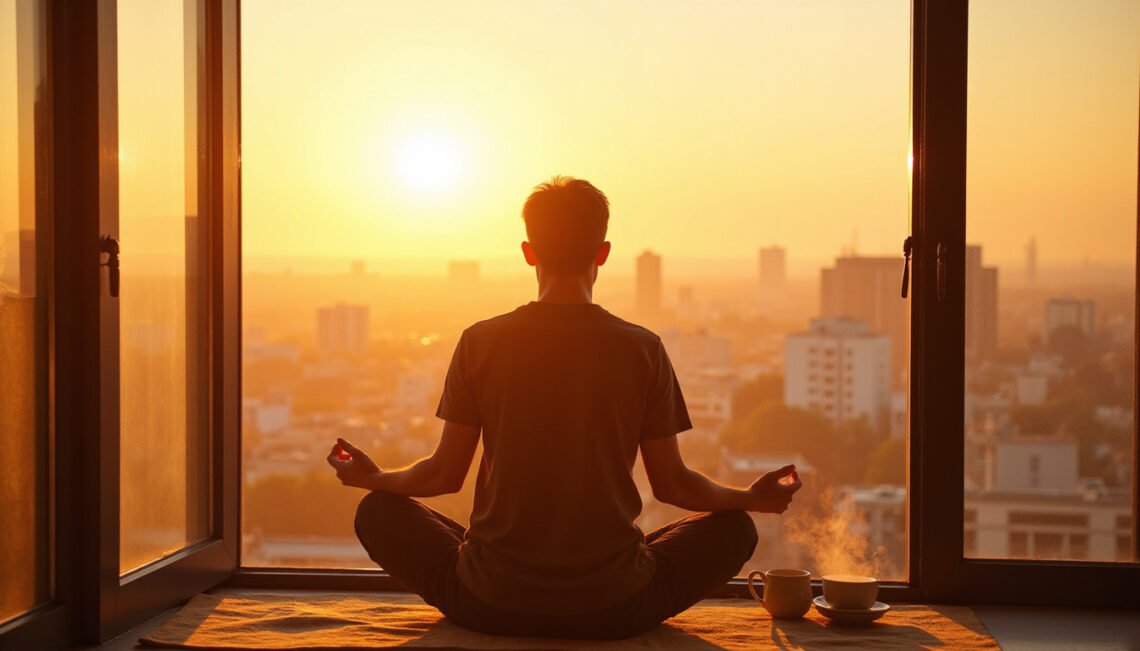
Mindfulness meditation is one of the simplest, most accessible ways to protect yourself from chronic stress and burnout—yet many people imagine it requires long sessions, special cushions, or a totally quiet room. In reality, a few quick daily rituals, done consistently, can reset your nervous system, sharpen your focus, and restore a sense of calm in under ten minutes.
This guide shows you how to fold practical, people-friendly mindfulness practices into a busy day so you can reduce stress without overhauling your life.
What Is Mindfulness Meditation, Really?
At its core, mindfulness meditation is the practice of paying attention, on purpose, to the present moment—without judgment. It’s not about emptying your mind or forcing yourself to be calm. Instead, you:
- Notice what’s happening (thoughts, feelings, body sensations, surroundings)
- Acknowledge it without fighting or clinging to it
- Gently return your attention to an anchor (often the breath)
Over time, this builds the mental “muscle” to respond rather than react, which is exactly what you need when stress starts piling up.
Research consistently shows that mindfulness-based interventions can reduce anxiety, improve mood, and even change brain regions linked to attention and emotional regulation (source: American Psychological Association).
Why Mindfulness Beats Stress and Burnout
Stress isn’t just “having a lot to do.” It’s your body’s response to perceived demands that feel bigger than your capacity. When this state becomes chronic, your system never fully comes back to baseline. That’s where burnout shows up: exhaustion, cynicism, and feeling ineffective.
Mindfulness meditation disrupts that cycle in several ways:
- Downshifts your nervous system: Slow, intentional breathing and non-reactive awareness activate the parasympathetic “rest-and-digest” response.
- Creates a pause between trigger and reaction: Instead of snapping or spiraling, you have a moment to choose your response.
- Reduces rumination: You spend less time replaying the past or worrying about the future.
- Builds self-awareness: You notice early signs of burnout—like irritability or brain fog—before they explode into bigger problems.
The key is consistency, not length. Five focused minutes every day will do more for your stress levels than a single 45-minute session once a month.
How to Start Mindfulness Meditation in Under 5 Minutes
If you’re new (or have struggled to “stick with it”), start with a simple, short practice. You don’t need to sit cross-legged or burn incense. Just:
-
Choose your anchor
Your breath is easiest. You can also use sounds, body sensations, or visual focus. -
Pick a cue in your day
For example: after you wake up, before lunch, or right after you park your car. -
Set a timer for 3–5 minutes
Short enough to feel doable, long enough to make a difference. -
Sit comfortably, eyes open or closed
Back relatively straight, but not rigid. Hands resting on your lap. -
Focus on your anchor
- Notice the sensation of air flowing in and out of your nose
- Or the rise and fall of your chest or belly
-
Expect your mind to wander
When it does, silently label what pulled you away (e.g., “thinking,” “planning,” “worrying”) and gently bring your attention back to your breath.
That’s it. That simple act of noticing and returning is the heart of mindfulness meditation.
Quick Morning Ritual: 5-Minute Grounding to Start Your Day
Mornings often set the tone. Instead of checking your phone before you’re fully awake, try this five-minute mindfulness ritual to start calmer and more focused.
Step 1: Wake, then pause (1 minute)
Sit up in bed or on a chair. Feel your feet on the floor. Before doing anything else:
- Notice five things you can see
- Four things you can feel (e.g., sheets, floor)
- Three things you can hear
- Two things you can smell
- One thing you can taste
This “5–4–3–2–1” grounding exercise brings your nervous system into the present.
Step 2: Morning breath meditation (3 minutes)
Close your eyes if comfortable.
- Inhale through your nose for a count of 4
- Hold gently for a count of 2
- Exhale through your mouth for a count of 6
Follow the feeling of your breath like you’re watching waves on a beach. If thoughts about the day appear, silently say, “Planning,” then return to your breath.
Step 3: One clear intention (1 minute)
Ask yourself: “How do I want to show up today?”
Examples: calm, focused, kind, patient.
Breathe in that word on the inhale and imagine sending it through your body on the exhale. This links mindfulness with purposeful action.
Micro-Moments at Work: 1–3 Minute Practices Between Tasks
You don’t need a meditation room at the office (or home office). You just need tiny “reset points” between tasks.
Here are quick mindfulness meditation rituals you can use during the workday:
-
The inbox reset (1 minute)
Before opening your email, place both feet on the floor. Feel the contact points of your body with the chair. Take 5 slow breaths, in through the nose and out through the mouth. Let each exhale soften your shoulders. -
The meeting transition (2 minutes)
After a meeting, sit still for two minutes. Close your eyes or soften your gaze.- Notice where you feel tension (jaw, neck, chest)
- With each exhale, imagine that area softening by 5%
-
The mindful walk (3 minutes)
On your way to the bathroom, kitchen, or printer:- Walk a bit more slowly than usual
- Feel each footstep: heel, arch, toe
- Notice sounds, light, and colors without labeling them as good or bad
These small practices interrupt autopilot and reduce the mental “carry-over” of stress from one task to the next.

Evening Wind-Down: Letting Go of the Day
Without a deliberate switch-off, your mind drags the entire day into your night. An evening mindfulness meditation ritual signals to your brain that it’s safe to release the day.
1. The “download and breathe” practice (5–7 minutes)
a) Mind dump (2–3 minutes)
On paper or in a notes app, write down everything crowding your mind: to-dos, worries, unresolved conversations. No organizing—just emptying.
b) Letting-go breath (3–4 minutes)
- Sit or lie comfortably
- Place one hand on your chest and one on your belly
- Inhale gently through your nose, feeling the belly rise
- Exhale slowly through pursed lips, as if blowing out a candle
With each exhale, imagine letting go of one piece of the day. If the mind comes back to a worry, silently say, “Not now” and return to the breath.
2. Brief body scan before sleep (3–5 minutes)
Lying in bed, bring attention slowly through your body:
- Start at your toes, then feet, calves, knees, thighs, hips, belly, chest, hands, arms, shoulders, neck, face, and head
- At each part, silently say, “Noticing [body part]” and allow it to soften on the exhale
If you drift off while doing this, that’s okay—your mind and body are doing exactly what they need.
A 10-Minute Daily Mindfulness Plan
To make mindfulness meditation stick, tie it to existing routines. Here’s a simple daily structure:
-
Morning (3–5 minutes)
- Grounding + breath meditation after waking
-
Midday (2–3 minutes)
- One mindful pause before or after lunch
- Choose a breath practice or brief walk
-
Evening (3–5 minutes)
- Mind dump + letting-go breath, or a body scan in bed
If that feels like too much, start with one moment a day. Once it’s automatic, add another.
Practical Tips to Build a Consistent Habit
Mindfulness is less about “doing it perfectly” and more about showing up regularly, even when it feels imperfect.
Use these strategies to stay consistent:
- Lower the bar: On tough days, your only goal might be 60 seconds of mindful breathing. That still counts.
- Pair with daily anchors: Attach practice to coffee, brushing teeth, or closing your laptop.
- Use gentle reminders: Set phone alarms labeled “30 seconds to breathe” or place sticky notes where you’ll see them.
- Accept “bad” sessions: Some days you’ll feel restless; others, calm. Treat every session as practice reps, not a performance.
- Avoid multitasking: No email, no scrolling. For those few minutes, meditation gets your full attention.
The real win is not feeling calm during meditation; it’s noticing how your reactivity, focus, and mood shift over weeks and months.
Common Myths About Mindfulness Meditation
Clearing up misunderstandings makes it easier to start.
-
“I can’t meditate; my mind is too busy.”
Busy mind = perfect candidate. The practice is noticing wandering and returning, not staying perfectly focused. -
“I don’t have time.”
Mindfulness can fit into what you already do: walking, eating, showering, commuting. Even one or two minutes counts. -
“It’s just relaxing; it won’t fix real stress.”
Mindfulness doesn’t remove your responsibilities, but it improves how you relate to them—often leading to better decisions, boundaries, and problem-solving. -
“It’s a spiritual thing, and I’m not into that.”
Modern mindfulness meditation is widely used in secular healthcare, education, and workplaces. You can adapt it to any belief system—or none.
FAQ: Mindfulness Meditation for Stress and Burnout
1. How often should I practice mindfulness meditation for stress relief?
Aim for daily practice, even if it’s only 3–5 minutes. Consistency matters more than duration. Many people feel noticeable benefits for stress and anxiety within 4–8 weeks of regular mindfulness practice.
2. Can mindfulness help with job burnout and emotional exhaustion?
Yes. Regular mindfulness meditation can reduce emotional exhaustion, increase a sense of control, and improve emotional regulation—key factors in burnout. It also makes it easier to notice when your workload or boundaries need adjusting, so you can take action earlier.
3. What’s the best type of mindfulness meditation for beginners with busy schedules?
For beginners, short breath-focused practices, mindful walking, and body scans are ideal. They’re simple, don’t require equipment, and can be done in 1–10 minutes, making them easy to weave into packed days.
Bring Mindfulness into Your Next 24 Hours
You don’t have to overhaul your life or carve out long blocks of time to feel better. A few minutes of mindfulness meditation, repeated daily, can shift you from running on fumes to moving through your day with more clarity and calm.
Choose one ritual from this guide—a 3-minute morning breath, a 2-minute mindful transition between tasks, or an evening wind-down—and commit to doing it today. Set a reminder, try it for just one week, and watch how your relationship with stress begins to change.
Your mind and body are signaling that they need a different way of handling pressure. Start with one small, mindful pause today, and give yourself the space to recover from stress and protect yourself from burnout—one breath at a time.