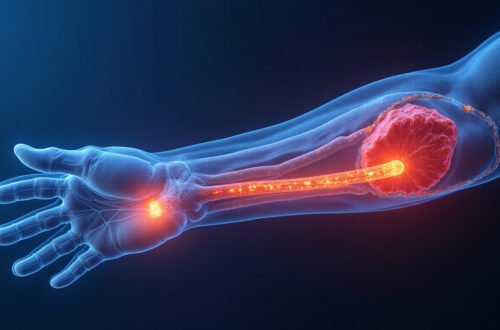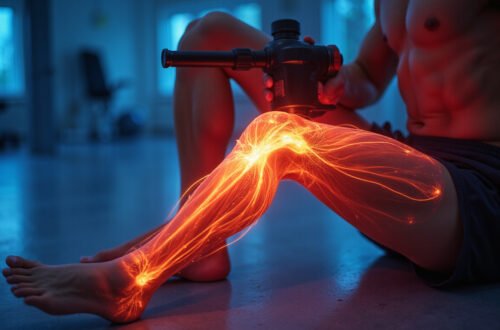
If you’ve ever felt a sharp or burning ache on the outside of your knee or hip, especially after running, cycling, or hiking, your iliotibial band is a prime suspect. IT band pain can be stubborn and frustrating, but it’s usually very fixable with the right mix of movement, strength, and recovery strategies—often without giving up the activities you love.
This guide breaks down what’s really going on, how to tell if your IT band is the problem, and the most effective simple fixes you can start using today.
What is the iliotibial band?
The iliotibial band (often called the IT band) is a thick strip of connective tissue running along the outside of your thigh. It:
- Starts at the iliac crest of the pelvis
- Runs down the outside of the thigh
- Connects to the tibia just below the knee (at Gerdy’s tubercle)
Several muscles, especially gluteus maximus and tensor fasciae latae (TFL), blend into the iliotibial band and use it as a “tendon highway” to help control hip and knee position.
Functionally, the IT band helps:
- Stabilize your knee when you run, walk, or cycle
- Control side-to-side movement of the thigh
- Assist with hip rotation and knee extension, depending on position
Because it’s a stabilizer, the iliotibial band takes a beating during repetitive activities—making it vulnerable when there’s weakness, stiffness, or poor movement mechanics upstream or downstream.
IT band pain vs. other knee and hip problems
IT band issues often get lumped in with “runner’s knee,” but that term can also refer to patellofemoral pain (pain around or behind the kneecap). Knowing the difference helps you treat the right problem.
Common signs of iliotibial band syndrome
IT band syndrome (ITBS) usually presents with:
- Pain on the outer side of the knee, sometimes sharp, often at or just above the bony bump on the outside of the knee (lateral epicondyle)
- Discomfort that worsens with activity, especially running downhill, repetitive squats, or long bike rides
- A feeling of tightness along the outer thigh
- Sometimes, tenderness when you press along the outside of the knee or just above it
Hip-related IT band pain tends to show as:
- Aching or burning at the outer hip (near the greater trochanter)
- Pain when lying on that side or doing side-lying leg lifts
- Catching, snapping, or a feeling of tightness in the outer hip area
If your main pain is deep inside the knee joint, under the kneecap, or associated with locking or giving way, the iliotibial band may not be the primary culprit and you should be evaluated by a professional.
What actually causes IT band pain?
The common myth is that the iliotibial band is “too tight” and just needs aggressive stretching. The reality is more nuanced.
Key contributors
-
Weak glutes and hips
Weakness in the gluteus medius and maximus can cause your pelvis to drop and your thigh to roll inward when you run or walk. That increases strain on the iliotibial band. -
Poor movement patterns
- Overstriding when running
- Knees collapsing inward during squats or stairs
- Excessive inward foot collapse (overpronation)
-
Sudden increases in training load
- Jumping mileage or intensity too quickly
- Adding lots of hills or speed work without adaptation
-
Biomechanical factors
- Leg-length differences
- Previous hip, knee, or ankle injuries
- Foot structure (very flat or very high arches)
-
Tissue irritation and overload
IT band syndrome is primarily an overuse irritation of tissues where the band interacts with the outside of the knee (and sometimes hip), not just a “tight muscle” problem (source: AAOS).
The upshot: pure stretching rarely fixes IT band pain alone. You need strength, control, and load management.
Simple home fixes for iliotibial band pain
If your pain is mild to moderate and not associated with trauma, you can often make meaningful progress at home. The key is to calm things down first, then gradually reload the area.
Step 1: Modify—not stop—your activity
Total rest is rarely necessary, but you should temporarily reduce the movements that irritate the iliotibial band.
- Reduce running volume by 30–50% for 1–2 weeks
- Avoid or limit downhill running and cambered surfaces
- Shorten your stride and increase cadence slightly (aim for ~165–180 steps/min)
- For cycling, raise your saddle slightly if your knee is very bent at the bottom of the pedal stroke
You can usually maintain fitness with:
- Elliptical, pool running, or swimming
- Flat walking if pain is low
- Light cycling on flat terrain if it’s comfortable
Let pain be your guide: aim for activities that keep pain ≤ 2–3 out of 10 and don’t cause a flare-up later that day or the next.
Step 2: Targeted strength exercises
Strong hips and glutes offload the iliotibial band. These exercises are a powerful long-term fix.
1. Side-lying leg raises
- Lie on your side, bottom leg bent, top leg straight
- Keep top leg in line with your body, toes pointing slightly down
- Lift the top leg about 30–40 cm, then lower slowly
- 2–3 sets of 12–15 reps per side, 3–4 times per week
Focus: feel it in the side of your hip, not your front thigh.
2. Clamshells
- Lie on your side with hips and knees bent ~45°
- Keep feet together, open your top knee like a clamshell without rolling your pelvis back
- 2–3 sets of 15–20 reps per side
Progression: Add a mini band above the knees.
3. Single-leg glute bridge
- Lie on your back, one knee bent, other leg straight
- Push through the heel of the bent leg, lifting hips until shoulders–hips–knee are aligned
- Hold 2 seconds, lower slowly
- 2–3 sets of 8–12 reps per leg
4. Lateral band walks
- Place a resistance band above your knees or around your ankles
- Slight knee bend, neutral spine
- Step sideways 8–10 steps one direction, then back
- 2–3 rounds
These build hip stability in a way that directly supports what the iliotibial band is trying to do during running and walking.

Step 3: Mobilize without overdoing it
You can’t “stretch” the iliotibial band much—it’s a thick, relatively inelastic structure—but you can free up the muscles that attach into it and calm surrounding tissues.
Gentle stretches
Aim for mild tension, no sharp pain, 20–30 seconds, 2–3 times per side.
-
Standing IT band stretch
- Stand tall, cross affected leg behind the other
- Lean your torso away from the affected side until you feel stretch along outer hip/thigh
- Optional: reach arm overhead on the affected side
-
Figure-4 glute stretch
- On your back, cross ankle over opposite knee
- Pull the uncrossed leg toward you until you feel a stretch in the buttock
Soft tissue work (optional but helpful)
Use a foam roller or massage ball for:
- Glutes (buttock muscles)
- TFL (just in front of the hip bone)
- Outer thigh muscles (quads, not directly on the bony knee)
Roll for 1–2 minutes per area, staying at tolerable pressure. You don’t need to aggressively roll directly on the iliotibial band itself; aim to relax the muscles that influence it.
Step 4: Improve your movement mechanics
Small changes in how you move can reduce stress on the iliotibial band.
For runners
- Increase cadence: A slightly faster step rate with shorter strides reduces the braking forces at the knee and hip.
- Land under your hips: Avoid reaching your foot far in front of you.
- Watch knee alignment: Knees should track over the middle of your foot, not collapse inward.
A running form assessment by a physical therapist or experienced coach can be valuable if your pain is recurring.
For everyday movements
- When squatting or using stairs, keep knees aligned over toes, not collapsing inward.
- Avoid always sitting cross-legged on the same side, which can load the outer hip repeatedly.
- Alternate sides when carrying bags or children.
Step 5: Progressively reload and return to sport
Once pain at rest is minimal and daily activities are comfortable, you can gradually build back up.
A simple progression:
- Pain-free walking on flat ground for 20–30 minutes
- Add short jogging intervals, such as 1 minute jog / 2 minutes walk for 20 minutes, on flat surfaces
- Increase jogging time by 10–15% per week as long as:
- Pain during activity stays ≤ 3/10
- No significant increase in pain the next day
Leave hills and speed work for later stages, once you can comfortably handle 30–40 minutes of continuous, easy running.
When iliotibial band pain needs professional help
Self-care works well for many people, but you should seek evaluation from a physical therapist, sports medicine doctor, or similar professional if:
- Pain is severe, sharp, or not improving over 2–4 weeks
- You have swelling, locking, or instability of the knee
- Pain began after a fall, twist, or direct trauma
- You have night pain or pain at rest that is worsening
- You’re unsure whether the iliotibial band is truly the source of your symptoms
Imaging (like MRI) is rarely needed initially, but may be used if there’s concern about other knee or hip conditions.
Preventing future IT band flare-ups
Once your iliotibial band has calmed down, prevention is mostly about consistency and moderation.
Build these habits:
- Strength train 2–3 times per week, with emphasis on glutes, hips, and core
- Follow the 10% rule: avoid increasing your running or cycling volume by more than ~10% per week
- Rotate shoes and replace running shoes every 300–500 miles
- Mix surfaces: add trails or tracks instead of all concrete, where possible
- Warm up with dynamic movements (leg swings, lunges, light drills) before intense workouts
A few minutes of prevention each week is far easier than weeks or months of managing recurrent iliotibial band pain.
FAQ: Common questions about iliotibial band issues
1. How long does iliotibial band syndrome take to heal?
Mild iliotibial band syndrome can improve significantly within 2–4 weeks with activity modification and targeted hip strengthening. More stubborn or longstanding cases may take 6–12 weeks or longer. Recovery time depends heavily on how well you manage training load and address underlying strength or movement deficits.
2. Should I stretch or foam roll my iliotibial band every day?
Daily gentle stretching of the muscles around the iliotibial band—especially the glutes and hip flexors—can be helpful. Foam rolling is best focused on surrounding muscles (glutes, quads, TFL) rather than aggressively rolling directly on the band itself. Aim for consistency and comfort, not intensity; pain during rolling is not required for progress.
3. Can iliotibial band pain cause hip and knee problems long-term?
IT band pain is rarely dangerous by itself, but chronic irritation can limit your activity and contribute to altered movement patterns that stress other joints. Early management—reducing aggravating activities, strengthening your hips and glutes, and improving mechanics—greatly reduces the risk of long-term knee or hip problems related to the iliotibial band.
If outer knee or hip pain has been limiting your runs, rides, or daily life, you don’t have to live with it—or give up what you enjoy. Start today with a small, doable plan: trim back the aggravating activities, add 2–3 hip-strengthening exercises, and gently mobilize the tissues around your iliotibial band. If you’d like tailored guidance and a progressive, step-by-step program specific to your body and goals, consider working with a qualified physical therapist or sports specialist who can help you get back to pain-free movement—and stay there.