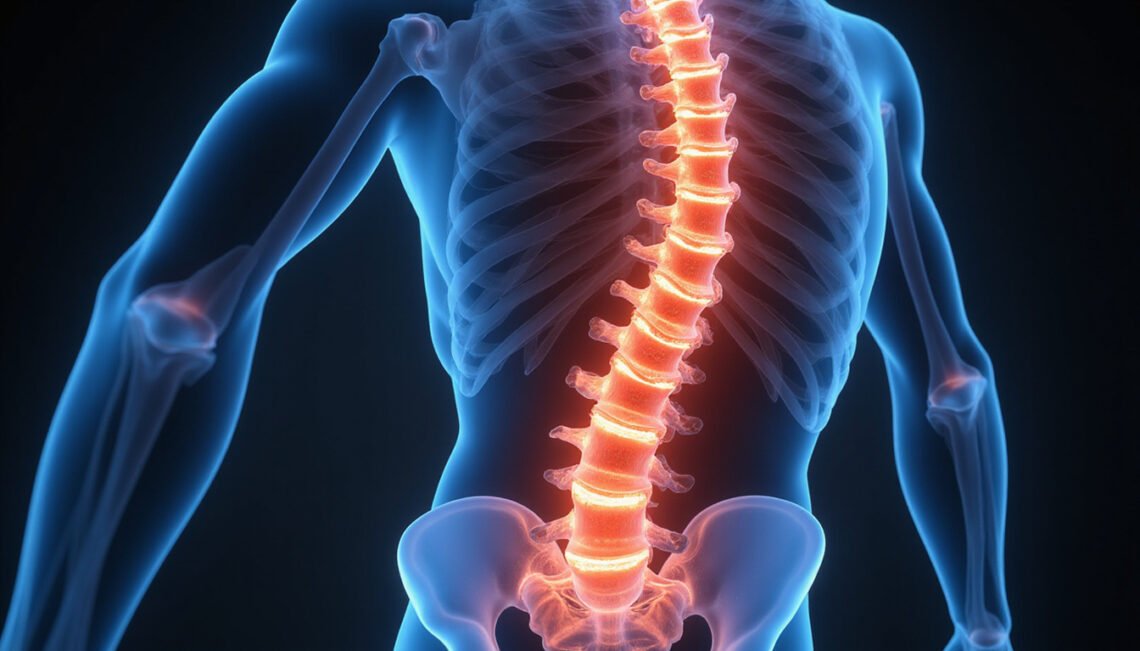
If you’ve tried stretching, massages, and even core workouts but still struggle with nagging back pain, your multifidus muscle might be the missing piece. This deep spinal muscle is rarely talked about, yet it plays a critical role in stabilizing your vertebrae, maintaining posture, and preventing injury. When it’s weak or not working properly, your spine is far more vulnerable to pain and strain.
In this guide, you’ll learn what the multifidus is, why it matters so much for spinal health, and how to activate and strengthen it with practical, safe exercises.
What Is the Multifidus?
The multifidus is a group of small, deep muscles that run along both sides of your spine from your neck down to your sacrum (the base of the spine). Instead of being one big muscle, it’s a series of short, overlapping muscles connecting one vertebra to another.
Key characteristics:
- Location: Deep in the back, beneath larger muscles like the erector spinae.
- Function: Stabilizes each vertebra, controls small spinal movements, and helps maintain posture.
- Role in pain: Often weakened or inhibited in people with chronic low back pain.
Because it’s deep and subtle, the multifidus doesn’t generate big, powerful movements like lifting or twisting. Instead, it provides fine-tuned stability—like the small screws that hold a piece of furniture together. You don’t see them, but you feel it when they’re loose.
Why the Multifidus Matters for Back Pain
Research has shown a strong connection between low back pain and changes in the multifidus muscle, including atrophy (shrinking) and decreased activation (source: National Library of Medicine). When this muscle isn’t doing its job, other tissues are forced to compensate, leading to overload and pain.
How multifidus dysfunction contributes to pain
- Loss of segmental stability: The spine is made of many small joints. If the multifidus isn’t stabilizing each segment, movement becomes less controlled and more stressful on discs and ligaments.
- Increased muscle guarding: Larger back muscles may tense up to protect the spine, leading to stiffness and fatigue.
- Altered movement patterns: Your body may twist, bend, or lift in less efficient ways, further irritating the back.
Common causes of a weak multifidus
- Prolonged sitting or sedentary lifestyle
- Previous back injury or surgery
- Poor posture (slouching, excessive arch, or swayback)
- Recurrent episodes of low back pain that were never fully rehabilitated
The good news: the multifidus responds very well to targeted training. Even simple, low-load exercises can help it switch back on and rebuild strength.
How to Tell If Your Multifidus Might Be Weak
You can’t see your multifidus in the mirror like your abs or biceps, but there are signs it may not be functioning well.
Possible indicators:
- Recurring “twinges” in your low back during everyday tasks like bending, getting up from a chair, or rolling in bed.
- Feeling unstable or “fragile” in the spine when lifting or twisting.
- Persistent aching near the spine rather than across the broad back muscles.
- One-sided low back pain that flares with small movements.
- Difficulty engaging your core without bracing or holding your breath.
These signs don’t prove multifidus weakness on their own, but they’re common in people whose deep stabilizers aren’t doing their job. A physical therapist or qualified clinician can perform specific tests and sometimes use ultrasound to assess multifidus activation.
Core vs. Multifidus: Why Traditional Ab Work Isn’t Enough
Many people assume that doing more crunches, planks, or sit-ups will “fix” their back. While overall core strength matters, it doesn’t automatically retrain the multifidus.
Differences to understand:
-
Global muscles (like rectus abdominis, obliques, erector spinae):
- Produce big movements
- Help with powerful tasks like lifting, bending, and twisting
- Often overactive in people with back pain
-
Local stabilizers (like multifidus and transversus abdominis):
- Provide subtle, continuous support to each spinal joint
- Activate before movement to protect the spine
- Often underactive or delayed in people with back pain
If you jump straight into heavy lifting or intense core work without restoring multifidus function, you’re building power on an unstable base. The ideal approach is low-load, precise activation first, then progressing to more dynamic tasks.
How to Activate Your Multifidus
Because the multifidus is small and deep, it requires attention and precision. The goal is gentle engagement, not brute force.
General tips before you start
- Move slowly and avoid pain.
- Focus on quality over quantity.
- Breathe naturally—don’t hold your breath.
- You should feel a mild, deep tension around your spine, not a big squeeze or cramp.
If any exercise increases your pain significantly, stop and consult a professional.
5 Foundational Multifidus Exercises
Perform these 3–4 times per week as tolerated. Start with low repetitions and gradually build up. If you’re unsure, check with a physical therapist, especially if you have a history of spinal injury or surgery.
1. Prone Multifidus Activation (Gentle Intro)
Purpose: Learn to feel and lightly engage the muscle.
- Lie on your stomach on a firm surface with a small pillow under your hips if needed.
- Place your fingertips gently on the muscles just beside your spine in your lower back.
- Gently imagine “swelling” the muscles under your fingers without arching your back or lifting your chest.
- Hold 5–8 seconds, breathing steadily.
- Relax and repeat 8–10 times.
You should feel a subtle firming under your fingertips, not a big movement.
2. Bird Dog (Quadruped Arm/Leg Reach)
Purpose: Train multifidus to stabilize during limb movement.
- Start on hands and knees, hands under shoulders, knees under hips.
- Engage your lower belly gently (as if zipping up snug pants).
- Without shifting your weight drastically, slowly extend your right leg straight back and your left arm forward.
- Keep your spine long and still—no sagging or arching.
- Hold 5–10 seconds, then switch sides.
- Perform 8–10 repetitions per side.
Keep movements controlled; think “lengthen” rather than “lift.”

3. Modified Side Plank (Knees Bent)
Purpose: Strengthen lateral stabilizers and multifidus without overloading.
- Lie on your side with knees bent at 90 degrees, elbow under shoulder.
- Stack hips and shoulders; keep your body in a straight line from shoulders to knees.
- Gently engage your core and lift hips off the floor.
- Hold 10–20 seconds, then lower.
- Repeat 5–8 times per side.
You should feel work in your side and deep around the spine, not just in the shoulder.
4. Bridge with Segmental Control
Purpose: Integrate multifidus with glutes and core during spinal movement.
- Lie on your back with knees bent, feet hip-width apart.
- Tighten glutes gently and roll your pelvis backward (flattening your lower back slightly).
- Slowly peel your spine off the floor one segment at a time into a bridge.
- Pause at the top, keeping ribs down and spine long.
- Lower slowly, imagining placing each vertebra down one by one.
- Perform 8–12 repetitions.
Focus on control and smoothness instead of height.
5. Standing Hip Hinge with Spinal Control
Purpose: Practice everyday movement with a stable spine and engaged multifidus.
- Stand with feet hip-width, slight bend in knees.
- Place hands on hips; gently engage core and multifidus (light tension around spine).
- Hinge at the hips, sending your buttocks backward while keeping your spine neutral.
- Keep the torso straight, as if it’s one solid plank.
- Return to standing by driving through your heels.
- Start with bodyweight and perform 10–12 reps.
This pattern mimics bending and lifting in daily life, training your multifidus to protect the spine.
Progressing Your Multifidus Training Safely
Once you can perform the foundational exercises with control and no increase in pain, you can progress in three main ways:
- Increase time under tension: Longer holds (e.g., 20–30 seconds for bird dog or side planks).
- Increase challenge: Move to full side planks, add light resistance bands, or use unstable surfaces (like a foam pad) under hands or knees.
- Integrate into functional tasks: Practice maintaining a stable spine and gentle multifidus engagement while:
- Squatting to pick something up
- Carrying groceries
- Pushing a stroller or cart
- Walking up stairs
Daily Habits to Support a Strong Multifidus
Exercises matter, but your everyday habits can either support or sabotage your progress. Use this checklist to reinforce your spine health:
- Sit smart: Hips slightly higher than knees, feet flat, lower back supported.
- Stand tall: Imagine a string lifting the crown of your head; avoid locking your knees.
- Move often: Stand, walk, or stretch briefly every 30–45 minutes.
- Lift with your legs and hips: Keep the object close, spine neutral, and use your legs to power the lift.
- Walk regularly: Even 10–20 minutes a day promotes circulation and gentle spinal activation.
These small changes reduce the constant stress on your spine, allowing your multifidus to function more effectively.
FAQ: Multifidus Muscle and Back Pain
1. How do I strengthen my multifidus muscle at home?
You can strengthen your multifidus muscle at home with low-impact, controlled exercises like bird dog, modified side planks, gentle prone activation, and bridge variations. Focus on subtle engagement, slow movements, and good posture. Aim for consistency—3–4 sessions per week will yield better results than occasional long workouts.
2. Can multifidus exercises really help with chronic low back pain?
Yes, multifidus exercises are widely used in rehabilitation programs for chronic low back pain. Studies show that retraining this deep stabilizer can improve spinal stability, reduce pain, and lower the risk of future flare-ups when combined with general exercise and healthy movement habits. Always consult a healthcare professional for a tailored plan if your pain is persistent or severe.
3. What’s the difference between the multifidus and other back muscles?
The lumbar multifidus is a local stabilizer—it attaches directly between vertebrae and provides fine control of spinal joints. Larger back muscles like the erector spinae create gross movements (bending, arching, extending). When the multifidus is weak or inhibited, the larger muscles may become overworked, leading to stiffness and fatigue rather than true stability.
Take Control of Your Spine Health Today
Back pain doesn’t have to be a life sentence, and you don’t need extreme workouts to protect your spine. By understanding and training your multifidus, you’re targeting one of the most important yet overlooked components of spinal stability. With consistent, precise exercises and smarter daily habits, you can build a stronger, more resilient back and reduce the risk of future flare-ups.
Start with the foundational multifidus exercises outlined above this week. If you’re dealing with ongoing or significant pain, partner with a physical therapist or spine specialist who can tailor a multifidus-focused program to your body. The sooner you begin strengthening this deep stabilizer, the sooner you can move with confidence—and leave chronic back pain behind.