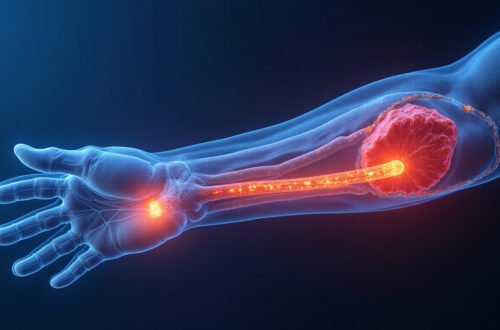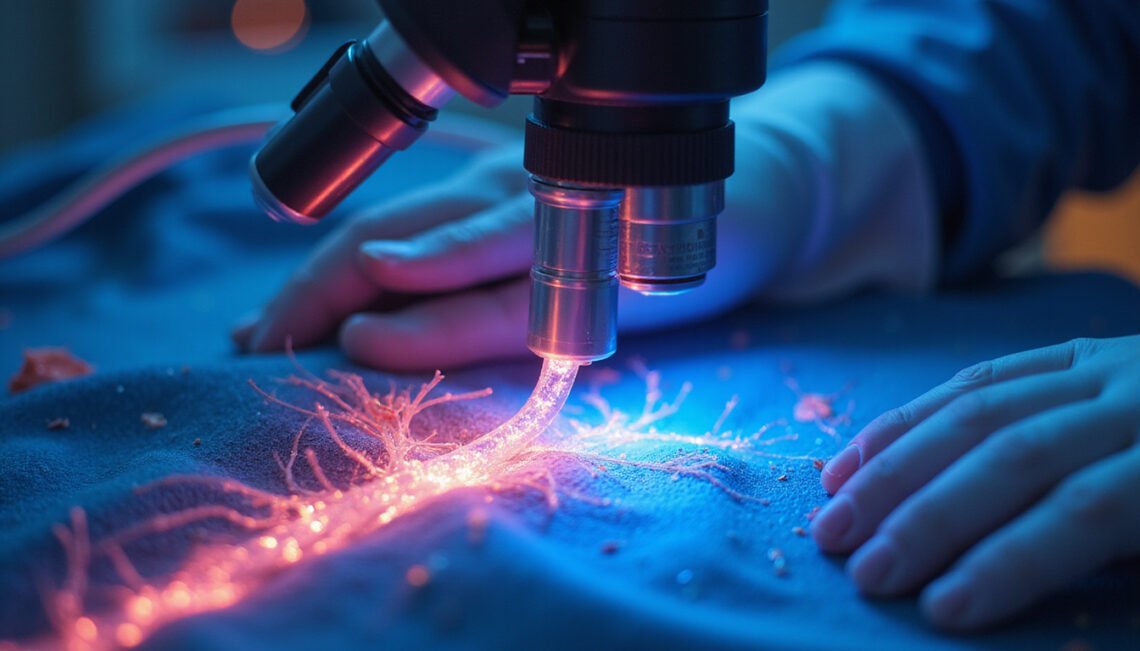
Advances in nerve repair are dramatically changing what’s possible after injuries that once caused permanent paralysis, numbness, or chronic pain. From high-precision microsurgery to lab-grown nerve grafts and bioelectronic implants, researchers are rapidly improving outcomes for people with damaged nerves in the brain, spinal cord, and limbs. Understanding these breakthroughs can help patients and families navigate treatment options and make more informed decisions.
Understanding nerve damage and why it’s so hard to fix
Nerves are the body’s electrical wiring. They carry signals between the brain, spinal cord, and every muscle, organ, and patch of skin. When they’re damaged by trauma, surgery, tumors, or disease, the results can include:
- Weakness or paralysis
- Loss of sensation (numbness, tingling, burning)
- Loss of fine motor skills
- Chronic neuropathic pain
- Autonomic problems (e.g., blood pressure, digestion, bladder control)
Two key challenges make nerve repair difficult:
-
Complex structure
Each peripheral nerve is like a cable with thousands of tiny wires (axons) bundled into fascicles. These fascicles serve different functions: motor (movement), sensory (feeling), and autonomic (automatic body functions). Matching and reconnecting the right fibers is intricate work. -
Limited regenerative capacity
Peripheral nerves can regrow at about 1–3 mm per day under ideal conditions, but only if their pathway is preserved or carefully reconstructed. Central nervous system nerves (brain and spinal cord) regenerate poorly due to inhibitory molecules and scar formation.
Because of this, traditional nerve repair often yielded partial recovery at best. Today’s breakthroughs aim to guide, accelerate, and enhance regeneration—and in some cases, bypass it entirely.
Traditional nerve repair: The foundation for modern innovation
Most new techniques build on classic approaches that remain essential:
Direct nerve repair (neurorrhaphy)
When a nerve is cleanly cut and the two ends can be brought together without tension, surgeons perform an end-to-end repair:
- Using an operating microscope and ultra-fine sutures
- Carefully aligning the nerve’s outer sheath (epineurium) and, when possible, internal fascicles
- Sometimes using surgical glue to minimize trauma
This method works best for fresh injuries, small gaps, and younger patients who generally have better regenerative capacity.
Nerve grafts
If there’s a gap between nerve ends that can’t be closed directly, surgeons traditionally use:
- Autografts: Nerve segments taken from another part of the patient’s body (commonly the sural nerve in the leg)
- The graft acts as a scaffold, guiding regrowth of axons from the injured nerve into the target area
While effective, autografts have drawbacks: additional surgery, donor-site numbness, and limited available length. These limitations sparked some of today’s biggest advances in nerve repair.
Bioengineered nerve grafts and conduits: Replacing donor nerves
One of the most impactful breakthroughs is the development of synthetic and biologic nerve guides, designed to replace or reduce the need for autografts.
Synthetic nerve conduits
These are tube-like structures placed between nerve ends to bridge small gaps. Materials include:
- Biodegradable polymers (e.g., polyglycolic acid, polycaprolactone)
- Collagen-based tubes
- Some incorporate internal microchannels to better organize regrowing axons
Benefits:
- Avoids donor-nerve surgery and associated complications
- Can be tailored in size and composition
- Gradually resorb over time as the nerve heals
They’re currently best suited for short gaps in sensory nerves, such as in the hand.
Processed nerve allografts
Processed human donor nerves are cleaned and sterilized to remove cells while preserving the natural structure:
- Provide a three-dimensional scaffold similar to native nerve
- Reduce immune response compared to non-processed tissue
- Useful for bridging longer gaps than most synthetic conduits handle
Studies show promising results for sensory nerve repair and some motor applications, with outcomes approaching autografts in many cases (source: American Society for Peripheral Nerve).
Next-generation “smart” grafts
Research is pushing conduits and grafts further by adding:
- Growth factors (e.g., nerve growth factor, BDNF) to stimulate regeneration
- Support cells like Schwann cells or stem cells
- Aligned nanofibers that guide axons in the correct direction
These bioactive designs aim to speed up and improve the accuracy of nerve repair, reducing miswiring that leads to poor function or pain.
Supercharged nerve transfers: Rerouting function to restore movement
For severe nerve injuries, especially around the shoulder, arm, and hand, nerve transfers have become a game-changer.
What is a nerve transfer?
Instead of only trying to fix the damaged nerve, surgeons:
- Take a functionally less important but healthy nerve (or some of its fibers)
- Connect it directly to a paralyzed muscle’s nerve or sensory branch
- Allow new axons from the donor nerve to grow into the target muscle or sensory territory
This often restores movement or sensation faster and more reliably than waiting for distant nerves to regrow to their original destinations.
Common applications
- Brachial plexus injuries (affecting shoulder/arm): Restoring elbow flexion, shoulder stability, and hand function
- Spinal cord injuries: In select incomplete injuries, transfers can reconnect brain-controlled nerves to muscles below the injury level
- Facial paralysis: Using nearby motor nerves to reanimate facial muscles
Advantages over older techniques
- Shorter regeneration distance (donor nerve is closer to the muscle)
- More targeted, functional recovery
- Can be combined with tendon transfers and muscle transfers for layered reconstruction
Modern nerve transfers represent one of the most practical and broadly adopted breakthroughs in nerve repair over the past decade.
Tissue engineering and stem cells: Building nerves from the ground up
Researchers are increasingly turning to tissue engineering and stem cell therapy to support or even replace damaged nerves.
Stem cells in nerve repair
Various stem cell types are being studied, including:
- Mesenchymal stem cells (from bone marrow or fat)
- Induced pluripotent stem cells (iPSCs)
- Neural stem/progenitor cells
Potential roles:
- Differentiating into Schwann-like cells that support axon growth
- Secreting growth factors that enhance regeneration
- Modulating inflammation and reducing scar formation
To date, many stem-cell approaches are still in clinical trials or early adoption, with cautious optimism about safety and long-term efficacy.
3D printing and custom nerve scaffolds
3D printing allows fabrication of:
- Custom-shaped conduits that match complex nerve paths
- Multi-channel scaffolds that mimic the internal fascicle architecture
- Structures seeded with cells and growth factors for personalized regeneration
These technologies promise more precise and functional nerve repair, especially for mixed motor-sensory nerves that require careful organization.

Electrical stimulation and bioelectronics: Coaching nerves to regrow
Beyond physical reconstruction, there is growing evidence that electricity can help nerves heal better and faster.
Intraoperative electrical stimulation
Short bursts of low-frequency electrical stimulation delivered to a nerve during surgery have been shown in some studies to:
- Accelerate axon growth
- Enhance reinnervation of target muscles
- Improve functional outcomes
This is a relatively simple adjunct that some surgeons are beginning to integrate into nerve repair procedures.
Wearable and implanted neurostimulation
After surgery, external or implanted devices can:
- Stimulate nerves and muscles to maintain muscle bulk and function
- Promote plasticity in the central nervous system
- Potentially reduce neuropathic pain
In spinal cord injury, implanted systems can help restore some hand, trunk, or leg function by activating spared circuits and muscles below the injury.
Brain-computer interfaces (BCIs) and neuroprosthetics
In cases where nerve repair isn’t possible, BCIs bypass damaged pathways:
- Record brain activity related to movement intent
- Translate signals into commands for robotic limbs or stimulation of paralyzed muscles
- Provide sensory feedback via vibration, pressure, or even direct stimulation of sensory nerves
While still emerging, these technologies offer a powerful “Plan B” when conventional nerve repair cannot restore sufficient function.
Rehabilitation: The essential partner to surgical nerve repair
Even the most advanced surgical techniques fail without intensive, targeted rehabilitation. Key elements include:
- Early protection and positioning: To prevent joint stiffness and contractures while nerves regrow
- Sensory re-education: Teaching the brain to interpret new or altered sensory inputs, especially after nerve transfers or grafts
- Motor retraining: Learning new movement patterns, such as using a former “elbow flexion” nerve to now open the hand
- Functional electrical stimulation (FES): Assisting weak muscles and reinforcing correct movement patterns
- Pain management: Addressing neuropathic pain with medications, therapy, and desensitization techniques
Neurological recovery is a long process—often 12–24 months or more—demanding persistence from patients and coordinated care from surgeons, therapists, and pain specialists.
What to expect if you need nerve repair
Every injury is unique, but a typical journey may involve:
-
Early assessment
- Detailed neurological exam, EMG/NCS, and imaging
- Determining which nerves are affected and whether spontaneous recovery is possible
-
Timing of surgery
- Some injuries are repaired urgently (e.g., clean lacerations)
- Others are observed for weeks to months to see if they improve before committing to nerve transfer or grafting
-
Choice of technique
- Direct repair for small clean cuts
- Grafts or conduits for gaps
- Nerve transfers for long-distance injuries or root avulsions
- Possible combination with tendon/muscle transfers
-
Long-term follow-up
- Regular exams and EMG to track regeneration
- Adjusting therapy and considering secondary procedures if needed
Clear communication with a peripheral nerve or neurosurgery specialist is crucial to set realistic expectations and design the best plan.
Key takeaways about modern nerve repair
- Many injuries once considered untreatable now have active reconstruction options.
- New techniques focus on:
- Providing better scaffolds (synthetic, allograft, tissue-engineered)
- Shortening regeneration distances (nerve transfers)
- Enhancing growth (stem cells, growth factors, electrical stimulation)
- Bypassing damaged pathways (BCIs and neuroprosthetics)
- Outcomes still depend on factors like age, injury level, delay before repair, and rehab intensity, but the ceiling of what’s possible is rising quickly.
FAQ: Nerve repair, regeneration, and recovery
1. How long does nerve regeneration take after nerve repair surgery?
Regenerated nerves typically grow about 1–3 mm per day, starting after a short “rest” period post-surgery. That means:
- For nearby targets (e.g., in the hand), early signs may appear in a few months.
- For more distant muscles, meaningful recovery can take 12–24 months or longer.
EMG testing and clinical exams help monitor progress during this time.
2. What is the difference between nerve regeneration and nerve reconstruction?
- Nerve regeneration is the biological process where damaged axons sprout and grow back down the nerve pathway.
- Nerve reconstruction includes the surgical techniques (direct repair, grafts, nerve transfers, conduits) used to restore that pathway or reroute function.
Effective reconstruction creates the environment that allows regeneration to succeed.
3. Are nerve repair techniques effective for spinal cord injuries too?
Spinal cord injuries are more complex because central nervous system nerves regenerate poorly. Direct “nerve repair” of the cord is still experimental. However:
- Nerve transfers can sometimes restore function in partially injured segments.
- Epidural and intraspinal stimulation, intensive rehab, and BCIs can help recover or augment movement.
- Research into cell therapy and biomaterials for the spinal cord is ongoing, but not yet standard care.
Take the next step: Advocate for the best possible nerve repair
If you or someone you care about is facing a nerve injury or dealing with persistent weakness, numbness, or nerve pain, you don’t have to accept “nothing can be done” as the final word. Modern nerve repair offers a spectrum of options—from advanced microsurgery and nerve transfers to bioengineered grafts and cutting-edge neurotechnology—that can significantly improve function and quality of life.
Ask for a referral to a specialist in peripheral nerve surgery or neurosurgery, bring your questions about the techniques described here, and discuss whether you’re a candidate for newer approaches. Early evaluation and a tailored plan, combined with committed rehabilitation, give you the best chance to restore movement, regain sensation, and reclaim independence.