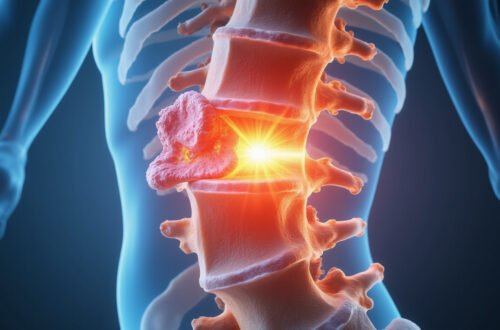
Muscle imbalance is one of the most common — and most overlooked — causes of pain, plateaus, and poor performance in the gym and in everyday life. Whether you’re a desk worker with tight hips, a runner battling knee pain, or a lifter stuck on the same weights, chances are muscle imbalance is part of the problem. The good news: with the right assessment and targeted exercises, you can start correcting these issues quickly and safely.
Below is a practical, research-informed guide to understanding, identifying, and fixing muscle imbalances with proven exercises you can apply right away.
What Is Muscle Imbalance?
A muscle imbalance occurs when one muscle or muscle group is:
- Stronger or tighter than its opposing group, or
- More active than its counterparts on the opposite side of your body.
Common examples:
- Strong chest vs. weak upper back → rounded shoulders, shoulder pain
- Strong quads vs. weak glutes/hamstrings → knee pain, poor hip stability
- Dominant right side vs. weaker left side → compensation, altered movement patterns
Imbalances can be:
- Front vs. back (anterior–posterior) – e.g., chest vs. upper back
- Left vs. right (side-to-side) – e.g., right glute vs. left glute
- Global vs. local (big movers vs. stabilizers) – e.g., big quads vs. weak hip stabilizers
Over time, these discrepancies can change how you move and load your joints, increasing your risk of injury and limiting performance (source: American Council on Exercise).
Common Causes of Muscle Imbalances
Most muscle imbalance issues don’t come from a single workout; they develop gradually through your habits:
-
Posture and daily positions
- Long hours sitting → tight hip flexors, weak glutes and core
- Hunched over phone/keyboard → tight chest, weak mid-back
-
Repetitive movement
- Runners and cyclists overusing quads and hip flexors
- Workers performing the same side-dominant tasks all day
-
Training program design
- Overemphasis on “mirror muscles” (chest, biceps, abs)
- Skipping posterior chain and stabilizer work (back, glutes, rotator cuff)
-
Old injuries
- Pain leads to compensation → body favors one side
- Protective movement patterns that never get retrained
Understanding where your imbalance comes from will help you pick the most effective exercises and lifestyle tweaks.
How to Tell if You Have a Muscle Imbalance
You don’t need expensive lab equipment to spot a muscle imbalance. Simple self-assessments can give you strong clues.
1. Visual Posture Check
Stand relaxed in front of a mirror (or have someone take photos):
-
Side view
- Head juts forward? Likely tight chest and weak upper back/neck flexors.
- Pelvis tilts forward with big lower-back arch? Often tight hip flexors and weak glutes/abs.
-
Front view
- One shoulder higher than the other? Possible upper-back or trap imbalance.
- Knees collapse inward (knock-knee) when you squat? Often weak glute medius.
2. Strength and Stability Tests
Compare left vs. right and front vs. back:
-
Single-leg squat to a chair
- Does one side wobble more or feel weaker? That side needs extra stability work.
-
Single-leg glute bridge
- Hips drop or hamstring cramps on one side? That glute is likely underactive.
-
Push vs. pull strength
- You can press much more than you can row? Likely anterior-dominant (chest/shoulder) imbalance.
3. Pain and Movement Patterns
Ask yourself:
- Do you always step off a curb or jump off a box with the same leg first?
- Do you feel “burn” mostly in one muscle (e.g., quads) but almost never in others (e.g., glutes)?
- Do you have recurring pain on the same side, especially in knees, hips, shoulders, or lower back?
A “yes” to several of these suggests the presence of muscle imbalance worth addressing.
Principles for Fixing Muscle Imbalance Fast (And Safely)
Before jumping into exercises, keep these principles in mind:
-
Prioritize quality over load
- Lighten the weight if form breaks down or one side compensates.
- You’re retraining patterns, not chasing records (yet).
-
Train the weaker side first
- On unilateral exercises, begin with your weaker limb.
- Match the stronger side to the rep count of the weaker one, not vice versa.
-
Use unilateral (single-limb) exercises
- These reveal side-to-side differences and force the weaker side to work.
-
Activate underused muscles before big lifts
- “Wake up” sleepy muscles with targeted activation drills in your warm-up.
-
Don’t neglect mobility
- Tight, overactive muscles may need stretching and soft-tissue work so the weaker muscles can fully engage.
Proven Exercises to Correct Common Muscle Imbalances
Below are targeted exercise strategies for the most frequent types of muscle imbalance. Perform these 2–3 times per week alongside your normal training, or as a focused phase for 4–6 weeks.
A. Upper Body: Chest vs. Upper Back & Shoulder Imbalance
Symptoms: Rounded shoulders, forward head, shoulder pain with pressing, weak rowing strength.
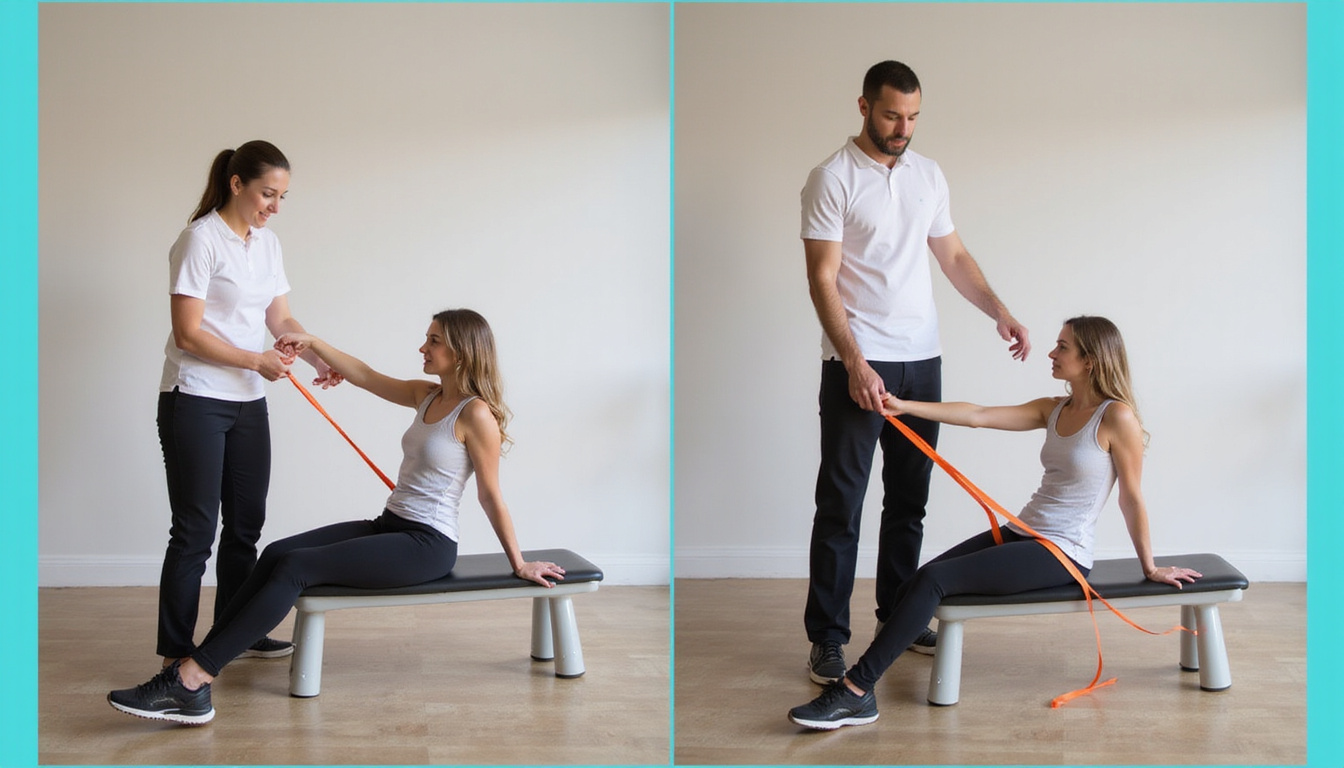
1. Band Pull-Aparts
- Hold a light resistance band at shoulder height.
- Pull the band apart by squeezing shoulder blades together, keeping arms mostly straight.
- 2–3 sets of 15–20 reps.
Benefits: Strengthens rear delts and mid-back; counters constant pressing and desk posture.
2. Face Pulls
- Attach a band or rope at forehead height.
- Pull toward your face, leading with elbows and rotating hands back.
- 3 sets of 12–15 reps.
Benefits: Balances front and back of shoulders; improves shoulder health.
3. Single-Arm Dumbbell Row (Unilateral)
- Support one hand and knee on a bench.
- Row the dumbbell, focusing on pulling with your back, not just your arm.
- 3–4 sets of 8–12 reps per side, starting with the weaker side.
Tip: Match the rep count of the weaker side, even if the stronger side feels easy.
B. Lower Body: Quad-Dominant vs. Weak Glutes/Hamstrings
Symptoms: Knee pain, minimal glute activation when squatting or running, “thighs doing all the work.”
1. Glute Bridge / Hip Thrust
- Lie on your back, knees bent, feet hip-width.
- Drive through heels, squeeze glutes to lift hips until torso and thighs form a line.
- 3 sets of 12–15 reps (progress to single-leg variations).
2. Romanian Deadlift (RDL)
- Hold dumbbells or barbell, soft bend in knees.
- Hinge at hips, send hips back, keep back flat, feel stretch in hamstrings.
- 3–4 sets of 6–10 reps.
Benefits: Strengthens hamstrings and glutes relative to quads; important for knee and hip protection.
3. Single-Leg Step-Up
- Use a box/bench about knee height.
- Step up with one foot, drive through heel, stand tall. Control the descent.
- 3 sets of 8–10 reps per side.
Coaching cue: Avoid pushing off the lower leg; the working leg should do the majority of the work.
C. Side-to-Side Hip and Knee Imbalance
Symptoms: One leg feels less stable, knee caves inward on one side, hip hikes or drops when walking/running.
1. Side-Lying Clamshell
- Lie on your side, hips and knees bent, heels together.
- Keeping feet together, open top knee like a clam without rolling hips back.
- 2–3 sets of 15–20 reps per side.
Target: Glute medius — key for hip stability and knee alignment.
2. Lateral Band Walks
- Place a mini-band above knees or around ankles.
- Slight squat, step sideways, keeping knees pushed out against band.
- 2 sets of 10–15 steps each direction.
3. Single-Leg Romanian Deadlift
- Stand on one leg, slight knee bend.
- Hinge at hips, reach the opposite leg back, keep hips square.
- 3 sets of 6–10 reps per side.
Benefits: Builds hip stability, balance, and posterior chain strength on each side.
D. Core and Lower Back Imbalances
Symptoms: Frequent lower-back tightness, especially after standing or lifting; weak or underactive deep core.
1. Dead Bug
- Lie on your back, arms up, knees bent at 90°.
- Slowly lower opposite arm and leg toward floor while keeping lower back pressed down.
- 2–3 sets of 8–10 reps per side.
2. Side Plank
- Lie on side, support yourself on forearm and edge of foot.
- Lift hips, forming straight line from ankles to shoulders.
- Hold 20–40 seconds, 2–3 sets per side.
Goal: Time should be equal on both sides; big differences indicate a side-to-side imbalance.
Sample Weekly Muscle Imbalance Routine
You can integrate corrective work into your existing plan or run it as a focused 4–6 week block. Here’s a simple structure:
Before each workout (10–15 minutes)
- Light cardio (3–5 min)
- Mobility for tight areas (e.g., chest, hip flexors)
- Activation:
- Upper day: Band pull-aparts, face pulls
- Lower day: Glute bridges, lateral band walks
- Full-body/core day: Dead bugs, side planks
During your workouts
- Include 2–4 unilateral exercises targeting your known imbalances.
- Train the weaker side first.
- Emphasize slow, controlled reps and full range of motion.
Weekly example
-
Day 1 – Upper Body
- Activation: Band pull-aparts, face pulls
- Main: Push-ups or bench, single-arm rows, overhead press, face pulls
-
Day 2 – Lower Body
- Activation: Glute bridges, lateral band walks
- Main: Squats or leg press, RDLs, step-ups, single-leg glute bridges
-
Day 3 – Full-Body / Stability
- Activation: Dead bugs, side planks
- Main: Single-leg RDLs, single-arm presses, carries (farmer’s or suitcase walks)
Key Tips to Speed Up Muscle Imbalance Correction
To make your efforts count, keep these guidelines in mind:
- Be consistent: 2–3 focused sessions per week over 4–8 weeks is where real change happens.
- Don’t chase fatigue alone: The right muscles should be working, not just “anything that burns.”
- Monitor progress:
- Re-test single-leg squats, bridges, or side planks every 2–3 weeks.
- Track pain levels and performance (e.g., more stable squats, easier runs).
- Adjust volume smartly:
- Slightly higher volume (1–2 extra sets) on the weaker side is acceptable for some exercises, provided form stays clean and joints feel good.
- Respect pain: Sharp or joint pain is a red flag. Scale back, adjust exercise selection, or consult a professional.
FAQ: Muscle Imbalances and Corrective Training
1. How long does it take to fix a muscle imbalance?
Mild muscle imbalances can show noticeable improvement in 4–6 weeks with consistent, targeted training. More entrenched issues, especially those linked to long-term posture or old injuries, may take several months. The key is combining strength, mobility, and motor-control work and reassessing regularly.
2. Can I keep lifting heavy if I have a muscle strength imbalance?
You often can, but you should modify your approach. Reduce load slightly on big bilateral lifts, add unilateral and corrective exercises, and ensure technique is symmetrical and pain-free. If heavy lifting worsens pain or compensation, temporarily prioritizing imbalance correction over maximal loading is usually wiser.
3. What is the best way to prevent muscle imbalances from coming back?
Maintain a balanced program:
- Pair pushes with pulls, quad work with posterior-chain work.
- Include unilateral exercises in most training weeks.
- Avoid long periods of static posture without movement breaks.
Re-test your posture and single-leg strength every few months and reintroduce corrective work when early signs of imbalance appear.
Start Fixing Muscle Imbalance Today
Muscle imbalance doesn’t fix itself. Left alone, it quietly steals strength, slows progress, and increases injury risk. The upside is that many imbalances respond quickly once you start training smarter: more unilateral work, targeted activation, and balanced programming.
If you’re ready to move better, lift more, and feel fewer aches, pick two or three of the corrective exercise groups above that match your situation and plug them into your next workout week. Track how you feel and perform over the next month — and if you want a personalized plan to address your specific muscle imbalances, consider working with a qualified coach or therapist who can assess your movement in detail.
Take ownership of your training today, and you can turn muscle imbalance from a limitation into a powerful opportunity for faster, safer strength gains.