Disc Sequestration: Surprising Symptoms, Treatment Options and Recovery Tips
Disc sequestration is one of the more serious forms of disc herniation, and it often catches people off guard with symptoms that don’t always match the textbook “back pain with leg pain” picture. Understanding what’s actually happening inside your spine, how it can present, and what your real-world treatment and recovery options are can make a huge difference in your outcome and peace of mind.
What Is Disc Sequestration?
To understand disc sequestration, it helps to know a bit about spinal discs.
Each disc sits between two vertebrae and acts like a shock absorber. It has:
- A tough outer ring (annulus fibrosus)
- A gel-like center (nucleus pulposus)
When the outer ring weakens or tears, the inner material can push out. This is a disc herniation. Disc sequestration is the most advanced stage of this process:
- Disc bulge – The disc pushes out but the outer ring is still intact.
- Disc protrusion – The nucleus pushes against a weakened spot but remains connected.
- Disc extrusion – The inner material breaks through the outer ring but is still attached to the disc.
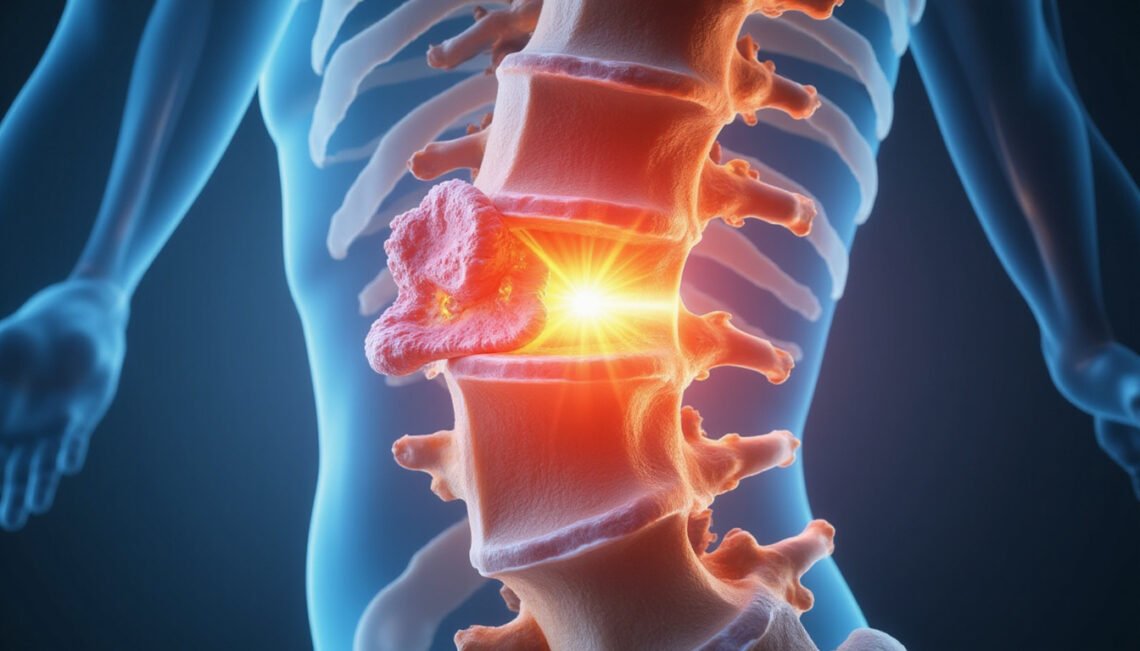
- Disc sequestration – A fragment of disc material breaks off completely and can migrate up or down the spinal canal.
With disc sequestration, that free fragment can press on nerves in unpredictable places, leading to symptoms that sometimes don’t make immediate sense.
Why Disc Sequestration Can Be More Serious
A sequestered disc fragment:
- May compress spinal nerves or even the spinal cord/cauda equina
- Can move over time, changing symptoms
- Often causes more intense inflammation that irritates nerves
This doesn’t automatically mean you need surgery, but it does mean:
- Symptoms should be taken seriously
- Prompt evaluation is important
- “Wait and see” doesn’t mean “ignore and hope it goes away”
Surprising Symptoms of Disc Sequestration
Many people expect disc problems to cause only low back pain or stiff neck. Disc sequestration can cause a wider range of symptoms, depending on the level of the spine (cervical, thoracic, lumbar) and the direction the fragment moves.
1. Pain in Unexpected Areas
Because irritated nerves can send pain along their entire path, you might feel:
- Hip, buttock, or groin pain (from lumbar sequestration)
- Pain radiating down one or both legs (sciatica-like symptoms)
- Shoulder blade or chest wall pain (from thoracic or cervical involvement)
- Arm pain, forearm aching, or hand pain (from cervical sequestration)
People sometimes end up at cardiology or hip clinics first, thinking it’s a heart, joint, or muscular problem, when the true source is in the spine.
2. Neurological Changes
A sequestered fragment can significantly irritate or compress nerves, leading to:
- Numbness or tingling in a leg, foot, arm, or hand
- Burning or electric shock sensations traveling down a limb
- Patchy sensory loss (certain skin areas feel “dead” or altered)
- Heightened sensitivity – even light touch feels sharp or painful
These nerve-related symptoms may be more prominent than back or neck pain.
3. Weakness and Coordination Problems
When motor nerve fibers are affected, you may experience:
- Foot drop – difficulty lifting the front of the foot, tripping easily
- Weakness climbing stairs or standing on toes/heels
- Weak grip strength or dropping objects (cervical involvement)
- Clumsiness or balance issues, especially with more central compression
Weakness is a red flag sign that requires urgent medical assessment.
4. Bowel or Bladder Changes (Medical Emergency)
In the lower spine, disc sequestration can sometimes compress the cauda equina, a bundle of nerves at the base of the spinal canal. Symptoms can include:
- New difficulty starting or stopping urination
- Loss of bladder or bowel control
- Numbness in the “saddle” area (inner thighs, buttocks, genital region)
- Severe or rapidly worsening leg weakness
These signs can point to cauda equina syndrome, a surgical emergency. If they appear, seek emergency care immediately.
How Disc Sequestration Is Diagnosed
Clinical Evaluation
A spine specialist, neurologist, or orthopedic physician will usually:
- Take a detailed history (onset, activities, prior injuries)
- Perform a physical and neurological exam, including:
- Reflex testing
- Strength assessment
- Sensation checks in specific dermatomes
- Range-of-motion and provocation tests (e.g., straight leg raise)
Imaging Studies
Because disc sequestration involves a free fragment, imaging is crucial:
- MRI – The gold standard. Shows:
- Location and size of the sequestered fragment
- Nerve root or spinal cord compression
- Inflammation and other spinal structures
- CT scan – Sometimes used if MRI is unavailable or contraindicated
- X-rays – Helpful for alignment and bone issues, but do not show disc fragments well
Certain blood tests or additional studies may be done to rule out other causes, such as infection, tumor, or systemic disease.
Non-Surgical Treatment Options for Disc Sequestration
Disc sequestration sounds alarming, but not all cases require surgery. A significant number of sequestered fragments can shrink or be resorbed by the body over time. Conservative care is often tried first, as long as there are no red-flag symptoms.
1. Medications
Your doctor may recommend:
- NSAIDs (e.g., ibuprofen, naproxen) for pain and inflammation
- Short courses of oral steroids to reduce acute nerve inflammation
- Neuropathic pain medications (e.g., gabapentin, pregabalin, duloxetine) for nerve-related pain
- Muscle relaxants if muscle spasms are prominent
- Short-term opioids only when absolutely necessary and for brief periods
Medication should be part of a broader plan, not the only strategy.
2. Physical Therapy
A skilled physical therapist can help manage symptoms and support healing:
- Gentle flexibility and mobility exercises
- Core and trunk stabilization to support the spine
- Postural training for daily activities and work
- Nerve gliding (nerve flossing) techniques when appropriate
- Education on safe movement patterns and body mechanics
Therapy usually starts cautiously and progresses as symptoms allow.
3. Epidural Steroid Injections
Epidural steroid injections place anti-inflammatory medication near the irritated nerves, aiming to:
- Reduce inflammation around the sequestered fragment
- Decrease radiating arm or leg pain
- Improve function enough to participate more fully in rehab
Relief can range from temporary to longer term. Injections don’t remove the fragment but may help your body tolerate it while natural resorption occurs.
4. Activity Modification and Self-Care
You may be advised to:
- Temporarily avoid heavy lifting, bending, twisting, and high-impact activities
- Use heat or ice for symptom relief
- Change your workstation or use ergonomic supports
- Take frequent movement breaks if you sit or stand for long periods
Bed rest is generally discouraged; gentle movement is usually better than prolonged immobilization.
When Surgery Is Recommended
Surgery is considered when:
- There are red-flag symptoms (e.g., cauda equina signs, severe or progressive weakness)
- Pain remains severe and disabling despite several weeks or months of well-managed conservative treatment
- Imaging shows significant nerve or spinal cord compression matching your symptoms
Common Surgical Procedures
-
Microdiscectomy (for lumbar sequestration)
- A small incision
- Removal of the sequestered fragment and sometimes a portion of the disc
- High success rates for leg pain relief when symptoms and imaging match
-
Laminectomy or laminotomy
- Removing part of the vertebral bone (lamina) to create more space
- Often done alongside fragment removal in cases of spinal stenosis plus disc sequestration
-
Cervical discectomy (ACDF or posterior discectomy)
- For disc sequestration in the neck
- May involve removing the disc and fusing the segment, or performing a motion-preserving procedure depending on your case
Modern spine surgery is typically more minimally invasive than in the past, with shorter hospital stays and faster initial recovery, though healing and rehab still take time.

Recovery Tips After Disc Sequestration (With or Without Surgery)
Recovery from disc sequestration is not just about pain reduction; it’s about protecting your spine and building resilience for the future.
1. Respect the Healing Timeline
Nerves and discs heal slowly. Full recovery can take months, not days. During that time:
- Expect ups and downs in symptoms
- Watch for trend improvements (pain episodes less intense, shorter, or less frequent)
- Communicate regularly with your healthcare team
2. Follow Your Rehab Plan
A typical plan may include:
- Early phase: Pain control, gentle movement, walking as tolerated
- Middle phase: Guided physical therapy, progressive strengthening and mobility work
- Later phase: Return-to-sport or return-to-work conditioning, focusing on real-life demands
Skipping rehab and “going back to normal” too quickly can increase the risk of recurrence or lingering problems.
3. Build a Spine-Friendly Lifestyle
To support long-term recovery and reduce future risk:
- Maintain a healthy weight to reduce load on your spine
- Strengthen your core, hips, and back regularly
- Use proper lifting techniques:
- Bend at the hips and knees
- Keep the load close to your body
- Avoid twisting while lifting
- Set up a good ergonomic workspace (chair support, monitor at eye level, feet flat on floor)
- Stay active with low-impact exercise like walking, swimming, or cycling
4. Manage Stress and Sleep
Chronic pain and nerve-related symptoms can be draining. Helpful strategies include:
- Regular sleep schedule, with a supportive mattress and pillows
- Relaxation techniques: breathing exercises, meditation, gentle yoga
- Cognitive-behavioral strategies for pain coping, if needed
Good sleep and stress management support the nervous system, which can reduce pain sensitivity.
Potential Long-Term Outlook
The prognosis for disc sequestration varies by:
- Size and location of the fragment
- Severity and duration of nerve compression
- Age, general health, and lifestyle
Some key points:
- Many sequestered disc fragments partly or completely resorb over time, especially with non-surgical management (source: National Library of Medicine)
- Even after surgery, you may be at higher risk of future disc issues, so ongoing spine care and strengthening are essential
- Early identification and treatment of serious signs improve the chances of a good outcome
FAQ: Disc Sequestration and Related Questions
1. Is disc sequestration worse than a regular herniated disc?
A sequestered disc is a type of herniated disc where a fragment has broken free. It can be more serious because the fragment can move and press on nerves in different places. However, “worse” depends on your symptoms. Some people with disc sequestration have manageable pain, while others need urgent surgery due to nerve damage risk.
2. Can a sequestered disc heal without surgery?
Yes. In many cases, a sequestered lumbar disc can shrink and be resorbed by the body over time. During this period, treatments focus on pain relief, protecting the nerves, and improving function. Regular monitoring is important to ensure there’s no worsening weakness, bowel/bladder changes, or severe nerve damage.
3. What’s the difference between disc sequestration and disc extrusion?
In a disc extrusion, the inner disc material has pushed out through the torn outer ring but is still physically connected to the main disc. In disc sequestration, that material has completely separated and become a free fragment. This difference matters because a sequestered fragment can migrate and irritate nerves at levels slightly away from the original disc.
Take the Next Step Toward Relief
Living with disc sequestration can feel overwhelming, especially when your symptoms don’t match what others describe. The most important thing you can do is get a thorough evaluation and a clear diagnosis, then work with a team—doctor, physical therapist, possibly a surgeon—to build a plan that fits your life and your goals.
If you’re dealing with persistent back, neck, or radiating limb pain—especially with numbness, tingling, or weakness—don’t wait for it to “just go away.” Reach out to a spine specialist or qualified healthcare provider, ask about the possibility of disc sequestration, and start a targeted treatment and recovery plan today. The sooner you act, the more options you’re likely to have, and the better your long-term outcome can be.