If you spend a lot of time sitting, lifting, running, or even just walking, learning proper glute release techniques can be a game-changer for your hips. Tight glutes don’t just cause soreness in your backside—they can trigger hip pain, lower-back stiffness, and even knee issues. The good news: you don’t need fancy tools or complex routines. With a few simple stretches and mobility drills, you can unlock your hips and feel real relief.
Below is a practical, step-by-step guide to understanding your glutes, why they get tight, and exactly how to release them safely and effectively.
Why glute release matters for hip pain
Your glutes (gluteus maximus, medius, and minimus) are among the strongest muscles in your body. They help you:
- Extend your hips (standing up, walking, climbing stairs)
- Stabilize your pelvis (keeping your hips level)
- Support your lower back during movement
When your glutes are tight, weak, or “switched off” from too much sitting, other structures start to compensate: hip flexors, low-back muscles, and even the IT band. Over time this imbalance can translate into:
- Achy or sharp pain at the side or back of the hip
- Deep buttock soreness (often mistaken for sciatica)
- Stiffness when standing after sitting
- Discomfort during squats, lunges, or walking uphill
Glute release techniques work by reducing muscle tension, improving blood flow, and restoring normal movement around the hip joint. Combined with light strengthening, they help realign how your hips and pelvis move.
How do you know your glutes need release?
You may benefit from glute release if you notice:
- Tender “hot spots” in your buttock when you press with your fingers or a ball
- Pain that worsens after long periods of sitting or driving
- Tightness when trying to cross one leg over the other
- Difficulty fully extending your hip during walking or running
- One hip or buttock feeling tighter or more sensitive than the other
Persistent, sharp, or radiating pain down your leg should be evaluated by a healthcare professional to rule out disc or nerve issues. But for many people, targeted glute work is an effective part of a hip-pain relief plan (source: Cleveland Clinic – Piriformis Syndrome).
Before you start: safety tips for glute release
A proper glute release routine should feel relieving, not punishing. Keep these basics in mind:
- Aim for mild to moderate discomfort, never sharp pain. Think “achey stretch,” not “electric shock.”
- Breathe slowly and deeply. Holding your breath makes muscles guard and tighten.
- Move slowly in and out of positions. No bouncing or jerky motions.
- Stay within your range. If a position aggravates hip or low-back pain, skip or modify it.
- Warm up briefly. A few minutes of walking or marching in place helps prepare tissues.
If you have a recent hip or back injury, joint replacement, or chronic condition, check with a physical therapist or doctor before starting a new stretching routine.
Core glute release stretches for hip pain
These stretches target key glute muscles and the deep rotators that often contribute to hip pain. You won’t need any special equipment—just a mat and maybe a pillow.
1. Figure-4 lying glute stretch
Targets: Gluteus maximus, piriformis, deep hip rotators
- Lie on your back with knees bent and feet flat.
- Cross your right ankle over your left thigh, just above the knee (forming a “4”).
- Lift the left leg toward your chest, threading your right hand through the gap and your left hand around the outside to clasp behind the left thigh.
- Gently pull the left leg toward you until you feel a stretch in the right glute/hip.
- Keep your head and shoulders relaxed, low back neutral.
- Hold 30–45 seconds, breathing steadily.
- Switch sides.
Make it easier: Place the foot of the non-stretching leg on a low stool instead of pulling it toward your chest.
2. Seated figure-4 hip opener
Targets: Gluteus medius/minimus, outer hip
- Sit on a sturdy chair with both feet flat.
- Cross your right ankle over your left thigh.
- Sit tall, then hinge slightly forward at the hips (not rounding the back).
- You should feel a stretch in the outer right hip and glute.
- Hold 30–60 seconds, then switch sides.
This is an excellent workplace or travel-friendly glute release you can do multiple times per day.
3. Pigeon pose (modified for safety)
Targets: Gluteus maximus, piriformis, hip capsule
- Start on all fours (hands and knees).
- Slide your right knee forward toward your right wrist.
- Angle your shin roughly under your torso; the right foot moves toward the left wrist (you can keep it closer to your hip for less intensity).
- Extend the left leg straight back, top of the foot on the floor.
- Keep your hips squared as much as possible.
- Stay upright with hands on the floor, or slowly lower your torso toward the ground for a deeper stretch.
- Hold 30–60 seconds, breathing into the glute. Switch sides.
Modify: Place a pillow or folded blanket under the hip of the front leg if you can’t comfortably reach the floor.
4. 90/90 hip stretch
Targets: Gluteus medius, deep rotators, hip capsule
- Sit on the floor with your right leg in front, knee bent at 90 degrees, shin parallel to your torso.
- Place your left leg to the side, also bent at 90 degrees, shin behind you.
- Both knees point in the same direction as their respective hips.
- Sit tall over the front hip; you’ll feel a stretch in that glute.
- For more, hinge gently forward over the front shin.
- Hold 30–45 seconds.
- Rotate to the other side and repeat.
This glute release position also improves hip internal and external rotation, crucial for healthy movement.
5. Child’s pose with side shift
Targets: Glutes, low back, side body
- Start on hands and knees.
- Sit your hips back toward your heels, reaching arms forward (standard child’s pose).
- Walk both hands slightly to the right; lean your hips subtly to the left.
- You should feel a stretch along the left side and into the glute.
- Hold 30 seconds, then switch sides.
This is a gentle option if you’re very stiff, recovering from pain, or stretching at the end of the day.
Self-massage and trigger-point glute release
Stretching lengthens muscle and soft tissue, but sometimes you also need direct pressure on trigger points—those small, tight “knots” that refer pain into your hip or leg.
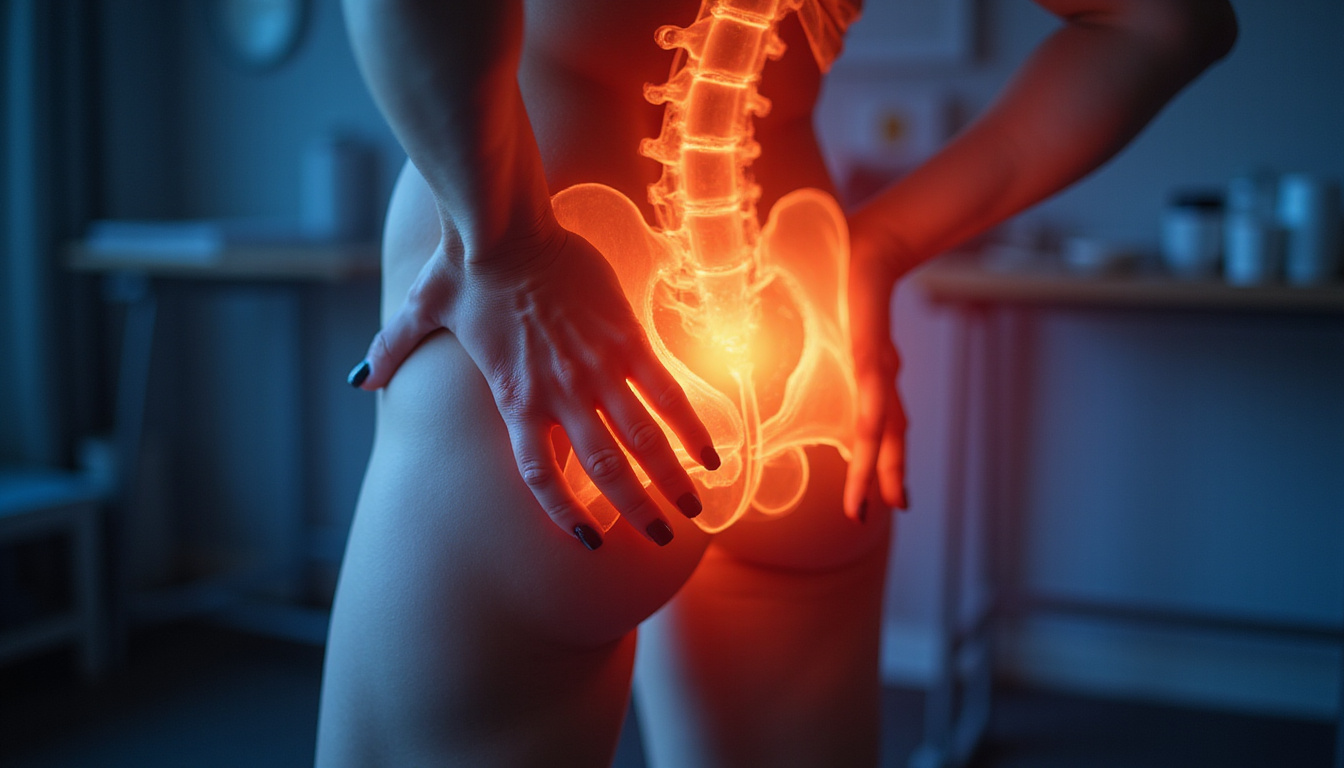
You can do basic trigger-point glute release at home using a tennis ball, lacrosse ball, or massage ball.
6. Wall-assisted glute ball release
Targets: Deep glute trigger points, piriformis
- Stand with your back to a wall.
- Place a ball between the wall and the fleshy part of one buttock.
- Lean gently into the wall to apply pressure.
- Slowly bend and straighten the knees or shift your body so the ball moves over the glute.
- When you find a tender spot, pause and hold pressure 20–30 seconds while breathing deeply.
- Move to 3–5 different spots, then switch sides.
Use the wall rather than the floor if you want more control over the pressure. It should feel intense but manageable, with the discomfort easing as you breathe.
7. Floor glute ball release (advanced)
Targets: Deep glute and hip rotators
- Lie on your back with knees bent.
- Place the ball under one side of your buttock, away from the spine and not directly on bone.
- Gently shift your weight side-to-side or draw small circles with your hips.
- Pause on tender points for 15–20 seconds.
- Limit to 1–2 minutes per side.
If you feel tingling, numbness, or radiating pain down your leg, move the ball or stop; you may be pressing on a nerve.
A simple daily glute release routine (10–15 minutes)
To make real progress with your hip pain, consistency is more important than intensity. Here’s a sample routine you can use 4–6 days per week:
-
Warm-up (2–3 minutes)
- March in place, gentle hip circles, or short walk.
-
Stretching (7–10 minutes)
- Figure-4 lying stretch – 30–45 seconds each side
- Seated figure-4 – 30–60 seconds each side
- 90/90 hip stretch – 30–45 seconds each side
-
Self-massage (3–5 minutes)
- Wall-assisted glute ball release – 1–2 minutes per side
-
Cool-down breath (1–2 minutes)
- Lie on your back, knees bent, one hand on chest and one on belly.
- Inhale through the nose for 4 seconds, exhale for 6 seconds.
Don’t forget strengthening: the other half of glute release
Releasing tight glutes without strengthening them is like loosening a screw without tightening the rest of the structure. Your body needs strong, well-coordinated glute muscles to maintain the benefits of your stretching.
After a week or two of consistent glute release work, start integrating light strengthening moves:
- Glute bridges – Lying on your back, lifting hips while squeezing glutes.
- Clamshells – Lying on your side, opening and closing bent knees like a clamshell.
- Bodyweight squats – Pain-free range only, focusing on hip hinge and glute squeeze at the top.
Perform 2–3 sets of 10–15 reps of one or two exercises, 2–3 times per week. This combination of release plus strength makes your hips more resilient.
Common mistakes that can reduce your results
To get the most from your glute release efforts, avoid these pitfalls:
- Going too hard, too fast – Excessive pressure or stretching can cause guarding and more tightness.
- Holding your breath – This increases tension; exhale especially as stretch intensity rises.
- Only working one side – Even if one side hurts more, both hips benefit from balanced care.
- Ignoring posture and daily habits – Long, unbroken sitting periods will keep re-tightening your glutes. Get up every 30–60 minutes when possible.
- Skipping consistency – Occasional stretching feels nice, but lasting change comes from regular practice.
Quick FAQ on glute release and hip pain
1. What is the best way to release tight glutes?
The best glute release approach combines gentle static stretches (like figure-4 and pigeon variations) with trigger-point ball work against a wall or floor. Doing these 4–6 days per week, at a light-to-moderate intensity, helps reduce muscle tension and restore hip mobility.
2. How often should I do a glute muscle release routine for hip pain?
Most people benefit from a short glute muscle release routine at least 3–4 times per week, with daily practice often providing faster relief. Keep sessions around 10–15 minutes and focus on how your body feels rather than pushing for maximum stretch.
3. Can glute trigger point release help with lower-back pain too?
Yes. Because the glutes stabilize the pelvis and support the lower back, glute trigger point release can ease some types of low-back discomfort, especially when the pain is related to muscle tightness or imbalance. However, persistent, severe, or radiating pain should always be evaluated by a medical professional.
Consistent, thoughtful glute release can dramatically reduce hip pain, improve your mobility, and make everyday movement feel easier. You don’t need an hour a day or a gym membership—just 10–15 focused minutes, a mat, and maybe a ball.
Start today: pick two stretches and one self-massage technique from this guide and do them tonight. Pay attention to how your hips feel when you get out of bed tomorrow. If you notice even a small improvement, commit to this routine for the next two weeks. Your hips, back, and whole body will thank you—and you’ll be one step closer to moving pain-free.