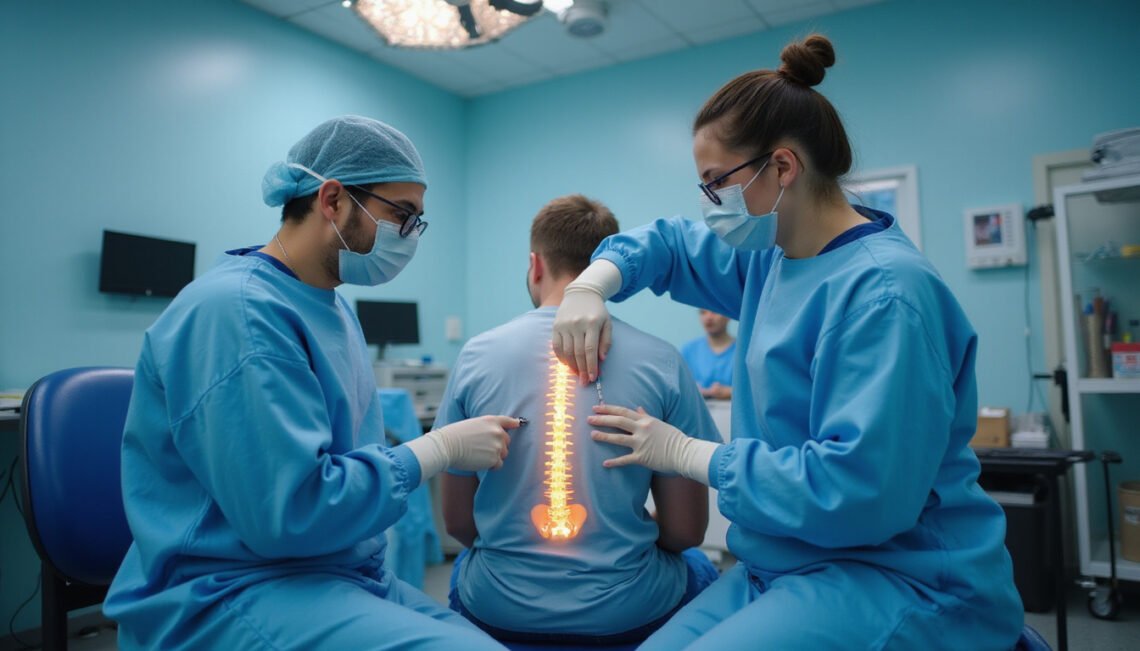
If you’ve been struggling with chronic neck or lower back pain, your pain specialist may recommend a medial branch block as both a diagnostic and therapeutic procedure. Understanding what this treatment involves—what to expect before, during, and after, as well as the risks and typical recovery timeline—can help you feel more prepared and confident going in.
What Is a Medial Branch Block?
A medial branch block is an injection of a local anesthetic (and sometimes a steroid) near the medial branch nerves that supply the facet joints of the spine. These tiny nerves transmit pain signals from the facet joints to your brain.
Facet joints are small joints along the back of your spine that help provide stability and guide motion. When they become arthritic, inflamed, or irritated, they can cause chronic neck, mid-back, or low back pain, sometimes radiating into the buttocks or upper legs.
A medial branch block is primarily:
- Diagnostic: To confirm whether the facet joints are the source of your pain.
- Therapeutic (short-term): To provide temporary relief and reduce inflammation.
If the injection successfully relieves your pain for a period of time, your provider may recommend a longer-lasting treatment, such as radiofrequency ablation (RFA) of the medial branch nerves.
Why Doctors Recommend a Medial Branch Block
Your provider may suggest a medial branch block if:
- You have chronic neck or back pain that has lasted longer than three months.
- Imaging (X-ray, CT, MRI) suggests facet joint arthritis or degeneration.
- Pain worsens with certain movements like extension, twisting, or prolonged standing.
- Conservative treatments—physical therapy, oral medications, activity modification—haven’t provided adequate relief.
- A more permanent procedure such as radiofrequency neurotomy is being considered, and your doctor wants to confirm the source of pain first.
By temporarily numbing the medial branch nerves, your provider can see how much of your pain improves. This helps avoid unnecessary or ineffective procedures and tailor a treatment plan specific to your pain generator.
How to Prepare for a Medial Branch Block
Preparation is typically straightforward, but following instructions carefully improves safety and outcomes.
Medication Review
Before the procedure, your pain specialist or anesthesiologist will:
- Review your medications, including blood thinners, diabetes medications, and supplements.
- Ask about a history of allergies, especially to anesthetics, iodine/contrast dye, or latex.
- Instruct you on whether to temporarily stop blood thinners such as warfarin, clopidogrel, or certain newer anticoagulants (always in coordination with your prescribing physician).
Eating and Drinking
Policies vary, but commonly:
- You may be asked to avoid food for 4–8 hours before the procedure if sedation is planned.
- Clear liquids may be allowed up to a few hours before, depending on facility guidelines.
Clothing and Transportation
- Wear loose, comfortable clothing that’s easy to change out of.
- Arrange for a responsible adult to drive you home, especially if you will receive sedation. Even if no sedation is used, some people prefer not to drive right after.
What Happens During a Medial Branch Block
A medial branch block is usually performed in an outpatient setting such as a pain clinic or ambulatory surgery center and typically takes 15–30 minutes.
Step-by-Step: During the Procedure
-
Check-in and consent
You’ll review the procedure details, risks, and benefits, then sign consent forms. Vital signs (blood pressure, heart rate, oxygen level) are checked. -
Positioning
You’ll lie face down on a procedure table. A cushion may be placed under your abdomen or chest for comfort and to optimize spinal positioning. -
Skin cleansing and local anesthesia
The skin over the injection site is cleaned with an antiseptic solution. A small injection of local anesthetic numbs the skin and deeper tissues. You may feel a brief sting or burning. -
Fluoroscopic (X-ray) guidance
Using real-time X-ray guidance, the physician inserts a thin needle to the area near the medial branch nerves that supply the suspected painful facet joints. Contrast dye may be injected to confirm correct placement and avoid injecting into a blood vessel. -
Injection of anesthetic (and optional steroid)
Once placement is confirmed, a small amount of local anesthetic (such as lidocaine or bupivacaine) is injected. Some physicians add a steroid medication to help reduce inflammation. -
Completion and brief observation
The needles are removed, and a small bandage is applied. You’ll be monitored for a short time to ensure you feel stable and have no immediate adverse reactions.
What to Expect Right After a Medial Branch Block
Pain Relief Timeline
- Immediate effect: Many people feel pain relief within minutes due to the local anesthetic.
- Duration: Relief from the anesthetic may last several hours to a day. If a steroid is used, any anti-inflammatory benefit may take several days to become noticeable.
- Diagnostic value: If your typical pain improves significantly (often defined as at least 50–80% relief) during the anesthetic window, that strongly suggests your facet joints—and thus the medial branch nerves—are a primary pain source.
Activity and Monitoring Pain
Your provider may encourage you to:
- Perform activities that normally provoke your pain (within reason and safely) during the initial relief period to accurately judge how much the injection helps.
- Keep a pain diary for at least 24 hours, noting:
- Pain levels before and after the procedure.
- Specific activities and how they felt.
- When pain starts to return and whether it’s at the same intensity.
This information helps your doctor decide on next steps, including whether to repeat the block or consider radiofrequency ablation.

Recovery After a Medial Branch Block
Recovery from a medial branch block is usually quick, with most people resuming normal activities within a day.
First 24–48 Hours
- Mild soreness at the injection site is common and may be treated with:
- Ice packs (10–15 minutes at a time).
- Over-the-counter pain relievers if approved by your doctor.
- Avoid strenuous activity or heavy lifting on the day of the procedure.
- You can usually shower the same day, but avoid soaking in a bathtub or pool for 24 hours.
Returning to Normal Activities
- Most patients return to regular daily activities, including work, within 24 hours.
- If you receive sedation, you’ll need to:
- Avoid driving, operating heavy machinery, or signing legal documents for the rest of the day.
- Physical therapy or exercise programs may be continued or resumed as directed by your provider to improve strength, flexibility, and spinal support.
Risks and Possible Side Effects of a Medial Branch Block
A medial branch block is generally considered safe, especially when performed by an experienced pain specialist using imaging guidance. However, as with any medical procedure, there are potential risks and side effects.
Common, Mild Side Effects
These are usually temporary:
- Soreness or bruising at the injection site.
- Temporary increase in pain as the anesthetic wears off.
- Feeling of numbness or heaviness in the back or nearby area.
Less Common but Potential Risks
- Bleeding or hematoma at the injection site, especially in people on blood thinners.
- Infection at the skin or deeper tissues (rare; minimized by sterile technique).
- Allergic reaction to anesthetic, steroid, or contrast dye.
- Nerve irritation or damage, very rare with proper technique.
- Vascular injection, where medication enters a blood vessel rather than the target area (fluoroscopic guidance and contrast reduce this risk).
Serious complications are rare, but you should contact your provider or seek urgent care if you experience:
- Fever or chills.
- Severe or worsening pain not relieved by usual measures.
- New or increasing weakness, numbness, or problems with bowel or bladder control.
- Redness, swelling, or drainage at the injection site.
For context, the American Society of Interventional Pain Physicians notes that, when properly performed, facet joint and medial branch procedures have a low complication rate (source: ASIPP Guidelines).
How Effective Is a Medial Branch Block?
The effectiveness of a medial branch block depends on your specific diagnosis and the purpose of the injection.
As a Diagnostic Tool
- A significant, short-term reduction in pain (often ≥50–80%) within the first day suggests your facet joints are a major source of pain.
- Some physicians may perform two diagnostic medial branch blocks on different days to confirm results and reduce the risk of false positives before proceeding to radiofrequency ablation.
As a Therapeutic Tool
- Some patients experience pain relief lasting days to weeks, especially if a steroid is used.
- However, medial branch blocks are not typically intended as a long-term standalone treatment; they are more often a step in a larger treatment plan that may include:
- Radiofrequency ablation of the medial branch nerves for longer-lasting relief.
- Physical therapy and exercises to support spinal health.
- Lifestyle modifications (weight management, posture correction, ergonomics).
Who Is a Good Candidate for a Medial Branch Block?
You may be a good candidate if:
- You have chronic axial spine pain (localized neck, mid-back, or low back pain) that has not responded to conservative therapies.
- Your pain is worse with extension or rotation and often improves with flexion.
- Imaging or clinical examination suggests facet joint involvement.
- You are considering radiofrequency ablation and your provider needs to confirm that facet joints are the culprit.
You may not be an ideal candidate if:
- You have an active infection or uncontrolled systemic illness.
- You have significant bleeding disorders that cannot be safely managed.
- You are pregnant and the risks of X-ray exposure outweigh potential benefits (alternate approaches may be considered).
Medial Branch Block vs. Other Spine Injections
It’s easy to confuse a medial branch block with other types of spinal injections. They differ in both target and purpose:
-
Medial Branch Block:
- Target: Medial branch nerves that supply facet joints.
- Purpose: Diagnose and potentially reduce pain from facet joints.
-
Facet Joint Injection:
- Target: The facet joint itself.
- Purpose: Deliver anesthetic and steroid directly into the joint.
-
Epidural Steroid Injection:
- Target: Epidural space around spinal nerve roots.
- Purpose: Reduce pain from disc herniation, spinal stenosis, or nerve root inflammation (radiculopathy/sciatica).
Understanding the difference helps you discuss realistic expectations with your provider.
Summary: What to Expect, Risks, and Recovery
- A medial branch block is a minimally invasive injection targeting the medial branch nerves that supply your facet joints.
- It is used primarily to diagnose facet-mediated pain and guide further treatment like radiofrequency ablation.
- The procedure usually takes less than 30 minutes, with quick recovery and same- or next-day return to routine activities.
- Risks are low but include infection, bleeding, allergic reaction, and rare nerve or vascular complications.
- Pain relief may be short-lived but provides valuable diagnostic information and, for some, meaningful temporary symptom relief.
FAQs About Medial Branch Blocks
1. How long does pain relief from a medial branch block last?
For most people, pain relief from a medial branch block lasts hours to a few days, depending largely on the type of anesthetic used. If steroid is included, you might experience some extended benefit for days to weeks, but the primary purpose is diagnostic. Longer-term relief is often sought with radiofrequency ablation if the block is successful.
2. Is a medial branch nerve block painful?
You may feel a brief sting from the skin numbing injection and some pressure as the needle is positioned. Many patients describe the medial branch nerve block itself as only mildly uncomfortable. Sedation can be used in some settings, though many procedures are done with local anesthesia alone.
3. How many medial branch blocks can you have?
The number of medial branch injections recommended depends on your situation. Often, one or two diagnostic blocks are performed to confirm facet joint pain. If they are helpful, your doctor may move to radiofrequency ablation rather than repeating blocks frequently. If used therapeutically with steroid, your provider will limit the number per year to reduce potential steroid-related side effects.
If you’re living with persistent neck or low back pain and wondering whether your facet joints are to blame, discussing a medial branch block with a pain specialist can be a crucial step toward clarity and relief. An evaluation with a qualified spine or pain physician can help determine whether this minimally invasive procedure fits into a comprehensive plan tailored to your needs. Don’t wait for your pain to dictate your life—reach out to a specialist today to explore whether a medial branch block is the right next step toward getting you moving and feeling better again.