If you’re struggling with pain or stiffness that just won’t go away, you may have heard your therapist mention mobilization with movement. This gentle yet powerful manual therapy approach can quickly improve mobility and reduce pain in a single session—often with results that surprise patients who’ve “tried everything.”
Below, you’ll learn what mobilization with movement is, how it works, when it’s used, and how you can get the most out of it to speed up your recovery.
What Is Mobilization with Movement?
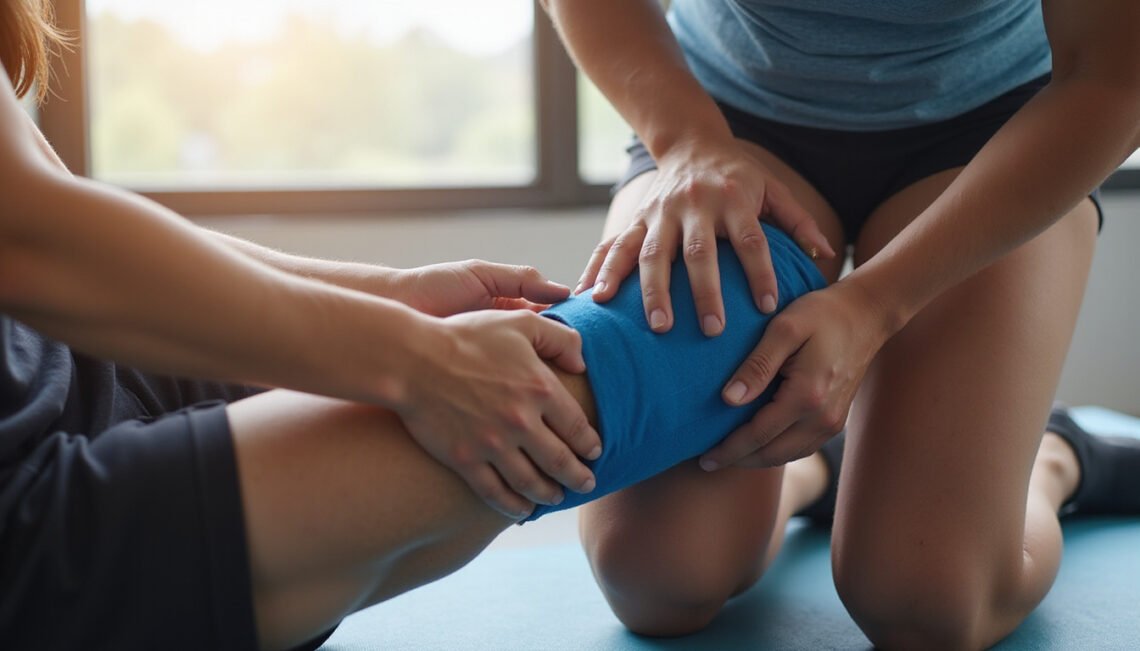
Mobilization with movement (MWM) is a hands-on treatment technique used by physical therapists and other manual therapists. It was popularized by New Zealand physiotherapist Brian Mulligan and is part of what’s often called the Mulligan Concept.
In simple terms, MWM combines:
- A gentle, sustained manual force applied by the therapist to a joint, and
- An active movement performed by you (the patient) at the same time.
The key feature: the movement you couldn’t do without pain becomes pain-free or much less painful when combined with the therapist’s mobilization.
This combination:
- Helps joints move more normally
- Reduces protective muscle guarding
- Retrains your nervous system to accept the movement again
How Mobilization with Movement Works (In Plain English)
Mobilization with movement is based on a few core ideas about how pain and movement interact.
1. Correcting Subtle Joint “Misalignments”
MWM assumes that in some injuries, the joint surfaces may not be gliding or tracking optimally. These are not major dislocations, but small positional “faults” that change how pressure and load are distributed.
When the therapist applies a specific, pain-free glide (for example, slightly shifting the knee joint in one direction), it can:
- Restore a more normal joint position
- Reduce compression or irritation
- Immediately improve range of motion
2. Calming the Nervous System
After pain or injury, your nervous system becomes protective:
- Muscles tighten
- Movement patterns change
- Your brain expects pain when you move a certain way
By combining a pain-free manual glide with the previously painful movement, the brain receives new input: “This movement is now safe.” Over time, this can reduce pain sensitivity and fear of movement.
3. Reinforcing Good Movement Through Repetition
Mobilization with movement isn’t just a one-off “adjustment.” The technique is repeated several times in a row and often followed by a self-mobilization exercise. This repetition helps:
- Reinforce the corrected movement pattern
- Make the change more lasting
- Integrate better joint mechanics into everyday activities
Conditions That Respond Well to Mobilization with Movement
Therapists use mobilization with movement for many common musculoskeletal problems. It tends to be most useful when there’s pain or stiffness with a specific movement.
Common areas and conditions include:
Neck and Upper Back
- Neck stiffness or limited rotation (trouble turning your head)
- Certain types of mechanical neck pain
- Some forms of nerve irritation causing arm symptoms (under guidance)
Shoulder and Arm
- Shoulder impingement (pain lifting the arm overhead)
- Rotator cuff–related pain
- Frozen shoulder (adhesive capsulitis) during some phases
- Tennis elbow (lateral epicondylalgia)
- Golfer’s elbow (medial epicondylalgia)
- Wrist and thumb pain (e.g., De Quervain’s tenosynovitis)
Lower Back and Pelvis
- Mechanical low back pain aggravated by bending or extension
- Sacroiliac (SI) joint–related pain
- Stiffness after episodes of acute back pain
Hip, Knee, and Ankle
- Knee pain with squatting or stairs (patellofemoral pain, early arthritis)
- Ankle sprains with lingering stiffness and reduced dorsiflexion
- Hip joint stiffness limiting walking or bending
Clinical research has shown positive effects of the Mulligan approach for problems such as tennis elbow, ankle sprains, and knee pain when used as part of a broader rehab program (source: Journal of Orthopaedic & Sports Physical Therapy).
What a Typical Mobilization with Movement Session Looks Like
If your therapist decides that mobilization with movement is appropriate for you, here’s what you can expect.
Step 1: Assessment of Painful Movement
First, your therapist will identify:
- The exact movement that causes you pain or feels limited
- How intense the pain is
- The direction and quality of stiffness or restriction
For example, you might say, “It hurts when I squat past halfway,” or “I can’t turn my head fully to the right.”
Step 2: Applying a Test Glide
Next, the therapist will:
- Position your joint (e.g., knee, shoulder, spine)
- Apply a gentle, sustained glide or repositioning force in a specific direction
- Ask you to repeat the painful movement while the glide is maintained
The goal: find a direction and magnitude of glide that makes the movement:
- Pain-free, or
- Significantly less painful, while increasing range of motion
If the movement becomes pain-free and smoother, it’s a strong indication MWM may work well for you.
Step 3: Repetition
Once a helpful glide is found, you’ll:
- Repeat the movement (e.g., knee bend, neck turn, arm raise)
- Typically 6–10 times in a set
- While the therapist maintains the mobilization
The key rules:
- The movement must remain pain-free or almost pain-free
- No forcing into sharp pain
- Quality and control of movement matter
Step 4: Re-Test and Compare
After one or more sets, your therapist will ask you to repeat the original movement without any assistance:
- Can you turn farther?
- Is there less pain?
- Does it feel easier or freer?
People often notice an immediate change, such as being able to squat deeper, reach higher, or turn their neck more comfortably.

Step 5: Teaching Self-Mobilization
To make the results last, your therapist may teach you a self-mobilization with movement exercise using:
- A belt or strap
- Your opposite hand
- A wall, chair, or band
You’ll be instructed on:
- How often to perform it (e.g., 2–3 times/day)
- How many repetitions
- What level of discomfort is acceptable (usually mild or none)
Benefits of Mobilization with Movement for Faster Recovery
When used appropriately, mobilization with movement can accelerate recovery in several ways.
1. Rapid Pain Reduction
Because the technique is centered around making the previously painful movement immediately more comfortable, many people experience:
- Quick decrease in pain during the session
- Less fear or guarding around the movement
- Improved confidence in using the joint
2. Improved Range of Motion
By restoring a better joint glide and reducing muscle guarding, MWM can:
- Increase how far you can move (flex, extend, rotate)
- Make movements smoother and less “blocked”
- Help you return faster to normal activities like turning your head while driving, squatting, or lifting overhead
3. Movement Retraining, Not Just “Cracking”
Unlike some purely passive techniques, mobilization with movement:
- Requires your active participation
- Integrates the correction directly into functional movements
- Helps “reprogram” your brain’s expectations about pain and motion
This combination of manual therapy plus active movement is a powerful tool for long-term improvement, not just short-term relief.
4. Synergy With Exercise
MWM is usually combined with:
- Strength training
- Flexibility exercises
- Posture and movement education
- Load management (how much you do day to day)
This combination is often more effective than exercise or manual therapy alone for many joint and muscle problems.
Who Is (and Isn’t) a Good Candidate?
Mobilization with movement is generally gentle and safe when performed by a trained professional, but it’s not for everyone.
Good Candidates
You may be a good candidate if you:
- Have pain or stiffness linked to specific movements
- Experience “blocking” or “catching” in a joint without major structural damage
- Have mechanical neck, back, shoulder, elbow, knee, or ankle issues
- Are able to actively participate and follow instructions
Situations Requiring Caution or Avoidance
MWM may not be appropriate (or must be carefully modified) if you have:
- Recent fractures or suspected fractures
- Acute infections in the joint
- Severe osteoporosis or bone fragility
- Active inflammatory arthritis flare (e.g., hot, swollen joints)
- Cancer in or near the region being treated
- Severe neurological symptoms (e.g., progressive weakness, loss of bowel/bladder control)
- Unexplained weight loss, fever, or night pain
Your physical therapist will screen for these “red flags” during your assessment and choose safe techniques accordingly.
How to Maximize the Results of Mobilization with Movement
Mobilization with movement works best when you support it with smart self-care and exercise.
Here are practical ways to get more from each session:
-
Communicate clearly during treatment
Tell your therapist exactly how the movement feels. If it’s still painful, they can adjust the direction or amount of glide. -
Respect pain guidelines at home
Do your home exercises within your therapist’s recommended pain range (often “mild discomfort is okay, sharp pain is not”). -
Stay consistent with self-mobilization
The gains from a single session are reinforced and maintained when you perform your self-mobilization exercises regularly. -
Pair MWM with strengthening
As mobility improves, strengthening the supporting muscles is crucial. Strong, well-controlled muscles help keep the joint moving well. -
Address posture and movement habits
Your therapist may point out daily activities or postures that aggravate your problem. Adjusting these can help maintain your improvements.
Simple Example: Mobilization with Movement for Tennis Elbow
To see how this works in real life, consider a common problem: tennis elbow.
- You have pain on the outside of your elbow when gripping or lifting.
- The therapist positions your elbow and forearm, then applies a gentle sideways glide to the joint.
- While the glide is held, you perform a previously painful movement—such as gripping or extending your wrist against resistance.
- If the pain decreases and strength improves, the therapist repeats the movement several times.
- You’re then taught a variation with a belt or your opposite hand to perform at home.
Over multiple sessions, this can:
- Reduce pain with gripping
- Improve strength and function
- Help you return to work or sport sooner, especially when combined with a full rehab plan
FAQ About Mobilization with Movement
Q1: How is mobilization with movement different from regular joint mobilization?
Traditional joint mobilization is usually passive—you relax while the therapist moves the joint. With mobilization with movement therapy, you actively move the joint at the same time the therapist applies a sustained glide. This active involvement helps integrate the correction into real movement patterns and often provides more immediate, noticeable results.
Q2: Can I do mobilization with movement on my own at home?
You can perform self-mobilization with movement exercises once a qualified therapist has assessed you and shown you what’s safe. They will teach you specific set-ups using straps, your hands, or furniture. Avoid copying random online techniques without guidance, as incorrect direction or force can irritate the joint instead of helping it.
Q3: How many mobilization with movement sessions will I need?
The number of MWM physiotherapy sessions needed varies widely based on your condition, its severity, and your goals. Some people notice significant improvements in just a few visits, while chronic or complex problems may require several weeks of treatment combined with exercise. Your therapist will reassess often and adjust the plan as you progress.
Start Using Mobilization with Movement to Speed Up Your Recovery
If pain or stiffness is limiting your daily life, sport, or work, you don’t have to simply “wait it out.” Mobilization with movement offers a targeted, active way to restore pain-free motion and rebuild confidence in your body’s abilities—often with faster progress than exercise or passive treatments alone.
The most effective first step is to schedule an assessment with a licensed physical therapist trained in the Mulligan Concept or similar manual therapy approaches. They can determine whether MWM is appropriate for your specific problem, create a tailored treatment plan, and teach you the right self-mobilization and strengthening exercises to keep you improving between visits.
Don’t let restricted movement and nagging pain become your new normal. Reach out to a qualified therapist in your area and ask whether mobilization with movement could be the missing piece in your recovery plan.