
If you’ve spent any time around a good trainer, you’ve probably heard the phrase neutral spine more than once. That’s because mastering a neutral spine is one of the fastest ways to improve posture, move more efficiently, and protect your back—whether you’re lifting in the gym or sitting at a desk all day. Learn how trainers teach it, how to feel it in your own body, and how to use it to instantly upgrade your posture.
What Is a Neutral Spine, Really?
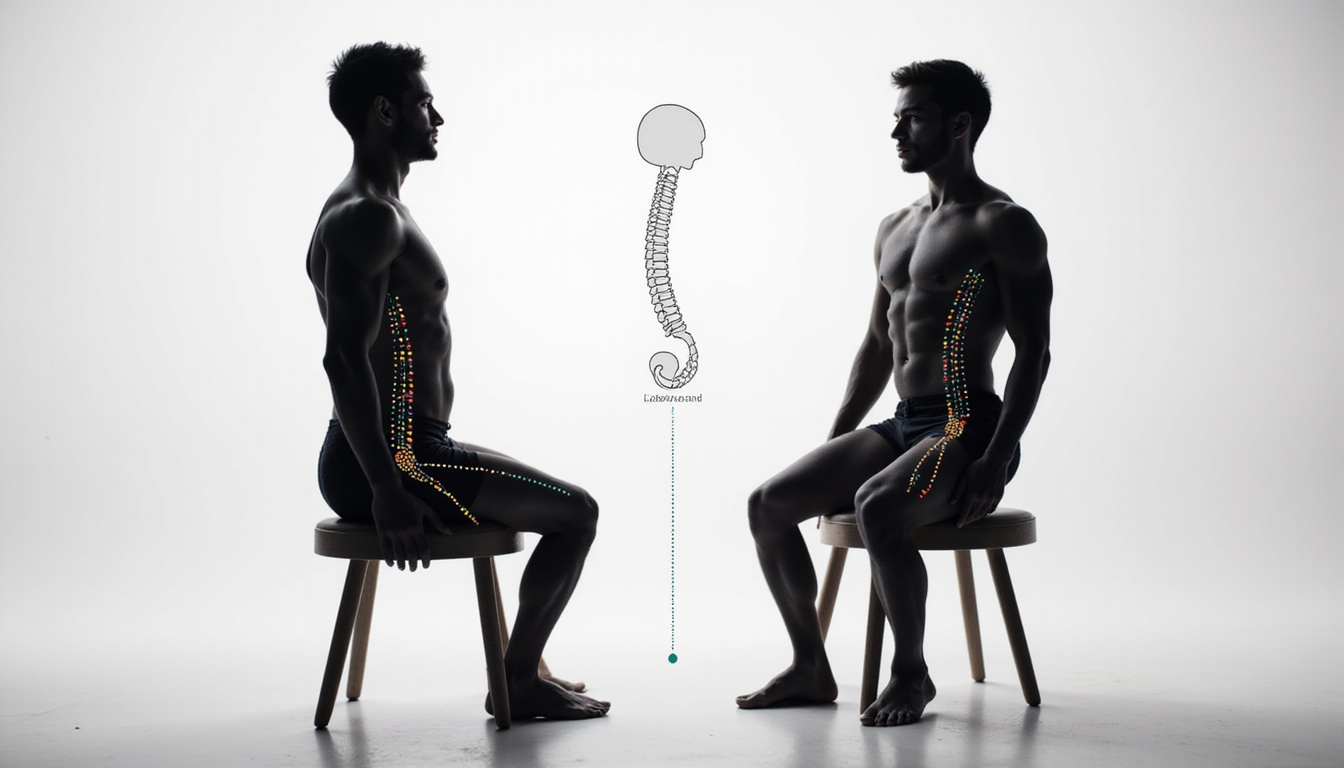
A neutral spine is the natural position of your spine when all three curves—cervical (neck), thoracic (mid-back), and lumbar (lower back)—are aligned and balanced. It’s not ramrod straight, and it’s not hyper-arched. It’s your personal “just right” zone.
In neutral:
- Your head is balanced over your shoulders
- Your ribs are stacked over your pelvis
- Your pelvis is neither tipped forward nor backward excessively
- Your spine’s curves are present but not exaggerated
Trainers love this position because it:
- Distributes load evenly through the spine
- Reduces stress on discs and ligaments
- Lets your core muscles work effectively as a support system
According to the American Council on Exercise, training with proper spinal alignment can help reduce injury risk and improve movement efficiency (source).
Why Trainers Obsess Over neutral spine
You’ll hear trainers cue neutral spine in everything from planks to squats to sitting at your desk. Here’s why it matters so much:
1. It’s the Foundation of Good Posture
Every “good posture” photo you’ve seen is essentially a version of neutral spine: stacked joints, relaxed shoulders, and a lengthened back. Get neutral right, and posture stops feeling rigid and starts feeling stable but comfortable.
2. It Protects Your Back During Lifts
Exercises like deadlifts, squats, and rows put load through your spine. If you’re rounded or over-arched, that load concentrates in vulnerable areas instead of being shared by your muscles and joints. Neutral spine keeps things in the safe zone.
3. It Makes Your Core Work Correctly
Your core muscles—deep abdominals, obliques, spinal erectors, diaphragm, pelvic floor—are designed to stabilize around a neutral spine. If you’re in a weird position, those muscles can’t create optimal tension, and you leak strength or stability.
4. It Improves Breathing and Movement
Neutral spine opens the ribs and diaphragm so you can breathe better and move more freely. The result: exercises feel smoother and easier, and daily activities like walking or standing feel less tiring.
The Trainer’s 30-Second neutral spine Reset
Trainers use a few simple drills to help clients “find” neutral quickly. Here’s a reliable one you can do almost anywhere.
Step 1: Lying Down Check (Supine Neutral)
- Lie on your back with knees bent, feet flat, hip-width apart.
- Place one hand under your lower back.
- Tilt your pelvis all the way forward (exaggerated arch), then all the way backward (press your lower back into the floor).
- Now land right in the middle of those two extremes.
You should feel:
- A small natural curve in the lower back (your hand can slide in, but not with a big gap)
- Ribs gently down toward the floor, not flaring up
- Neck long, chin slightly tucked, not craning up
That’s your lying neutral spine.
Step 2: Standing neutral spine
Now stand up and recreate that feeling:
- Stand tall with feet under hips.
- Gently squeeze your glutes.
- Place one hand on your lower ribs, one on the front of your hips.
- Exhale as if fogging a mirror and gently bring ribs “down” over your pelvis until your hands are vertically stacked.
You’re in neutral when:
- Ears line up roughly over shoulders, hips, and ankles
- You feel tall but not tense
- Your lower back has a slight inward curve, but you’re not sticking your butt out or tucking it under dramatically
Trainers will repeat this “stack your ribs over your pelvis” cue all day. It’s the shortcut to neutral.
How Trainers Cue neutral spine in Common Exercises
Here’s how good coaches quietly build neutral spine into almost every movement.
Squats
- Common mistake: Chest collapses, back rounds, or lower back over-arches.
- Trainer cues:
- “Chest proud, ribs down.”
- “Sit between your hips, not over your toes.”
- “Keep your spine angle the same as you go down and up.”
Quick self-check: As you squat, your torso should lean forward slightly but maintain the same shape—no rounding or extra arching.
Deadlifts and Hinge Movements
- Common mistake: Rounding from the upper or lower back.
- Trainer cues:
- “Push your hips back like you’re closing a car door with your butt.”
- “Keep your ribs over your hips.”
- “Imagine your spine is a solid plank from head to tailbone.”
Quick self-check: Film from the side. Your back should look like one long, neutral line, not a curved “C” or exaggerated “S.”
Planks
- Common mistake: Hips sag (over-arched back) or pike (butt in the air).
- Trainer cues:
- “Tuck your tail slightly and pull ribs toward hips.”
- “Push the floor away, long through the back of your neck.”
Quick self-check: In side view, ears–shoulders–hips–knees–ankles form a straight line.
Rows and Pulls
- Common mistake: Shoulders up to ears, neck craned forward.
- Trainer cues:
- “Long neck, pull shoulders down and back gently.”
- “Move from your shoulder joint, not your spine.”
Quick self-check: Your torso stays stable in neutral; only your arms move.
Simple Drills to Train Your neutral spine
Use these exercises as “posture practice” between work emails or as part of your warm-up.
1. Cat–Cow with Neutral Finish
- On hands and knees, arch your back up (cat).
- Then drop your belly and lift your chest (cow).
- After 5–6 reps, stop exactly between the two extremes.
That in-between point is your neutral spine on all fours.
2. Wall Posture Drill
- Stand with your back to a wall:
- Heels 1–2 inches away
- Butt, upper back, and back of head lightly touching
- Slight space behind your lower back is okay, but not a huge gap.
- Gently draw your chin back (avoid tipping it up).
Hold for 30–60 seconds, breathing slowly. Notice how neutral feels when fully supported.
3. Dead Bug (Core Stability in Neutral)
- Lie on your back in your supine neutral spine.
- Arms up toward ceiling, knees bent at 90 degrees over hips.
- Exhale and slowly lower opposite arm and leg toward the floor, keeping your rib–pelvis relationship steady.
- Return and switch sides.
If your lower back starts to arch more or press hard into the floor, you’ve lost neutral—go smaller with the movement.
Everyday Habits Trainers Fix to Protect neutral spine
Neutral spine isn’t just for the gym. Trainers constantly correct small daily habits that slowly wreck alignment.
Sitting
- Don’t: Slump into a C-shape or over-arch to “sit up straight.”
- Do:
- Sit on your sit bones, not your tailbone.
- Keep feet flat on the floor.
- Slightly tilt your pelvis until your lower back curve feels natural, not forced.
A simple trick: raise your screen to eye level and bring your hips slightly higher than your knees with a cushion or adjustable chair.
Standing
- Don’t: Lock your knees, lean on one hip, or thrust your ribs forward.
- Do:
- Distribute weight evenly on both feet.
- Soften your knees.
- Stack ribs over pelvis as in your standing neutral drill.
Phone Use
- Don’t: Hang your head forward for long periods (“text neck”).
- Do:
- Bring the phone up closer to eye level.
- Gently tuck your chin and lengthen the back of your neck.
One-Minute neutral spine Checklist
Use this quick list to reset posture whether you’re sitting, standing, or lifting:
- Feet: Flat and grounded, weight balanced.
- Knees: Soft, not locked.
- Pelvis: Neither tucked under nor excessively tilted forward.
- Ribs: Gently “down,” stacked over pelvis.
- Shoulders: Relaxed, slightly back and down—not yanked.
- Neck: Long, chin gently tucked, not jutting forward.
- Breath: Slow, into your lower ribs and belly, not just the upper chest.
Run through these checkpoints before a set at the gym or after long periods at your desk to “reboot” your neutral spine.
FAQ: neutral spine & Posture
1. What is a neutral spine position and why is it important?
A neutral spine position is your spine’s natural alignment, where the three curves of your neck, mid-back, and lower back are present but not exaggerated. It’s important because it distributes forces evenly, reduces stress on discs and ligaments, and lets your core stabilize efficiently, which improves posture and cuts injury risk.
2. How do I maintain neutral posture while sitting at a desk?
To keep a neutral spine while sitting, sit on your sit bones, keep feet flat, adjust your chair so hips are slightly higher than knees, and gently align ribs over pelvis. Your lower back should have a small curve, shoulders relaxed, and screen at or near eye level to avoid jutting your head forward.
3. How can I train my neutral spine for lifting and exercise?
Practice neutral spine in low-load positions first—on your back (dead bugs), on all fours (cat–cow to neutral), and at the wall. Then carry it into squats, hinges, and planks using cues like “ribs over hips,” “long neck,” and “solid plank from head to tailbone.” Light filming from the side is a powerful way to check and refine your neutral alignment.
Put neutral spine Into Practice Today
Knowing about neutral spine is useful; feeling it consistently is where your posture and performance change. Take five minutes today to try the lying neutral drill, the wall posture exercise, and the one-minute checklist. Then apply those same cues to your next walk, workout, or even your next hour at your desk.
If you’re ready to transform your posture, move with more confidence, and protect your back long-term, start building neutral spine into every workout—and every workday. Consider working with a qualified trainer or movement specialist who can fine-tune your alignment and give you personalized feedback. The sooner you master your neutral spine, the sooner great posture stops being something you chase and starts being your new default.