Transverse Abdominis: 7 Essential Moves to Build Bulletproof Core
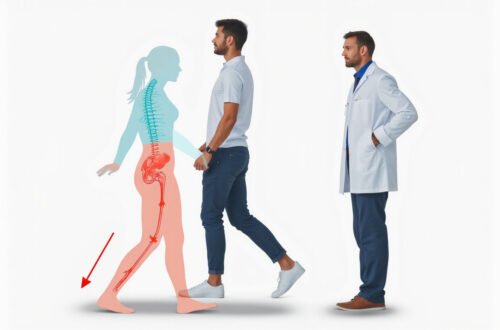
The transverse abdominis is often called your “natural weight belt” or “corset muscle,” and for good reason. It’s the deepest layer of your abdominal muscles, wrapping horizontally around your torso to stabilize your spine, protect your lower back, and support everything from lifting heavy loads to simply standing tall. If you want a truly strong, resilient, “bulletproof” core—not just visible abs—training the transverse abdominis (TVA) is non-negotiable.
Below, you’ll learn what the transverse abdominis does, how to activate it properly, and 7 essential moves to build deep-core strength safely and effectively.
What Is the Transverse Abdominis (TVA)?
The transverse abdominis is a broad, horizontal muscle layer that runs from your spine around to the front of your abdomen, attaching to your ribs, pelvis, and a connective tissue band called the linea alba.
Key roles of the TVA:
- Provides deep-core stability for your spine and pelvis
- Increases intra-abdominal pressure to protect the lower back
- Supports breathing and posture
- Helps with everyday tasks like lifting, twisting, and bending
Unlike the rectus abdominis (the “six-pack” muscle) and the obliques, the transverse abdominis doesn’t create big, showy movements. Instead, it’s active behind the scenes, stabilizing your trunk before you move your arms and legs. This is why TVA activation is critical in rehab, athletic performance, and long-term back health.
According to the American Council on Exercise, impaired deep-core function is closely linked with low back pain and poor movement quality (source).
How to Tell If Your Transverse Abdominis Is Weak
You don’t need a scan or lab test to suspect TVA weakness. Common signs include:
- Frequent or recurring lower back pain
- Difficulty maintaining good posture when sitting or standing
- Belly “doming” or bulging when doing sit-ups or planks
- Feeling unstable when lifting, carrying, or changing directions
- Core exercises feeling more like “back strain” than “ab work”
If any of these sound familiar, focusing on the transverse abdominis can be a game-changer. The goal isn’t just to do more “ab work,” but to train your deep core to fire at the right time, with the right intensity.
Mastering TVA Activation Before You Add Load
Before you dive into the 7 essential moves, it’s crucial to understand how to properly engage your transverse abdominis. Many people either over-brace (like they’re being punched) or simply hold their breath. Neither is ideal.
Basic TVA activation drill:
- Lie on your back with knees bent, feet flat on the floor, neutral spine (small natural curve in lower back).
- Place your fingertips just inside your hip bones.
- Inhale through your nose, allowing your rib cage and belly to expand.
- As you exhale through pursed lips, gently draw your lower belly in toward your spine, as if tightening a wide belt one notch—not as tight as possible.
- You should feel a gentle tension develop under your fingertips without your belly “popping” upward or your pelvis tilting.
- Maintain normal breathing while holding this low-level tension for 5–10 seconds, then relax and repeat.
Practice this 5–10 times a day for a few days. Once you can reliably feel your transverse abdominis switch on, you’re ready for more challenging exercises.
7 Essential Moves to Build a Bulletproof Transverse Abdominis
Perform these moves 2–4 times per week. Start with 1–2 sets of each, then build up to 3 sets as your control improves. Move slowly, prioritize quality over quantity, and stop if you feel pain in your back or hips.
1. Dead Bug (Foundational TVA Control)
Why it works: The dead bug teaches your transverse abdominis to stabilize your spine while your arms and legs move—exactly what your core must do in daily life.
How to do it:
- Lie on your back, arms straight up toward the ceiling.
- Lift your legs, bending hips and knees to 90 degrees (tabletop position).
- Engage your TVA (gentle draw-in) and keep your lower back lightly pressed toward the floor.
- Slowly lower your right arm and left leg toward the floor, stopping just before your lower back arches.
- Return to the start, then switch sides.
Prescription:
- 3 sets of 6–10 slow reps per side
2. Modified Side Plank (Deep Lateral Core Activation)
Why it works: Side planks light up the obliques and transverse abdominis, especially on the underside of your body, improving lateral stability.
How to do it (kneeling variation):
- Lie on your side with your elbow under your shoulder and knees bent.
- Stack your hips and knees, keep your body in a straight line from head to knees.
- Engage your TVA, then lift your hips off the floor, forming a straight line.
- Hold while breathing steadily, without letting your ribs flare or hips sag.
Prescription:
- 2–3 sets of 15–30 seconds per side
To progress, straighten your legs into a full side plank once you can easily hold 30 seconds.
3. Bird Dog (Spine-Safe Anti-Rotation)
Why it works: The bird dog teaches your transverse abdominis and spinal extensors to work together, preventing rotation and excessive arching as your limbs move.
How to do it:
- Start on all fours: hands under shoulders, knees under hips, neutral spine.
- Gently engage your TVA.
- Extend your right arm forward and left leg backward, reaching long, not high.
- Avoid twisting your torso or dropping your lower back.
- Hold 2–3 seconds, then return and switch sides.
Prescription:
- 3 sets of 8–10 reps per side
For extra TVA challenge, pause longer in the extended position.
4. Pallof Press (Standing Anti-Rotation Strength)
Why it works: The Pallof press teaches your transverse abdominis to resist twisting forces, which is highly relevant for sports, lifting, and real-world movement.
How to do it:
- Attach a resistance band to a fixed object at chest height.
- Stand sideways to the anchor, feet hip-width apart, holding the band with both hands at your chest.
- Step away to create tension.
- Engage your TVA and glutes.
- Press the band straight out in front of your chest; hold for 2–3 seconds.
- Resist the band pulling you toward the anchor.
- Slowly bring your hands back to your chest.
Prescription:
- 2–3 sets of 8–12 reps per side
Choose a band that challenges you without compromising your posture.
5. Heel Slides (Gentle Lower-Core Isolation)
Why it works: Heel slides are an excellent early-stage exercise for the transverse abdominis, particularly after pregnancy, injury, or if you’re new to core training.
How to do it:
- Lie on your back with knees bent, feet flat, neutral spine.
- Engage your TVA and keep your ribs down.
- Slowly slide your right heel away from you along the floor, extending your leg.
- Stop before your lower back arches or your belly bulges.
- Slide your heel back to the starting position and switch sides.
Prescription:
- 2–3 sets of 8–12 slow reps per side
Keep the movement small and controlled; this is about quality, not range.
6. Hollow Body Hold (Advanced TVA Challenge)
Why it works: The hollow body hold is a gymnastic staple that strongly activates the transverse abdominis, rectus abdominis, and hip flexors while training global trunk stiffness.
How to do it (with progression options):
- Lie on your back, arms overhead, legs straight.
- First, bend your knees and tuck them toward your chest.
- Engage your TVA and press your lower back gently into the floor.
- Lift your head and shoulders slightly off the ground.
- Straighten your legs to about a 45° angle and reach your arms overhead—only if you can keep your lower back flat.
If this is too intense, try one or more of these regressions:
- Keep knees bent instead of straight
- Keep arms by your sides
- Lower legs less (closer to vertical)
Prescription:
- 3–5 holds of 10–25 seconds
Stop immediately if your lower back comes off the floor.
7. Farmer’s Carry (Functional Core Integration)
Why it works: Loaded carries integrate transverse abdominis activation into real-world movement, improving posture, grip strength, and full-body stability.
How to do it:
- Grab a pair of dumbbells or kettlebells at your sides.
- Stand tall: chest up, ribs stacked over pelvis, eyes forward.
- Gently engage your TVA as if zipping up tight jeans.
- Walk slowly and steadily for a set distance or time.
- Avoid leaning, shrugging shoulders, or letting weights swing wildly.
Prescription:
- 3–4 rounds of 20–40 meters or 20–40 seconds
To bias anti-lateral-flexion and TVA on one side, try a suitcase carry (weight in one hand only).
Putting It Together: Sample TVA-Focused Core Routine
Here’s how you might combine these moves into a 20–25 minute session:
- TVA Activation Drill – 2 minutes of practice
- Dead Bug – 3 x 8 reps per side
- Bird Dog – 3 x 8 reps per side
- Modified Side Plank – 3 x 20 seconds per side
- Pallof Press – 2 x 10 reps per side
- Farmer’s Carry – 3 x 30 seconds walk
You can rotate in heel slides and hollow body holds as your control and strength improve.
Tips to Maximize Transverse Abdominis Training
- Breathe continuously. Never hold your breath; the TVA must work with your diaphragm, not against it.
- Aim for low-to-moderate tension. Think “firm but not maximal” to avoid over-bracing.
- Move slowly and deliberately. Fast reps usually mean other muscles are compensating for a lazy TVA.
- Stop at the first sign of back pain. Modify the exercise or reduce the range of motion.
- Consistency beats intensity. A few focused sets, 3–4 times a week, will strengthen your transverse abdominis far better than occasional marathon ab sessions.
Quick Reference: TVA-Strengthening Exercises at a Glance
- TVA activation drill
- Dead bug
- Heel slides
- Bird dog
- Modified or full side plank
- Pallof press
- Hollow body hold
- Farmer’s or suitcase carry
Rotate through these over the week to build a strong, balanced, bulletproof core.
FAQ About the Transverse Abdominis
1. How do I isolate the transverse abdominis without overusing my hip flexors?
Focus on low-load exercises like heel slides, dead bugs, and gentle TVA activation drills. Keep your ribs down, move slowly, and stop each rep before your hips take over or your lower back starts to arch. If you feel more in your hips than your deep core, reduce the leg range of motion.
2. What are the best transverse abdominis exercises for beginners?
Start with the TVA activation drill, heel slides, and modified side planks. These are beginner-friendly, spine-safe, and allow you to learn the feeling of proper deep-core engagement before progressing to more advanced moves like hollow body holds and loaded carries.
3. Can strengthening the transverse abdominis help with lower back pain?
For many people, yes. The transverse abdominis plays a key role in stabilizing the lumbar spine. When it’s weak or poorly coordinated, the lower back often compensates and becomes overloaded. Strengthening your TVA—combined with good movement habits and medical guidance where needed—can reduce strain and improve spinal support. Always consult a healthcare professional if you have existing back issues.
A strong, defined midsection starts from the inside out, and the transverse abdominis is at the heart of that deep, durable strength. Instead of chasing endless crunches, commit to training your TVA with these 7 essential moves. Start with the activation drill and foundational exercises, progress gradually, and you’ll feel the difference in your posture, stability, and confidence in every movement you make.
Begin your bulletproof-core routine this week: pick three of the exercises above, add them to the end of your workouts, and track your progress. Your spine, your performance, and your long-term health will thank you.