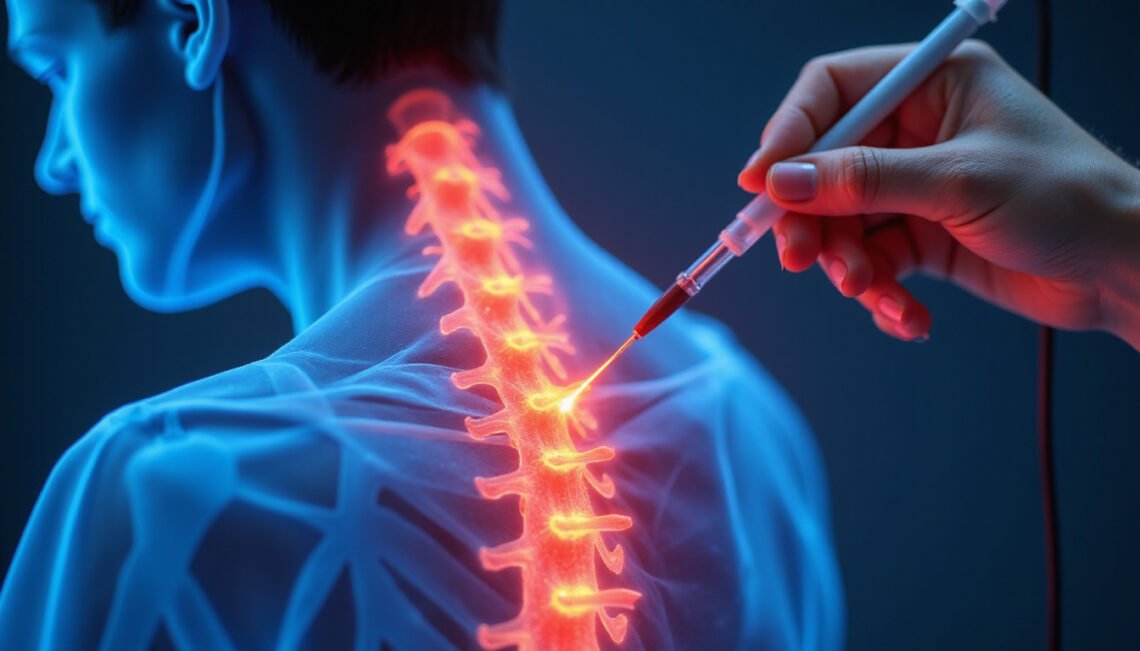
Pulsed Radiofrequency: How This Treatment Finally Stops Chronic Pain
Pulsed radiofrequency is emerging as a powerful, minimally invasive option for people living with chronic pain that doesn’t respond to medications, injections, or physical therapy. Unlike traditional “nerve-burning” procedures, this technique uses carefully controlled pulses of energy to modulate nerve activity without destroying the nerve. For many patients, pulsed radiofrequency (PRF) can mean meaningful relief, better function, and fewer side effects than more aggressive procedures.
Below, you’ll learn what pulsed radiofrequency is, how it works, who it helps, what to expect from treatment, and how it compares to other pain interventions.
What Is Pulsed Radiofrequency?
Pulsed radiofrequency is a pain management procedure in which a special needle (electrode) delivers short bursts of electrical energy near a nerve or within a pain-generating structure (like a joint or dorsal root ganglion). These bursts create an electric and electromagnetic field that influences how the nerve transmits pain signals—without heating it enough to cause permanent damage.
Key points:
- Goal: Reduce pain by changing how nerves behave and transmit pain signals
- Temperature: Kept below ~42°C (107.6°F) to avoid nerve destruction
- Approach: Short pulses of current separated by passive “cooling” intervals
- Setting: Usually performed in a procedure room or outpatient surgery center under fluoroscopic (X-ray) or ultrasound guidance
PRF sits between conservative treatments (like medications and physical therapy) and more aggressive procedures like continuous radiofrequency ablation or surgery.
How Pulsed Radiofrequency Works on a Nerve Level
To understand why pulsed radiofrequency helps chronic pain, it’s useful to look at what happens at the nerve level.
The science in simple terms
A nerve fiber carries electrical signals from your body to your spinal cord and brain. In chronic pain, certain nerves can become sensitized, sending exaggerated or constant pain signals even without significant ongoing injury.
Pulsed radiofrequency:
- Delivers short, high-voltage bursts of current near the target nerve
- Creates an intense electric field and electromagnetic environment around that nerve
- Alters how the nerve channels open and close (especially sodium and calcium channels)
- Modulates pain-processing structures in and around the spinal cord
Because the temperature is tightly controlled and kept below a damaging threshold, the nerve is not “burned.” Instead, the nerve’s ability to fire and maintain pain signals is modulated—often leading to pain relief that can last months.
Research suggests PRF may:
- Reduce inflammatory mediators around the nerve
- Affect gene expression in pain pathways
- Decrease central sensitization (the “volume knob” of pain in the nervous system) (source: World Institute of Pain)
What Conditions Can Pulsed Radiofrequency Treat?
Pulsed radiofrequency is used for a wide range of chronic pain conditions, especially those involving specific nerves or spinal structures.
Common indications include:
- Chronic neck and back pain
- Facet joint–related pain (cervical, thoracic, lumbar)
- Dorsal root ganglion–mediated pain
- Sciatica and radicular pain
- Leg pain from nerve root irritation or compression
- Neuropathic pain
- Post-herpetic neuralgia (shingles pain)
- Peripheral nerve injuries
- Complex regional pain syndrome (CRPS), in some cases
- Joint and musculoskeletal pain
- Knee pain (e.g., from osteoarthritis, via genicular nerves)
- Shoulder pain
- Hip pain
- Head and facial pain
- Occipital neuralgia (back-of-the-head headaches)
- Trigeminal neuralgia and other neuralgias (in select cases)
Its suitability depends heavily on your specific diagnosis, the nerve anatomy involved, and how you responded to previous diagnostic or therapeutic injections.
Who Is a Good Candidate for Pulsed Radiofrequency?
You may be a candidate for pulsed radiofrequency if:
- You have chronic pain (typically >3–6 months) with a suspected or confirmed nerve-related component
- You’ve tried conservative treatments (medications, physical therapy, lifestyle changes) with limited benefit
- You’ve had partial or temporary relief from nerve blocks or diagnostic injections
- You want to avoid more destructive procedures like continuous RF ablation or major surgery
- You’re medically able to undergo a minor outpatient procedure
Pulsed radiofrequency may be particularly appealing if:
- You’re younger and doctors want to avoid permanently destroying nerves
- You have complex or mixed pain patterns where full ablation might be risky
- You have neuropathic pain that isn’t responding well to medications
Only a pain specialist can decide if this procedure makes sense for you, typically after imaging, physical examination, and targeted diagnostic nerve blocks.
Pulsed Radiofrequency vs Continuous Radiofrequency Ablation
Both procedures use radiofrequency energy, but their intent and effect are different.
Key differences
-
Temperature and tissue effect
- Continuous RF ablation: Heats tissue to ~80°C, intentionally destroying (ablating) part of the nerve to stop pain signals
- Pulsed radiofrequency: Keeps temperatures below ~42°C, avoiding nerve destruction and instead modulating function
-
Risk profile
- Continuous RF: Higher risk of numbness, weakness, or unintended nerve damage (though generally low when done correctly)
- PRF: Lower risk of permanent nerve injury because it’s non-destructive
-
Duration of relief
- Continuous RF: Often offers longer relief for very specific conditions (e.g., facet joint pain)
- PRF: Relief can last months; for some people it’s comparable, for others somewhat shorter, but with a gentler risk profile
-
Ideal use cases
- Continuous RF: Well-defined targets like medial branch nerves in spine-related axial pain
- PRF: Neuropathic pain, dorsal root ganglion pain, peripheral nerves, and cases where nerve destruction is not desirable
Many pain specialists use pulsed radiofrequency when they want nerve modulation without nerve destruction, especially in complex or neuropathic pain states.

What Happens During a Pulsed Radiofrequency Procedure?
Although specifics vary, the general process is fairly standard and typically done on an outpatient basis.
Before the procedure
- You’ll discuss benefits, risks, and alternatives with your pain specialist.
- Blood thinners or certain medications may be adjusted if necessary.
- You’ll usually need a driver to take you home.
During the procedure
-
Positioning
- You lie on an X-ray or ultrasound table depending on the target area.
-
Skin prep and anesthesia
- The skin is cleaned with antiseptic.
- A local anesthetic numbs the skin and deeper tissues.
-
Needle placement
- Using real-time imaging (fluoroscopy or ultrasound), the doctor advances a specialized RF needle near the target nerve or dorsal root ganglion.
-
Sensory and motor testing
- The electrode may deliver mild stimulation to confirm it’s near the correct nerve.
- You may feel tingling or a reproduction of your typical pain (sensory test).
- Gentle motor testing helps avoid major motor nerves.
-
Pulsed radiofrequency application
- The RF generator delivers bursts of energy (e.g., 20 ms pulses at 2 Hz) for typically 120–480 seconds.
- Temperature is continuously monitored to maintain a safe limit.
-
Completion
- The needle is removed, and a small bandage is applied.
- You rest briefly in a recovery area.
After the procedure
- You can often go home within 30–60 minutes.
- Mild soreness at the injection site for a day or two is common.
- Pain relief can begin quickly, but sometimes takes days to weeks to fully manifest.
Benefits of Pulsed Radiofrequency for Chronic Pain
Pulsed radiofrequency offers several advantages compared to some other interventional pain treatments:
- Non-destructive: Nerve function is modulated, not permanently destroyed
- Lower complication risk: Reduced chance of long-term numbness, weakness, or neuroma formation
- Repeatable: The procedure can often be repeated if pain returns
- Targets nerve-related pain: Especially useful for neuropathic and radicular pain patterns
- Outpatient and minimally invasive: No general anesthesia in most cases; small needle, no surgical incisions
- Reduced medication reliance: Many patients can lower their dose of pain medications over time
- Preserves options: Keeps the door open for other interventions or surgeries later if needed
Outcomes vary, but a significant percentage of appropriately selected patients experience meaningful pain reduction and improved quality of life.
Risks and Side Effects of Pulsed Radiofrequency
While generally safe, pulsed radiofrequency is still a medical procedure and carries some risks.
Potential side effects and complications include:
- Temporary soreness or bruising at the treatment site
- Transient increase in pain for a few days
- Minor bleeding
- Infection (rare, minimized with sterile technique)
- Allergic reaction to medications or contrast dye
- Nerve irritation, numbness, or weakness (usually temporary if it occurs)
Serious complications are rare when the procedure is performed by an experienced specialist using proper imaging guidance.
What Results Can You Expect?
Results are individualized, but common patterns include:
- Initial days: Soreness at the injection site; pain may be unchanged or slightly worse
- First few weeks: Gradual onset of pain relief as nerve modulation takes effect
- Peak effect: Often noticed within 2–6 weeks
- Duration: Relief may last several months or longer; some patients request repeat treatments when pain recurs
Measurable improvements often include:
- Lower pain scores
- Better sleep
- Increased walking or activity tolerance
- Reduced reliance on pain medications
- Improved ability to work or participate in daily life
Your doctor may use pain scales, functional assessments, and follow-up visits to gauge your response and plan ongoing care.
How to Prepare for a Pulsed Radiofrequency Treatment
To maximize safety and results, your pain specialist may recommend:
- Reviewing all medications and supplements, especially blood thinners
- Notifying them of any allergies, particularly to contrast dye, local anesthetics, or latex
- Arranging transportation, since you may not be able to drive immediately afterward
- Wearing comfortable clothing and leaving valuables at home
- Eating a light meal beforehand unless told otherwise
After the procedure, simple steps like ice packs, gentle movement, and avoiding heavy lifting for a day or two can help ease local soreness.
FAQ: Pulsed Radiofrequency and Chronic Pain
1. What is pulsed radiofrequency therapy and how is it different from “nerve burning”?
Pulsed radiofrequency therapy uses short bursts of radiofrequency energy to influence how nerves transmit pain signals, while keeping temperatures low enough to avoid destroying the nerve. Traditional “nerve burning” (continuous radiofrequency ablation) intentionally heats nerves to high temperatures to create a lesion and block signals. PRF aims to modulate, not permanently damage, nerve tissue.
2. How long does pulsed radiofrequency last for back and nerve pain?
Relief from pulsed radiofrequency for back or nerve pain can last several months, and sometimes longer, depending on the cause of your pain, the specific nerve treated, and individual factors. Many patients experience meaningful improvement for 3–9 months, and some benefit beyond that. The procedure can often be repeated if pain returns and you responded well previously.
3. Is pulsed radiofrequency treatment safe and painful?
Pulsed radiofrequency treatment is generally considered safe and well tolerated when performed by an experienced pain specialist. The area is numbed with local anesthetic, and mild sedation may be used, so most patients feel only pressure or brief discomfort during needle placement and testing. Afterward, mild soreness or bruising is common for a few days, but serious complications are rare.
Taking the Next Step: Is Pulsed Radiofrequency Right for You?
If chronic pain is limiting your life and conservative measures haven’t brought lasting relief, pulsed radiofrequency may offer a way forward—especially if your pain has a nerve-related component. The procedure is minimally invasive, non-destructive, and often provides months of meaningful relief with a relatively low risk profile.
The most important step is a thorough evaluation by a qualified pain management specialist who understands when, where, and how to use pulsed radiofrequency for the best outcomes. With a tailored plan that may also include physical therapy, lifestyle changes, and targeted medications, PRF can become a cornerstone of a more active, less pain-dominated life.
If you’re ready to explore whether pulsed radiofrequency could finally help stop your chronic pain, schedule a consultation with an interventional pain clinic or specialist in your area and ask specifically about this option. The right conversation today could be the turning point toward long-awaited relief.