Hip External Rotation Exercises to Relieve Pain and Build Strength
Healthy hip external rotation is essential for walking, squatting, climbing stairs, getting in and out of a car, and most athletic movements. When this motion is limited or the muscles that control it are weak, you can develop hip, knee, or even lower-back pain—and everyday activities start to feel harder than they should.
This guide walks you through what hip external rotation is, why it matters, and the best exercises to relieve pain and build lasting strength, so you can move with more freedom and stability.
What Is Hip External Rotation?
Hip external rotation is the movement that turns your thigh or knee outward, away from the midline of your body. You use it when you:
- Cross one ankle over the opposite knee
- Sit “criss-cross” on the floor
- Pivot to step sideways or change direction
- Open your knees in a squat or when standing up from a chair
Key muscles involved in hip external rotation include:
- Gluteus maximus (the large buttock muscle)
- Deep hip rotators (piriformis, gemelli, obturator internus/externus, quadratus femoris)
- Parts of the gluteus medius and minimus
- Sartorius and posterior fibers of the adductors
When these muscles are weak or tight, your hip joint can’t move smoothly through its normal range, which can affect your posture and gait.
Why Hip External Rotation Matters for Pain and Performance
Restricted or weak hip external rotation doesn’t just affect the hip joint—it can influence your whole lower body and spine.
How Limited Hip External Rotation Causes Problems
- Compensations at the knee: If your hip can’t rotate outward, the knee often caves inward (valgus), which increases stress on the ACL, meniscus, and patellofemoral joint.
- Low-back strain: Your lumbar spine may twist or extend more than it should to make up for lost hip rotation.
- Hip impingement and pinching: Poor control and limited space in the joint can create a pinching sensation at the front of the hip, especially in deep flexion.
- Gait inefficiency: Walking and running become less efficient when the hip can’t rotate properly, leading to fatigue and overuse issues.
Research shows that hip strength and mobility are strongly linked to knee and hip pain, especially in runners and people with patellofemoral pain (source: Journal of Orthopaedic & Sports Physical Therapy – hip strength and running injuries).
Benefits of Strong, Mobile External Rotators
- Reduced hip, knee, and low-back pain
- Better squat and lunge mechanics
- More stable, efficient running and walking
- Improved balance and single-leg control
- Easier daily activities like standing up, stair climbing, twisting, and pivoting
How to Know If You Have Limited Hip External Rotation
You can get a rough sense of your hip external rotation at home with a simple self-check. This isn’t a diagnosis, but it can highlight areas to work on.
Simple Seated Check
- Sit on a chair with your knees bent to 90°, feet flat, hips level.
- Keeping your thigh still, gently move your foot inward, so your lower leg moves toward the midline.
- Watch how far your shin moves without your pelvis twisting.
You should see a reasonable outward rotation of the thigh (foot moving inward). Compare both sides. If one side moves much less, feels tight, or causes pain, you may have reduced hip external rotation on that side.
If pain is sharp, deep, or you have a history of significant hip injury, consult a medical professional before starting exercises.
Warm-Up: Preparing the Hips for Rotation
Before any strengthening work, warm up the tissues that allow hip external rotation.
1. Dynamic Hip Circles (Standing)
- Stand holding a countertop or wall for balance.
- Lift one knee to hip height, then draw slow, controlled circles from the hip joint.
- Do 8–10 circles outward and inward per side.
2. Cat-Camel with Hip Focus
- On hands and knees, alternate arching and rounding your spine.
- As you do this, gently shift your hips side to side, feeling the joint move in the socket.
- Continue for 30–60 seconds.
This low-load motion increases joint lubrication and signals the nervous system that the hips are about to work.
Foundational Hip External Rotation Exercises (Pain-Relief Focus)
If you’re currently in pain or have been sedentary, start with these low-load, controlled exercises. Move slowly and avoid forcing any painful range.
1. Supine Figure-4 Stretch (Piriformis / Deep Rotators)
- Lie on your back, knees bent, feet flat.
- Cross your right ankle over your left knee, making a “4” shape.
- Gently pull the left thigh toward your chest until you feel a stretch in your right buttock/hip.
- Hold 20–30 seconds, 2–3 times per side.
Focus on relaxing the hip; don’t yank on the leg. This stretch targets the deep rotators that influence hip external rotation.
2. Seated Hip External Rotation Stretch
- Sit on a chair. Cross your right ankle over your left knee.
- Sit tall, then gently hinge forward from the hips (not the low back) until you feel a stretch in your right hip.
- Hold 20–30 seconds, 2–3 times per side.
If the stretch is too intense, reduce the lean or support the crossed ankle with a pillow.
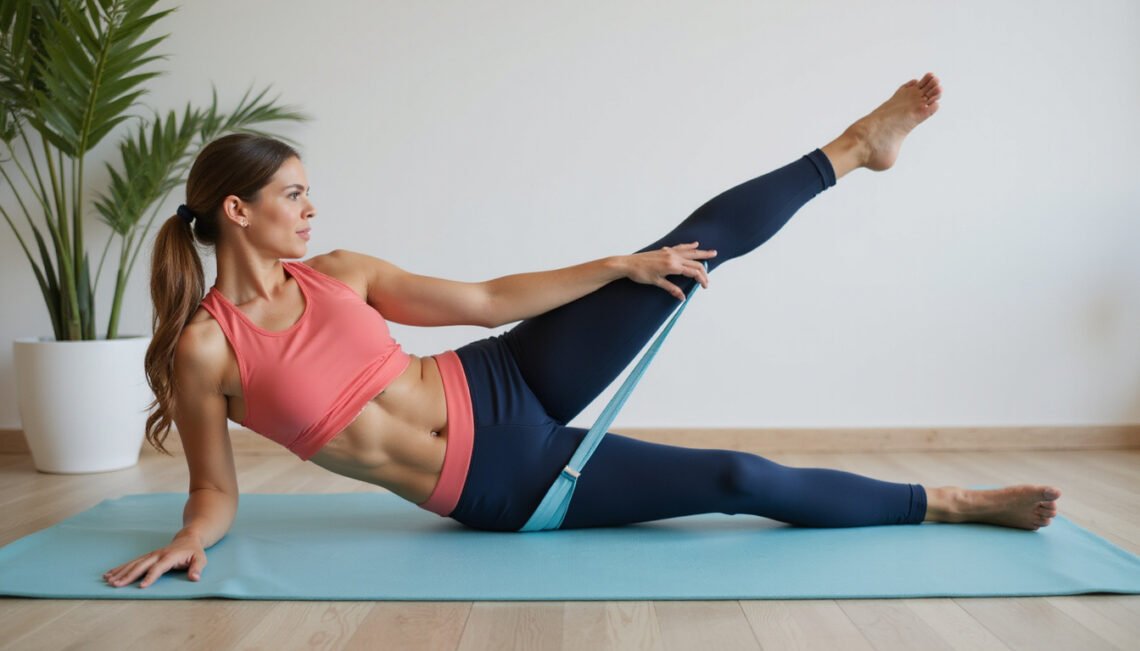
3. Side-Lying Clamshells
- Lie on your side with hips and knees bent about 45°, heels together.
- Keep your feet touching as you lift the top knee up, opening like a clamshell.
- Don’t roll your pelvis backward—only move from the hip.
- Pause at the top for 1–2 seconds, then slowly lower.
- Do 2–3 sets of 10–15 reps per side.
Clamshells activate the gluteus medius and deep external rotators, building foundational strength and stability.
Strength-Building Hip External Rotation Exercises
Once basic motion is comfortable and pain is manageable, progress to more demanding strengthening work. These exercises better prepare you for real-world and athletic movements.
4. Banded Hip External Rotation (Seated)
- Sit upright on a chair or bench, knees bent to 90°.
- Loop a light resistance band around both ankles.
- Keep one foot planted as an anchor.
- Move the working foot outward against band resistance, rotating from the hip.
- Control the return; don’t let the band snap back.
- Perform 2–3 sets of 12–15 reps per side.
This isolates hip external rotation in a functional seated position similar to getting in and out of a car.
5. 90/90 Hip Rotations
- Sit on the floor with one leg in front, hip and knee bent 90°, and the other leg behind you, also at 90° (a “zig-zag” position).
- Sit tall; you should feel a gentle stretch in one or both hips.
- Lean slightly toward the front shin, keeping your back long, then return upright.
- Slowly rotate your torso and hips to switch to the other side, moving through center.
- Perform 6–8 slow transitions per side.
This moves your hips through external and internal rotation while improving control and joint awareness.
6. Monster Walks (Diagonal Band Walks)
- Place a resistance band around your legs, just above your knees or at the ankles.
- Stand with feet hip-width apart, slight bend in knees, hips back in a mini-squat.
- Step diagonally forward and outward with one foot, then bring the other foot in to reset to hip-width.
- Keep your knees pushed slightly out against the band to resist inward collapse.
- Take 10–15 steps forward, then backward. Do 2–3 rounds.
Monster walks train the glutes to maintain external rotation and prevent knee valgus, especially useful for runners and lifters.
Advanced Hip External Rotation Exercises for Athletes
If you’re already active and want to maximize power, stability, and injury resilience, these advanced variations challenge hip external rotation under load.
7. Single-Leg Romanian Deadlift with Hip Rotation Control
- Stand on one leg, holding a dumbbell or kettlebell in the opposite hand.
- Hinge at the hip, sending the non-stance leg back, keeping your hips level.
- As you hinge, lightly resist any tendency for the knee to cave inward—maintain slight external rotation.
- Return to standing, squeezing the glute.
- Do 2–3 sets of 8–10 reps per leg.
This builds posterior-chain strength while demanding precise hip alignment and external rotation control.
8. Lateral Step-Downs
- Stand sideways on a step or low box, one foot on, one hovering off the side.
- Slowly bend the stance knee, lowering the other heel toward the floor without letting it bear weight.
- Keep your stance knee tracking over the mid-foot or slightly outward; avoid it dropping inward.
- Push through the heel to return to standing.
- Perform 2–3 sets of 8–12 reps per side.
Lateral step-downs strengthen the hip and train the external rotators to stabilize the knee.
9. Deep Goblet Squat with Band Around Knees
- Place a light band just above your knees.
- Hold a dumbbell or kettlebell at your chest.
- As you squat, gently press your knees outward into the band, engaging the hip external rotators.
- Maintain neutral spine and keep feet flat.
- Perform 3 sets of 8–12 reps.
This integrates hip external rotation into a compound movement, reinforcing proper knee alignment under load.
Programming: How Often to Train Hip External Rotation
For most people, improving hip external rotation requires consistent, moderate work rather than occasional overload.
A simple weekly structure:
-
Mobility & Stretching (3–5x/week)
- Figure-4 stretch
- Seated hip stretch
- 90/90 rotations
-
Strengthening (2–4x/week)
- Clamshells
- Seated band rotations
- Monster walks
- Goblet squats or step-downs
General guidelines:
- Start with one set per exercise and build to 2–3 sets as tolerated.
- Use controlled tempo: 2 seconds up, 2–3 seconds down.
- Mild muscle fatigue is fine; sharp joint pain is not.
- If pain worsens or radiates, stop and seek a professional evaluation.
Safety Considerations and When to Seek Help
While hip external rotation exercises are safe for most, there are times to be cautious:
- Acute hip injury or recent surgery: Get clearance from your surgeon or physical therapist.
- Severe arthritis or known structural abnormalities: You may need a customized range and specific modifications.
- Sharp, catching, or locking sensations in the hip joint: This can indicate labral or structural issues that need assessment.
- Persistent radiating pain, numbness, or tingling: Especially if it travels down the leg, consult a clinician.
A licensed physical therapist can assess your hip external rotation, identify specific muscle weaknesses, and progress you safely.
FAQ: Hip External Rotation, Pain, and Strength
1. What causes limited external rotation of the hip?
Common causes include prolonged sitting, weak glute muscles, tight deep hip rotators, previous hip injuries, arthritis, and movement habits that overuse internal rotation (knees caving inward during squats, running, or landing).
2. How can I improve hip external rotation safely if my hips feel very stiff?
Start with gentle stretches like supine or seated figure-4, and low-load exercises such as clamshells and 90/90 positions. Stay just shy of pain, use slow breathing, and build up gradually. If stiffness is severe or one side is dramatically worse, get a professional hip rotation assessment.
3. Can hip external rotation exercises help knee and lower-back pain?
Yes, in many cases. Strong, coordinated hip external rotation helps keep your knees aligned and reduces excessive twisting and extension in the lower back. While not a cure-all, improving hip mechanics is a key part of many evidence-based rehab programs for knee and low-back pain.
Start Reclaiming Your Hip Mobility and Strength
You don’t have to live with stiff, achy hips or feel unstable every time you squat, lunge, or climb stairs. By consistently training hip external rotation—from gentle stretches to progressive strengthening—you can reduce pain, stabilize your knees and lower back, and move with more power and confidence.
Choose 3–5 of the exercises above that match your current ability, and commit to doing them several times per week for the next 4–6 weeks. Track how your range of motion, pain levels, and daily movements feel.
If you’re unsure where to start or have a history of hip or back issues, consider working with a qualified physical therapist or strength coach who can design a personalized hip rotation program tailored to your body.
Begin today: give your hips the focused attention they deserve, and build the rotational strength that supports every step, squat, and stride you take.