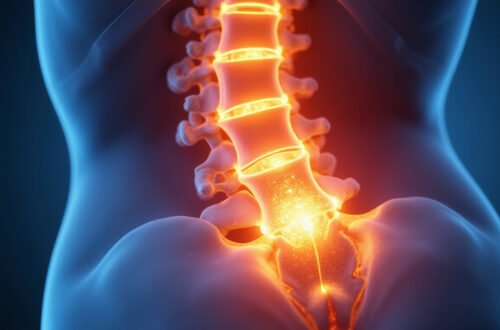
L5 radiculopathy is a common cause of lower back pain that radiates down the leg, often into the foot and big toe. When the L5 nerve root is irritated or compressed, it can trigger sharp pain, numbness, tingling, or weakness that can seriously limit walking, standing, and daily activities. Understanding what’s happening, how it’s diagnosed, and what treatment options exist—from rapid relief strategies to advanced surgeries—can help you make informed, confident decisions.
What Is L5 Radiculopathy?
L5 radiculopathy occurs when the L5 spinal nerve root, exiting from the lower lumbar spine, is compressed or inflamed. “Radiculopathy” refers to symptoms caused by a pinched or irritated nerve at the spinal root.
Common causes
Most L5 radiculopathy cases arise from structural issues in the lower spine:
- Lumbar disc herniation (L4–L5 level) – A bulging or herniated disc presses on the L5 nerve root.
- Degenerative disc disease – Age-related disc wear reduces disc height and narrows nerve passageways.
- Spinal stenosis – Narrowing of the spinal canal or foramina compresses the nerve.
- Spondylolisthesis – One vertebra slips forward over another, pinching the nerve.
- Bone spurs (osteophytes) – Extra bony growths from arthritis can crowd the nerve.
Less common causes include tumors, cysts, infection, or trauma.
Typical Symptoms of L5 Radiculopathy
Because the L5 nerve serves specific regions and muscles, its compression produces a recognizable pattern of symptoms.
Sensory symptoms
You may notice:
- Pain radiating from the lower back or buttock down the side of the thigh, the front/side of the lower leg, and into the top of the foot and big toe
- Numbness or tingling along that same path
- Burning or electric-shock sensations, especially when sitting, coughing, or bending
Motor symptoms
The L5 nerve controls key muscles used for walking and lifting the foot:
- Weakness lifting the big toe or foot (foot dorsiflexion)
- Trouble walking on your heels
- A tendency for the foot to “slap” the ground (in more severe cases, early foot drop)
Reflex changes
Unlike some other lumbar nerve roots, the L5 root does not have a routinely tested deep tendon reflex (like the knee-jerk L4 or ankle S1 reflex). That’s why doctors rely more heavily on strength, sensation, and imaging for diagnosis.
Rapid Relief Strategies for L5 Radiculopathy
When pain is intense, the primary goal is to calm the nerve and help you function while the underlying problem begins to heal.
1. Activity modification (but not complete rest)
Total bed rest is rarely helpful and can worsen stiffness and weakness. Instead:
- Avoid heavy lifting, twisting, and high-impact activities.
- Use short walks on flat surfaces to keep blood flowing and prevent deconditioning.
- Change positions often (sitting, standing, walking) instead of staying fixed for long periods.
2. Medications for short‑term relief
Under guidance from your clinician, medications may include:
- NSAIDs (ibuprofen, naproxen) – Reduce inflammation and pain.
- Acetaminophen – Pain relief for those who cannot take NSAIDs.
- Short courses of oral steroids – Sometimes prescribed to reduce acute nerve inflammation.
- Neuropathic pain medications – Such as gabapentin or pregabalin, for burning or electric pain.
- Muscle relaxants – For associated muscle spasms.
Opioids are generally avoided or used only briefly due to side effects and addiction risk.
3. Ice and heat
- Ice (10–15 minutes at a time) can reduce acute inflammation in the early phase.
- Heat (warm packs or showers) can relax tight muscles that may be guarding the painful area.
Alternate to see which gives you more relief.
4. Postural tweaks and ergonomic support
- Use a chair with good lumbar support; add a pillow or roll if needed.
- When lying down, try on your back with a pillow under your knees or on your side with a pillow between your knees to reduce strain on the lower spine.
5. Short‑term bracing
In some cases, a lumbar support brace or corset may help temporarily by limiting painful motion while you heal. This should be a short-term strategy, as overreliance can weaken core muscles.
Targeted Exercises and Physical Therapy
Once severe pain eases, guided movement becomes crucial in L5 radiculopathy recovery.
Goals of physical therapy
- Reduce nerve inflammation and mechanical compression
- Improve spine flexibility and stability
- Strengthen core and hip muscles to offload the lower back
- Correct posture and movement patterns that aggravate the nerve
Common PT components
- McKenzie (extension-based) exercises – Often helpful when pain centralizes (moves from the leg back toward the spine), which can indicate reduced nerve irritation.
- Neural glides – Gentle nerve mobilization to improve the nerve’s ability to move within its tunnel.
- Core strengthening – Planks, pelvic tilts, and stabilization work under professional supervision.
- Hip and hamstring stretching – To reduce tension that can pull on the lumbar spine.
Always get personalized guidance; incorrect or overly aggressive exercise can worsen symptoms.
Diagnostic Tests for L5 Radiculopathy
L5 radiculopathy is primarily a clinical diagnosis, but tests confirm the cause and rule out serious conditions.
1. Clinical evaluation
A spine specialist, neurologist, or primary care provider will:
- Take a detailed history (onset, location, pain characteristics, aggravating/relieving factors, red flags like bowel/bladder issues).
- Perform a neurological exam including:
- Strength testing, especially big toe and foot dorsiflexion
- Sensation testing along the L5 distribution
- Gait assessment (including heel walking)
- Straight leg raise or slump tests to provoke nerve pain if present
2. Imaging studies
If symptoms are severe, prolonged, or accompanied by neurological deficits, imaging is usually recommended:
- MRI of the lumbar spine – The gold standard for visualizing discs, nerves, stenosis, and soft tissue (source: American Association of Neurological Surgeons).
- CT scan – May be used if MRI is not possible or to assess bony structures in more detail.
- X‑rays – Show alignment, degenerative changes, and spondylolisthesis, but not nerves or discs directly.
3. Electrodiagnostic tests
When the diagnosis is uncertain or there may be multiple nerve problems:
- EMG (electromyography) and NCS (nerve conduction studies) assess how well nerves and muscles are functioning, and can help distinguish L5 radiculopathy from peripheral nerve entrapments (like peroneal neuropathy).
When Is L5 Radiculopathy an Emergency?
Immediate medical attention is crucial if you experience:
- New or rapidly worsening weakness, especially inability to lift the foot or toes
- Loss of bowel or bladder control or inability to urinate
- Numbness around the groin or inner thighs (saddle anesthesia)
- Severe, unrelenting pain with fever, weight loss, or night sweats
These may indicate cauda equina syndrome, infection, tumor, or other serious conditions requiring urgent intervention.
Non-Surgical Interventions Beyond Basics
When first-line measures don’t provide enough relief, your doctor may suggest advanced non-surgical options.
Epidural steroid injections
A needle delivers corticosteroid medication near the irritated L5 nerve root:
- Aims to reduce inflammation and pain.
- Can provide weeks to months of relief, often enough to fully engage in physical therapy.
- May be repeated a limited number of times per year.
Radiofrequency ablation (RFA)
This is more often used for facet joint–related back pain than true radiculopathy, but in select cases, treating pain generators around the nerve can help.
Complementary options
Some people find adjunctive benefit from:
- Acupuncture
- Massage therapy
- Cognitive-behavioral therapy (CBT) for chronic pain coping
These should complement, not replace, medically guided treatments.
Surgical Options for L5 Radiculopathy
If conservative care (typically 6–12 weeks) doesn’t provide functional improvement, or if there is significant or progressive neurologic deficit, surgery may be recommended.

Key indications for surgery
- Persistent, disabling leg pain that limits daily life despite non-surgical treatment
- Progressive weakness, such as worsening foot drop
- Structural causes clearly visible on imaging that correlate with symptoms
Common surgical procedures
-
Microdiscectomy (L4–L5 level)
- Purpose: Remove the portion of a herniated disc compressing the L5 nerve.
- How: Small incision; microscope-assisted, minimally invasive technique.
- Benefits: Often provides rapid leg pain relief and has high success rates for appropriately selected patients.
-
Laminectomy / decompression
- Purpose: Relieve pressure on the nerve by removing part of the vertebral bone (lamina) and thickened ligaments.
- Often used when spinal stenosis is the main issue.
-
Spinal fusion
- Purpose: Stabilize the spine when there is significant instability (e.g., advanced spondylolisthesis).
- Involves joining two or more vertebrae with bone graft and hardware.
- May be combined with decompression to free the nerve.
Recovery expectations
Recovery depends on the procedure and your overall health, but typically involves:
- Early walking (same day or next day for many microdiscectomy patients)
- Gradual return to light activities over weeks
- Structured rehabilitation to restore strength and mobility
- Restrictions on heavy lifting and bending for a specified period
Many people experience dramatic improvement in leg pain, but mild numbness or weakness can sometimes persist, especially if nerve compression was prolonged.
Preventing Recurrence and Protecting Your L5 Nerve
Even after symptoms improve, protecting your lower back is vital to prevent recurrence.
Key prevention strategies
- Maintain a healthy weight to reduce spinal load.
- Strengthen core and hip muscles with regular, safe exercises.
- Use proper lifting techniques—bend at the hips and knees, keep loads close to your body, and avoid twisting while lifting.
- Break up prolonged sitting or standing with short movement breaks.
- Quit smoking if applicable; smoking accelerates disc degeneration and impairs healing.
Working with a physical therapist or trainer familiar with spine conditions can help design a sustainable maintenance program.
Quick Reference: Signs and Steps for L5 Radiculopathy
-
Watch for:
- Pain from lower back/buttock down the side of the leg to the top of the foot/big toe
- Numbness/tingling in that pattern
- Weakness lifting the big toe or foot
-
Initial steps:
- Modify activities; avoid heavy lifting and prolonged bending.
- Use NSAIDs or other medications as recommended.
- Start gentle movement; avoid extended bed rest.
- See a healthcare professional for evaluation if symptoms last >1–2 weeks or are severe.
-
Urgent care needed if:
- Rapidly worsening weakness
- Loss of bowel/bladder control
- Groin numbness or severe systemic symptoms
FAQ About L5 Radiculopathy and Related Conditions
1. How long does L5 nerve root pain usually last?
L5 nerve root pain from a herniated disc often improves significantly within 6–12 weeks with conservative care. Some people feel better sooner, while others with severe compression or underlying degeneration may have more prolonged symptoms. Persistent or worsening pain beyond a couple of months warrants thorough evaluation and discussion of additional interventions.
2. What is the difference between L5 radiculopathy and sciatica?
“Sciatica” is a broad term describing pain radiating from the lower back into the leg along the sciatic nerve. L5 radiculopathy is a specific diagnosis where the L5 spinal nerve root is compressed or irritated. L5 radiculopathy is one of several possible causes of sciatica; others can involve different lumbar nerve roots or peripheral nerve issues.
3. Can L5 nerve compression be treated without surgery?
Yes. Many cases of L5 nerve compression improve without surgery through medications, physical therapy, activity modification, and sometimes epidural injections. Surgery is usually reserved for cases with severe or progressive neurologic deficits or pain that doesn’t respond to well-executed conservative treatment.
Take the Next Step Toward Relief
L5 radiculopathy can be frightening and disabling, but it is also highly treatable once you understand what’s driving your pain and what options you have. Early attention to symptoms, accurate diagnosis, and a tailored combination of rapid relief strategies, rehabilitation, and—when appropriate—surgical treatment can dramatically improve your quality of life.
If your leg pain, numbness, or foot weakness sounds like what you’ve just read, don’t wait for it to become a long-term problem. Schedule an evaluation with a spine-savvy clinician or neurologist, bring a detailed description of your symptoms, and ask specifically about L5 radiculopathy and its treatment options. With timely, informed care, you can protect your nerve, reduce pain, and restore your ability to move with confidence.