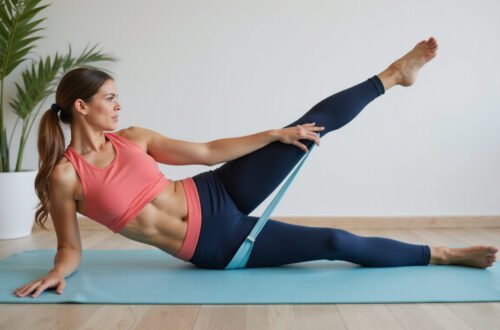
If you struggle with a stiff lower back or nagging aches after sitting or standing, improving your lumbar mobility is one of the most effective, low-effort changes you can make. A more mobile lumbar spine helps you move better, sit more comfortably, and reduce the strain that leads to chronic pain.
This guide breaks down why your lower back gets tight, the key principles of healthy lumbar movement, and simple daily moves you can start using today—no gym or special equipment required.
Why Lumbar Mobility Matters for Pain Relief
Your lumbar spine is the section of your back between your ribs and pelvis. It’s built to:
- Support your body weight
- Allow bending, twisting, and extension
- Transfer force between your upper and lower body
When lumbar mobility is limited, other areas—like your hips, mid-back, or even your knees—have to pick up the slack. That compensation often leads to:
- Muscle tightness and spasms
- Disc and joint irritation
- Sciatic-type symptoms
- General lower back soreness after basic activities
Research supports the connection between movement and less back pain: guidelines from organizations like the American College of Physicians recommend staying active and using movement-based therapies as first-line treatment for most low back pain (source: American College of Physicians).
The good news: short, consistent daily mobility work can dramatically improve how your back feels and functions.
Core Principles of Healthy Lumbar Movement
Before jumping into specific exercises, it helps to understand a few key principles:
1. The lumbar spine likes support, not isolation
Your lower back moves best when your:
- Hips are mobile
- Core is engaged
- Glutes are active
Think “team movement,” not the lower back working alone.
2. Mobility plus stability beats stretching alone
Stretching tight muscles helps, but for lasting results you need:
- Mobility: your ability to move through a range of motion
- Stability: your ability to control that motion
Each move in this guide blends both.
3. Consistency beats intensity
You don’t need intense workouts. You need daily, gentle input:
- 5–10 minutes a day
- Low to moderate effort
- Movements that feel relieving, not punishing
Pre-Check: A Simple Lumbar Mobility Self-Test
Use this quick test to feel where you’re starting. You don’t need to write anything down—just notice how your body feels.
-
Forward bend
- Stand tall, knees soft.
- Slowly bend forward, letting your arms hang.
- Notice: where do you feel the tightness most—hamstrings, low back, or both?
-
Extension (gentle backbend)
- Stand with hands on hips.
- Gently lean backward, looking forward or slightly up.
- Notice: is the motion smooth or pinchy? Left, right, or central?
-
Side bend
- Slide one hand down your leg while the other arm reaches overhead.
- Repeat on the other side.
- Notice: is one side stiffer?
-
Rotation
- Cross arms over chest.
- Gently turn your shoulders left, then right.
- Notice: any discomfort or big difference between sides?
Keep a mental note. After doing the daily moves for 1–2 weeks, retest—you should feel smoother, less guarded movement and less pain.
Daily Lumbar Mobility Routine (10 Minutes or Less)
You can do this sequence once or twice a day. Aim for smooth, pain-free motion and normal breathing throughout. If any move triggers sharp or worsening pain, skip it and consult a professional.
1. Cat-Camel (Spinal Segmentation)
Purpose: Gently mobilizes the whole spine, especially the lumbar area, and wakes up the core.
How to do it:
- Start on hands and knees, hands under shoulders, knees under hips.
- Inhale: gently arch your back, letting your belly move toward the floor and lifting your chest slightly (don’t jam your neck).
- Exhale: round your spine toward the ceiling, tucking your tailbone and gently dropping your head.
- Move slowly, like you’re articulating one vertebra at a time.
Reps: 8–12 slow cycles.
Tip: Focus on the part of the movement that feels most stiff and spend a little extra time there.
2. Child’s Pose with Side Reach
Purpose: Opens the lower back and sides, helping with lateral lumbar mobility and tension.
How to do it:
- From hands and knees, sit your hips back toward your heels, knees slightly apart.
- Walk your hands forward and rest your forehead on the floor or a pillow.
- For side emphasis: walk both hands to the right to feel a stretch along the left side of your lower back and rib cage.
- Breathe deeply into your side and lower ribs.
- Repeat to the other side.
Hold: 20–30 seconds each side.
Tip: If your knees or hips are uncomfortable, place a cushion between your calves and thighs or do this with your chest on a chair or bed.
3. Lumbar Rotation: Windshield Wipers
Purpose: Promotes gentle rotational lumbar mobility, which often reduces feelings of “locked” or “stuck” joints.
How to do it:
- Lie on your back with knees bent, feet flat and wider than hip-width.
- Arms out to the sides in a T or cactus position.
- Let both knees slowly drop to one side while keeping your shoulders on the floor.
- Pause briefly, then bring your knees back to center and lower them to the other side.
Reps: 10–15 each side, smooth and controlled.
Tip: If your low back is very sensitive, move in a smaller range and work up gradually.
4. Hip Flexor Release: Half-Kneeling Stretch
Hip tightness often masquerades as lower back pain. Improving hip mobility reduces strain on the lumbar spine.
How to do it:
- Kneel on your right knee with your left foot in front, knee bent at 90°, like a lunge.
- Keep your torso upright, light core engagement.
- Gently shift your hips forward until you feel a stretch in the front of the right hip.
- Avoid arching your lower back—think of tucking your tailbone slightly.
Hold: 20–30 seconds each side, 2 rounds.
Tip: Use a pillow under the back knee if needed.
5. Glute Bridge for Supported Lumbar Mobility
Purpose: Activates glutes and core so the lumbar spine moves with support, improving both mobility and stability.
How to do it:
- Lie on your back, knees bent, feet hip-width and flat.
- Gently brace your core (like you’re preparing for a poke in the stomach).
- Press through your heels and lift your hips until your body forms a straight line from shoulders to knees.
- Pause, then slowly lower back down.
Reps: 10–15, 2 sets if comfortable.
Tip: Focus on glutes doing most of the work, not just the lower back.
6. Seated Figure-4 (Piriformis and Hip Stretch)
Tight hips contribute heavily to reduced lumbar mobility and irritation.
How to do it:
- Sit on a chair with both feet flat.
- Cross your right ankle over your left knee in a figure-4 shape.
- Sit tall, then gently hinge forward from your hips until you feel a stretch in your right glute/hip.
- Keep your spine long; avoid rounding.
Hold: 20–30 seconds each side.
Tip: If crossing your ankle is too intense, rest your ankle on a low stool and lean forward slightly.
7. Standing Pelvic Tilts (Posture Reset)
Purpose: Teaches you to move your pelvis under control, a core skill for healthy lumbar mechanics in standing and walking.
How to do it:
- Stand with feet hip-width, knees soft, hands on hips.
- Gently tuck your pelvis under (flattening your lower back slightly).
- Then tilt your pelvis the opposite way, letting your lower back gently arch.
- Move slowly between these two positions, avoiding extremes.
Reps: 10–15, 1–2 times per day (great desk break).
Tip: Think of this as a small, controlled motion, not a big dramatic move.
A Quick-Reference Daily Lumbar Mobility Checklist
Use this as a simple structure you can remember without a written program:
- Spine wake-up (1–2 minutes)
- Cat-Camel
- Lengthen and decompress (2–3 minutes)
- Child’s Pose with side reach
- Gentle rotation (2–3 minutes)
- Lumbar windshield wipers
- Hips and glutes (3–4 minutes)
- Half-kneeling hip flexor stretch
- Glute bridges
- Seated figure-4
- Posture practice (1 minute)
- Standing pelvic tilts
Total: roughly 10 minutes.

Lifestyle Habits That Support Better Lumbar Mobility
Exercises work best when your daily habits aren’t constantly undoing them. A few small adjustments can make a big difference.
1. Change positions often
The problem isn’t sitting or standing—it’s staying in one position too long.
- Set a 30–45 minute timer to stand, walk, or do 1–2 mobility moves.
- Alternate between sitting and standing if you have a sit-stand desk.
2. Smart sitting setup
- Hips slightly higher than knees (use a wedge cushion or adjust chair height).
- Feet flat on the floor.
- Low back supported by a small pillow or rolled towel if needed.
3. Walk more—gently and regularly
Walking promotes natural lumbar mobility and circulation:
- Aim for multiple short walks (5–10 minutes) spread through the day.
- Avoid power-walking if your back is irritated; think “easy, smooth strides.”
4. Sleep environment
- Side sleepers: pillow between knees to keep hips level.
- Back sleepers: small pillow under knees can reduce lumbar strain.
- Avoid giant, soft mattresses that let you sink unevenly if they aggravate your back.
When to Be Cautious and Seek Help
Mild to moderate mechanical back pain usually responds well to improved lumbar mobility and strength. However, get evaluated by a healthcare professional promptly if you notice:
- Numbness, tingling, or weakness in one or both legs
- Loss of bladder or bowel control
- Severe, worsening pain that doesn’t change with movement or rest
- Recent significant trauma (fall, accident)
- Unexplained weight loss or fever with back pain
A physical therapist, sports medicine doctor, or chiropractor can tailor a program to your specific needs and rule out serious conditions.
FAQ: Lumbar Mobility and Lower Back Health
Q1: How often should I do lumbar mobility exercises for best results?
For most people, doing lumbar mobility exercises once or twice daily works well. Short, frequent sessions (5–10 minutes) are more effective than a single long session once a week. Consistency over 2–4 weeks is typically when you start noticing meaningful pain reduction and better movement.
Q2: Can lumbar spine mobility work replace strength training?
No. While lumbar spine mobility exercises reduce stiffness and discomfort, they work best alongside general strength training, especially for your hips, core, and upper back. Think of mobility as the oil in the engine and strength as the engine itself—you want both for lasting relief.
Q3: Is it safe to do lumbar mobility stretches if I have a disc bulge or sciatica?
Gentle lumbar stretching and mobility can be helpful for many people with disc issues or sciatic-type pain, but the exact exercises matter. Avoid moves that sharply increase pain, numbness, or tingling. It’s wise to get guidance from a physical therapist who can adapt mobility drills to your condition.
Take Action: Start Your 10-Minute Lumbar Reset Today
You don’t need to live with a tight, aching lower back or wait for a perfect time to start fixing it. A simple, consistent lumbar mobility routine—just a few minutes in the morning or after work—can gradually unlock stiffness, reduce pain, and help you move with more confidence.
Pick one or two of the moves above and do them today. Add another next week. Let your back learn that movement is safe, supported, and pain doesn’t have to be your default.
If you want more structure, turn this into a daily ritual: set a reminder, roll out a mat, and give your lumbar spine 10 minutes of focused care. Your future self—walking, lifting, and living with less pain—will be glad you did.