
If you sit a lot, have nagging lower back pain, and notice your hips tilt forward with your butt sticking out and belly pushing forward, you might be dealing with anterior pelvic tilt. This common postural pattern can stress your spine, tighten your hips, and weaken your core and glutes—but it’s also highly fixable with the right approach.
Below you’ll learn exactly what anterior pelvic tilt is, how to tell if you have it, and five simple, practical fixes you can start today to reduce pain and restore a healthier posture.
What is anterior pelvic tilt?
Your pelvis is like a bowl that connects your spine to your legs. In a neutral position, that bowl is upright. With anterior pelvic tilt, the front of the pelvis tips downward and the back lifts upward. This increases the curve in your lower back (lumbar lordosis) and can create:
- Tight hip flexors (front of hips)
- Tight lower back muscles
- Weak or inhibited glutes
- Weak or underactive deep core and hamstrings
This postural imbalance commonly develops from:
- Long hours of sitting
- Lack of strength training for glutes and core
- Poor movement habits, like standing with your hips pushed forward
- Certain sports or activities that emphasize hip flexion (like cycling or sprinting) without balancing extension strength
Anterior pelvic tilt isn’t a “disease” or a permanent deformity; it’s usually a set of muscular imbalances and habits that can be improved.
How anterior pelvic tilt causes back pain
Anterior pelvic tilt shifts your center of gravity forward. To keep you upright, your lower back musculature works overtime, often leading to:
- Compressed facet joints in the lower spine
- Irritation of lumbar discs from increased curve
- Tightness in the erector spinae (lower back muscles)
- Compensations up the chain (mid-back, neck, shoulders) and down the chain (knees, ankles)
Over time, this can show up as:
- Persistent lower back ache, especially after sitting or standing
- Hip and groin stiffness
- Hamstring “tightness” that never seems to stretch out
- A feeling of being “locked” in the front of the hips
Research shows that lumbopelvic posture is strongly linked with low back pain and movement dysfunction (source: National Library of Medicine – search “lumbopelvic posture low back pain” for multiple studies).
The good news: by changing your muscular balance and movement habits, you can often reduce or eliminate these symptoms.
Do you have anterior pelvic tilt? Simple self-test
You don’t need an X-ray or fancy lab to get a general idea. Use this quick at-home check:
1. Visual posture check
Stand sideways in a mirror, barefoot, relaxed.
Look for:
- Belly gently protruding forward, even if you’re not overweight
- Buttocks noticeably sticking out
- Exaggerated lower back curve
- Rib cage flaring forward
2. ASIS–PSIS landmark check (optional but helpful)
If comfortable, gently feel:
- Front of pelvis: bony point just below your belt line (ASIS)
- Back of pelvis: bony point on either side of your lower back (PSIS)
In a neutral pelvis, the front bone is slightly lower than the back. If the front feels much lower than the back, that suggests anterior tilt.
3. Wall test
- Stand with your back against a wall: head, upper back, and heels touching
- Try to slide your hand into the small of your back
A small space is normal. If you can easily fit your whole hand or even your forearm with room to spare, you likely have an exaggerated lumbar curve often associated with anterior pelvic tilt.
If these signs sound like you—and especially if you have recurring low back or hip pain—the following fixes can help.
Fix 1: Release your hip flexors (undo the sitting posture)
Tight hip flexors are a major driver of anterior pelvic tilt. When you sit, your hips stay in a flexed (bent) position, and over time the muscles at the front of your hips adaptively shorten.
Key muscles involved:
- Iliopsoas (deep hip flexor)
- Rectus femoris (one of your quadriceps)
- Tensor fasciae latae (TFL)
Half-kneeling hip flexor stretch (daily)
- Start in a half-kneeling position (like the bottom of a lunge), right knee on the floor, left foot forward
- Tuck your pelvis slightly under (imagine zipping up tight jeans)
- Gently shift your weight forward until you feel a stretch in the front of your right hip
- Keep your ribs down and glutes engaged—don’t arch your lower back
- Hold 30–45 seconds, 2–3 rounds each side
You can do this 1–2 times per day, especially after long sitting periods.
Fix 2: Strengthen your glutes (your natural anti-tilt)
Your glute muscles, especially the gluteus maximus, help extend the hip and keep the pelvis from tilting too far forward. When they’re weak or underactive, the lower back often compensates.
Glute bridge (foundational exercise)
- Lie on your back, knees bent, feet flat hip-width apart
- Brace your core (like someone’s about to poke your stomach)
- Squeeze your glutes and drive your hips up until your body forms a straight line from shoulders to knees
- Don’t arch your back; think of “lengthening” your hips toward your knees
- Hold 1–2 seconds at the top, then lower with control
Aim for:
- 2–3 sets of 10–15 reps, 3–4 times per week
As this gets easier, you can progress to:
- Single-leg glute bridges
- Hip thrusts with weight
- Romanian deadlifts (if you’re familiar with proper form)
The key is feeling the work in your glutes, not your lower back.
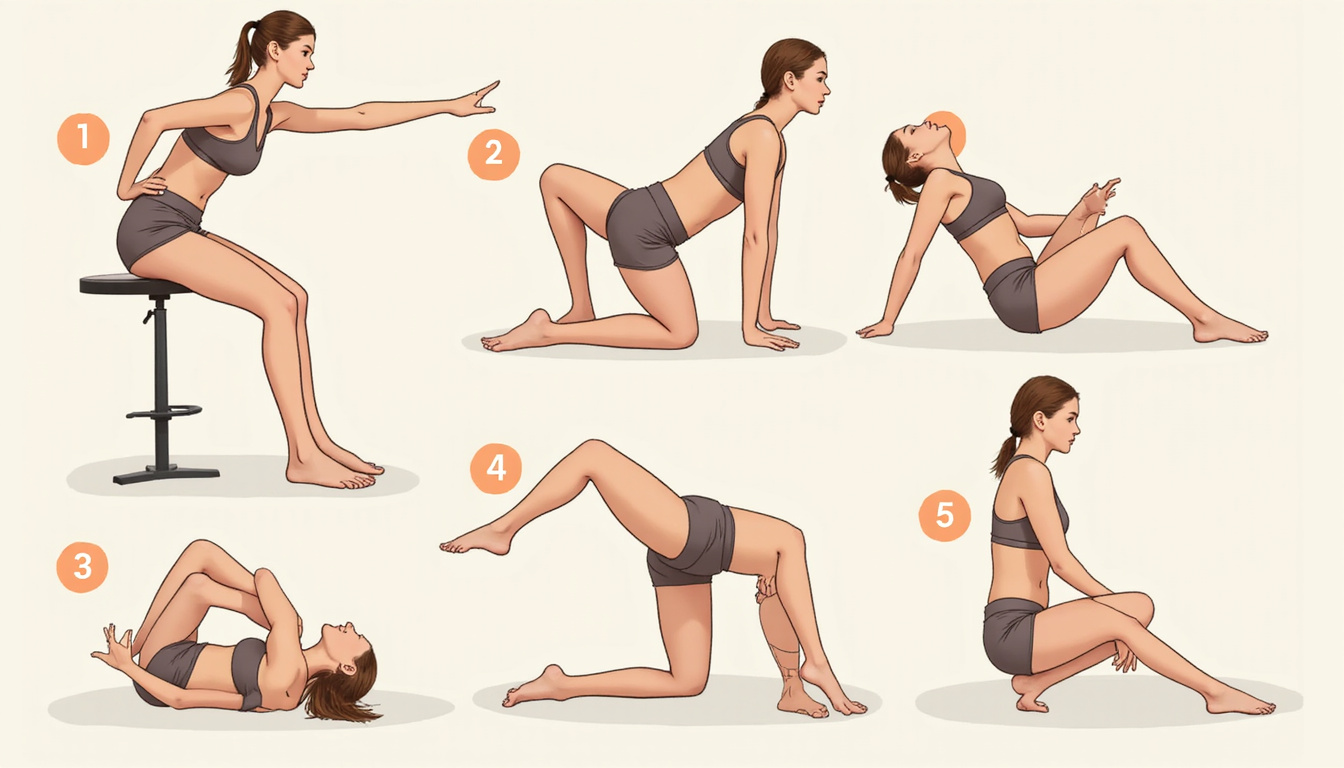
Fix 3: Build a strong, stable core (not just “abs”)
With anterior pelvic tilt, the front of your trunk often becomes weak and lengthened, especially the deep stabilizing muscles. A strong core isn’t just about six-pack abs—it’s about controlling the position of your pelvis and spine.
Dead bug (core control + pelvic positioning)
- Lie on your back, arms reaching toward the ceiling, hips and knees bent at 90 degrees (“tabletop” position)
- Gently press your lower back toward the floor without aggressively flattening it
- Slowly extend your right arm overhead and your left leg out, keeping your lower back stable
- Return to the starting position and switch sides
Guidelines:
- Move slowly, keep your ribs down, and avoid arching your lower back
- 2–3 sets of 8–10 controlled reps per side, 3–4 times per week
Other great core options for anterior pelvic tilt:
- Plank variations (focus on maintaining neutral pelvis, not sagging)
- Side planks (for lateral core stability)
- Pallof press (anti-rotation core strength)
Fix 4: Retrain your standing and sitting posture
Exercises help, but if you spend the other 16 hours of your day in the same old posture, progress will be limited. Small habit changes compound over time.
Standing posture reset
When you stand:
- Feet: Hip-width apart, weight evenly distributed
- Knees: Soft, not locked
- Pelvis: Imagine your pelvis as a bowl of water—tip it slightly backward so the water doesn’t spill out the front
- Ribs: Stack your ribs over your pelvis; don’t flare them forward
- Head: Ears roughly over shoulders, avoid craning forward
Hold this alignment for a few breaths at a time throughout the day, especially when:
- Waiting in line
- Brushing your teeth
- Cooking
- Talking on the phone
Sitting posture tips
- Hips slightly higher than knees if possible (use a cushion or chair adjustment)
- Sit with your sit bones on the chair, not rolled back onto your tailbone
- Slight arch in lower back is fine, but avoid extreme sway
- Feet flat on the floor, not tucked under your chair
- Stand, walk, or stretch briefly at least once every 30–45 minutes
Fix 5: Stretch hamstrings and lower back the right way
Many people with anterior pelvic tilt feel like they have “tight hamstrings,” but often the hamstrings are actually lengthened and overworking to counter the tilt. Random aggressive hamstring stretching can backfire.
Instead, aim for balanced mobility:
Posterior chain stretch with neutral spine
- Stand with feet hip-width apart
- Place your hands on a chair or countertop for support
- Hinge at the hips (push hips back) while keeping your spine long and neutral
- You should feel a gentle stretch in the hamstrings and possibly calves
- Hold 20–30 seconds, 2–3 rounds
Child’s pose with breath
- Kneel on the floor, sit back on your heels, and reach your arms forward
- Relax your lower back and focus on slow, deep breaths into your belly and lower ribs
- Hold for 45–60 seconds
These stretches reduce muscle tension around the pelvis while encouraging a more neutral spinal alignment.
Putting it all together: a simple daily routine
Here’s a practical starting plan to combat anterior pelvic tilt and reduce back pain. It can be done in about 15–20 minutes:
- Hip flexor stretch – 2 x 30–45 sec each side
- Posterior chain stretch – 2 x 20–30 sec
- Glute bridge – 3 x 10–15 reps
- Dead bug – 2–3 x 8–10 reps per side
- Child’s pose breathing – 1 x 45–60 sec
- Posture check-ins – 3–5 times daily, 20–30 seconds at a time
Consistency matters more than perfection. Do this routine at least 3–4 days per week for 4–6 weeks and note changes in:
- Back and hip pain levels
- Ease of standing for long periods
- Awareness of your pelvic position during daily activities
Common mistakes when fixing anterior pelvic tilt
When working on anterior pelvic tilt, watch out for these pitfalls:
- Over-fixing with extreme posterior tilt: Tucking your pelvis excessively under can create different problems. Aim for neutral, not a flat or rounded lower back.
- Only stretching, never strengthening: Stretching alone won’t fix the underlying muscle imbalances. You need glute and core strength.
- Training abs with lots of crunches: Repetitive spinal flexion doesn’t always improve pelvic control and can sometimes irritate the lower back.
- Ignoring pain signals: Sharp, shooting, or worsening pain is a sign to stop and consult a professional.
If pain persists, worsens, or radiates down your legs, see a qualified healthcare provider (physiotherapist, sports medicine doctor, chiropractor) for a personalized assessment.
FAQ: anterior pelvic tilt and back pain
1. Can anterior pelvic tilt be reversed?
In many cases, yes—anterior pelvic tilt can be significantly improved through targeted exercises, stretching, and postural retraining. You’re not reshaping bones; you’re retraining muscles and movement patterns. The more consistent you are, the more likely you’ll see lasting change.
2. How long does it take to fix anterior pelvic tilt?
Everyone is different, but many people notice some back pain relief within 2–4 weeks of regular work and visible postural changes in 8–12 weeks. Factors like your activity level, how long you’ve had the tilt, and how consistent you are with exercises all affect the timeline.
3. Is anterior pelvic tilt bad if I have no pain?
Not necessarily. Some degree of anterior pelvic tilt is normal for many people. It becomes a concern if it’s extreme or combined with weakness and stiffness that lead to discomfort or movement problems. Even if you’re pain-free, improving pelvic control and strength can enhance performance and reduce injury risk.
Take control of your posture and stop back pain now
You don’t have to live with constant lower back tightness and hip discomfort. By understanding anterior pelvic tilt and taking a few focused steps—releasing tight hip flexors, strengthening your glutes and core, and improving your daily posture—you can offload your spine and move with more comfort and confidence.
Start with the simple routine above today. Commit to just 15–20 minutes, 3–4 days per week, for the next month. If you’d like, I can also help you build a personalized progression based on your current fitness level and pain history—just tell me what your days look like and what equipment (if any) you have, and we’ll map out your next steps.