If you’re looking for a science-backed way to calm your nervous system and sharpen your mind without medication, biofeedback therapy is one of the most powerful tools available. In just a few sessions, many people learn to dial down anxiety, ease physical tension, and create laser-like focus—on demand.
Below, you’ll learn what biofeedback is, how it works, who it helps, and how to decide if it fits your health and performance goals.
What Is Biofeedback Therapy?
Biofeedback therapy is a mind–body training method that uses real-time measurements of your body’s signals—like heart rate, breathing, muscle tension, or brainwaves—to teach you how to control them consciously.
In a typical session:
- Sensors are placed on your skin or scalp.
- A device or computer translates your body’s signals into visual or sound feedback.
- With guided breathing, imagery, or focus exercises, you watch those signals change as you relax or concentrate.
- Over time, you learn which techniques reliably calm or energize you—until your body begins to respond automatically.
Instead of guessing whether you’re relaxing, biofeedback shows you objective proof in real time. That instant feedback dramatically speeds up learning.
How Biofeedback Calms Stress So Quickly
When you’re stressed, your nervous system flips into “fight or flight” mode: fast heart rate, shallow breathing, tight muscles, racing thoughts. Biofeedback therapy trains the opposite response: the “rest and digest” parasympathetic state.
Here’s how it rapidly melts stress:
- Heart rate variability (HRV) biofeedback teaches you to breathe in a rhythm that balances your autonomic nervous system. Higher HRV is linked to better stress resilience and emotional regulation.
- Muscle tension (EMG) biofeedback shows you when muscles are clenched—even if you don’t feel it yet—so you can release tension in your jaw, neck, shoulders, and back.
- Skin temperature or sweat gland (electrodermal) biofeedback signals when your body is going into stress mode, letting you slow things down before anxiety spikes.
With practice, your body learns a new default: less reactivity, calmer baseline, faster recovery after stress. Clinical research has shown biofeedback can reduce anxiety, headaches, and stress-related symptoms (source: Mayo Clinic).
How Biofeedback Supercharges Focus and Mental Performance
Stress hijacks attention; calm, alert focus unlocks performance. Biofeedback therapy helps you access that “calm laser” state on cue.
Key mechanisms for focus:
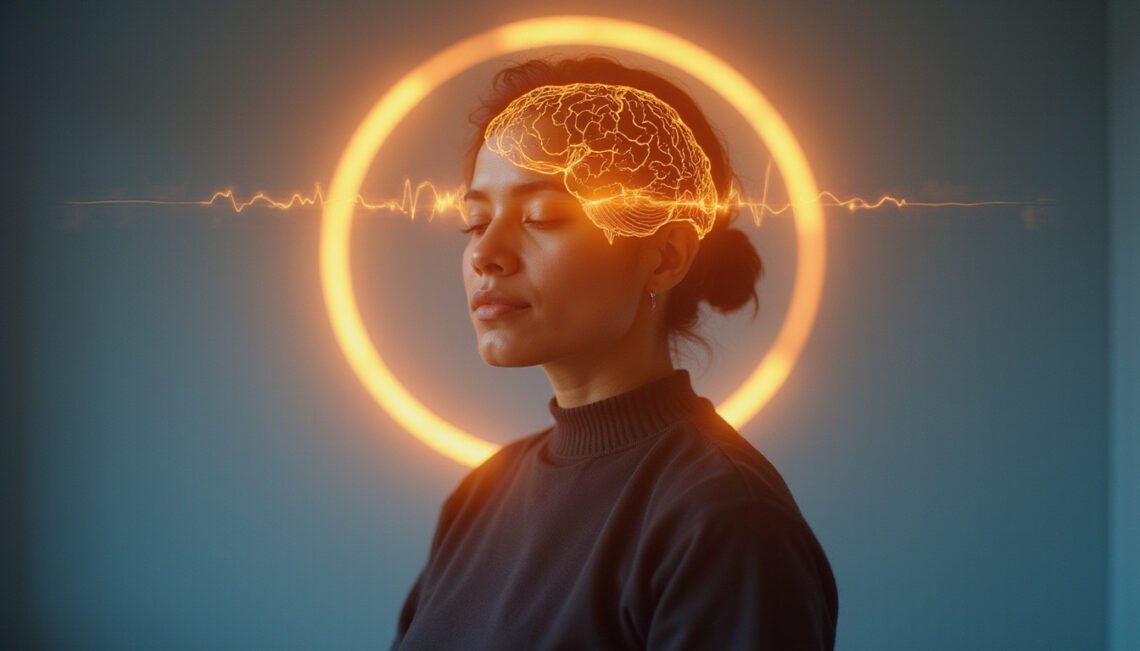
- Brainwave (neurofeedback) training: EEG sensors track brain activity in real time. Specific training protocols reward brain patterns linked with sustained attention and reduce patterns related to distraction or impulsivity.
- HRV and breath training: Balanced breathing stabilizes energy and reduces mental noise, giving you a more stable attention span.
- Attention feedback tasks: Some systems use games or tasks that only respond well when you’re in the right focus zone, reinforcing that state in your brain.
People often report:
- Fewer “mental fog” episodes
- Less procrastination and task-switching
- Better test-taking, studying, or work productivity
- More consistent performance under pressure (e.g., athletes, executives, performers)
Types of Biofeedback Therapy (and What They’re Best For)
Not all biofeedback is the same. Different methods target different systems in your body.
1. Heart Rate Variability (HRV) Biofeedback
- What it measures: Beat-to-beat changes in heart rate
- Best for: Stress, anxiety, resilience, emotional regulation, performance under pressure
- What it feels like: Breathing at a slow, steady pace with visual or audio guidance while watching your heart rhythm on a screen
2. EMG (Muscle) Biofeedback
- What it measures: Electrical activity in skeletal muscles
- Best for: Tension headaches, jaw clenching (TMJ), neck and back pain, rehab after injuries
- What it feels like: Sensors on tense areas show a graph or tone that changes as you relax the muscle
3. Neurofeedback (EEG Biofeedback)
- What it measures: Brainwave activity
- Best for: Focus issues, ADHD, sleep problems, mood regulation, peak performance
- What it feels like: Wearing a cap or sensors on the scalp while watching a movie or game that responds to your brain activity
4. Thermal and Skin Conductance Biofeedback
- What they measure: Skin temperature (blood flow) and sweat gland activity
- Best for: Anxiety, migraines, Raynaud’s, stress awareness
- What it feels like: A gentle sensor on fingers or hands while you practice relaxation to warm your hands or steady responses
Many clinicians combine these methods into a personalized plan, depending on your symptoms and goals.
What a Typical Biofeedback Therapy Session Looks Like
A standard clinical session lasts about 45–60 minutes. While approaches vary, most follow this basic structure:
-
Check-in and goal setting
- Review stress levels, symptoms, or focus challenges since the last session
- Set a concrete goal (e.g., “fall asleep faster,” “reduce afternoon headaches,” “stay focused during reports”)
-
Sensor placement
- Noninvasive sensors are attached to your skin or scalp
- The process is painless—no electricity goes into your body; devices only record signals
-
Training exercises
- Guided breathing, visualization, grounding exercises, or cognitive tasks
- You watch your body’s reactions on a screen—graphs, colors, games, or feedback sounds
-
Skill consolidation
- The therapist helps you notice what works best to change your signals
- You may get handouts or app recommendations for home practice
-
Plan homework
- Short daily exercises (often 5–15 minutes) to reinforce new patterns between sessions
Most people start to feel subtle changes within 3–5 sessions and see more stable, lasting improvements after 8–20 sessions, depending on the condition and consistency of practice.
Conditions Biofeedback Therapy Can Help
Biofeedback is not a miracle cure, but there’s solid evidence and clinical experience supporting its use as part of a comprehensive plan for:
- Stress and generalized anxiety
- Panic symptoms and emotional reactivity
- Tension and migraine headaches
- Chronic pain and muscle tension
- TMJ and jaw clenching
- ADHD and attention difficulties
- Insomnia and sleep onset problems
- High blood pressure (as an adjunct to medical care)
- Irritable bowel syndrome (IBS) related to stress
In many cases, biofeedback is used alongside other treatments—such as CBT, medication, physical therapy, or lifestyle changes—to amplify results and give people more control over their own physiology.

Always discuss with your healthcare provider before changing any medication or existing treatment plan.
Who Is a Good Candidate for Biofeedback Therapy?
You may benefit from biofeedback if you:
- Prefer non-drug, skills-based approaches to managing stress or symptoms
- Are willing to practice simple techniques at home between sessions
- Struggle with issues that worsen with stress, like headaches, IBS, or insomnia
- Want to improve focus, emotional control, or performance in high-pressure environments
It may be less suitable if you:
- Are unable to attend regular sessions (at least weekly at first)
- Are not interested in actively practicing or learning new habits
- Have complex medical conditions that require immediate or intensive medical intervention
Biofeedback therapy is generally considered safe and noninvasive, with minimal risk. The main requirement is your motivation and consistency.
At-Home Biofeedback: Can You Do It Yourself?
You don’t have to be in a clinic to benefit from biofeedback principles. There are three main options:
-
Professional clinical biofeedback
- Best for: complex conditions, strong symptoms, or when you want an expert to interpret data
- Pros: personalized protocols, precise equipment, therapist support
- Cons: cost, travel, limited appointment times
-
Consumer biofeedback and neurofeedback devices
- HRV wearables, neurofeedback headbands, and smartphone-connected sensors
- Best for: ongoing training after clinical sessions, stress management, performance
- Pros: convenience, lower long-term cost, daily practice
- Cons: less precise, no clinical oversight, harder to interpret on your own
-
“Biofeedback-inspired” techniques without hardware
- Coherent breathing, progressive muscle relaxation, mindfulness
- You don’t see real-time data, but you still train your nervous system
For many people, an ideal path is: short-term guided biofeedback therapy with a clinician, followed by longer-term maintenance and optimization with home tools and self-regulation skills.
How to Choose a Biofeedback Therapist or Program
To get the most from biofeedback therapy, the quality of your provider matters. Look for:
- Relevant credentials:
- Psychologists, counselors, physicians, physical therapists, or other licensed professionals
- Optional specialist certification from organizations like BCIA (Biofeedback Certification International Alliance)
- Experience with your condition:
- Ask what conditions they treat most often and what results they typically see
- Clear treatment plan:
- How many sessions do people usually need?
- What home practice is expected?
- Evidence-based approach:
- Use of validated protocols and, ideally, collaboration with your existing healthcare team
Don’t hesitate to ask questions in a free consultation or first session—it’s important that you feel comfortable and supported.
Practical Tips to Maximize Results from Biofeedback Therapy
To melt stress faster and boost your focus more effectively, use biofeedback as a training program, not a one-time fix. A few practical strategies:
- Be consistent: Treat it like physical training—regular short practice beats occasional long sessions.
- Track progress: Note sleep, mood, pain, focus, and stress levels weekly to see patterns.
- Integrate into daily life: Use short exercises before big meetings, during study sessions, or before bed.
- Combine with lifestyle basics: Good sleep, movement, hydration, and nutrition amplify the effects.
- Stay curious instead of critical: Biofeedback is about learning how your body works—not judging how “good” or “bad” you are at relaxing.
Quick Summary: What You Can Expect
Biofeedback therapy helps you:
- Understand your unique stress and focus patterns
- Learn simple, science-backed ways to calm your nervous system
- Practice new responses until they become automatic
- Reduce stress and anxiety while enhancing mental clarity and performance
With commitment and guidance, many people experience life-changing improvements in how they feel and function day to day.
FAQ About Biofeedback and Stress/Focus Training
1. Is biofeedback effective for anxiety and stress disorders?
Yes. Multiple studies show that biofeedback for anxiety—especially HRV and EMG approaches—can reduce symptoms of generalized anxiety, panic, and stress-related physical complaints when used as part of a structured program. It’s often used alongside therapy and lifestyle changes for best results.
2. Can neurofeedback and biofeedback help with attention problems like ADHD?
Many clinics use neurofeedback for focus and attention as a complementary treatment for ADHD and attentional issues. Some individuals report better concentration, reduced impulsivity, and improved task completion, particularly when combined with coaching, behavioral strategies, or medication as needed.
3. How long does it take for biofeedback training to work?
For most people, biofeedback for stress and focus begins to feel noticeably helpful after a few sessions, with more durable changes developing over 2–3 months of consistent practice. Chronic or complex conditions may require longer-term work.
Ready to Train Your Nervous System for Calm and Focus?
You don’t have to be at the mercy of stress, racing thoughts, or scattered attention. With biofeedback therapy, you can see exactly how your body responds to the world—and then deliberately retrain it for calm, clarity, and control.
If you’re ready to melt stress faster, sleep deeper, and supercharge your ability to focus, explore biofeedback options in your area or connect with a certified provider online. The skills you build now can pay off for the rest of your life—every time you breathe through a challenge, reset your nervous system, and choose how you want to feel.