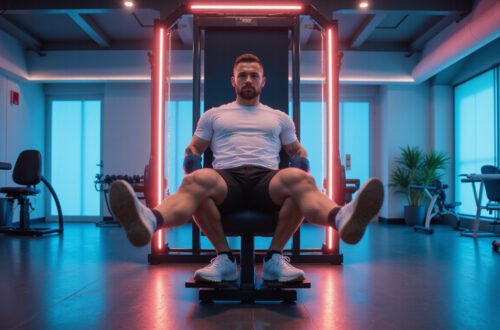
Leg lifts are one of the most effective, versatile bodyweight exercises you can use to strengthen your core, sculpt your abs, and improve overall stability. Whether you train at home or in the gym, leg lifts can be adapted for beginners and advanced athletes alike, making them a staple for anyone serious about core training.
Below you’ll find exactly how to perform leg lifts safely, proven variations for all levels, and a simple way to build them into a core routine that actually delivers results.
Why Leg Lifts Deserve a Place in Your Routine
Leg lifts don’t just “work your lower abs.” They hit a wide network of muscles that support everyday movement:
- Rectus abdominis (“six-pack” muscle)
- Hip flexors (iliopsoas, rectus femoris)
- Obliques (especially with twisting variations)
- Deep core stabilizers (transverse abdominis)
- Lower back and glutes (for stabilization)
Research shows that exercises involving leg raises and lifts can significantly increase abdominal muscle activation and core strength when compared to simple crunches (source: ACE).
Because leg lifts can be done lying, hanging, seated, or supported on parallel bars, you can always find a version that fits your current strength and equipment.
How to Do Basic Lying Leg Lifts with Perfect Form
If you’re new to leg lifts, start on the floor. This variation is accessible and still highly effective.
Step-by-step: Lying Leg Lifts
- Lie on your back with legs straight and together, arms by your sides or hands under your hips for extra support.
- Engage your core by gently pulling your belly button toward your spine.
- Keeping your lower back pressed into the floor, slowly raise both legs until they’re at about a 70–90° angle.
- Pause briefly at the top, without letting your hips roll off the floor.
- Lower your legs slowly until they’re just above the ground—don’t let your heels touch.
- Repeat for 8–15 controlled reps.
Key form tips
- Move slowly—if momentum is doing the work, your abs aren’t.
- If your lower back arches off the mat, reduce your range of motion or bend your knees.
- Breathe out as you lift, breathe in as you lower.
Common Mistakes People Make with Leg Lifts
To get the most from leg lifts and avoid pain, watch out for these frequent errors:
- Arching the lower back: This shifts stress to your spine instead of your abs.
- Using momentum and swinging: Reduces muscle activation and increases injury risk.
- Going too low too soon: If you can’t control the descent, shorten the range of motion.
- Neck straining: Keep your head relaxed; don’t crank it forward to “help.”
If you feel sharp pain in your lower back, stop, shorten the range, or regress to an easier variation.
Beginner-Friendly Leg Lift Variations
If full leg lifts are still too challenging, use these progressions to build strength safely.
1. Bent-Knee Leg Lifts
Bending the knees shortens the lever, making the move easier on your core and back.
- Lie on your back with knees bent at 90°.
- Lift knees toward your chest while exhaling.
- Lower slowly until toes lightly touch the floor.
- Focus on keeping your lower back pressed into the mat.
2. Single-Leg Lifts
This version reduces load and helps build unilateral strength and control.
- Lie flat with one leg bent (foot on floor) and the other leg straight.
- Raise the straight leg to about 70–90°.
- Lower it slowly, stopping just above the floor.
- Complete reps, then switch legs.
3. Reverse Crunches
Reverse crunches mimic leg lifts, but use a smaller range and more hip curl, making them more manageable while targeting similar muscles.
- Lie on your back, knees bent and feet off the ground.
- Exhale and curl your pelvis upward, bringing knees toward chest.
- Slowly lower hips back down with control.
Use these for 3–4 weeks, then test your strength again with standard leg lifts.
Intermediate Leg Lift Variations for Faster Core Gains
Once you’ve mastered the basic floor version, increase the challenge with these proven progressions.
1. Leg Lifts with Hip Raise
This adds a powerful lower-ab emphasis.
- Perform a regular lying leg lift.
- At the top, press your feet toward the ceiling and gently lift your hips off the ground.
- Lower hips first, then slowly lower your legs.
2. Leg Lifts with a Hold
Static holds build muscular endurance and control.
- Lift your legs to 45° and hold for 10–20 seconds.
- Keep your core braced and lower back flat.
- Lower slowly, then repeat.
3. Leg Lifts on a Bench
Lying on a bench increases the range of motion, especially if you let legs drop slightly below hip level (only if your back can stay flat).
- Lie on a flat bench, hips near the edge.
- Hold onto the bench behind your head for stability.
- Lift and lower your legs in a controlled arc, stopping when your lower back wants to arch.
Advanced Leg Lifts to Seriously Challenge Your Core
If you’re comfortable with standard leg lifts and want a tougher challenge, try these advanced variations.

1. Hanging Leg Lifts
Hanging leg lifts are a gold-standard core exercise in gymnastics and calisthenics.
How to perform hanging leg lifts:
- Hang from a pull-up bar with an overhand grip.
- Keep your shoulders slightly active (don’t hang completely loose).
- With legs straight, raise them to at least hip height; advanced lifters can go to the bar.
- Lower with full control—no swinging.
If straight legs are too tough, bend your knees (hanging knee raises) as a progression.
2. Captain’s Chair / Parallel Bar Leg Lifts
Many gyms have a captain’s chair or dip station that supports your upper body.
- Support your weight on your forearms or hands.
- Start with legs hanging straight down.
- Lift straight legs to about hip or chest level.
- Lower slowly without letting them swing.
This variation removes grip limitations and lets you focus purely on your core.
3. Windshield Wipers
Windshield wipers target your obliques heavily and demand a strong, stable core.
- Hang from a bar or lie flat on your back with legs straight up.
- Keeping legs together, rotate them side to side like a windshield wiper.
- Move under control, avoiding momentum.
Start with a small rotation until you can stabilize your spine.
How Often Should You Do Leg Lifts?
For most people, 2–3 focused core sessions per week is enough to see results, as long as you’re challenging yourself and progressing.
Sample weekly plan:
- Day 1: Lying leg lifts – 3 sets of 10–12
- Day 3: Bent-knee hanging leg lifts – 3 sets of 8–10
- Day 5: Leg lifts with hip raise – 3 sets of 8–12
Rest 45–75 seconds between sets. Once the top end of the rep range feels easy with perfect form, increase difficulty by:
- Adding reps
- Slowing the tempo (3–4 seconds on the way down)
- Moving to a harder variation
Do Leg Lifts Burn Belly Fat?
Leg lifts will strengthen and build your abdominal muscles, but they do not spot-reduce fat from your belly. Visible abs come from a combination of:
- A consistent strength routine (including leg lifts)
- Calorie balance (slight deficit for fat loss)
- Overall movement (steps, cardio, sports)
- Adequate sleep and stress management
As you lose body fat overall, the stronger, denser muscles built by leg lifts will appear more defined.
Safety Tips for Pain-Free Leg Lifts
To keep your core training safe and sustainable:
- Warm up first: 3–5 minutes of light cardio and dynamic movements (hip circles, leg swings).
- Protect your lower back: If it arches, shorten the range or switch to bent knees.
- Avoid jerky movements: Controlled tempo protects joints and boosts muscle activation.
- Stop at discomfort, not pain: Mild muscular burning is normal; sharp joint or back pain is not.
- Progress gradually: Only move to more advanced leg lift variations when you own the current level.
If you have existing back or hip issues, talk with a qualified professional before adding intense leg lift variations.
Quick Leg Lift Workout You Can Start Today
Here’s a simple 10–12 minute routine that hits the entire core using leg lifts and a few complementary moves:
- Bent-Knee Leg Lifts – 2 sets of 12–15
- Standard Lying Leg Lifts – 3 sets of 8–12
- Reverse Crunches – 2 sets of 10–15
- Plank (forearm) – 2 sets of 30–40 seconds
Perform this 2–3 times per week, leaving at least one rest day between sessions. As you get stronger, swap bent-knee leg lifts for straight-leg, then begin adding hanging variations.
FAQs About Leg Lifts and Core Training
1. Are leg lifts good for lower abs specifically?
Leg lifts are excellent for emphasizing the lower portion of the rectus abdominis. While you can’t fully isolate “lower abs,” leg lifts and reverse crunches create more activation in that area compared with many upper-ab movements like standard crunches.
2. How many leg lifts should I do per day for a strong core?
You don’t need to do leg lifts every day. Aim for 2–3 sessions per week with 2–4 sets of 8–15 reps, depending on the variation. Focus on quality and progression over sheer volume.
3. Are hanging leg lifts better than lying leg lifts?
Hanging leg lifts generally demand more overall core strength, hip flexor strength, and grip. They can be “better” for advanced lifters, but lying leg lifts are still highly effective and often safer and more controllable for beginners and intermediates. The best option is the one you can do with perfect form and progressive overload.
If you’re serious about sculpting a stronger, more defined core, leg lifts should be a foundation of your routine. Start with a version that matches your current strength, master the technique, and then steadily progress to more challenging variations like hanging leg lifts and hip raises.
Commit to 8–12 focused minutes of targeted core work, including leg lifts, three times a week for the next month. Track your reps, note your improvements, and feel how much stronger and more stable your entire body becomes. Your next step is simple: pick a variation from this guide, drop to the floor or grab a bar, and get your first set of leg lifts done today.