
Aquatic therapy is becoming a go-to option for people who want to heal faster, move with less pain, and rebuild strength without pounding their joints. Whether you’re recovering from surgery, managing chronic pain, or just getting back into exercise after an injury, water-based rehab can offer a safer, more comfortable path to recovery than land exercises alone.
Below, you’ll learn how aquatic therapy works, who it helps most, what a typical session looks like, and how to decide if it’s right for you.
What is aquatic therapy?
Aquatic therapy (also called water therapy, pool therapy, or aquatic physical therapy) is a form of rehabilitation performed in a warm pool under the guidance of a trained professional—usually a physical therapist or certified aquatic therapist.
Unlike recreational swimming, aquatic therapy is:
- Goal-oriented: Focused on specific rehab goals like pain reduction, improved range of motion, or enhanced balance.
- Individually tailored: Exercises are customized to your condition, fitness level, and stage of recovery.
- Clinically supervised: A licensed clinician monitors your body mechanics, symptoms, and progression.
The warm, supportive environment of the water allows people to perform movements and exercises that might be too difficult or painful on land.
How aquatic therapy helps your body heal
Aquatic therapy works because of the unique properties of water. Together, they make exercise easier on your body while still challenging your muscles and cardiovascular system.
1. Buoyancy: Less weight on your joints
Buoyancy is the upward force that water exerts on your body. This reduces the amount of weight your joints have to support:
- In water up to your waist, you bear about 50% of your body weight.
- In water up to your chest, you bear roughly 25–35%.
- In water up to your neck, you may bear as little as 10%.
This offloading of body weight means you can:
- Walk and move with less pain.
- Start weight-bearing earlier after surgery or injury.
- Practice normal movement patterns without overloading sensitive joints.
2. Hydrostatic pressure: Natural support and pain relief
Water exerts pressure evenly on your body when submerged, known as hydrostatic pressure. This can:
- Reduce swelling in joints and limbs.
- Improve circulation and venous return.
- Provide gentle compression that supports unstable joints.
- Enhance body awareness (proprioception), helpful after injuries.
Many people feel more stable and secure in the water, which makes them more willing to move and challenge themselves.
3. Resistance: Low-impact strength training
Water is about 800 times denser than air. Every movement you make in water has built-in resistance, but it’s:
- Smooth: No sudden jerks or impacts.
- Balanced: Resistance occurs in all directions.
- Self-paced: Move slower to reduce effort; move faster to increase it.
This makes aquatic therapy ideal for building strength in a controlled, joint-friendly way.
4. Warmth: Relaxed muscles and reduced pain
Many therapy pools are heated to around 88–94°F (31–34°C). Warm water helps:
- Relax tight muscles and reduce spasms.
- Increase blood flow to muscles and soft tissues.
- Decrease pain sensitivity and stiffness.
These effects make it easier to stretch, move, and participate fully in therapy sessions.
Conditions that benefit from aquatic therapy
Aquatic therapy can help a wide range of musculoskeletal, neurological, and chronic pain conditions. It’s commonly used when land-based exercise is too painful, too difficult, or not yet safe.
Orthopedic and joint conditions
- Osteoarthritis and rheumatoid arthritis
- Degenerative joint disease
- Hip, knee, ankle, or shoulder injuries
- Tendonitis and bursitis
- Low back and neck pain
- Scoliosis and postural issues
Because of reduced joint loading, people with arthritis often find they can walk, squat, and move more comfortably in water than on land.
Post-surgical rehabilitation
- Total hip or knee replacement
- ACL or other ligament reconstruction
- Rotator cuff repair
- Spinal surgery
- Fracture repair after immobilization
Aquatic therapy can allow earlier movement and gentle weight-bearing after surgery, helping maintain strength, mobility, and circulation while protecting healing tissues (source: American Physical Therapy Association).
Neurological and balance disorders
- Stroke recovery
- Multiple sclerosis (MS)
- Parkinson’s disease
- Peripheral neuropathy
- Balance disorders and frequent falls
The supportive nature of water gives people with balance or coordination problems a safer environment to practice walking and functional tasks without the same risk of falls.
Chronic pain and mobility limitations
- Fibromyalgia
- Chronic low back pain
- Chronic fatigue syndrome
- General deconditioning
- Obesity-related joint pain
The combination of warmth, buoyancy, and gentle resistance can help people move more freely and build endurance when other forms of exercise feel overwhelming.
What to expect in an aquatic therapy session
If you’re new to aquatic therapy, knowing what happens in a session can help you feel more comfortable and prepared.
Initial evaluation
Before you ever get in the pool, your therapist will:
- Review your medical history, medications, and imaging.
- Assess your pain, strength, flexibility, and movement patterns.
- Discuss your goals (e.g., walking without a cane, returning to sports, lifting your grandchild, etc.).
They’ll then determine if water therapy is safe and appropriate, or if you should start with land-based work first.
Pool environment and equipment
Most therapeutic pools have:
- Warm water with easy entry (stairs, ramps, or lifts).
- Railings or edges for support.
- Shallow and (sometimes) deeper sections.
Common tools used in aquatic therapy include:
- Foam dumbbells or paddles for upper-body resistance
- Kickboards and noodles for support or resistance
- Ankle or wrist weights for added challenge
- Underwater treadmills in some advanced facilities
Session structure
A typical 30–60 minute aquatic therapy session may include:
- Warm-up: Gentle walking or marching in the water, light arm movements.
- Range of motion exercises: Controlled stretches and joint movements to restore flexibility.
- Strength exercises: Leg lifts, squats, arm pulls, core stability movements.
- Balance and gait training: Walking in different directions, standing on one leg, step-ups.
- Cardiovascular work: Water walking or jogging, small jumps, or interval-style movements.
- Cool-down and stretching: Slower movements and stretches to reduce tension.
Your therapist will monitor your pain and fatigue and adjust intensity accordingly.
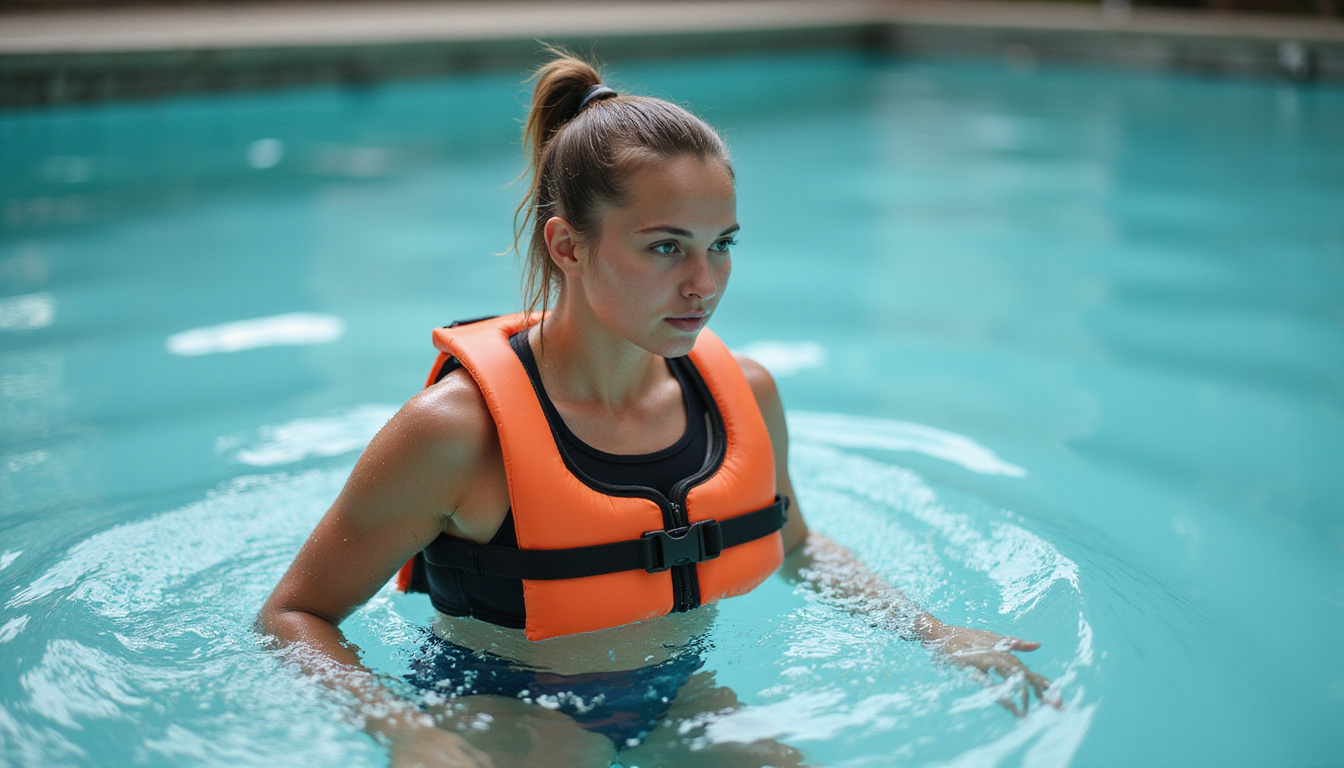
Sample low-impact water exercises
These are examples of exercises commonly used in aquatic therapy. Do them only if cleared by a healthcare provider and ideally under professional supervision.
-
Water walking
- Walk forward, backward, and sideways in waist- to chest-deep water.
- Focus on upright posture and smooth steps.
- Helps with gait training, hip and knee strength, and endurance.
-
Standing leg raises
- Hold the pool wall for support.
- Slowly lift one leg forward, then to the side, then backward.
- Strengthens hips and improves control.
-
Mini squats
- Stand with feet shoulder-width apart in shallow water.
- Slowly bend knees and hips as if sitting in a chair, then rise.
- Builds leg strength with less joint stress than land squats.
-
Arm sweeps with paddles or foam dumbbells
- Stand in shoulder-deep water.
- Push hands forward and back, or out to the sides and in.
- Strengthens shoulders, chest, and upper back.
-
Core stability: water “bracing”
- Stand tall and gently tighten abdominal muscles.
- March in place or lift arms overhead while keeping your trunk steady.
- Improves core strength and balance.
Benefits of aquatic therapy vs. land-based therapy
Both land and water therapy are valuable; often they’re combined in a rehab plan. Aquatic therapy stands out for certain advantages:
Key benefits of aquatic therapy
- Lower impact on joints and spine
- Earlier movement after injury or surgery
- Improved pain tolerance during exercise
- Built-in resistance for safe strength gains
- Enhanced balance with lower fall risk
- Safe option for people with higher body weight
- Often more enjoyable and less intimidating for beginners
Over time, many people transition from mostly aquatic therapy to more land-based exercise as they gain strength, confidence, and pain control.
Who should avoid or modify aquatic therapy?
Aquatic therapy is safe for most people, but there are situations where it may not be appropriate or will need special precautions. Check with your doctor or therapist if you have:
- Uncontrolled heart disease or severe breathing problems
- Open wounds, skin infections, or unhealed surgical incisions
- Certain contagious illnesses
- Uncontrolled seizures
- Severe fear of water or inability to follow safety instructions
- Incontinence (unless the facility can safely accommodate it)
Your therapist and physician should clear you before starting any new rehab program, including aquatic therapy.
How to get started with aquatic therapy
If you’re considering aquatic therapy, a structured approach helps you get the most from it.
1. Talk to your healthcare provider
Ask your doctor, surgeon, or specialist if pool-based rehabilitation is appropriate for your diagnosis and stage of healing. In many cases:
- A prescription or referral is required for insurance coverage.
- Your provider can indicate any restrictions (e.g., no twisting, limited weight-bearing).
2. Find a qualified facility
Look for:
- A clinic or rehab center that specifically offers aquatic physical therapy.
- Licensed physical therapists or occupational therapists trained in water-based rehab.
- Safe pool access (stairs, handrails, lifts) and appropriate water temperature.
You can search through professional organizations, local hospitals, or rehabilitation centers.
3. Wear appropriate gear
- Comfortable, well-fitting swimsuit or athletic swimwear
- Water shoes for traction and foot protection
- Towel, robe, and any assistive devices you use on land (cane, walker, etc.)
Arrive early so you can change without rushing and review any questions with your therapist.
4. Pace yourself and track progress
- Expect to feel tired but not overwhelmed after sessions.
- Communicate openly about pain levels during and after exercise.
- Celebrate small wins: walking farther, using less support, or feeling less stiff.
Over time, your therapist may transition you to a mix of aquatic and land therapy to support long-term function.
FAQ: Common questions about aquatic therapy
Is aquatic physical therapy effective for joint pain?
Yes. Aquatic physical therapy for joint pain is widely used for conditions like osteoarthritis and rheumatoid arthritis. The reduced joint loading and warm water environment allow people to exercise more comfortably, often achieving better mobility and function than with land exercises alone, especially in the early stages of rehab.
Can water-based therapy replace regular physical therapy?
In most cases, water-based therapy is a complement—not a full replacement—for traditional physical therapy. Many rehab plans start in the pool to reduce pain and improve mobility, then gradually include more land exercises to prepare your body for real-world activities like walking on uneven surfaces, climbing stairs, or lifting objects.
How often should I do aquatic rehabilitation sessions?
Frequency depends on your condition, goals, and overall health. Many people attend aquatic rehabilitation 2–3 times per week in the early phases. As pain decreases and strength improves, the plan may be adjusted to include more independent exercise, home programs, or land-based therapy.
Take the next step toward easier movement and faster healing
If pain, stiffness, or fear of re-injury is keeping you from moving the way you want, aquatic therapy can be a powerful, low-impact way to start rebuilding your strength and confidence. The supportive, warm-water environment lets you move more freely, practice daily activities safely, and progress at a pace that respects your body’s limits.
You don’t have to figure it out alone. Reach out to a local physical therapy clinic or rehabilitation center that offers aquatic therapy, ask about an evaluation, and explore whether pool-based rehab is right for your condition. Starting now can help you control pain sooner, protect your joints, and get back to the activities that matter most to you—one step, and one gentle movement in the water, at a time.