Glute Weakness: 7 Proven Exercises to Fix Pain and Improve Performance
Glute weakness is one of the most common — and most overlooked — causes of lower-body pain, stiffness, and poor athletic performance. Whether you’re a runner, lifter, weekend athlete, or someone who sits at a desk all day, underactive or weak glutes can quietly sabotage how you move, feel, and perform. The good news: with the right targeted exercises, you can restore strength, improve alignment, and dramatically reduce pain.
In this guide, you’ll learn how to recognize glute weakness, why it happens, and 7 proven exercises to fix it and boost performance in daily life and sport.
Why Glute Strength Matters So Much
Your glutes (gluteus maximus, medius, and minimus) are the powerhouse of your posterior chain. They:
- Extend your hips (standing up, jumping, sprinting)
- Stabilize your pelvis (protecting your knees and lower back)
- Control leg alignment (keeping your knees from collapsing inward)
When you have glute weakness, other muscles step in to compensate — usually your lower back, hamstrings, hip flexors, and quads. Over time, this “workaround” can lead to:
- Low back pain
- Knee pain (especially runner’s knee or patellofemoral pain)
- Hip pain or tight hip flexors
- IT band irritation
- Poor balance and unstable single-leg movements
Research consistently links poor hip abductor and extensor strength with knee and hip issues in athletes and everyday movers alike (source: National Library of Medicine).
Common Signs You Have Glute Weakness
You don’t need a lab test to suspect glute weakness. If you recognize several of these signs, your glutes probably need attention:
- Knees collapse inward during squats, lunges, or when landing from a jump
- Lower back aches after walking, standing, or lifting
- Hip or lateral knee pain during or after running
- You “feel” squats more in quads and back than in your butt
- Difficulty balancing on one leg
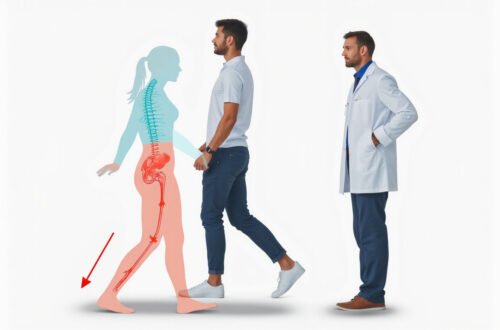
- Your hips drop to one side when walking or running (Trendelenburg sign)
- You sit most of the day and rarely train your posterior chain
If a movement professional has ever mentioned “poor hip stability” or “weak posterior chain,” that’s often code for glute weakness.
Why Do Glutes Get Weak in the First Place?
Several common lifestyle and training habits contribute to weak or underactive glutes:
-
Too much sitting
Sitting for hours keeps your hips flexed and your glutes lengthened but inactive. Over time, hip flexors can tighten while glutes become harder to recruit (“gluteal amnesia”). -
Quad-dominant training
Programs that overemphasize leg presses, leg extensions, and forward-leaning squats can shift work away from your glutes and into your quads. -
Old injuries
Ankle sprains, knee pain, or back injuries can change how you move, unconsciously reducing glute activation to avoid discomfort. -
Poor movement patterns
If you’ve never been taught how to hinge at the hips or control your knees, your body will use the easiest pattern — not the best one.
The solution is not just “more glute work,” but smarter, progressive strengthening with solid technique.
How to Fix Glute Weakness: Key Principles
Before diving into the 7 exercises, keep these principles in mind:
- Start with activation and control, then build to heavier strength moves.
- Prioritize quality over load — feel the glutes working through the full range.
- Train 2–3 times per week for meaningful improvements.
- Balance bilateral and single-leg work to improve strength and stability.
- Be consistent for at least 6–8 weeks; neuromuscular changes take time.
1. Glute Bridge (Foundation Activation)
The glute bridge is a simple but powerful way to relearn how to fire your glutes without overusing your lower back.
How to do it:
- Lie on your back with knees bent, feet flat hip-width apart.
- Tilt your pelvis slightly so your lower back is gently pressed toward the floor.
- Drive through your heels and squeeze your glutes to lift your hips until your body forms a straight line from shoulders to knees.
- Pause for 1–2 seconds, keeping ribs down and abs engaged.
- Lower slowly.
Reps/Sets: 2–3 sets of 10–15 reps
Coaching tips:
- Avoid arching your lower back — movement comes from the hips, not the spine.
- Think “squeeze butt cheeks together” at the top.
2. Clamshells (Glute Medius & Hip Stability)
Clamshells target the glute medius and minimus, the side glute muscles that stabilize your pelvis and keep your knees from collapsing inward.
How to do it:
- Lie on your side with hips and knees bent about 45°, feet stacked.
- Keep hips stacked and core braced.
- Keeping feet together, lift the top knee as high as you can without rolling your hips back.
- Pause, then slowly lower.
Reps/Sets: 2–3 sets of 12–20 reps per side
Coaching tips:
- Imagine your hip bones pointing straight ahead.
- If it’s too easy, add a mini-band above your knees.
3. Hip Thrust (Heavy Glute Strength Builder)
Once you can control a bridge, the hip thrust is one of the best ways to load your glutes heavily and safely.
How to do it:
- Sit on the floor with your upper back against a bench, knees bent, feet flat about hip-width apart.
- Rest a barbell or dumbbell across your hips (or start with bodyweight).
- Brace your core and drive through your heels to lift your hips until thighs and torso form a straight line.
- Squeeze glutes hard at the top for 1–2 seconds.
- Lower with control.
Reps/Sets: 3–4 sets of 6–12 reps
Coaching tips:
- Keep your chin slightly tucked; avoid hyperextending your lower back.
- If you feel it mostly in quads or back, move feet slightly farther from your hips.
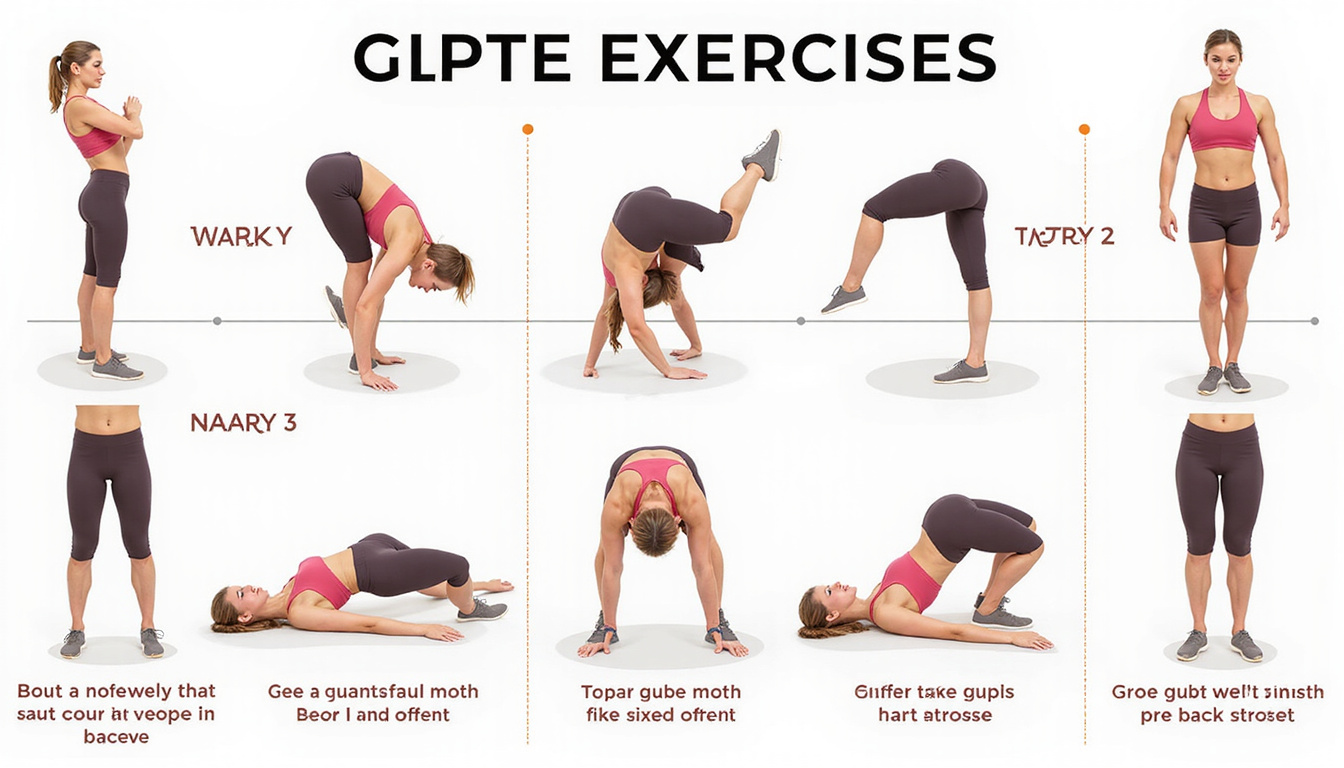
4. Romanian Deadlift (RDL) (Posterior Chain Strength)
The RDL trains the hip hinge pattern, reinforcing glute and hamstring strength and protecting your lower back during lifting.
How to do it:
- Stand tall with feet hip-width, holding a barbell or dumbbells in front of thighs.
- Slight bend in knees, chest proud, shoulders back.
- Push hips back as you lower the weight along your thighs, keeping it close to your body.
- Stop when you feel a strong stretch in hamstrings but can still keep a flat back.
- Drive hips forward and squeeze glutes to stand.
Reps/Sets: 3 sets of 6–10 reps
Coaching tips:
- Think “close the car door with your butt” — hinge, don’t squat.
- Keep weight in mid-foot to heel, not on your toes.
5. Lateral Band Walks (Hip Abductor Strength)
Lateral band walks strengthen the outer glutes, crucial for knee alignment and cutting or side-to-side movements.
How to do it:
- Place a resistance band around your legs (just above knees or at ankles).
- Stand with feet hip-width apart, slight bend in knees, athletic stance.
- Step sideways with one foot, then follow with the other, keeping tension on the band.
- Move 8–12 steps in one direction, then reverse.
Reps/Sets: 2–3 rounds each direction
Coaching tips:
- Keep toes pointing forward or slightly in, not turned outward.
- Don’t let knees cave inward; push them slightly out against the band.
6. Bulgarian Split Squat (Single-Leg Strength & Stability)
This single-leg variation exposes and corrects asymmetries while heavily recruiting the glutes.
How to do it:
- Stand about 2–3 feet in front of a bench, back to it.
- Place the top of one foot on the bench behind you.
- Shift most of your weight into the front heel.
- Lower your back knee toward the floor, keeping chest up and front knee tracking over middle toes.
- Push through your front heel to return to standing.
Reps/Sets: 3 sets of 6–10 reps per leg
Coaching tips:
- If you want more glute focus, take a slightly longer stance.
- Start with bodyweight before adding dumbbells.
7. Single-Leg Deadlift (Balance, Coordination, and Glute Activation)
The single-leg deadlift challenges balance and coordination, teaching your glutes to control the hip and knee in a functional way.
How to do it:
- Stand on one leg with a soft bend at the knee, holding a dumbbell or kettlebell in the opposite hand (or both hands).
- Hinge at the hips, allowing your free leg to extend straight back as your torso leans forward.
- Keep hips square to the floor and spine neutral.
- Lower until you feel a strong stretch in the standing leg’s hamstrings.
- Drive through the standing heel and squeeze glutes to return.
Reps/Sets: 2–3 sets of 6–10 reps per side
Coaching tips:
- Move slowly; use a wall or dowel for support at first if needed.
- Prioritize alignment over range — don’t twist or rotate.
Sample Weekly Plan to Correct Glute Weakness
Here’s a simple way to structure these exercises into your week:
Day A (Strength & Activation)
- Glute Bridge: 2–3 × 12–15
- Clamshells: 2–3 × 15–20/side
- Hip Thrust: 3 × 8–12
- Lateral Band Walks: 2–3 rounds each way
Day B (Strength & Stability)
- RDL: 3 × 6–10
- Bulgarian Split Squat: 3 × 6–10/leg
- Single-Leg Deadlift: 2–3 × 6–8/leg
- Optional: Light bridges or clamshells as a finisher
Aim for 2–3 sessions per week, with at least one day of rest between glute-focused days.
Key Form and Progression Tips
To get the most from these glute weakness exercises:
- Master bodyweight first before adding heavy loads.
- Control the eccentric (lowering) phase — 2–3 seconds down.
- Focus on mind–muscle connection: feel the glutes, not just “moving the weight.”
- Progress gradually: more range, more reps, more resistance, or harder variations.
- Address mobility: if your hip flexors are very tight from sitting, add gentle hip flexor stretches to help your glutes fire better.
FAQ: Glute Weakness and Glute Strengthening
1. How do I know if I have weak glutes or glute imbalance?
Common signs of glute weakness or a glute imbalance include one knee caving in more than the other during squats or lunges, feeling one side of your butt working harder, hip drop when you stand on one leg, or consistent pain on one side of your lower back, hip, or knee. A simple test: perform a set of single-leg bridges on each leg — if one side tires much faster or cramps, you likely have a glute strength imbalance.
2. Can I fix glute weakness at home without gym equipment?
Yes. Many glute strengthening exercises — like bodyweight glute bridges, single-leg bridges, clamshells, and bodyweight Bulgarian split squats — can be done at home. A few inexpensive tools like a mini-band and a single dumbbell or kettlebell massively increase your options and progression, but you can build a solid foundation using just your bodyweight.
3. How long does it take to correct glute weakness and see results?
Most people notice improved muscle activation and less discomfort within 2–4 weeks of consistent glute training. However, meaningful strength gains and performance improvements typically take 6–12 weeks of 2–3 focused sessions per week. If pain persists or worsens despite a dedicated program, consult a physical therapist or qualified professional to rule out more complex issues.
Start Fixing Glute Weakness Today
Glute weakness doesn’t just limit your performance — it changes how your entire lower body moves and absorbs stress, often leading to stubborn pain and recurring injuries. The 7 exercises above give you a clear, proven path to stronger, more responsive glutes and better movement overall.
You don’t need hours in the gym or a complicated routine. Commit to 2–3 focused sessions per week, prioritize clean technique, and progressively challenge yourself. Your hips will feel more stable, your knees and back will thank you, and your strength and speed will climb.
Start by choosing three of these exercises and doing them in your next workout. Build the habit this week — your future, pain-free and more powerful self depends on it.