If you’re tired of waking up sore, stiff, or just not well-rested, upgrading to a memory foam mattress can be a game-changer. Choosing the right memory foam mattress, however, can feel overwhelming. Between foam densities, firmness levels, cooling features, and warranties, it’s easy to get lost in the details and end up with something that doesn’t suit your body or sleep style.
This guide walks you through everything you need to know to confidently choose the best memory foam mattress for better sleep, step by step and without the jargon.
What Is a Memory Foam Mattress?
A memory foam mattress is made from viscoelastic foam, a material that softens in response to heat and pressure and slowly returns to its original shape. It was originally developed by NASA to improve seat cushioning and crash protection and later adapted into bedding products (source: NASA Spinoff).
Key characteristics of memory foam
- Pressure relief: Contours closely to your curves, distributing weight evenly.
- Motion isolation: Great at absorbing movement, ideal for couples.
- Spine alignment: Helps keep your spine in a neutral position when properly matched to your body and sleep position.
Different brands and models vary widely, but these core traits are what define a true memory foam mattress.
Benefits of a Memory Foam Mattress
Before diving into specs and features, it’s helpful to know why you might choose memory foam over other mattress types like innerspring or latex.
1. Superior pressure relief
The “hug” of a memory foam mattress can relieve pressure on your shoulders, hips, and lower back. This can be especially helpful for:
- Side sleepers with sore shoulders or hips
- People with joint or muscle pain
- Those who wake up with numb arms or legs
By cradling the body, memory foam helps reduce pressure points that can cause tossing and turning.
2. Excellent motion isolation
If your partner tosses, turns, or gets up frequently at night, memory foam can help you sleep through it. The foam absorbs movement instead of transferring it across the bed, so you’re less likely to be disturbed.
3. Support for spinal alignment
When you choose the right firmness and thickness, memory foam helps maintain a neutral spinal alignment, which can ease or prevent back pain. This is especially important if you:
- Sit for long hours during the day
- Have chronic lower back pain
- Notice your back feels worse in the morning
4. Wide range of styles and prices
You can find a memory foam mattress:
- As a budget-friendly bed-in-a-box
- As a luxury hybrid with coils and multiple foam layers
- In firmness levels from ultra-soft to extra-firm
This makes it easier to find something that fits your body and your budget.
Types of Memory Foam to Know
Not all foam is created equal. When shopping for a memory foam mattress, you’ll likely see these terms:
Traditional memory foam
- Feel: Slow-responding, deep contouring, classic “hug.”
- Pros: Excellent pressure relief and motion isolation.
- Cons: Can retain more heat and feel warmer.
Gel memory foam
- What it is: Traditional memory foam infused with gel beads or swirls.
- Pros: Designed to absorb and dissipate heat for a cooler feel.
- Cons: Cooling effects vary; not all gel foams are significantly cooler.
Open-cell memory foam
- What it is: Foam with a more open internal structure for airflow.
- Pros: Better breathability, cooler than dense traditional foam.
- Cons: May feel slightly less dense or supportive if poorly made.
Plant-based or eco memory foam
- What it is: Memory foam that replaces some petrochemicals with plant-based oils.
- Pros: Can sleep cooler, may have less off-gassing odor.
- Cons: Quality varies by brand; “eco” doesn’t always mean more durable.
Often, a mattress combines two or more of these foam types in different layers.
How to Choose the Right Firmness
Firmness is one of the most important factors when choosing a memory foam mattress. It directly affects comfort, support, and how well you sleep.
Most mattresses are rated on a 1–10 scale:
- 1–3: Soft
- 4–6: Medium / Medium-firm
- 7–10: Firm
Match firmness to your sleep position
Side sleepers
- Best: Soft to medium (3–6)
- Why: Allows your shoulders and hips to sink in enough to stay aligned and relieve pressure.
Back sleepers
- Best: Medium to medium-firm (5–7)
- Why: You need cushioning for your lower back, but with enough support to keep your spine neutral.
Stomach sleepers
- Best: Medium-firm to firm (7–9)
- Why: Too soft and your hips sink, arching your lower back and causing pain. Firmer foam keeps your torso lifted.
Consider your body weight
Your weight changes how a memory foam mattress feels:
- Under 130 lbs: The same mattress will feel firmer. You may prefer soft to medium.
- 130–230 lbs: Medium to medium-firm typically works well.
- Over 230 lbs: Aim for medium-firm to firm with higher-density foams for better support.
Foam Density and Thickness: Why They Matter
Beyond firmness, two specs that tell you a lot about a memory foam mattress are density and thickness.
Foam density
Density is measured in pounds per cubic foot (PCF). It affects durability, feel, and support:
- 3.0–3.9 PCF (low density):
- Softer, lighter, more budget-friendly
- Less durable, may sag sooner
- 4.0–5.0 PCF (medium density):
- Good balance of contouring, support, and durability
- Ideal for most sleepers
- 5.0+ PCF (high density):
- Very durable, deep contouring
- Can feel warmer and “stuck in the bed” to some
Look for at least 4 PCF in the comfort layers for long-term performance, especially if you’re heavier or need strong pressure relief.
Mattress thickness
A typical memory foam mattress is 8–14 inches thick. More layers and thickness do not always mean better, but they can matter based on your body type.
- 8–10 inches: Best for kids, guest rooms, or lighter adults
- 10–12 inches: Suitable for most adults, good balance of comfort and support
- 12+ inches: Often plusher, better for heavier individuals or those who want a more luxurious feel
Make sure the top comfort layers are thick enough (usually 2–4 inches of quality memory foam) so you actually feel the contouring the way it’s designed.
Cooling Features to Look For
Older memory foam had a reputation for sleeping hot. Modern designs are much better, but if you’re a warm sleeper, pay attention to cooling features.
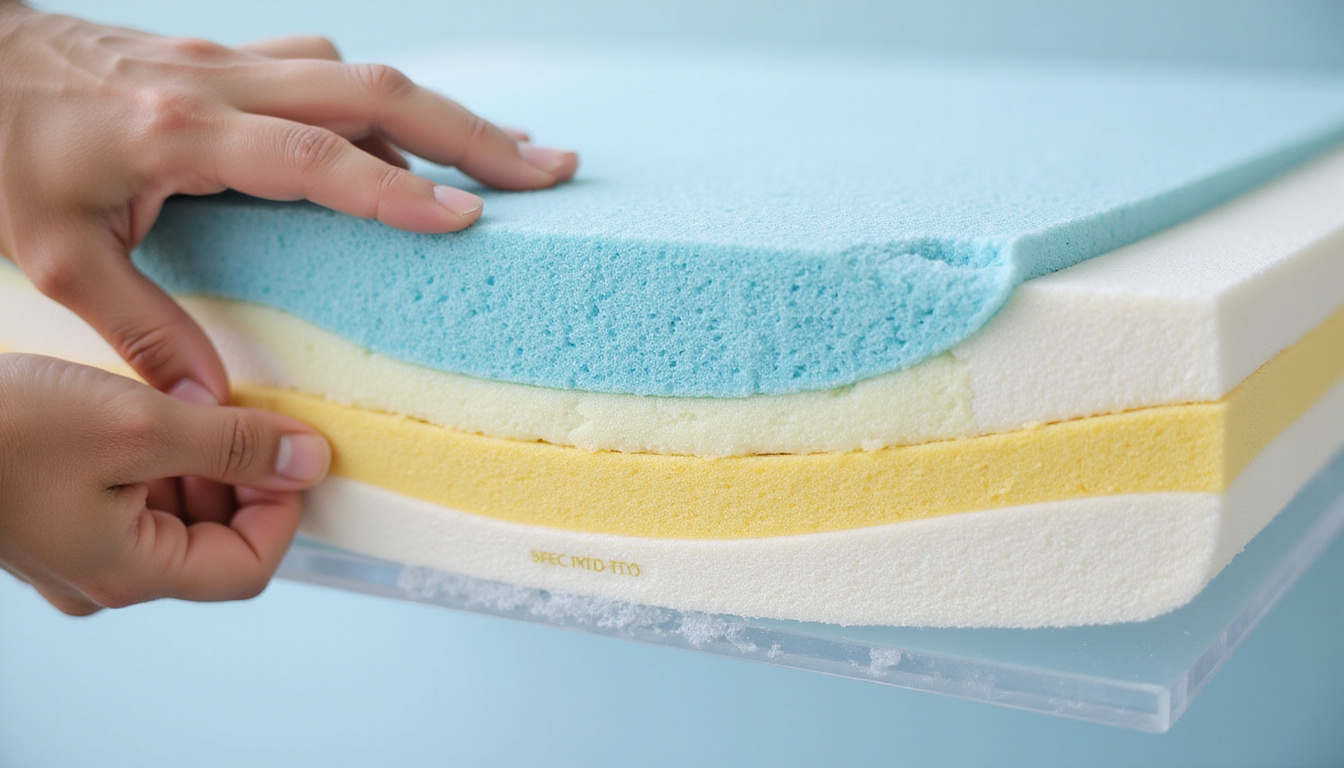
Common cooling elements:
- Gel-infused foam: Gel swirls or beads claim to absorb heat.
- Open-cell structure: Allows more airflow through the foam.
- Phase-change materials (PCM): Fabrics or foams that feel cool to the touch and help regulate temperature.
- Breathable covers: Cotton, Tencel, or other moisture-wicking fabrics.
- Hybrid design: Memory foam on top of coils for increased airflow.
If you sleep hot, prioritize a memory foam mattress with at least two of these: cooling cover + gel/open-cell foam or hybrid construction.
Certifications and Safety: What to Check
Memory foam is a manufactured product, so it’s smart to check for safety certifications.
Look for:
- CertiPUR-US®: Ensures the foam is made without certain harmful chemicals, heavy metals, and has low VOC emissions.
- OEKO-TEX® Standard 100 (for covers): Tests for harmful substances in textiles.
- GREENGUARD or GREENGUARD Gold: Indicates low chemical emissions indoors (less common, but a plus).
These labels don’t guarantee comfort, but they do add peace of mind that your memory foam mattress meets baseline health and safety standards.
Durability, Warranties, and Trial Periods
A mattress is a long-term purchase. Evaluate how well it’s likely to hold up—and what protection you have if it doesn’t.
Durability clues
- Foam densities listed (4+ PCF in comfort layers is a good sign)
- Reinforced edges or edge-support systems
- Brand reputation and reviews after 2–3 years of use
A well-made memory foam mattress typically lasts 7–10 years before noticeable sagging.
Warranties
- Standard warranties range from 5 to 15 years, sometimes “lifetime.”
- Check what’s covered:
- Sagging depth (e.g., impressions deeper than 1–1.5 inches)
- Exclusions (misuse, lack of proper foundation, stains)
A long warranty is good, but meaningful sagging coverage is better than flashy “lifetime” language.
Sleep trials
Many online mattress brands offer a 90–365 day trial period. Use it fully:
- Give your body at least 30 days to adjust.
- Keep notes on any pain or discomfort trends.
- Reach out to customer service if you’re consistently uncomfortable—some brands offer a topper or exchange.
Budgeting: How Much Should You Spend?
Memory foam mattress prices vary widely:
- Budget (under $600 for Queen):
- Good for guest rooms, lighter sleepers, or short-term use.
- Expect lower density foams and simpler designs.
- Mid-range ($600–$1,400 for Queen):
- Best value zone for most people.
- Better-quality foams, improved cooling, stronger warranties.
- Premium ($1,400+ for Queen):
- Thicker, multi-layer designs, advanced cooling, luxury covers.
- Worth it if you have specific needs (chronic pain, heavier weight, hot sleeping).
Don’t overpay for marketing hype, but don’t underinvest if you have ongoing pain or sleep issues. A quality mid-range memory foam mattress that suits your body often offers the best long-term comfort per dollar.
Quick Checklist: How to Shop for a Memory Foam Mattress
Use this list as you compare options:
- Identify your sleep position and firmness preference.
- Check foam density (aim for 4+ PCF in comfort layers for durability).
- Confirm thickness (10–12 inches for most adults; 12+ if heavier).
- Review cooling features if you sleep hot.
- Look for safety certifications (CertiPUR-US®, etc.).
- Read the fine print on warranty and sleep trial.
- Scan real user reviews for mentions of sagging, heat, and pain relief.
- Match the mattress to a proper foundation (slats, platform, or box spring recommended by the manufacturer).
FAQs About Memory Foam Mattresses
Is a memory foam mattress good for back pain?
A memory foam mattress can be very helpful for back pain if you choose the right firmness and support. Medium to medium-firm models with quality, higher-density foam often provide enough contouring for your lower back while keeping your spine aligned. If your back pain is severe or chronic, consult a healthcare professional and use their guidance along with mattress research.
How long does a memory foam mattress last?
A good-quality memory foam mattress typically lasts around 7–10 years before significant sagging or loss of support. Durability depends on foam density, construction quality, and how well you care for it. Rotating the mattress every few months, using a proper foundation, and adding a mattress protector can help extend its lifespan.
Does a memory foam mattress sleep hot?
Older styles often slept hot, but many modern memory foam mattresses include cooling features like gel infusions, open-cell foam, breathable covers, and hybrid coil systems. If you’re a warm sleeper, look specifically for models marketed as “cooling” that combine multiple strategies—cooling fabric + gel or open-cell foam—rather than relying on one feature alone.
Ready to Sleep Better on the Right Memory Foam Mattress?
Choosing a memory foam mattress doesn’t have to be confusing or stressful. When you focus on the essentials—your sleep position, preferred firmness, foam density, cooling needs, and a solid warranty—you dramatically increase the odds of waking up rested and pain-free.
Instead of guessing or grabbing the first sale you see, take a few minutes to compare options using the checklist above. Your bed is where you spend a third of your life; a well-chosen memory foam mattress is an investment in better sleep, better energy, and better health.
Start narrowing down your top two or three candidates today, read recent reviews, and take advantage of at-home sleep trials. The sooner you find a mattress that truly supports you, the sooner you’ll start waking up feeling like your best self.