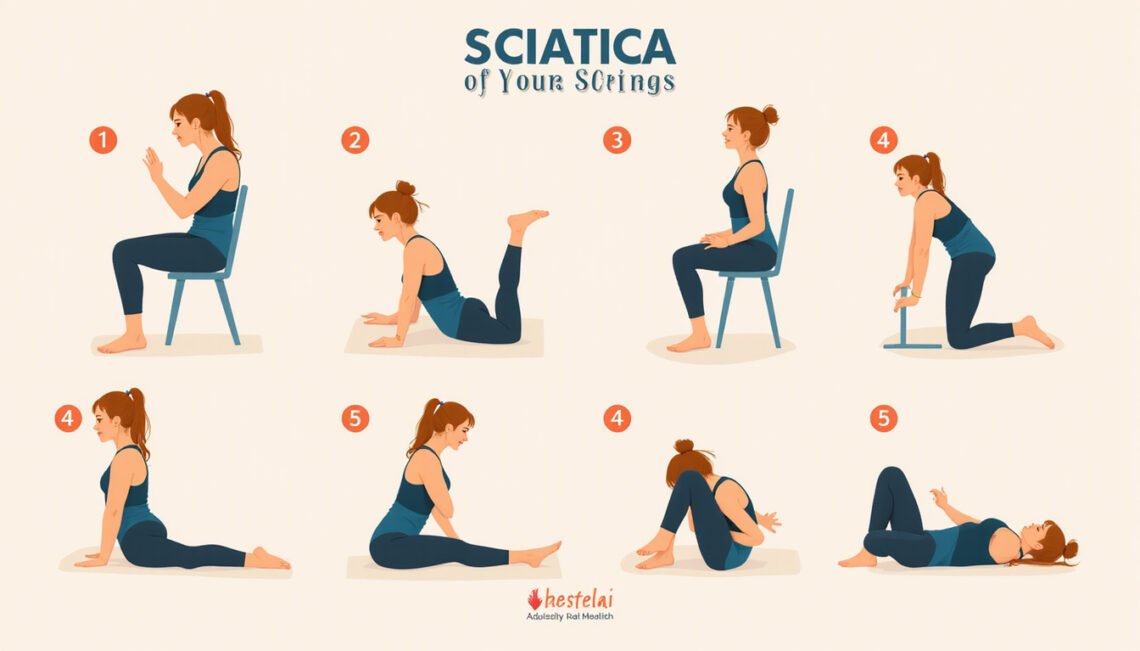
If sciatic nerve pain makes sitting, working, or driving miserable, adding a few simple seated sciatica stretches to your daily routine can make a real difference. You don’t need a gym, a mat, or a lot of time—just a sturdy chair and a willingness to move slowly and gently. This guide walks you through nine beginner‑friendly stretches, how to do them safely, and how to build them into a long-term pain-relief plan.
Always stop any stretch that causes sharp, shooting, or worsening pain, and consult a healthcare professional if your symptoms are severe, new, or changing.
What Is Sciatica, and Why Sitting Hurts
Sciatica is irritation or compression of the sciatic nerve, which runs from your lower back through your hips and down each leg. It can cause:
- Sharp or burning pain in the buttock, thigh, or leg
- Numbness or tingling
- Weakness in the leg or foot
Long periods of sitting can tighten the hip flexors, hamstrings, and glutes while putting extra pressure on the lower back—exactly the areas that can aggravate sciatica. Well-chosen seated sciatica stretches can help by:
- Gently mobilizing the lower back and hips
- Reducing muscle tension around the nerve
- Encouraging better circulation
- Improving posture while you sit
How to Use These Seated Sciatica Stretches Safely
Before we get into specific moves, keep these safety tips in mind:
- Move to mild–moderate stretch only: You should feel a gentle pull, never sharp or electric pain.
- No bouncing: Hold stretches steadily and breathe.
- Start small: If you’re in a lot of pain, begin with shorter holds (10–15 seconds).
- Stay symmetrical: Even if only one side hurts, stretch both sides.
- Talk to a professional: Especially if you have a history of back surgery, severe osteoporosis, or nerve issues.
Aim for 5–10 minutes of stretching, 1–2 times per day. Many people like to do a round in the morning and another after work.
1. Seated Pelvic Tilt (Gentle Low Back Mobilizer)
This is an excellent warm-up stretch to loosen the lower back before deeper moves.
How to do it
- Sit tall near the front of your chair, feet flat, hip-width apart.
- Place your hands on your thighs.
- Slowly tilt your pelvis backward, gently rounding your lower back as if tucking your tailbone under.
- Then tilt your pelvis forward, slightly arching your lower back and rolling your weight toward your sit bones.
- Move back and forth slowly with your breath for 8–10 repetitions.
What it helps
- Mobilizes lumbar spine
- Reduces stiffness from prolonged sitting
2. Seated Figure-4 Stretch (Piriformis Focus)
The piriformis muscle in the buttock often irritates or compresses the sciatic nerve. This stretch targets it directly while you sit.
How to do it
- Sit tall with both feet flat on the floor.
- Cross your right ankle over your left knee, making a “figure-4” shape.
- Flex your right foot (to protect the knee).
- Gently press your right knee downward while keeping your back straight.
- If comfortable, hinge slightly forward from the hips until you feel a stretch in the right glute/hip.
- Hold 20–30 seconds, breathing steadily.
- Switch sides.
Modify if needed
If crossing the ankle to the knee is too intense, cross your right ankle over your left shin instead and lean forward slightly.
3. Seated Hamstring Stretch
Tight hamstrings tug on the pelvis and can increase strain on the lower back and sciatic nerve.
How to do it
- Sit on the edge of your chair.
- Extend your right leg forward with heel on the floor and toes pointing up. Left foot stays flat.
- Keep your back straight and hinge forward from your hips (not your waist).
- Stop when you feel a stretch along the back of your right thigh.
- Hold 20–30 seconds.
- Repeat on the left leg.
Common mistake: Rounding the back. Think “chest forward, spine long” as you lean.
4. Seated Hip External Rotation Stretch
This move opens the outer hip and glute muscles that often spasm with sciatica.
How to do it
- Sit tall with feet wide, about shoulder-width.
- Let your right knee fall gently outward, keeping the foot on the floor and the left leg stable.
- You can lightly press on the inside of the right knee to deepen the stretch—but never force it.
- Hold 15–20 seconds, then bring the knee back to center.
- Repeat on the other side.
This is a small, subtle movement, but over time it can make sitting feel less cramped through the hips.
5. Seated Hip Flexor Stretch (For Chair-Sitters and Drivers)
Tight hip flexors from long sitting can increase the arch in your low back and worsen nerve compression.
How to do it
- Sit sideways on your chair, facing left, with your left thigh supported and left foot flat.
- Slide your right leg back so only the toes are on the floor, letting your right knee bend slightly.
- Keep your torso upright and gently shift your pelvis forward until you feel a stretch in the front of your right hip.
- Hold 20–30 seconds.
- Turn to face the other way on the chair and repeat.
Hold the back of the chair for balance if needed.
6. Seated Cat–Cow (Spinal Mobility Stretch)
Borrowed from yoga and adapted to a chair, this dynamic stretch mobilizes the entire spine and can relieve stiffness around the sciatic nerve.
How to do it

- Sit tall with feet flat and hands on your knees.
- On an inhale, arch your back gently, roll your shoulders back, and lift your chest (Cow position).
- On an exhale, round your back, tucking your chin and gently pulling your belly button toward your spine (Cat position).
- Move smoothly between these two positions for 8–10 slow breaths.
Keep the motion comfortable; you’re looking for gentle movement, not maximum bending.
7. Seated Knee-to-Chest Stretch
This classic stretch can ease pressure in the lower back and glutes.
How to do it
- Sit tall with your back away from the chair, feet flat.
- Bring your right knee toward your chest, using your hands to hold just below the knee or behind the thigh.
- Gently draw the knee closer until you feel a stretch in your low back or buttock.
- Keep your shoulders relaxed and avoid leaning too far back.
- Hold 20–30 seconds, then switch legs.
If needed, place a small pillow or folded towel behind your low back for support.
8. Seated Side Bend Stretch
This stretch targets the side of the lower back and hip, which can get tight and pull on the sciatic nerve.
How to do it
- Sit tall with feet flat, holding the side of the chair with your left hand.
- Raise your right arm overhead.
- Gently lean your torso to the left, reaching your right arm up and over.
- You should feel a stretch along the right side of your ribcage, waist, and hip.
- Hold 15–20 seconds, breathing steadily.
- Return to center and switch sides.
Avoid collapsing forward or twisting; think of making a gentle C‑shape to the side.
9. Seated Nerve Glide (“Flossing”) for Sciatic Relief
Nerve glides, or “flossing,” help the sciatic nerve move more freely through surrounding tissues. These should be very gentle—no forcing.
How to do it
- Sit tall with both feet flat.
- Extend your right leg so the heel rests on the floor and the knee is straight or slightly bent.
- As you pull your toes toward you, gently straighten your neck and look slightly up.
- As you point your toes away, gently nod your chin toward your chest.
- Move slowly with the breath for 8–10 repetitions, staying well below any pain.
- Repeat on the other leg.
You should feel only a light pulling sensation, not sharp or electric pain.
When and How Often to Do Seated Sciatica Stretches
Consistency matters more than intensity. A simple starting plan:
-
Daily routine (5–10 minutes)
- Pelvic Tilt
- Cat–Cow
- Figure-4 (both sides)
- Hamstring Stretch (both sides)
-
Workday breaks (2–5 minutes)
- Side Bend (both sides)
- Knee-to-Chest (both sides)
- Nerve Glides (both legs)
-
After driving or long sitting
- Hip Flexor Stretch (both sides)
- Hip External Rotation
You can adjust based on how you feel, but most people benefit from at least one full round of these stretches each day.
Simple Checklist for Safer Stretching
Use this quick list to keep your seated sciatica stretches safe and effective:
- Start with gentle motion (Pelvic Tilt, Cat–Cow) before deeper holds
- Keep your spine long; hinge from the hips when leaning forward
- Breathe slowly and don’t hold your breath
- Stop if you feel sharp, burning, or spreading pain
- Stretch both sides, not just the painful leg
- Combine stretching with short walking breaks when possible
When to See a Professional About Sciatica
While seated stretches are helpful for many people, certain symptoms need medical attention. Contact a doctor or physical therapist if you notice:
- Sciatica pain lasting more than a few weeks despite self-care
- Progressive weakness, numbness, or balance problems
- Loss of bladder or bowel control (urgent medical emergency)
- History of cancer, unexplained weight loss, or fever with back pain
A licensed physical therapist can tailor specific stretch and strengthening programs to your body and condition (source: American Physical Therapy Association).
FAQ: Seated Sciatica Stretching Basics
1. What are the best seated stretches for sciatica at work?
Some of the most office-friendly moves are the seated figure-4, seated hamstring stretch, and seated side bend. They require no special clothes or equipment and can be done in a standard desk chair in 1–2 minutes.
2. Can chair exercises really help sciatic nerve pain?
Yes. Gentle chair stretches for sciatica can reduce muscle tension, improve mobility in the lower back and hips, and ease pressure around the nerve. They work best when combined with short walking breaks, proper posture, and, when needed, guidance from a professional.
3. How often should I do seated sciatica stretches for lasting relief?
Most people benefit from doing seated sciatica stretches once or twice daily, plus brief movement breaks every 30–60 minutes of sitting. Consistency over weeks and months is key for lasting improvement rather than occasional long sessions.
Start Your Seated Sciatica Routine Today
You don’t have to wait for the perfect time, space, or workout clothes to start easing your sciatic pain. Pick two or three of these seated sciatica stretches and do them right where you are—at your desk, at the kitchen table, or even on the edge of your bed.
From there, build toward a simple daily routine, listen to your body, and adjust as you go. If you’re unsure which stretches are right for you or your pain isn’t improving, reach out to a healthcare professional or physical therapist for personalized guidance.
Begin today with one gentle stretch; your back, hips, and legs will thank you with every more comfortable step—and every less painful sit.